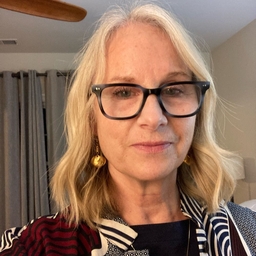
Linda Salley needs a million dollars.
As executive director and board president of the African American Museum of Bucks County, she is hoping this year’s fundraising gala will help them get across the finish line sooner rather than later.
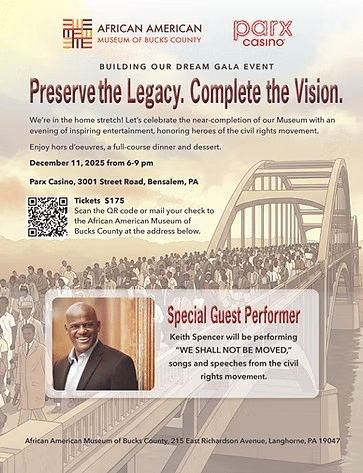
The event, themed “Preserve the Legacy. Complete the Vision,” will take place December 11 at Parx Casino Racetrack in Bensalem from 6 to 9 p.m. “It feels wonderful and it is a big relief to finally reach this point even if we still need money to get it finished,” Linda told me via email.
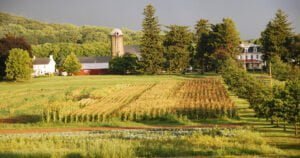
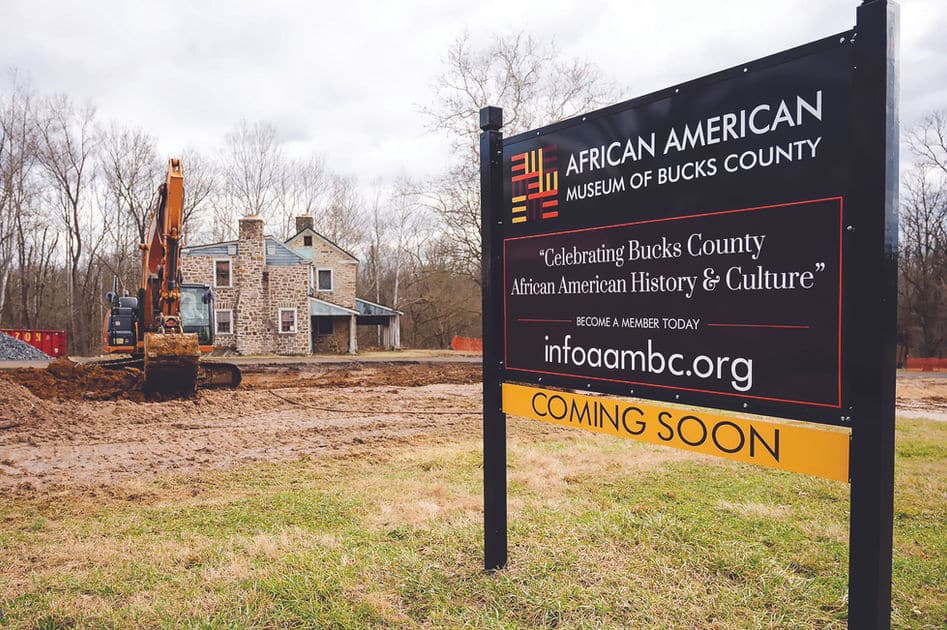
Three years ago, the seven-member board broke ground to begin renovations on the 18th century stone home, situated on 32 acres in Middletown Township. Two years before that, in 2020, they began to lease the property from the county for $1 a year for 30 years. Known in the past as Boone Farm, the property is now the future home of Bucks County’s first African American museum.
“We overcame many obstacles, from unanticipated delays during and after the pandemic, and structural and design issues, but we are happy to say we are almost there!”
Since their formation in 2014, the AAMBC has operated as a traveling museum. Now it is the museum’s turn to play host rather than visitor, and while having permanent exhibits will be a welcome change to transporting them, their mission remains the same: to promote understanding of the African American experience through history, education and inspiration.
Guests at the gala will enjoy an evening of drinks, a full-course dinner and entertainment by baritone vocalist and actor Keith Spencer who will perform a one-hour program titled “We Shall Not Be Moved: Songs and Speeches from the Civil Rights Movement.” Guests can also bid on work by local artists in the silent auction and will hear the latest news on the building’s renovations. Additionally, a posthumous tribute will be paid to Dr. Walter P. Lomax, Jr., respected physician and philanthropist who passed away in 2013.
“He’s well known in Philly for his work in medicine and with the prison system,” Linda said. “But the whole time he was living in Bucks County so we’re claiming him as our own,” Linda said.
“They’re hiring at Boone Farm.”
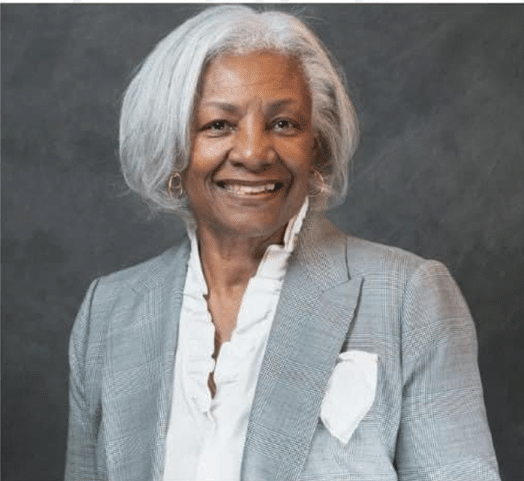
After retiring from the New York City Board of Education in 2003, Linda volunteered to teach quilting to a group of twelve women at a senior center in Bristol. They were all originally from the rural South and called themselves The Young at Heart.
“I noticed their hands were swollen and I could see that they had worked on a farm. Because they weren’t able to sew with their hands, I brought in sewing machines.”
As the group gained confidence in making quilts, they began to share their stories about migrating north from Georgia, North Carolina and South Carolina, traveling at night. They told Linda they found a flier and had told their families, “They’re hiring at Boone Farm.” The house and farm in Middletown Township was owned and run by Cheshire Lawton Boone and his wife Grace.
“In the 1930s and 1940s, Boone Farm offered good paying jobs and steady employment for African Americans which allowed them to raise their children and have a better life, a safe life, in Bucks County,” Linda said.
It wouldn’t be until some years later that Linda would connect the dots between the farm where The Young at Heart women had once made a living and the property that AAMBC co-founder Harvey Spencer had envisioned as the museum’s permanent home.
“We’re gonna get that building.”
Harvey Spencer would point out the dilapidated property on Route 413 near St. Mary Medical Center whenever Linda drove him to his doctor’s appointments. Linda told him they’d have to raise a lot of money, but he persisted.
“He said, Look at the land. That’s the museum. I told him, Okay, we’ll see what we can do. I knew he was getting sick and I told my husband we had to get that building for Harvey.”
Linda and her husband Alonzo Salley (a.k.a. Lonnie, Sonny, Al—Linda had many names for her late husband who she credits as the one who shaped the person she is today), went to the Bucks County Courthouse in Doylestown to ask about the land records and were sent to the third floor.
“We went to the third floor and I guess the lady thought I was lost.
What can I help you with, sweetheart?
I’m looking for a property.
Do you have the name?
No.
Do you have the address?
No.
I told her it was near Bridgetown Pike and 413 and this little old lady went to this big book—the book was bigger than she was.”
There were two abandoned buildings listed. Linda pointed to the one that Harvey showed her and she and Alonzo left the courthouse with three pages of information about the building. Though Harvey wouldn’t live long enough to see how things turned out, Linda remembers how he never gave up on his dream. “He said, Linda, we’re gonna get that building.” I said, Okay, Harvey.”
“I’m going to give you five hundred dollars.”
After Harvey died in 2016, Linda attended an event at The Peace Center in Langhorne where she met Bucks County Commissioner Diane Ellis-Marseglia. Linda told Diane she was working hard to introduce AAMBC to the public.
“She said, I’m going to give you five hundred dollars. I said, You will? Because we didn’t have anything. We literally didn’t have anything but a dream. So, five hundred dollars sounded like five million dollars.”
When Diane asked if she had a building in mind, Linda told her about the abandoned building on Route 413, down from St. Mary Medical Center. Diane wasn’t sure she could get that one but she told Linda she’d make sure the museum got a building. “And I was satisfied with that,” Linda said.
Time passed and the museum continued to conduct Underground Railroad Tours and transport mobile exhibits to schools, libraries and senior centers until late one night, Diane called Linda out of the blue.
“She said, You got the building. It had been so long, I said, What building? and she said, The one you asked for. Boone Farm.”
Linda was shocked. That was the moment she realized the building and land that Harvey had envisioned for their museum, that he’d pointed out on their way to St. Mary’s, that he’d known in his heart they’d get and that was now theirs, was Boone Farm.
Visitors will learn more about Boone Farm’s storied past when they enter the museum.
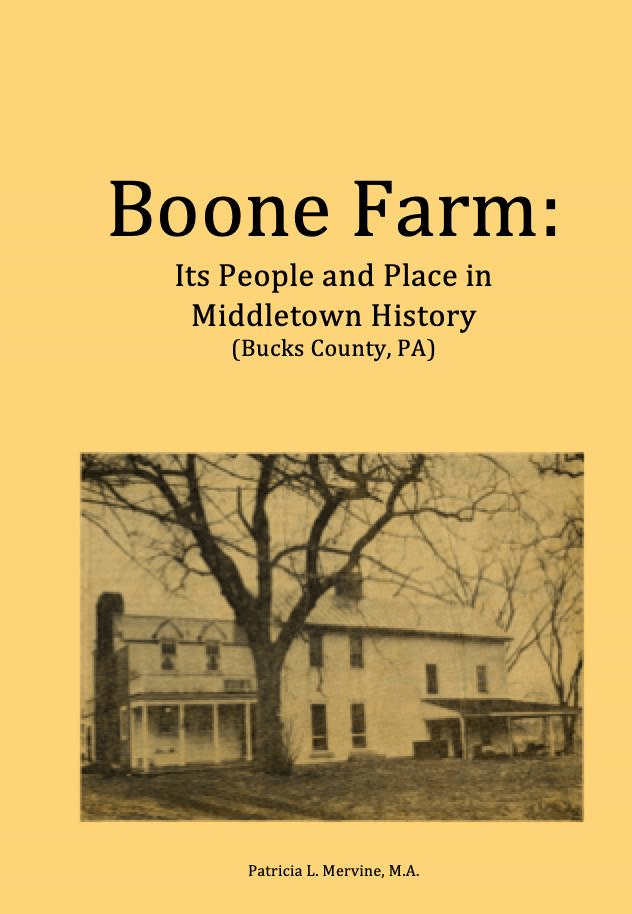
“The farm’s connection to the history of African Americans in Bucks County will be featured when the museum opens,” stated Patricia Mervine, local historian and author of the book Boone Farm: Its People and Place in Middletown History. “The history of Boone Farm will be highlighted in the reception room through a mural, a flip book, and artifacts.”
“…for people of all ages and backgrounds.”
In an email, Mervine described the range of experiences the museum will offer.
“The state-of-the-art museum promises permanent exhibits addressing a timeline of history from the 1600s to the present. Featured will be exhibits African Roots, the Slave Trade and educational opportunities for all ages. When visitors walk in, they’ll see a two-story Wall of Fame spotlighting a photo array of African Americans with Bucks County connections. The museum will also have a research library with books ranging from antique to contemporary. Wall murals will feature images of nearly two dozen famous Black authors. Other features in the museum will be the Timeline Room, highlighting over 70 points of history from the 1630s through the present; the Passage to Freedom Room, which details through murals, interpretative panels, and interactive technology, the story of the Underground Railroad in Bucks County; and a room dedicated to lives in freedom, spotlighting African American neighborhoods that have disappeared and some that still exist, the story of the Great Migration, and an event that made national headlines – the integration of Levittown. The Prayer Hall honors the special role of African American churches. The Education Center will host changing exhibits throughout the year, with related curricula for students.”
More than twenty retired educators from Bucks County have volunteered to be docents and field trip facilitators. “Their love of learning and teaching will be a wonderful asset to the museum,” Mervine added.
As the AAMBC’s Capital Campaign Chair, Mervine has witnessed Linda’s determination first-hand. “Her commitment to the education of present and future generations is the engine that has moved this museum forward from a start-from-scratch concept to a beautiful well-designed educational facility, for people of all ages and backgrounds.”
The Central Bucks and Lower Bucks Underground Railroad tours have been very popular over the years and will continue after the museum opens.
“The January Central Bucks tour is already sold out,” Linda said. “Interested groups should contact Cheryl Glover to book a future tour at cglover@aamusembucks.org.”
“We’re hoping that we’ll meet our goal.”
Linda Salley needs a million dollars partly because of the drop off in federal funding for the arts in general and African American projects in particular.
“Federal grants just aren’t available anymore. We hope that’s temporary, but that’s the way it is right now, unfortunately,” she said.
State funds have also shrunk and, though the county has been generous, Linda said they need more.
“It’s a difficult time to ask, because people are going through a lot. We’re hoping that we’ll meet our goal, that someone will reach out and say, “This is for you” and at least it will carry the museum for a year.”
When asked how the public can donate, Linda suggested some options.
“A few of the ways are to make a one-time donation, sponsor an indoor section of the museum, purchase a bench or a brick for our patio. Or become a member,” she said. (Visit the AAMBC website for details or donate HERE.)
“One exquisite quilt.”
On the museum website’s Who We Are page, there is a quote in Linda’s bio:
Every person I meet, every effort undertaken, every joy, frustration, hope, and sorrow—all are the material of the human experience. We each are the beautifully contrasting piece that our Master Designer keeps lovingly crafting into one exquisite quilt.
When I asked Linda about this quote, she said, “I wrote that a while ago. That’s what it is. It involves everyone, there’s no color barrier here, we want to share this rich history of Bucks County.”
In addition to viewing the exhibits, Linda hopes schools and community groups come to the museum for tours and talks to learn about the entire community.
“That’s what we’re all about, telling the story and we did a lot of research and found out a lot of great information, especially about Bucks County. We want to open up the eyes of many people.”
The three-story, 4,000 square foot soon-to-be permanent home of the African American Museum of Bucks County is located at 867 Newtown-Langhorne Road in Middletown Township. They hope to open their doors in March 2026.
“It has been a long five years to reach this point. We are extremely grateful to the Bucks County Commissioners for their ongoing support, as well as the numerous volunteers whose hard work has made this happen,” Linda said. “Since the museum was founded, we dreamed of having our own physical building to share the history and culture of African Americans in Bucks County with students and families.”