
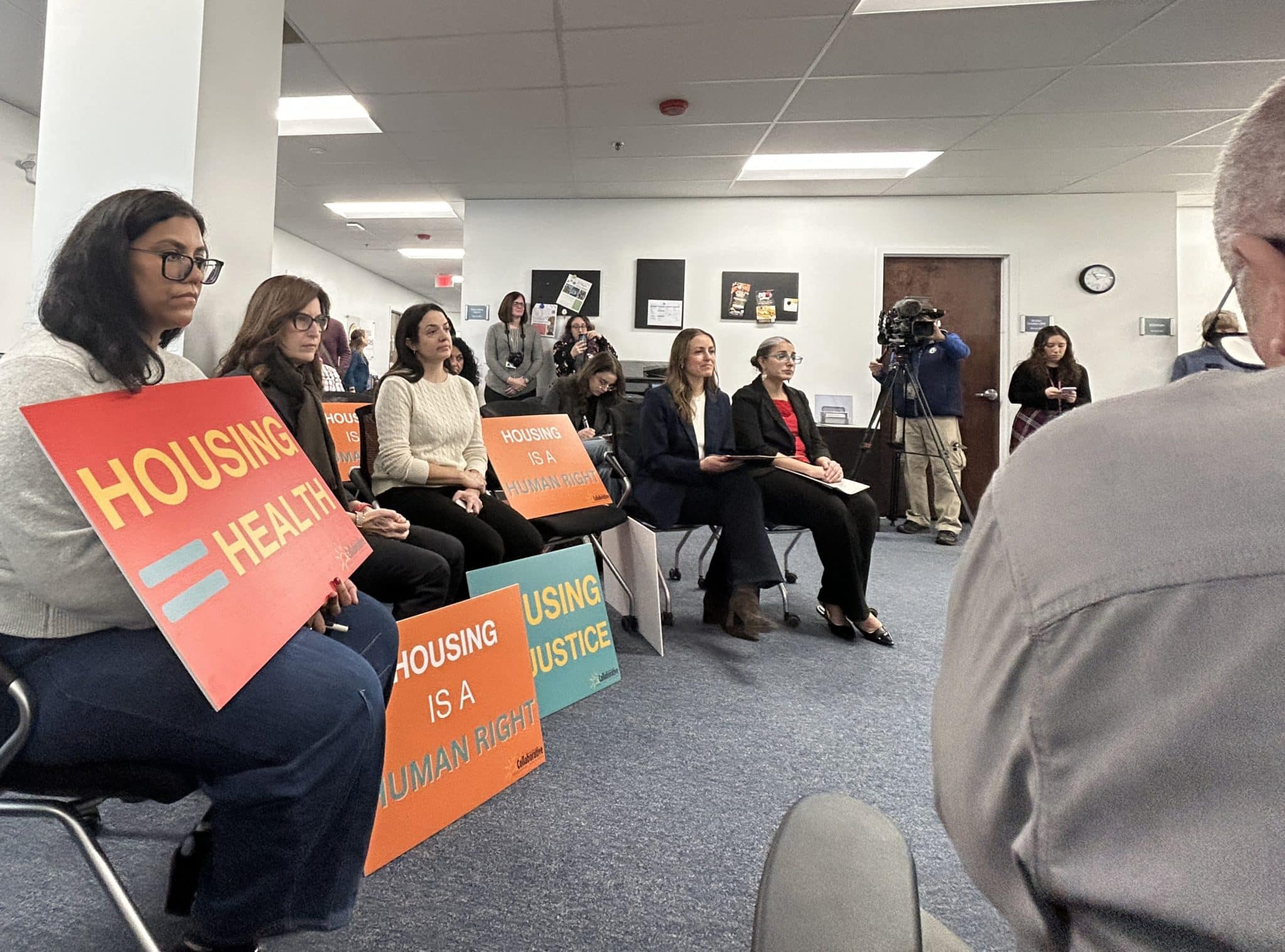
Sudden HUD policy shifts to homelessness assistance could have a detrimental impact on Bucks’ homeless and housing insecure populations.
The Continuum of Care (CoC) program – an annual federal funding opportunity to help communities combat homelessness – recently received drastic markups by HUD including overall funding cuts and reallocations for strategies deemed less effective by local organizations. In Warminster on Monday, local nonprofits and county leaders held a press conference to discuss the potential effects for Bucks and Montgomery County.
In Bucks County, the total funding at risk is about $2.4 million, with 90 people and five government and nonprofit providers impacted. As of this year, there were 421 people experiencing homelessness in the county.
HUD’s changes are currently undergoing litigation. The most recent move was last Friday, when a district judge issued a preliminary injunction to temporarily block the agency from imposing its proposed changes to the program.
Kristyn DiDominick, executive director of the nonprofit Bucks-Mont Collaborative, said CoC is supposed to be a foundation for local homelessness response and provide predictability so communities can plan ahead.
“The direction of the newly released NOFO…is moving us towards strategies that we believe will worsen homelessness and destabilize communities, not improve them,” DiDominick said.
According to The National Alliance to End Homelessness, the issuing of awards will be delayed and program funding will run dry due to the policy shifts. The shifting of the program’s rules has been disruptive, DiDominick said.
“When the NOFO competition is this late, confusing, or shifting in ways that don’t reflect how homelessness actually ends, the ripple effects don’t stay on paper. They land on real people,” DiDominick said.
Emma Hertz, the president and CEO of HealthSpark Foundation, called on the Senate to approve an amendment to the December 18th THUD package extending the current FY2024 CoC grants for 12 months, and also called on the two chambers of congress to open a formal public comment period so local leaders may review the changes. Additionally, Hertz called on HUD to remove the 30% cap on the amount of funding available for permanent housing.
If left unchanged, the 30% cap would force CoC-funded programs to switch focusing on permanent housing to transitional housing and street outreach.
“[The cap] is arbitrary, not based on evidence, and reduces years of work that communities have done to provide stability in housing for folks,” Hertz said. “It also takes away local decision-making control and puts that control in the hands of the federal government, who don’t know our communities.”
Erin Lukoss, CEO of Bucks County Opportunity Council (BCOC), said if homelessness and housing insecurity increases, nonprofits and faith-based organizations will be swamped with insufficient resources. Lukoss added that when rental assistance disappears, people turn to charities for food.
“At BCOC, our food network is already operating at or near capacity,” Lukoss said.
“In a suburban community, we have this social contract that says if you’re living outside, you have to hide. Then, everybody says we must not have a problem because we don’t see it.” – Mark Boorse, Director of Program Development at Access Services
Lukoss said BCOC helps people become self-sufficient, and that the proposed policy shifts do not foster an environment for self-sufficiency. Studies have shown that permanent housing reduces homelessness and lowers public costs, and Lukoss said it contributes to overall stability.
“When families are focused on survival, self-sufficiency becomes harder to reach,” Lukoss said. “We help people move ahead, and all of this instability jeopardizes that work. People can’t pursue education, maintain employment, or build savings when they don’t know where they’ll sleep next month.”
Lukoss emphasized that the instability caused by the ongoing shifts makes the current moment “especially dangerous”.
“When the rules change abruptly, it forces systems to react instead of plan, and reaction is always more expensive and less humane,” Lukoss said.
Diane Ellis-Marseglia, a Democratic Bucks County commissioner, said that 92% of homeless people who were provided housing in Bucks have remained there, which she believes shows that permanent housing works well.
Marseglia also said overall housing prices in Bucks are too high for everyday workers.
“We have also watched housing prices in Bucks County become so unattainable that our workforce housing isn’t even there,” Marseglia said. “How can we expect people who are facing homelessness to emerge and be able to take care of themselves?”
READ: Bucks County State Rep. Jim Prokopiak Leads Roundtable Discussion on Housing Affordability Solutions
Stacy Dougherty, executive director of Laurel House, emphasized the effects housing instability has on domestic abuse victims.
“When HUD funding is reduced, removed, or delayed, the impact is immediate and devastating,” Dougherty said. “Survivors face longer wait lists, fewer available units, and a far greater risk of homelessness or being forced back into abusive environments.”
Mark Boorse, director of program development at Access Services, said that because perception of homelessness shapes policy, people who have experienced it should be especially heard. Boorse added that the belief that affordable housing drains community resources must change and communities should advocate for best practices in homeless outreach.
“We also need to generate direct action by replicating any of the myriad projects that communities are already implementing to address the crises of housing and homelessness in their spaces,” Boorse said.
Responding to a question about whether it’s a misconception that people experiencing homelessness in Bucks mostly come from outside the county, Boorse said most of them live in the same zip code where they were last housed.
“The data supports the fact that people stay close to where they are,” Boorse said. “People experiencing homelessness have the same ties to the community that you and I have, and they don’t leave those spaces because that’s where their support system is.”
Boorse added his reasoning why this may be the case even if the homeless population isn’t visible.
“In a suburban community, we have this social contract that says if you’re living outside, you have to hide,” Boorse said. “Then, everybody says we must not have a problem because we don’t see it.”
In an interview with the Beacon, Lukoss cited a statistic that about 6 percent of the population in Bucks live in poverty.
“Poverty is hidden in this county … People don’t believe that we have a six percent poverty rate,” Lukoss said. “People don’t like seeing homelessness in our county, and so they do their best to blend in.”
Asked about future legal proceedings, Hertz said she’s expecting action in the next couple of days. She also said there is opportunity for legislation to prevent the policy change, which is currently being discussed in the senate.