
I was working in my office the morning of January 7 when I heard sirens just before 10 a.m. Living in a city, you develop a sense for how urgent a siren is and what they are responding to. Is it a single fire truck rolling out to check on a kitchen fire or heavy rescue and an ambulance? I looked up from my laptop and heard police sirens coming in from the north – first one, then a bunch, coming from multiple directions, and they were hustling.
It didn’t take long, maybe an hour of unease, when I got the news that ICE had shot someone on Portland Avenue, just across Powderhorn Park, a quick five-minute bike ride from where we lived and had raised our daughters. I felt disbelief, shock and anger, but somehow not surprise that it had actually happened. We’d seen the angry face of immigration enforcement, and there was a growing sense that they were getting frustrated at the spine Minnesota was showing. ICE was increasingly angry that people kept showing up to blow whistles and hold iPhones, while the motley gangs of immigration enforcement agents pulled people out of their cars and homes. Tense interactions were becoming brittle, and confrontations were heating up.
It wasn’t until later that afternoon that we heard a name, and the crushing news that a woman named Renee Good had been shot on Portland Avenue, killed by ICE.
South Minneapolis is a neighborhood full of puppet-makers and pranksters, new arrivals and old guard hippies. I’m sure other cities have places with this mix of acceptance and a diversity-forward embrace of a shared urban home, but I’ve grown to love being part of the stubbornly joyful fabric of South Minneapolis.
The Ojibwe called the falls in what is now downtown Minneapolis “Gakaabikaang – the place of the waterfall.” The corner stores and old country houses of worship that northern European immigrants built in the area around Gakaabikaang take on new faces as our neighborhoods age and grow more diverse. I often note that in the course of a 10-minute run to the co-op I’ll pass leftie cultural bastions like Heart of The Beast Puppet and Mask Theater and the Grease Pit Bike Shop; Latino new arrivals like Taco Taxi (closed as of last week, likely due to ICE enforcement, but have not heard where they are) and Las Cuatro Milpas (slogan is Make Tacos – Not Walls, home of one of the first immigration raids here last summer; Little Earth and the Red Lake Nation Embassy, anchors of the urban Native community; and more Somali dugsis and mosques than I can count.
We celebrate spring with the Mayday Parade and Festival down Bloomington Avenue into Powderhorn Park. We bundle up no matter what the weather to get outside in mid-January for the Art Sled Rally. We stand up for the good and the goofy, we go Hulk at the first sign of injustice, and there is a sense that our community stands for justice and wants to make room for all voices to be valued.
We rose up to make sure the world heard when Minneapolis cop Derek Chauvin murdered George Floyd in 2020, and we’ve had a year of Trump 47’s erratic antics wake up our sense of outrage. So when the news hit the afternoon of January 7 we knew there would be a vigil and a march. We would say her name and wail at the injustice. What I don’t think any of us realized was the roar of support returning and magnifying the energy from outraged friends all over the globe.
Dark settles in around 5 p.m. in early January, and a crowd was already gathering at 34th and Portland as the street lights came on. It was a raw day, and sidewalks were glazed ice covered by what was left of the snow we got before Christmas. I grabbed my warm stuff, forgot my Yaktrax, and hustled awkwardly across the Park to be with the gathering crowd. Candles and phone flashlights bobbed ahead of me, and I realized I was part of a wave of people moving in from all directions toward the gathering.
Six years ago in May the day after George Floyd was killed, we headed in a blind rage toward 38th and Chicago and then to the Minneapolis Police Third Precinct; today we joined hands again to mourn another innocent victim, this time just a few blocks North of where Mr Floyd took his last desperate breath.
It was still just hours since our neighbor had died, her car crashing into a parked car and a light pole on the side of Portland Avenue. The car was gone, and a growing collection of flowers marked the site. I moved into the crowd, squeezing in to get closer to the imams, pastors, and social justice leaders, and spied Minnesota House member Aisha Gomez, all urging the crowd to say her name, say her name, say her name. Mid-morning, a woman was killed by an angry federal cop, and before dinner time we were drawn together by a collective instinct to share our outrage.
Thousands of us filled the street and cried bewildered tears. It was literally a cry in the night, voices raised to make damn sure the world knew that while one woman had died, this was a wound we shared as souls trying to live in a world darkened by injustice. We sang of love and promise, and looked around in astonished anger that once again, our light couldn’t outshine hate.
Calls and texts came in through the evening, and we heard from friends and family from across the country and scattered around the globe. I wrote back in the deepening realization that the whole world was watching again, seeing our rage and love, and I thought I couldn’t do it again. No one knows how to do this – we know the songs and the blind instinct to march together – but how do you knit a community back together again, and now again? We’d done it in Covid masks for George Floyd, what kind of hall of mirrors was reflecting it all back, demanding we march again?
With astonishing speed and efficiency, we sorted ourselves into neighborhood watch groups. In the two weeks after Renee Good was killed, the number of eyes on the street increased by the hundreds. Within a matter of days it wasn’t just the activists standing up to the invasion, there was a tangible buzz of tension. ICE was everywhere, and we couldn’t relax.
ICE was arresting someone on Hiawatha, and then pulling a driver out of their car at 42nd and Cedar, then posturing near a mosque at 28th and 13th, and then harassing a family two blocks up 15th – where hilariously, they crashed into a phone pole, going too fast through a roundabout. Intimidating as they appear, these dipshits can’t drive on snow, and they couldn’t navigate walking on ice to save their lives. Stupidity, fear, and all, it felt very much like an armed occupation.
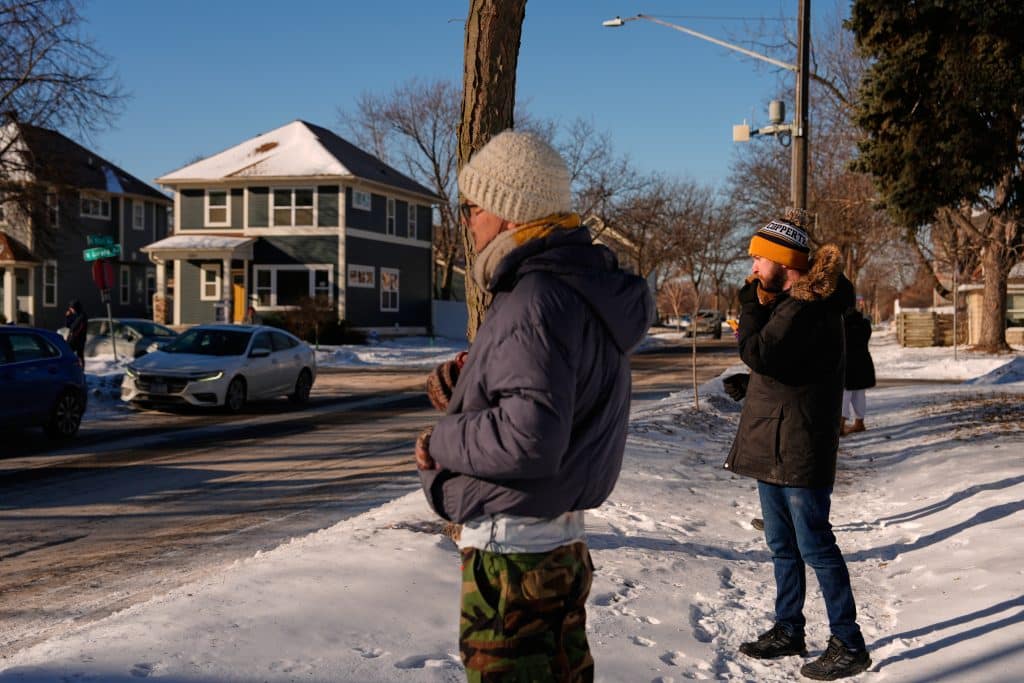
Life was getting in the way for me, and between work and family obligations, and I was mostly watching from the sidelines as my neighborhood took on ICE. I came up for air the week of January 19, and was finally able to jump into whatever this was. Organizers sent people on foot around a set of blocks; pairs in cars were assigned a larger square, and we all set out to melt some ICE. I went to my assigned corner and settled in to watch traffic, certain that I was not at all certain what I was looking for.
The thing about looking for groups of bad guys in SUVs is that suddenly every vehicle looks like a blacked-out SUV. Every contractor, every mom in a Tahoe with kids in back, and every commuter dad in a freshly-carwashed Grand Cherokee looks like it might hold a nervous pack of toxic camo’d and balaklava’d masculinity.
I sat through a chunk of rush hour, running the heat when the below zero cold outside started to chill my feet, watching left-turners wait for the arrow, watching buses let off riders and let in new transfers making their last connection. A guy sat in his car in the parking lot behind me, and I watched him until I decided he was … just a guy. I thought, this must be what a stakeout feels like. I saw at least 4 million dark SUVs in two hours, and I kept thinking “This is nuts.” I closed out my shift and planned to do it again in the morning.
At 9:26 Saturday morning, January 24, my phone pinged. “Request for observers at 26th and Nicollet. There’s been another shooting.” Disbelief and a tightening in my chest. Again?, I texted back. Again?
The thing about panic is that it narrows your field of vision, and your focus chokes down to a black point. The thing about not being able to act is sometimes because you just can’t figure out how to start. It was a hell of a time to feel panicked and paralyzed – here I was, my day finally clear enough to let me take action – and I had no idea what to do.
My partner was out of state with an ailing relative, and she immediately texted and told me to be careful. My phone pinged, and pinged and pinged again, video of the killing was going around within what seemed like minutes. My heart said go, my friends asked what was going on; one daughter said be careful, the other said carefully, “really, you need to be careful.” My wife cried when I told her I was heading out. And it began to sink in, I needed to do. something. and I needed to be very careful – and keep my own toxic male energy from getting myself killed. My loved ones were telling me to slow down, that someone with my same instinct to step in and defend against the invaders and injustice had just been shot. And I needed to think about what I was stepping into as I grabbed my keys, thermos of hot tea, and whistle.
We moved through 68 hours below zero temperatures over the weekend. It was a cold two days of staring at license plates, peering at drivers to see how many and were they masked, and “were there two in the back seat?” It was also friendly horns tooting when they saw us on watch. It was exhilarating, scary as hell, and it finally felt like we were doing something.
We got his name late Saturday afternoon, and started saying it out loud. At first just his, Alex Pretti. Alex Pretti. Then Alex Pretti and Renee Good. Then others in recent memory who had been killed by law enforcement: George Floyd, Jamar Clark. Philando Castile. Justine Damond. Leneal Frazier. And throughout, the feeling that none of us wanted to do this mourning again, and that no matter how loud we chanted, no matter how fervently we hummed the hymns, harmonized This Land Is Your Land, and stomped into the hip hop rhythm of ‘hey-hey ho-ho, ICE has got to go’, I don’t think we could really know if our light would ever outshine the dark that dimmed our city.
READ: Democratic AGs stress importance of citizen-generated evidence in challenging ICE
Friends worked protest memories into texts through the afternoon. Older friends remembered railing against The Saigon Execution, and assassinations of Robert Kennedy and Martin Luther King in ‘68. They still can’t believe the pain of Kent State and Jackson State murders in 1970. Distant memories for anyone younger than 60, touchpoints from another era. But here we were, living through the winter of 2025-2026, the year that ICE and Border Patrol invaded Minneapolis in real time.
When I heard Renee Good had been killed I was alone, and I choked a sob and remembered the uprising after George Floyd was murdered and thought, I don’t think I can do this again.
When I heard Alex Pretti had been shot – 10 times, hands on the street, face down, we found out later – I felt sick.
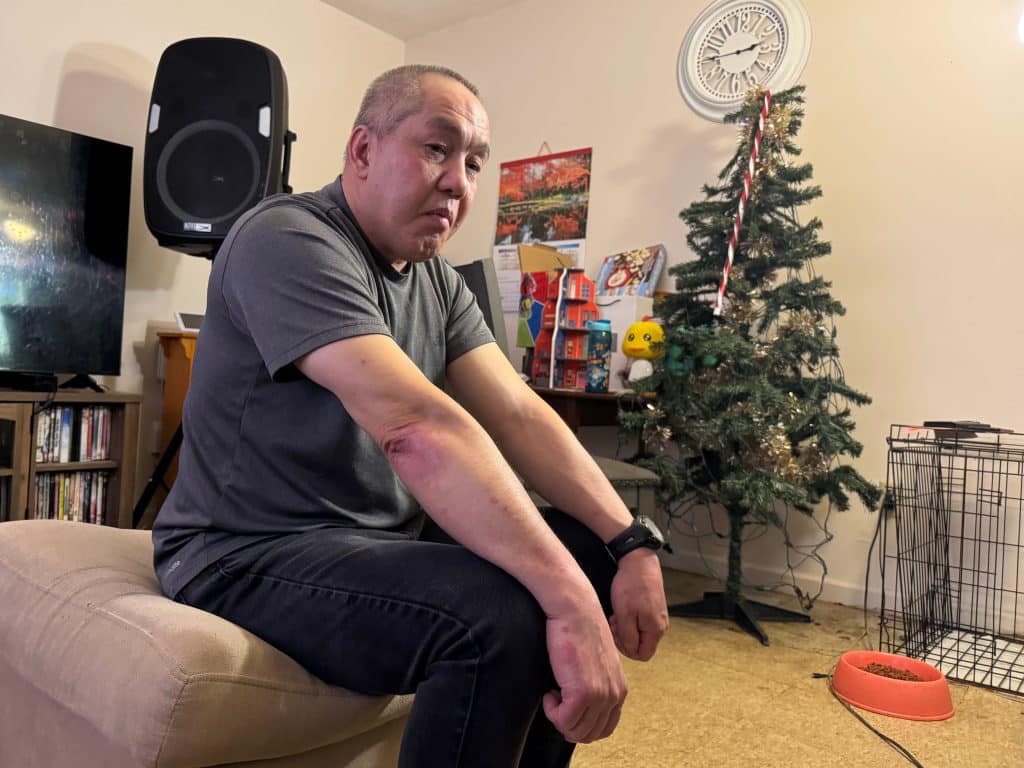
When I heard ChongLy Scott Thao – a U.S. citizen, son of the first Hmong-American nurse, a woman who cared for American soldiers during the Secret War – was led out into the Minnesota winter in shorts and Crocs, “as his 4-year-old grandson watched and cried,” I felt betrayal and anger.
In a quiet moment during conversation with my 90-year-old mother, I asked what she knew about what was happening in Minnesota. Not much she said, Fox hadn’t really been covering it. I talked with her about what was happening in my state, in my neighborhood. She looked at me with surprise, unable to grasp that this stuff in the news was happening in the Mayday Parade neighborhood. Finally I said, mom, you are a lifelong Republican, a Reagan conservative and a Bush hawk, and I don’t think this is the America you voted for. I told her I didn’t think she would recognize the party she had dedicated every election since 1968 to. I offered to let her dictate a letter to the Chicago Tribune that I could send on her behalf.
It’s too bad she died Monday morning. Cancer finally took her away.
I think I could have gotten her to let me send that letter. That would have been the most powerful thing I could have done with this narrow, black circle of panicked paralysis. Marching, singing, and scanning traffic for ICE SUVs feel good, but getting a Greatest Generation Republican to say the quiet part out loud would have been real power.