
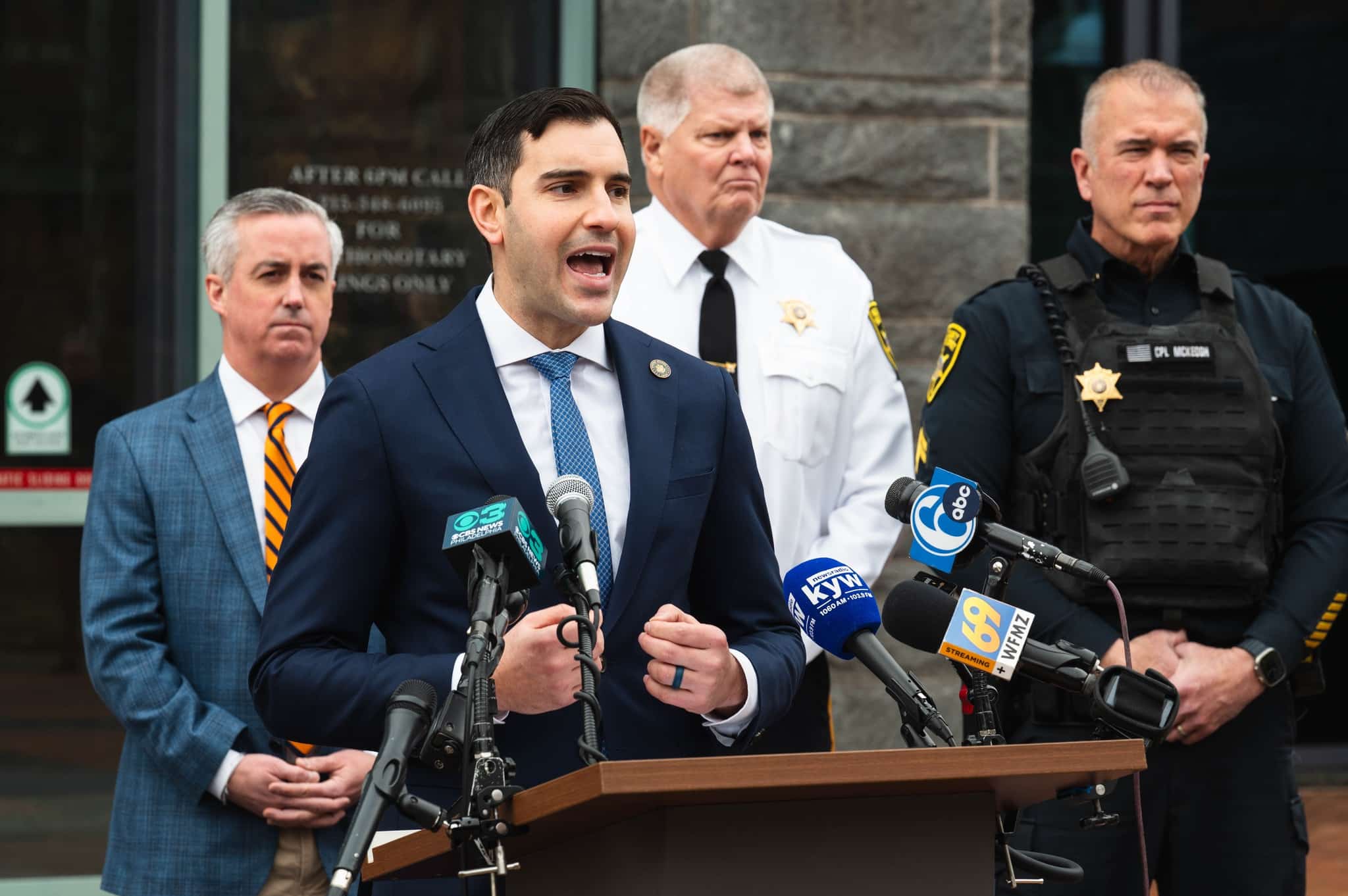
Local sheriff’s deputies will not be acting as de facto ICE agents as part of the Trump administration’s nationwide immigration crackdown, Bucks County’s new sheriff announced Wednesday at a press conference in Doylestown.
One week after being sworn in, Democrat Danny Ceisler kept a campaign promise by formally terminating his department’s ICE 287(g) agreement, ending a controversial partnership that had sparked widespread fear, opposition, and political mobilization across the county.
“My decision to terminate this partnership was based solely on public safety considerations and it is my belief that this action will restore the trust between tens of thousands of our residents and the brave officers who protect and serve them,” said Ceisler.
Ceisler’s predecessor, Republican Fred Harran, enrolled the Bucks County Sheriff’s Department in the “task force model” option of this nationwide program, which serves as a “force multiplier” by empowering trained deputies to challenge people on the streets about their immigration status and conduct sweeps as if they they themselves were immigration agents. The move drew immediate backlash from immigrant communities, immigrants rights advocates, and other local residents, – quickly becoming a central issue in last year’s election.
From the jump, Ceisler opposed the agreement, arguing that it was unnecessary and counterproductive. Voters agreed. Ceisler won in November by over 25,000 votes and a 10% margin.
“Immigrants are our neighbors, they are our friends, they are taxpayers, and they deserve the protection of law enforcement in this community,” said Ceisler.
He listened to “heartbreaking feedback” from leaders in the immigrant community which helped inform his opposition to the program.
“From the day this office signed up to have deputies perform immigration enforcement, immigrants began living in even greater fear than they were before,” he added.
That was a concern of Doylestown’s Heidi Roux, director of immigrant justice at The Welcome Project. When the Bucks County Beacon first broke the news of the agreement, she said it would undermine public safety by creating distrust and fear within the local immigrant community. Bucks County is home to more than 65,000 immigrants from Latin America, South Asia, India, Liberia, Ukraine, and other regions.
“Our immigrant community is also interested in reporting and bringing violent criminals to justice,” said Roux. “That is why it’s imperative to have a collaborative relationship with local law enforcement, so victims and witnesses feel comfortable coming forward and making our entire community safe.”
READ: Bucks County Commissioners Meeting Packed with Residents Fired Up Over Sheriff’s ICE Agreement
While former Sheriff Harran was not able to formally implement the program before losing his seat, even though he and 16 deputies received training, the heightened threat of local law enforcement acting as ICE agents created an environment in which many immigrants stopped calling 911, stopped reporting crimes, and avoided the courthouse altogether.
“We have seen good, law-abiding residents who are doing everything right to earn their citizenship, detained and deported by the Trump administration. When large numbers of our residents are afraid to call 9-1-1 or come to court and testify, that makes our entire community less safe,” said Ceisler. “This is not a public safety problem for immigrants, this is a public safety problem for everyone”
Jose, a local immigrant, told the Bucks County Beacon that this was definitely a problem he witnessed.
“While this is a necessary step toward restoring trust, it does not eliminate ICE activity in Bucks County, and our advocacy to protect civil and human rights will continue.” – NAACP Bucks County President Adrienne King
“Right now, if anybody sees a police car, they just want to hide. Nobody wants to talk to them, nobody wants to answer any questions,” he said.
For good reason. Just this week, an employee was taken from Jose’s workplace locally by agents he believes were ICE – with no warning or explanation.
“They just came to my work and took this man,” he said. “They saw someone speaking Spanish, someone who looks Spanish, and picked him up. He couldn’t defend himself, and there was nothing that we could do. Helpless is the best way I can describe how we’ve been feeling.”
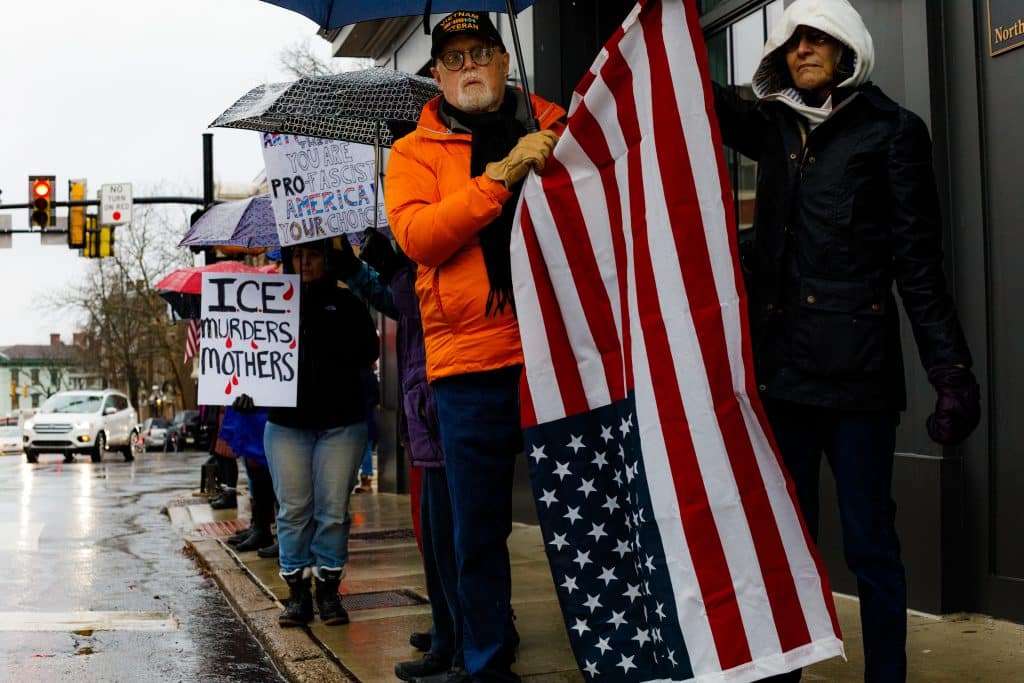
Barbara Simmons, Executive Director of the Peace Center summed up how many residents are feeling about the end of this proposed ICE partnership: “relief and hope.”
“When we watch the actions of ICE in places such as Chicago, Portland, Los Angeles, they have been used to intimidate innocent people. If our immigrant neighbors don’t feel safe, then none of us can feel safe,” said Simmons. “When my hard-working neighbor is afraid to go to work, that impacts the family and local business. No one wins.”
Adrienne King, President of NAACP Bucks County, acknowledged that even without 287(g), concerns about ICE activity remain.
“Ending the involvement of 16 deputies is not symbolic; it removes a direct pathway for racial profiling, fear-based policing, and the erosion of community trust,” said King.
While there is relief that 287 (g) has been terminated, Sheriff Ceisler noted that Bucks has not become a “sanctuary county” and there will still be ICE presence. Even if he wanted to, he could not unilaterally keep ICE completely out of the county.
“While this is a necessary step toward restoring trust, it does not eliminate ICE activity in Bucks County, and our advocacy to protect civil and human rights will continue,” King added.
Even without 287 (g), ICE will continue to have access to the County jail and individuals convicted of serious crimes will continue to be deported through established legal processes. The Department of Corrections will also continue to share information through the LiveScan fingerprint system, as it has for decades.
“While these steps are important to the safety of all our residents, they do not end ICE activity in our are,” said Indivisible Bucks County’s Laura Rose, who like others celebrated Ceisler’s decision, but recognizes the ICE threat is not completely gone. “In light of the January 7 murder of Renee Good and the extreme measures we are seeing from ICE enforcement officers in other communities, we will continue to push for transparency, accountability, and policies that protect the civil and human rights of all our neighbors.”
What will change is the role of sheriff’s deputies in the community. Under Ceisler’s order, deputies will no longer be trained to perform immigration enforcement. Additionally, law enforcement agents are now explicitly prohibited from asking crime victims, witnesses, or court observers about their immigration status. Ceisler hopes this additional guardrail will help restore trust and ensure residents are not afraid to seek help or participate in the justice system.
READ: Will Pennsylvania Unmask ICE Agents in 2026?
“To the members of our immigrant communities,” Ceisler said, “you are safe to call 9-1-1. You are safe to report crime. You are safe to come into this courthouse and testify.”
Weeks before Ceisler’s announcement, Doylestown Borough passed a resolution affirming noncooperation with ICE, reflecting a broader local understanding that community safety depends on trust, not fear.
For advocates, the end of 287(g) is an important step in ensuring immigrant communities feel safe engaging with law enforcement.
“Ending the 287(g) agreement was essential to rebuilding our relationship with local law enforcement,” Roux said. “All relationships are based on trust.”