
Written by Jennifer Saul, University of Waterloo and Tim Kenyon, Brock University
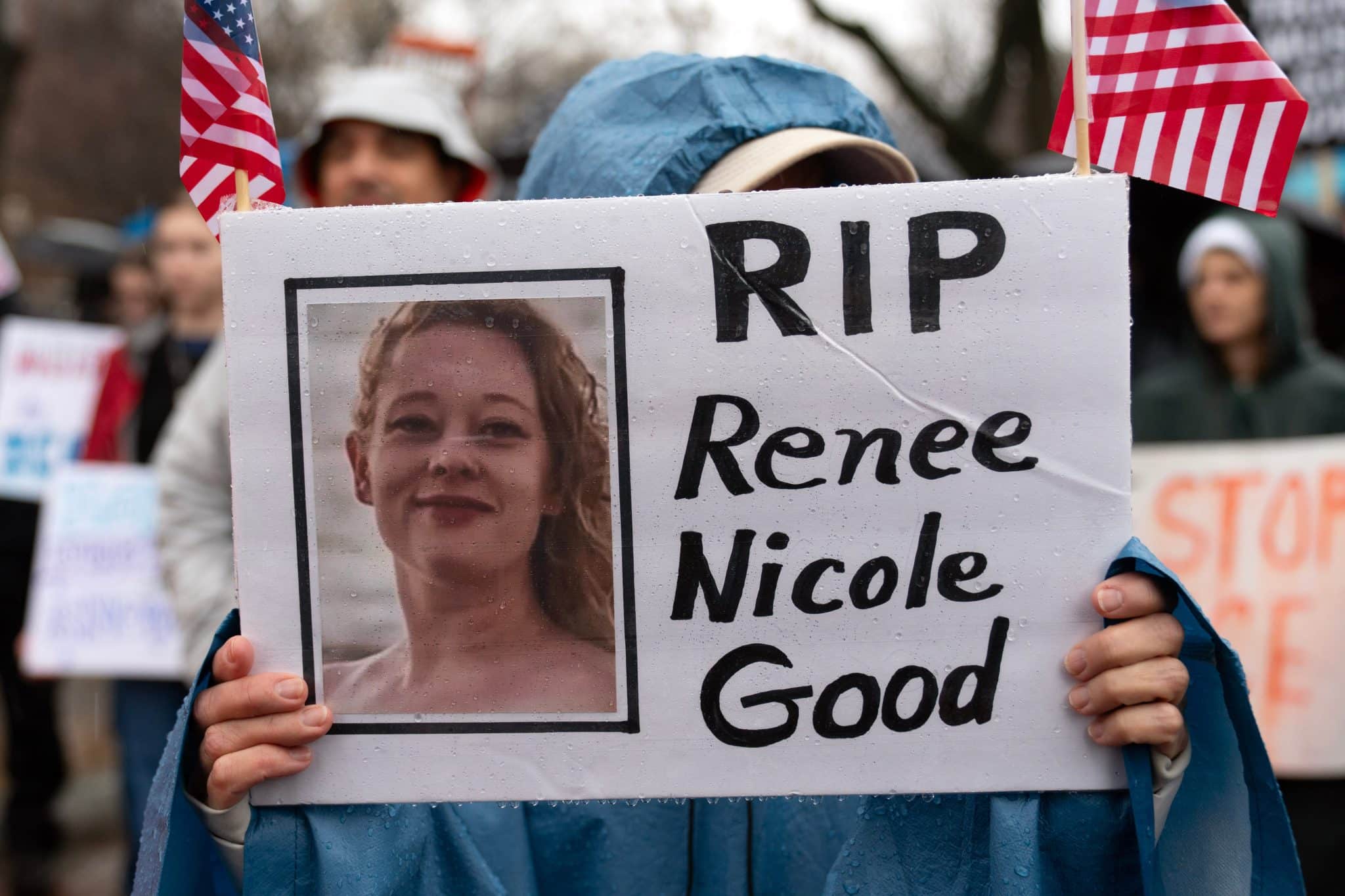
By now, many of us have probably seen the video of a Minneapolis woman whose last words were a calm “It’s fine, dude; I’m not mad at you,” before she was shot three times in the head as she turned her car to drive away from an Immigration and Customs Enforcement (ICE) agent.
U.S. President Donald Trump claimed that Renee Good “violently, willfully, and viciously ran over the ICE Officer, who seems to have shot her in self defense.”
Vice-President JD Vance declared “the reason this woman is dead is because she tried to ram somebody with her car… You have a woman who aimed her car at a law enforcement officer and pressed on the accelerator. Nobody debates that.”
These statements, and others that doubled down on them, were made even as videos showing they were clearly false were in wide circulation.
It’s puzzling. Why lie in a situation like this? Who can you hope to deceive, when evidence falsifying your statements is freely available?
Seeing is not believing?
Our work on authoritarian public discourse stresses that there are multiple answers to this question, partly because there are many different audiences of mass communication. We need to come to grips with the multiple functions of obvious falsehoods like these to understand why they are made so often and so prominently, and how they serve authoritarian leaders.
First, something that seems obvious to you can be credible to others. How? Because in an era of algorithmic news feeds, we are not all getting the same news. Those with a newsfeed of nothing but MAGA influencers are in a different epistemic bubble from other people.
And they may well be in an echo chamber, in which opposing voices are so discredited that when an alternative narrative reaches them, it’s immediately dismissed.
Millions of people may not have seen the videos of the incident at all, or may have seen versions with instructions on how to interpret the visuals: she’s not turning around, she’s backing up in preparation to ram into the shooter; she’s not calmly indicating that she isn’t a threat, she’s refusing to comply with orders.
Videos of police using force often have this dual nature: they can document and prove wrongdoing; but they can also be used to train citizens to see threats where there are none.
Authoritarian tactics
Some people will find the lies too obvious to be plausible attempts at deception. Yet bald-faced lies are important in strongman politics.
Authoritarians can display their power by asserting obvious falsehoods, showing that they cannot be held to account. They also play to their base by showing contempt for a shared enemy, while demanding displays of loyalty and compliance from underlings.
Officials are forced to engage in the humiliating ritual of repeating what we call compliance lies. Think here of White House press secretary Sean Spicer at the start of Trump’s first term, forced to defend absurd lies about Trump’s and Obama’s inauguration crowds.
At the time, this may have seemed merely buffoonish. What’s happened since illustrates how dangerous this can be as the subject of the lies has changed to matters concerning life and death.
Other people may simply become confused by obvious lies. The competing interpretations of the Minneapolis video are diametrically opposed. Once news sites and social media feeds are sufficiently populated by these opposing views, it can feel like an overwhelming task to discern what’s really true.
And exposing a lie still doesn’t end its influence. It is easier to create an opinion with a lie than to undo that opinion when the lie is debunked, something known to psychologists as the continued influence effect.
Filling social media feeds with falsehoods to create confusion is a crucial part of the strategy that Steve Bannon, a Republican strategist and former Trump adviser, called “flooding the zone with shit.” This can leave people unsure of who to trust, what to believe, or even what the issue really is.
‘Both sides’ reporting
Relatively savvy and good-faith entities can be used as instruments of this strategy. In the name of neutrality and balance, centrist news media can fall back on a “both sides” model that frames stories mainly in terms of what each side is saying.
When one side commits to obvious lies, this approach obligingly repeats those lies while outsourcing the fact-checking to the opposing side, as if it were merely a partisan dispute.
These dueling narratives can then become the story. The strategy to lie shifts focus away from the shooting itself, in this incident, and onto the alleged controversy.
In other words, obvious lies aren’t necessarily failed lies. They can confuse, distract, excite and intimidate a range of audiences. They can also be believed, no matter how obviously false they seem.
To treat them as mere indications of shamelessness or incompetence on the part of the liar is to overlook the serious harm they can do and the appeal they have in authoritarian politics.
Jennifer Saul is Chair in Social and Political Philosophy of Language at University of Waterloo and Tim Kenyon is Professor and Faculty of Humanities at Brock University.
This article is republished from The Conversation under a Creative Commons license. Read the original article.