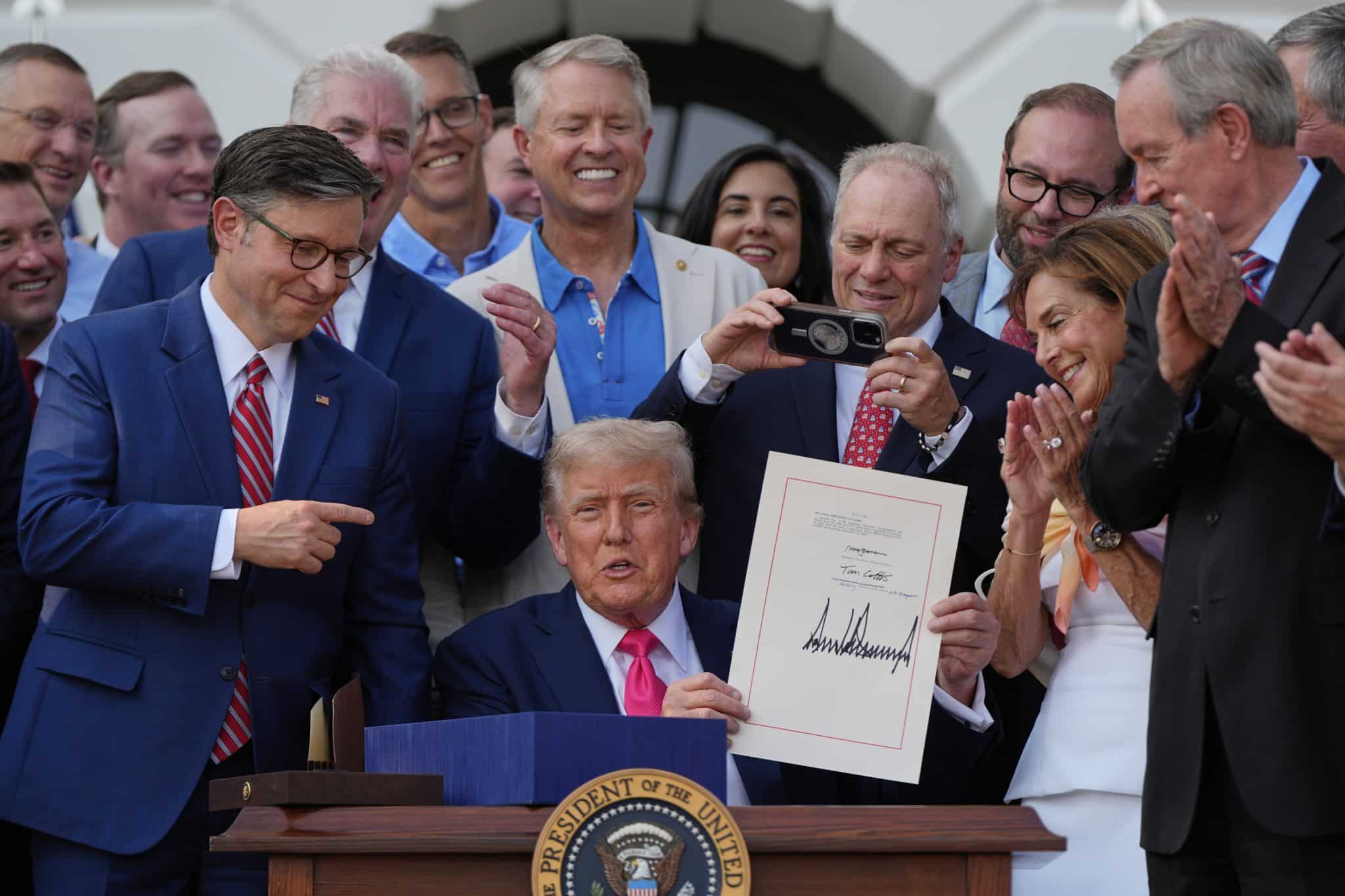
The release Tuesday of 24 interactive maps illustrating the impacts to kids and families thanks to the Trump Administration’s “One Big Beautiful Bill” Act (H.R. 1) highlights unprecedented hardships kids and families across the commonwealth are expected to face.
Pennsylvania Partnerships for Children released illustrated data projecting coverage losses, reduced food assistance and the impacts to families directly resulting from last year’s passage of H.R. 1 and federal program cuts to Medicaid and the Supplemental Nutrition Assistance Program (SNAP).
“The new maps show the harsh reality for families in PA-01 as a consequence of H.R. 1 – thousands could lose Medicaid coverage and SNAP support. For children, this is especially dangerous as the school year ends because without school meals, SNAP becomes even more critical,” said Lucia Simonelli of Quakertown in an email.
Simonelli is running in the May Democratic primary for a chance to unseat Republican incumbent Brian Fitzpatrick in November’s midterm elections.
READ: VIEW THE MAPS
Fitzpatrick represents PA-01, which covers all of Bucks County and a small portion of Montgomery County.
“Let’s be clear about who’s responsible for this: Rep. Fitzpatrick was instrumental in making this bill law. While he voted against the final version, he didn’t fight against it, and in fact, voted to advance it when it counted. Families in our district will live with the consequences of his actions, despite his attempts to distance himself from responsibility,” Simonelli said.
H.R. 1’s cuts to Medicaid and SNAP will impact health care access, food security, and economic well-being in every corner of the state, the Pennsylvania Partnerships press release said.
“Brian Fitzpatrick had a chance to protect the families and communities of our district from Trump’s ‘big beautiful bill.’ He failed,” said Bob Harvie in an email.
Harvie is a Bucks County commissioner and a Democratic candidate facing off against Simonelli in May.
According to Pennsylvania Partnerships:
- Medicaid is the single largest insurer of children. More than 1.1 million Pennsylvania children rely on Medicaid or 40% of all children in the state.
- SNAP is the most extensive child anti-hunger program in the nation. Over 309,000 SNAP households in Pennsylvania include children, making kids among the most vulnerable to food assistance cuts.
Cuts to Medicaid and SNAP are expected to have significant impacts on household budgets, the ability to afford health care and new work requirements imposed on those who remain enrolled in the programs.
The resulting strain the cuts will place on local hospitals and retailers according to county, state house and senate legislative district demographics is also showcased on the Pennsylvania Partnerships map.
“When you gut Medicaid and SNAP you gut the hospitals, clinics and local grocery stores that entire communities depend on. These maps show hospitals across Pennsylvania are at risk of closing or scaling back services. If we lose those institutions, we don’t get them back. The ripple effects touch everyone, whether you’re on Medicaid or not,” Harvie noted.
The new maps will provide advocates, policymakers and community officials “a never-before-seen look at what is at stake in their own communities,” the press release said.
“These maps aren’t just numbers in a report; these maps illustrate the choices working families are going to have to make about whether to pay for a doctor’s visit or put food on the table.” – Democrat Bob Harvie
“Behind every data point is a child, a parent or a neighbor whose health and food security depend on these programs. These maps make it impossible to overlook the real, local consequences of federal and state funding decisions,” said Kari King, president and CEO of Pennsylvania Partnerships for Children.
Pennsylvania Partnerships for Children is a statewide, independent, non-partisan, non-profit organization working for public policy change to help children learn, thrive and succeed.
“These maps aren’t just numbers in a report; these maps illustrate the choices working families are going to have to make about whether to pay for a doctor’s visit or put food on the table,” Harvie added.