This article was originally published by Votebeat, a nonprofit news organization covering local election administration and voting access.
An attorney who represented a Pennsylvania county as it attempted to investigate the 2020 election is facing possible suspension or disbarment.
Thomas Carroll, an attorney from the Lehigh Valley, represented Fulton County in a long-running dispute the county had with the Pennsylvania Department of State and a voting equipment manufacturer.
Now, the Pennsylvania Disciplinary Board, which regulates lawyers’ conduct, says Carroll should face consequences for the “bad faith” way in which he represented the county.
“[Carroll] used means that had no substantial purpose other than to delay and burden the parties, the Special Master, the Supreme Court of Pennsylvania, and the courts,” the March complaint from the Office of Disciplinary Council alleges.
Carroll told Votebeat he was confident he would prevail against the charges at trial.
“My clients were weaponized against for exposing national security evidence,” he wrote in an email. “The special master referred me in part to the bar for seeking a continuance due to breaking a rib and being on prescribed narcotics as a result. The truth will prevail.”
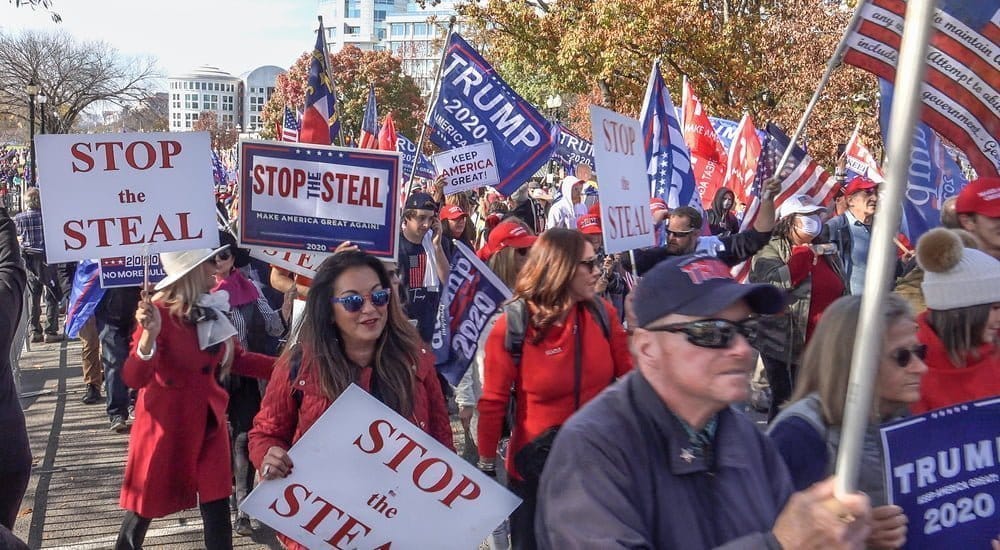
After the 2020 election, which was won by Democrat Joe Biden, two Republican Fulton County commissioners began trying to investigate the results following a push from allies of President Donald Trump. As part of that investigation, they allowed an outside company to examine and download data from the county’s voting equipment.
The Pennsylvania Department of State, alarmed that a third party had accessed the county’s equipment, decertified it and sought an order from the state Supreme Court to prevent the county from allowing any other outside entities to examine the equipment. The court granted the order.
After that order was issued in early 2022, the county brought on Carroll as an attorney in the ongoing dispute. That summer, the county allowed another company to examine its equipment. As a result of that and the county’s overall conduct during the case, the state Supreme Court imposed substantial fines and issued a strong rebuke against both the county and Carroll.
“Despite being given every opportunity to participate in good faith in the proceeding, Attorney Carroll incessantly transgressed the bounds of zealous but ethical advocacy,” Justice David Wecht wrote for the court’s majority in 2023.
Justice Kevin Dougherty went a step further in his concurring opinion and specifically recommended the Pennsylvania Disciplinary Board investigate Carroll’s conduct, which he called “especially concerning and problematic.”
In its complaint, the disciplinary board alleges several actions by Carroll that it says violate rules Pennsylvania attorneys are bound by.
For example, despite being hired by the county in April 2022, Carroll filed a motion in late July of that year after the county had missed the deadline to file a brief, saying he had “just appeared in this case.” He asked for an extension, which was granted, but he also missed that deadline.
That fall, when the Department of State was seeking to have the county held in contempt for allowing a second inspection of its equipment, the disciplinary board alleges Carroll repeatedly made “frivolous” filings and failed to inform the courts, or his clients, of relevant information.
The complaint also alleges that on Nov. 7, the day the county commissioners were scheduled to give depositions, Carroll filed a motion to delay those depositions. He argued that an outage in the state’s election management system would prevent the commissioners from testifying — even though the issue had occurred three days prior and had already been resolved.
When that request was rejected, Carroll told the Department of State the commissioners could not appear for the depositions or a hearing two days later. He explained in a subsequent filing that was in part because of their responsibilities running the 2022 election, even though they knew the election’s date when the depositions were agreed to.
The state Supreme Court also noted that Carroll did not notify the Democratic commissioner of her scheduled deposition, which “exposed her to sanctions and even arrest.”
The disciplinary board alleges that Carroll violated 11 different parts of the professional rules of conduct, including sections that involve making false statements and intentionally disrupting proceedings.
Carroll, in a response filed by his attorneys, denied the allegations and said he was not acting in “bad faith,” as the court alleged, but rather “zealously” representing his clients. He also noted the long period between when the Supreme Court recommended the disciplinary board seek sanctions against him and when they were actually filed.
“The unreasonable delay in prosecution of this matter has caused actual, concrete prejudice to Respondent’s ability to defend himself against the 241 factual averments in the Petition, which concern fast-paced events that occurred in 2022 and 2023,” Carroll’s attorneys wrote. “Respondent has been forced to practice law for nearly three years under the cloud of an unresolved disciplinary referral, which constitutes an unadjudicated sanction in itself and has caused significant personal, emotional, and professional harm.”
READ: Flood of Poll Watchers, Observers, Monitors to Descend on Midterm Voters
Bob Davis Jr., a Harrisburg-based ethics attorney who has practiced before the Pennsylvania Disciplinary Board, said the fact that the disciplinary proceeding was prompted by a rebuke directly from the state Supreme Court is significant.
“I think if the Supreme Court says that, I think you can very likely expect there is a case there,” he said.
Davis said a panel of three lawyers from Carroll’s part of the state will consider the case and present a finding to the disciplinary board, which will make recommendations on discipline to the Supreme Court. If Carroll is found to have violated any of the professional rules of conduct the disciplinary board is alleging he violated, Davis said he expects the recommended disciplinary action would range from suspension to possibly even disbarment.
A hearing on the allegations is scheduled for Feb. 25, 2027.