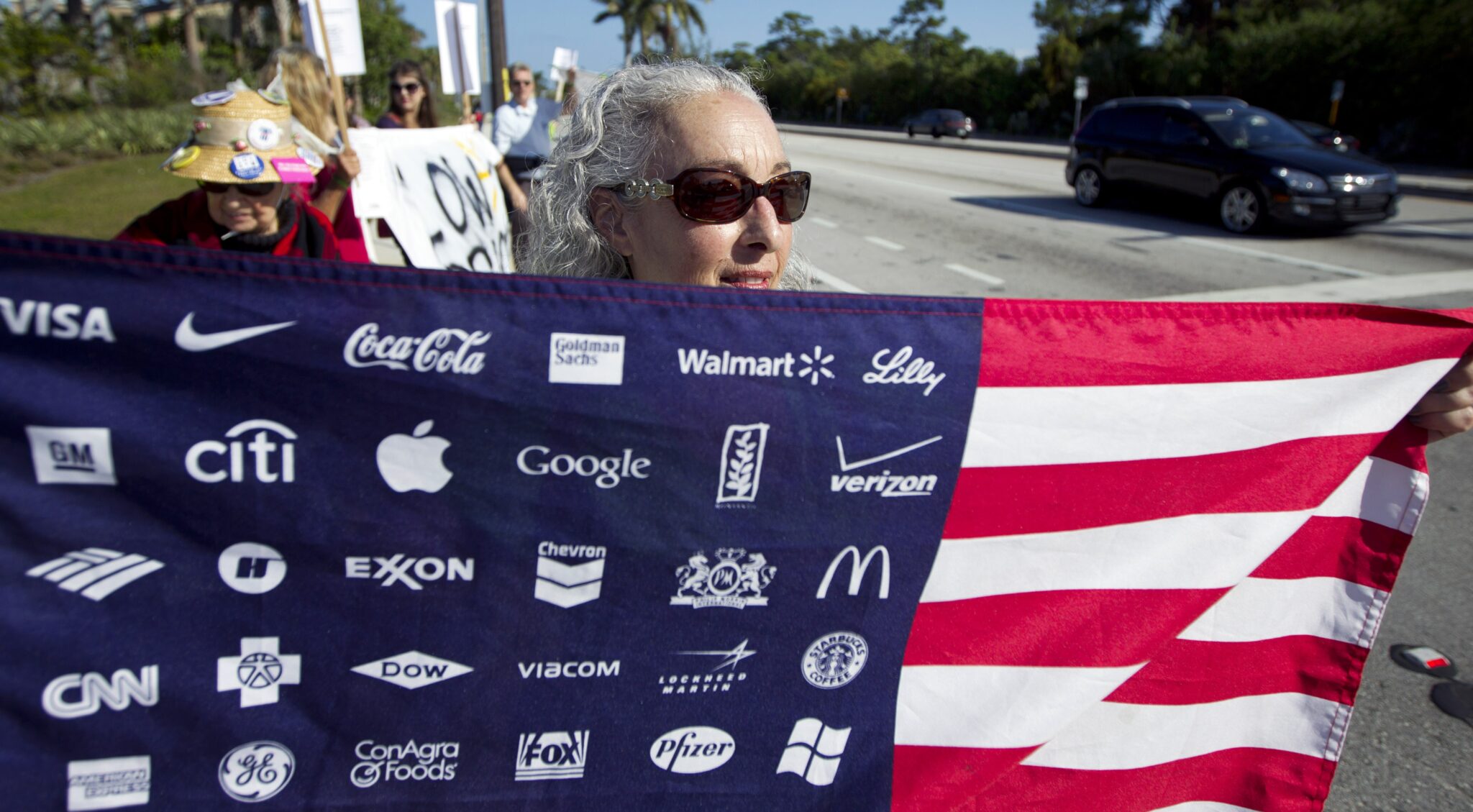
One of the greatest frustrations I had during my eighteen years representing the great state of Montana in the U.S. Senate was watching, in real time, the ever-increasing flood of corporate money poison our political discourse.
Washington couldn’t—or wouldn’t—fix the problem unleashed by the Supreme Court’s 2010 decision in Citizens United, which allowed unlimited independent spending on elections by corporations and unions on free speech grounds. But now there’s a quiet revolution happening in the states that could finally take corporate money out of politics. And I’m proud that my home state is helping lead the way.
This fall, Montana voters will have a chance to approve what’s known as the “Montana Plan,” a novel ballot initiative that would redefine corporate powers in our state. It’s based on a simple premise: The state has always had the authority to dictate a corporation’s powers, and it has the authority to change them. If the ballot measure passes, spending money in Montana elections will no longer be one of those granted powers.
The Montana Plan ballot initiative would prohibit electoral spending by corporations across the board, from the state’s chamber of commerce and labor unions, to out-of-state and in-state companies, to all varieties of nonprofits. No person will be forced to give up any of their First Amendment rights; every Montanan will be able to speak, publish, give, organize, and vote. All that will change is that corporations will get a little less powerful.
Enactment of this measure is not precluded by Citizens United. That ruling considered what restrictions the government may place on corporations that already hold the power to spend in elections. But it never held that a state must grant corporations the power to spend in the first place. No court ever has.
READ: Pennsylvania House Democrats Just Introduced a Bill That Could End Dark Money in Our Elections
This plan, first envisioned by the think tank Center for American Progress, is such a good idea that it has since sprouted elsewhere while it takes root in Montana. Hawaii legislators were so inspired by what we were doing that they passed their own version into law in May, with bipartisan support. Nineteen other state legislatures took up versions of the bill this year. (The Hawaiian bill will not take effect until July 2027, while the Montana Plan, if passed, would be effective on January 1.)
Looking back, I spent much of my Senate career trying to stem the torrent of corporate money in politics. This included writing the Spotlight Act requiring exempt organizations like unions and some nonprofits to disclose all substantial contributors, backing the DISCLOSE Act to rein in campaign spending, and supporting a constitutional amendment to overturn Citizens United directly. But, in each case, the profusion of cash always won. It’s incredibly satisfying to see a real solution now arising in the states.
The Montana Plan ballot initiative would prohibit electoral spending by corporations across the board, from the state’s chamber of commerce and labor unions, to out-of-state and in-state companies, to all varieties of nonprofits.
Passing this ballot initiative on November 3 would, in many ways, return to the ideals that Montana held for a century before the Citizens United ruling. In 1912, at a time when my grandparents were homesteading their Montana farm, the state passed the Corrupt Practices Act, which imposed limits on corporate money in politics, usurping the ability of the state’s powerful copper industry to buy off legislators, judges, and newspapers.
READ: AI Super PACs Are Unleashing Millions to Tilt Primaries in Their Favor
In short, Montana cleaned up its own politics without waiting for Washington, D.C., to act or a court to grant permission.
The current Montana Plan is built of even sturdier stuff, using a tool only Montanans can wield: amending our state’s laws to give corporations the powers we decide they should have. If we decide to no longer grant corporations the power to overwhelm our politics, that’s our decision to make.
This column was produced for Progressive Perspectives, a project of The Progressive magazine, and distributed by Tribune News Service.