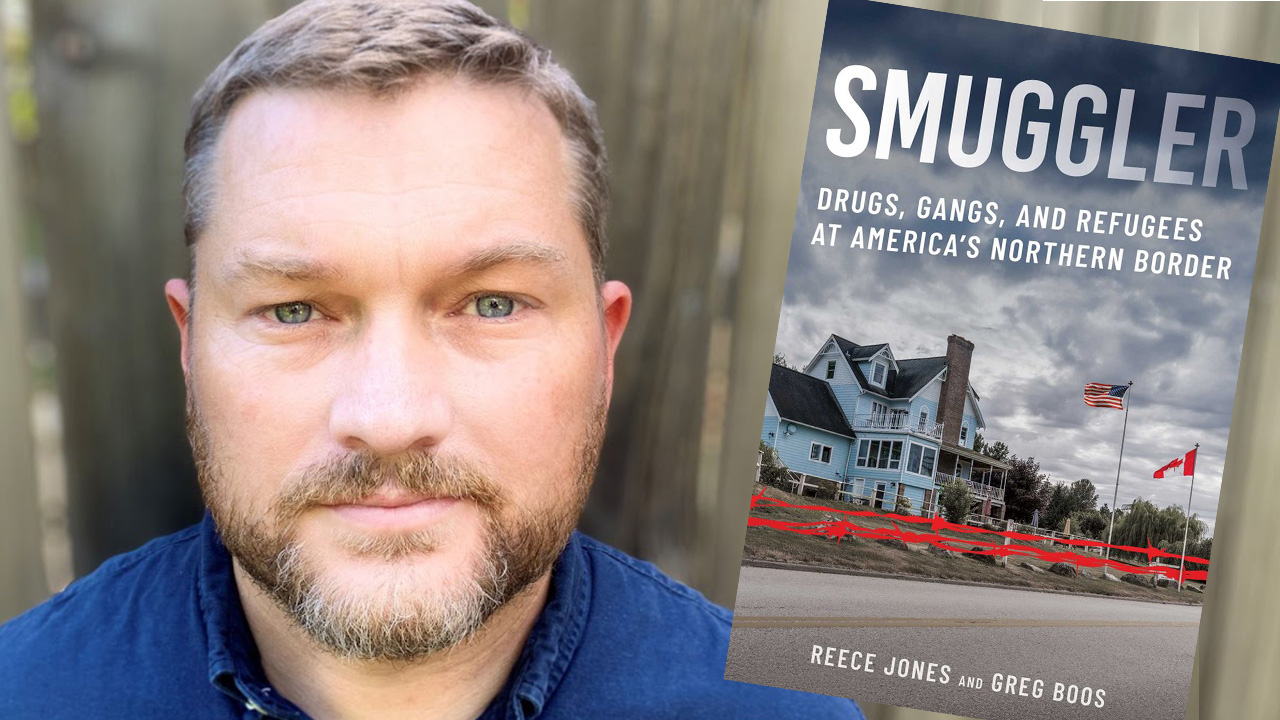
One of the most important books to be released in 2026 is Reece Jones’ SMUGGLER: Drugs, Gangs, and Refugees at America’s Northern Border. It’s the true life story of a man that lived along the Canadian border who became the center of what would become one of the most important Supreme Court cases of our lifetime.
The “Smuggler” in Reece Jones’ new book is Bob Boulé, a conservative Republican who bought a bed & breakfast and quickly discovered that his new home and business was an important route for refugees to get into Canada. Bob found himself in a moral and financial quandary – help the refugees at the risk of getting arrested or report them and lose their business. He ended up splitting the difference, helping over 1,000 asylum seekers cross into Canada over 15 years and working with Border Patrol and Homeland Security Investigations to stop drug smugglers. Until one Border Patrol agent decided he had a problem with Bob.
Jones and his co-author Greg Boos weave a compelling tale of Boulé’s struggles dealing with the ever evolving legal and political struggle of dealing with Homeland Security and the US border.
Smuggler walks that perilous line between true crime thriller and informative nonfiction text. The book has already been optioned by HBO Max for a potential series.
Jones also wrote the vital book, Nobody Is Protected on the history of the US Border Patrol that forewarned everything that is happening right now, so you shouldn’t miss his followup that humanizes the story.
The last time we spoke was for Nobody Is Protected, before this current Trump administration.
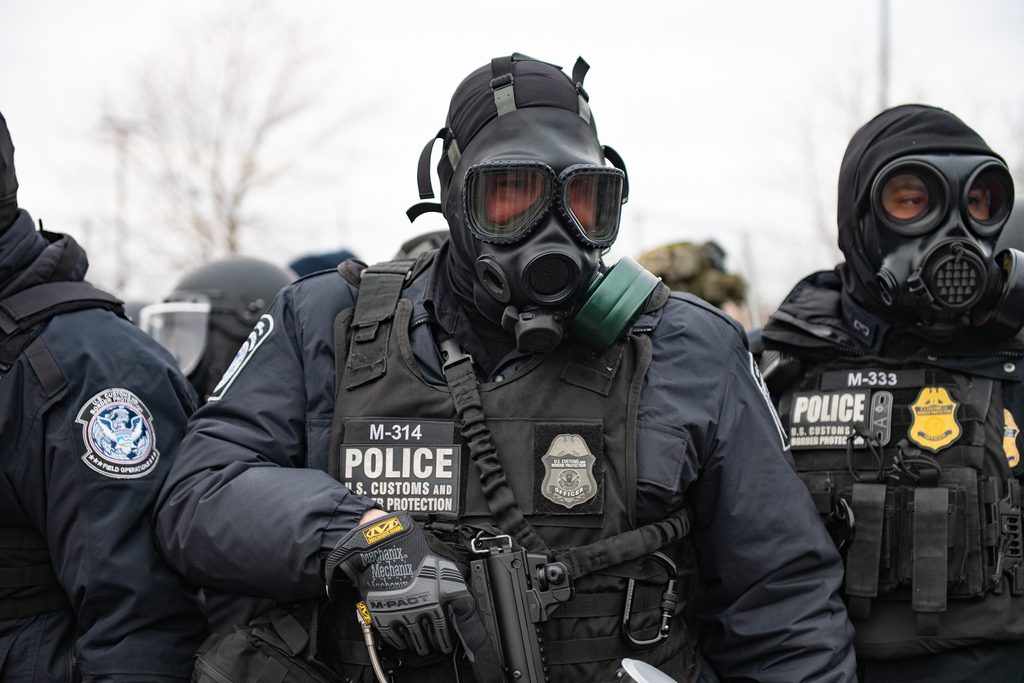
It’s been pretty disheartening to have the title of that book be proved so clearly, so quickly after it was published. As we’ve seen in Minneapolis and Houston and all kinds of cities across the United States, it’s proving to be true that there are very few checks on immigration officials inside the U.S., and that those things were granted by the Supreme Court in the 1970s and have been continued to be expanded in the decades since then.
That’s resulted in a situation where they can more or less do what they want with very little oversight onto it. And it puts not just immigrants, but citizens, everybody at risk.
The Border Patrol hasn’t always been this behemoth of an organization.
In the 1970s, there were about 1,500 Border Patrol agents when the key Supreme Court cases happened. That laid out the parameters for what we’re seeing today, which is stops with very little justification needed. They have a lower standard than regular police do to make a stop for a vehicle or an individual. They also can use racial profiling as one factor, among others, to decide when to stop people. And there’s mountains of data that suggest that people of color are far more likely to be stopped and talked to by the Border Patrol than anyone else is. Now there is a large agency, over 20,000 agents in the Border Patrol and also maybe more than that with ICE.
So why start with Bob Boule’s bed and breakfast, the Smugglers Inn at the beginning of your book.
I hope that our [readers] will realize this is not a dull legal tome. This is a truth is stranger than fiction book. I was drawn to it because of the Supreme Court case.
It turns out that this guy, Bob Boule is just a crazy character. He’s flamboyant. He’s larger than life. And he likes a lot of attention. But he also, over the course of the book, makes a quite profound transition in his beliefs. So he starts out he’s a conservative businessman in this kind of midlife crisis around the year 2000. His previous businesses selling Washington apples and cherries goes bankrupt. And he’s like, what am I going to do with my life? And so on a whim, he buys this house directly on the border. He thinks he’s going to flip it, you know, and sell it as real estate.
But he realized he kind of likes it, and he decides to open it as a bed and breakfast. So in the year 2003, when he opens this bed and breakfast. He’s always voted for Republicans. He listens to country music. He’s a quintessential conservative. But right from the start, these refugees start to show up at this place, and he hears their stories, and he kind of starts to have sympathy for them. He realizes that his beliefs about politics don’t match with his real life experience. And so, kind of the central question of the book is like, what is he going to do about that?
One clear lesson of it is that people can change. And I think a second lesson of it is exactly what you just said, how do people change? They have face-to-face interactions with people. I think that seems to be what we increasingly are getting away from in our lives.
Spoiler, he does decide to help the refugees. [Has asks himself], how far is he willing to go? Is he willing to risk his business? Is he willing to risk his life? Is he really to go to prison for this?
And the answer turns out being yes to all of those. So it’s this big transition that he has. And so the story around this is kind of conflict between him wanting to be law abiding [and helping refugees.] He works as an informant originally for the Border Patrol and later on for Homeland Security Investigations, but at the same time, he’s helping over a thousand people to cross over the border in the dead of night to get asylum in Canada.
So it’s these kind of juxtaposition of those positions. And when he’s assaulted in 2014 by a Border Patrol agent, he’s protecting an asylum seeker. So he puts his body in between a Border Patrol agent and asylum seeker and gets thrown to the ground in that altercation. And that’s where the eventual Supreme Court case [Egbert v. Boule] emerges out of.
It’s a really positive story in the end on how people can change, and grow with empathy.
Yeah, absolutely. I mean, to me, that’s one thing. One clear lesson of it is that people can change. And I think a second lesson of it is exactly what you just said, how do people change? They have face-to-face interactions with people. I think that seems to be what we increasingly are getting away from in our lives. Right? We’re living these online lives siloed into these, these kind of communication containers where we only hear the same views as the ones that we believe. And what I found in my research over and over again is this fact that if we could get people to talk to each other in person and actually meet another human being, that’s how people change their minds about things.
READ: The Sanctuary Movement and Immigrant Solidarity from Reagan to Trump
It actually bookends back pretty well to my original work. My first big project was working on border walls, and I went to Israel, India and the US-Mexico border, and I talked to people who lived in places where there wasn’t a wall. And then after the wall went up, what their experience was. And over and over again, that was the biggest change for them. That was before we knew the people over there. They were our friends. We talked to them. It was great. Once this wall went up, we’re cut off. We can’t see them anymore, right? We don’t know who they are. And it’s easier to believe these stories about how dangerous they are. So, I think this story does that same thing in the other direction, right?
That the walls were there. But then once those face-to-face interactions happened almost by accident, it’s not like Bob, you know, intentionally went and did this, but it kind of fell into his lap in a way. And he changed his mind. Right. And so I think there is some hope in that.
“Bivens v. Six Unknown Named Agents of Federal Bureau of Narcotics” is an incredibly important court case that I don’t think I heard about until I read you last book Nobody Is Protected. Can you give us a bit of back story on that one?
So we’ll have to take a little step back and let me give you a little history of these things. Back in the 1870s, in the reconstruction period, Congress passed a civil rights Act that created avenues to sue government officials for violating your constitutional rights.
This was in the Ku Klux Klan era. And so, the law says that you can sue state officials and local officials for constitutional violations. Because, at this time, the federal government was more or less upholding the Constitution. And there were a number of state actors in the South that were not. This was a way to give people the ability to sue those state actors. But what that does in effect, though, is it excludes federal officials from that. So there’s this gap, that under that set of laws, you can’t sue federal agents directly.
So in the 1970s, there was this case, 1971 Bivens versus six unnamed federal agents. This guy Bivens had had his house searched, unjustifiably, and he sued them. And the Supreme Court decided that, yes, there was this special mechanism for particular constitutional violations that would allow people to sue federal agents. And so they created it for the Fourth Amendment in this 1971 decision. In 1979 and 1980, they extended it to the fifth and the eighth amendment of the Constitution. And then after that, though, they’ve kind of gotten cold feet about this. In the decades since then, the Supreme Court has decided that they think that that was a mistake because essentially, they created a judicial remedy for something that really should be a legislative remedy. So since then, they’ve essentially said that “We made a mistake. We shouldn’t have done this.” And instead what should happen is Congress needs to fix section 1983 of the US code and add federal agents to it. Right. And if Congress wants to do that, then they will. If they don’t want to do that, then it’s not up to the courts to make that decision.
So the Egbert v. Boule case in 2022 was kind of the final one of these because it is so analogous to the original 1971 case that there was essentially no way that you could argue that it’s not. So [Justice] Gorsuch at the time, said, “if the costs and benefits in Boule’s case do not justify a new Bivens action on the facts so analogous to Bivens itself, it’s hard to see how they ever could.” And so the result of Egbert v. Boule is essentially to say there is currently no mechanism to sue federal agents for violating your constitutional rights.
It’s a great story, and you splice in so much history and needed information – but what would you hope comes out of the release of the Smuggler?
If you’re looking for a solution to this issue, there are some legislative ones. Right? The Supreme Court has said that this problem is for legislatures in Congress. Some Democrats have been putting forward and act that they call the Bivens act, which would solve this problem. And all it involves is adding five words to the existing law.
Right. If they just need to insert of the United States or before the part that talks about the state and local officials, that would solve it. But secondly, a number of individual states in the interim have been putting forward their own laws to solve this.
So these are called, counter 1983 laws that create state mechanisms to allow people to sue for constitutional violations. So Illinois has passed one of these. New York has passed one of these. And a few states have their own civil rights acts that already create a mechanism that allows for that as well. So Maine and California have that already. So one thing that could definitely be done, even while Trump is in Congress and the Republicans probably have the Senate, is to do these state laws.
And so a lot of local legislatures need to put forward their own Bivens acts that create these mechanisms to use state law to sue for constitutional violations.