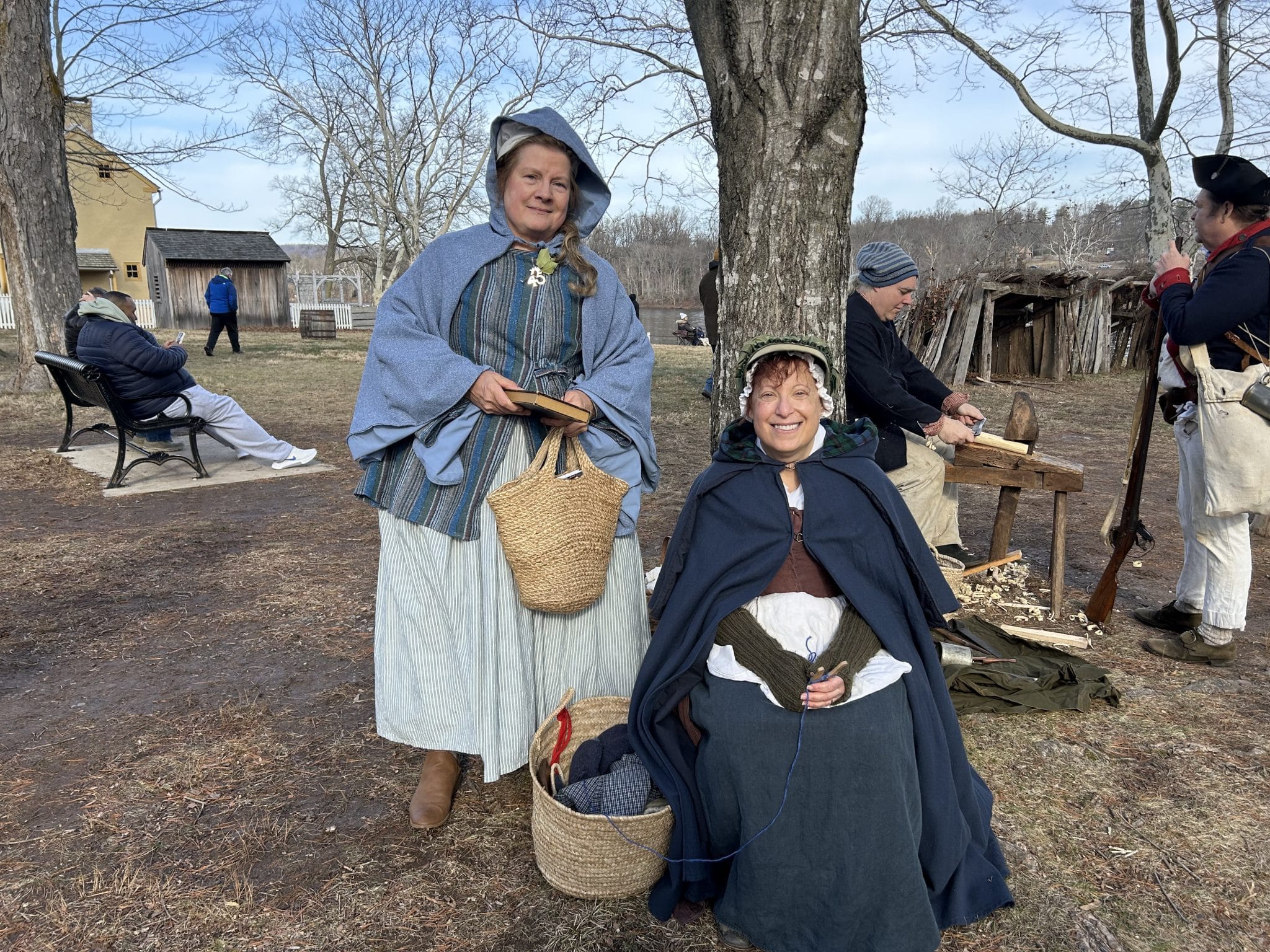
Though Washington’s army of reenactors were forced to refrain from crossing the Delaware, the 73rd annual Christmas Washington Crossing Reenactment still brought the American Revolution to life.
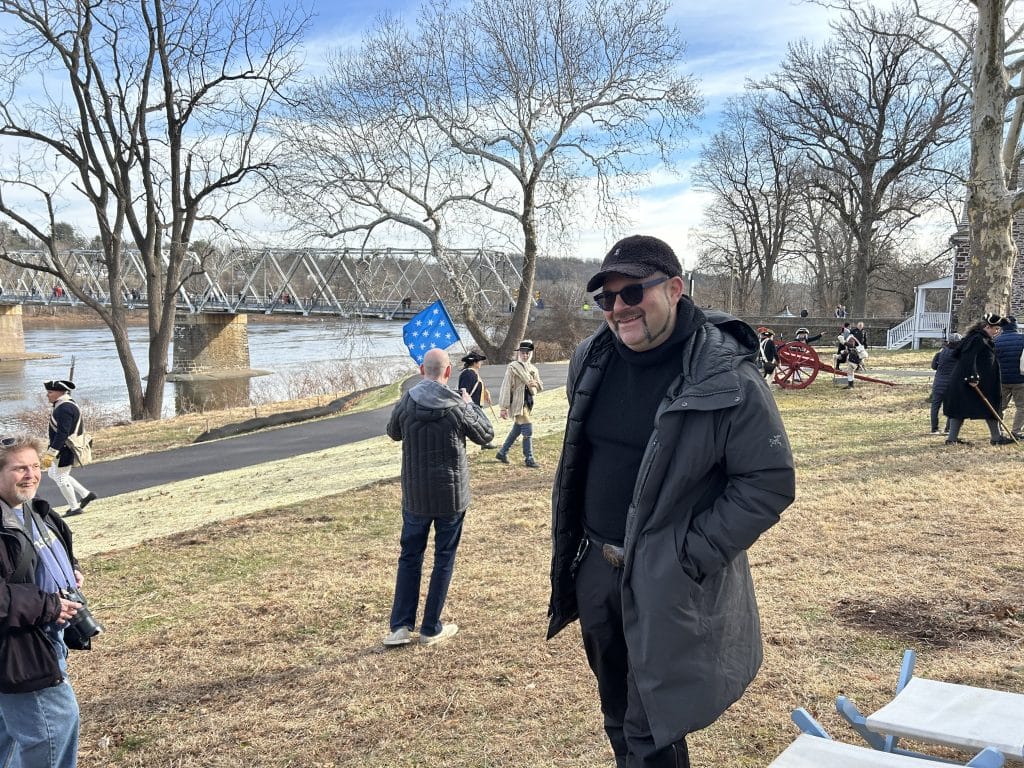
On a rather balmy 50 degree and sunny Christmas Day, thousands of reenactors decked in red, white and blue, onlooking attendees, and dogs on leashes gathered around the Delaware River to commemorate the beginnings of U.S. history. Unfortunately, the river was running too low for the reenactors to cross it.
The Christmas Day crossing reenactment is run by the Friends of Washington Crossing Park and has taken place since 1953. It commemorates the night of Dec. 25, 1776, when more than 2,000 soldiers, amidst icy waters, crossed the Delaware River into New Jersey to eventually defeat the Hessian troops serving Great Britain in the Battle of Trenton.

Bruce Slager, from Bristol, was in the air force from 2000-2013 and often searches for places in the county to connect with veterans. Slager said the crossing reenactment is a good way to spend the holidays for a veteran.
“As a veteran, this event is a great spot for me to come and feel patriotic because a lot of veterans are feeling lonely during the holidays,” Slager said.
Robin Bell drove from Washington D.C. to see his mom reenact in the Alexander Hamilton artillery unit.
In D.C., Bell said, he sees firsthand what he believes is an administration attempting to rewrite U.S. history. Bell came to the crossing to see where it all began.
“We’ve been dealing a lot with questions about how democracy will look like moving forward,” Bell said. “[The crossing] is an interesting event to look at the history that we have had, and you learn a lot about how to move forward by looking at the past.”
Philip Gambino, from Barnegat, New Jersey and originally from Staten Island, said the crossing is a good reminder of the country’s unifying history in a divided time.
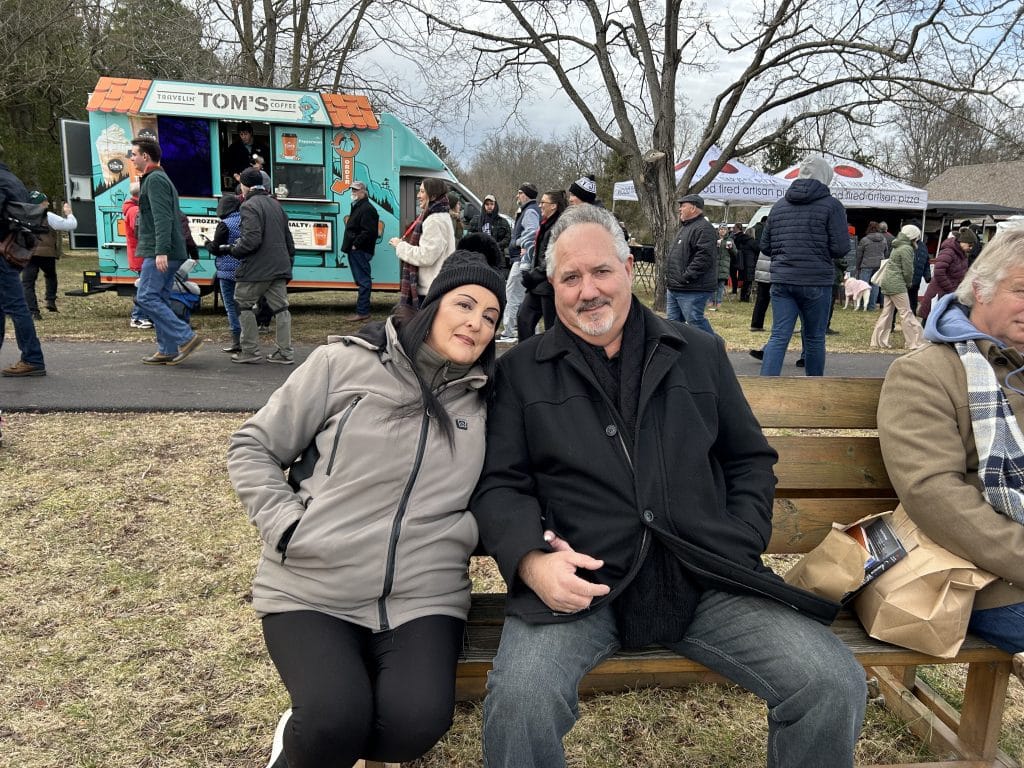
“I come from a city where diversification is everything, and there’s always going to be tribulations,” Gambino said. “But at the end of the day, we have to remember we’re all here because of what these gentlemen and women did for us in the beginning.”
Gambino added that he came to the reenactment instead of staying in the house, drinking, and watching football. By attending the reenactment, he said he feels more connected to this country.
PHOTO ESSAY: Christmas Day Washington Crossing Reenactment
“I hope that people break from their tradition of just celebrating the gifts and the flair of Christmas and maybe go back and see where this country began and appreciate it,” Gambino said.
Reenactor Kevin Chapman, of Plainsboro, New Jersey, is a member of the Trenton-based First Rhode Island Regiment Reenactors, and was interpreting a person of African descent that took part in the crossing.
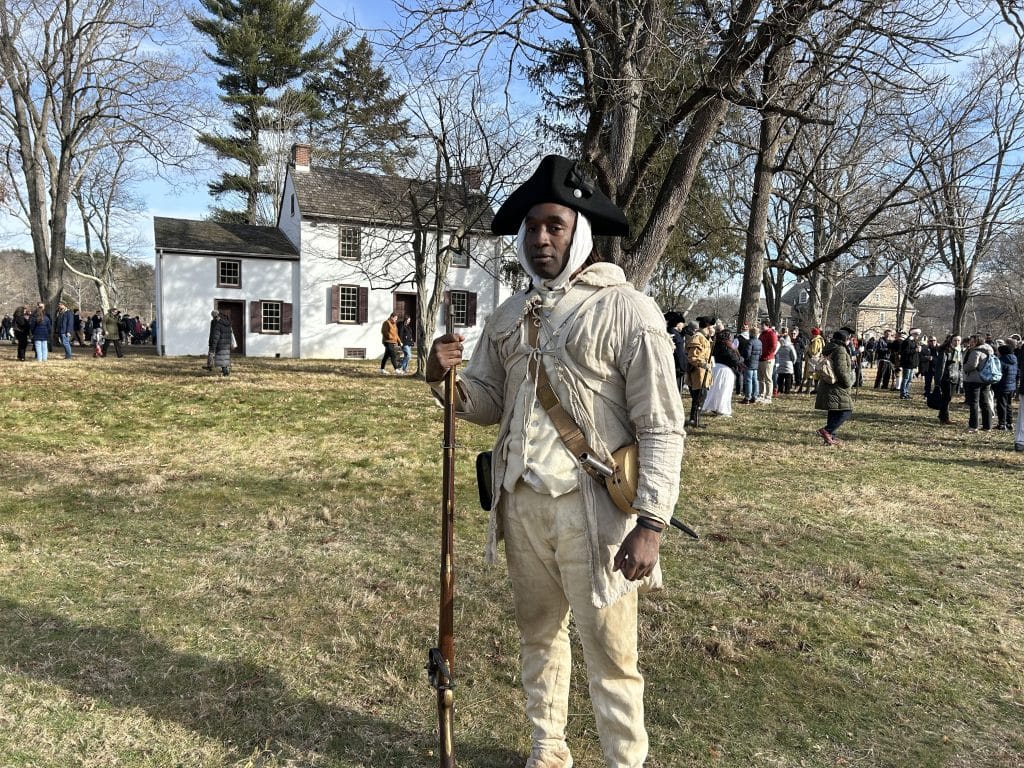
“The story of soldiers of color and women of color that served on both sides is very much undertold,” Chapman said. “I feel like I am giving voices to people who haven’t been represented.”
Chapman said reenactment attendees are often curious about why Black soldiers fought, what their experience was like, how many of them took part in the war, and whether the army was integrated. Chapman said that many people don’t realize much of Washington’s army was Black.
“You don’t see [Black soldiers] in many Revolutionary War paintings,” Chapman said.
Noah Lewis, from Upper Darby, reenacted Edward Hector – a Black soldier who fought during the American Revolution in Proctor’s Pennsylvania Artillery. While Hector did not participate in the crossing of the Delaware, he worked as a teamster, which was civilian-military asset. He drove a wagon, and bombardier in the Battles of Brandywine and Germantown.
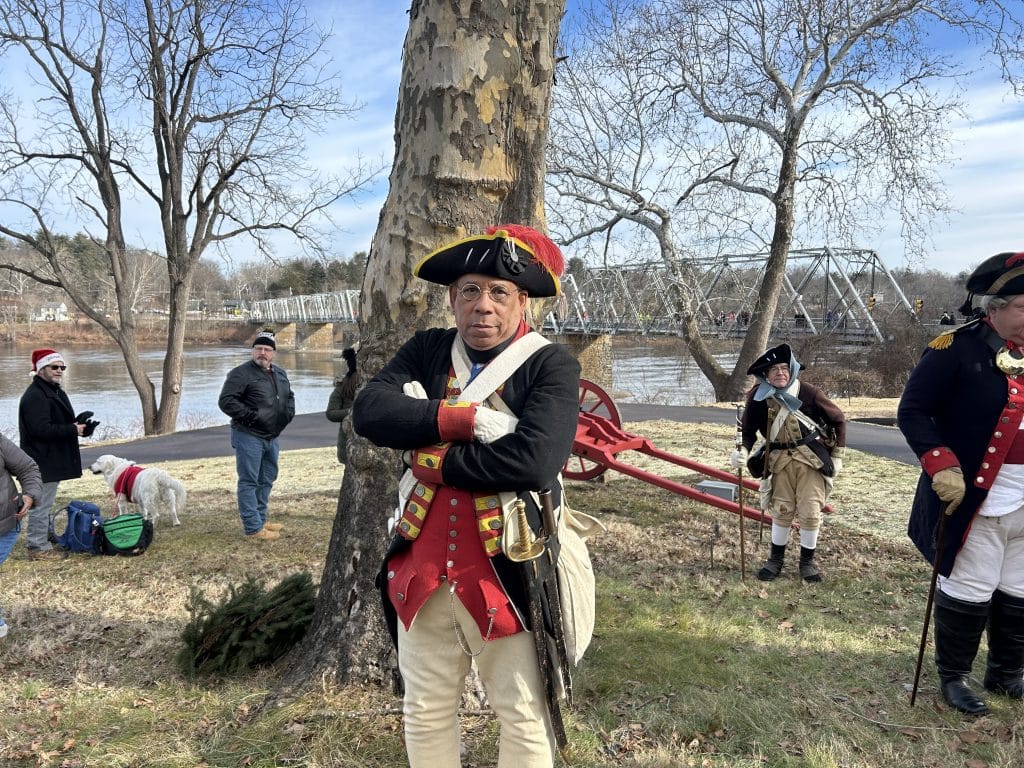
“As a bombardier, he managed one of the three rear positions of the cannon,” said Lewis.
Lewis noted that Black soldiers made a significant contribution in the Battle of Yorktown, and formed a crucial part of the Marblehead and the Rhode Island Regiment. He also pointed out that by the end of the war, at least 10% of Washington’s army were Black soldiers.
“People don’t realize that African American history is American history,” Lewis said. “Without the contribution of Black people, there’s a good chance we wouldn’t have won the American Revolution at all.”
Tim and Denise Baum from Telford, New Jersey, said their kids preferred to stay home during Christmas each year instead of attending the reenactment. Now that their children are married and moved out, the Baums said, they chose to come out and see history in action.
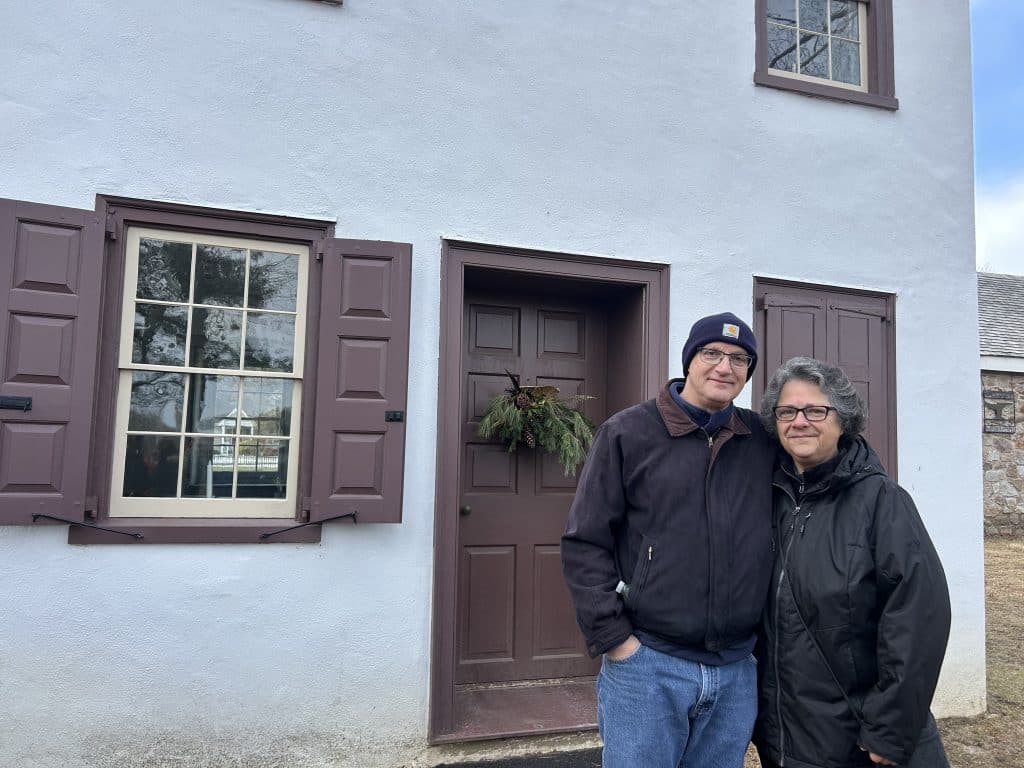
“The kids would always shoot it down, and say ‘No, we want to stay home on Christmas Day,'” Tim Baum said. “Now we’re on our own, and we said, ‘let’s do it,’ and it exceeds our expectations.”
Jan White, from Newark, Delaware, reenacted as a member of the German Regiment and the 1st New Jersey Regiment. For 20 years, White has reenacted American revolutionary women who supported the Army by doing household tasks such as washing laundry. White said it’s important to honor the memory of the women who really sacrificed for the revolution.
“[Women’s contributions] were something I never knew about until I got into the hobby, and it’s something that’s not discussed in the history books,” White said. “By the end of the war, Washington agreed that the women helped win the war, and I work to honor that.”
Julie Nuzzo, a New Hope resident and a volunteer with Friends of Washington Crossing Park, sat in the historical Hibbs House and described its colonial era hearth and oven to visitors.
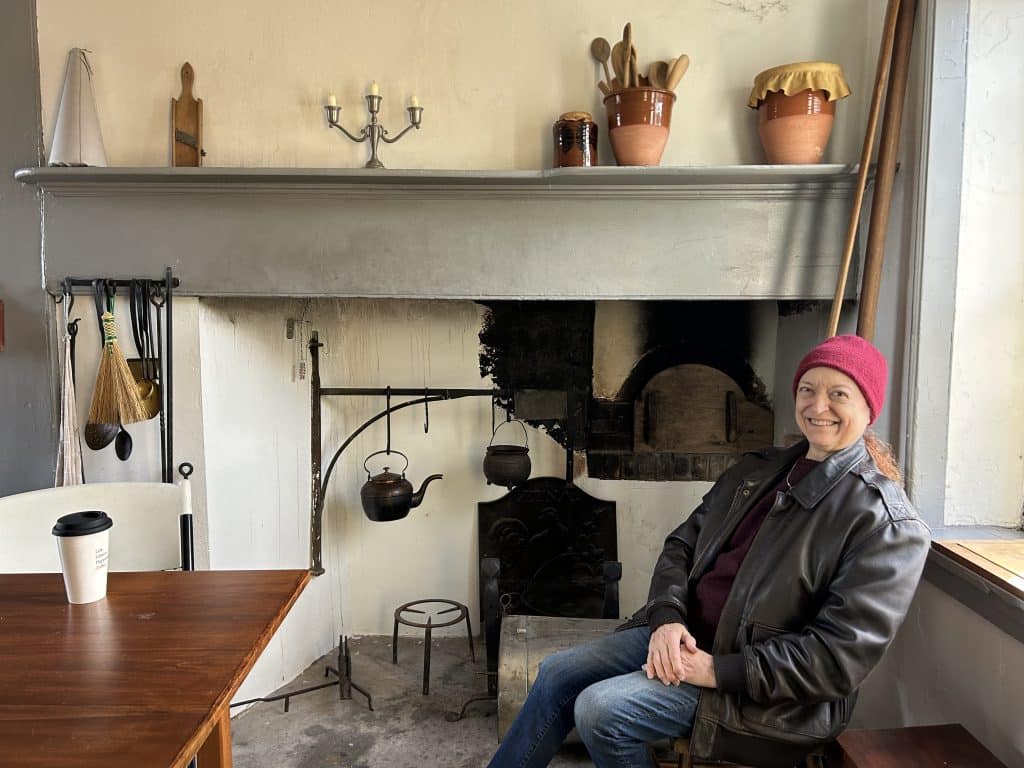
Nuzzo said that people don’t typically learn the intricacies of ordinary life during the revolution.
“We skim over things and leave out a lot of the details. We don’t talk about what the people eat, what they were thinking, or what they did on a daily basis,” Nuzzo said. “Life was very different.”
Jacob Thomas, Susan Flaherty, and their dog Remy, all from New Brunswick, New Jersey, said they were delighted and surprised to see thousands of people at the event on Christmas day.
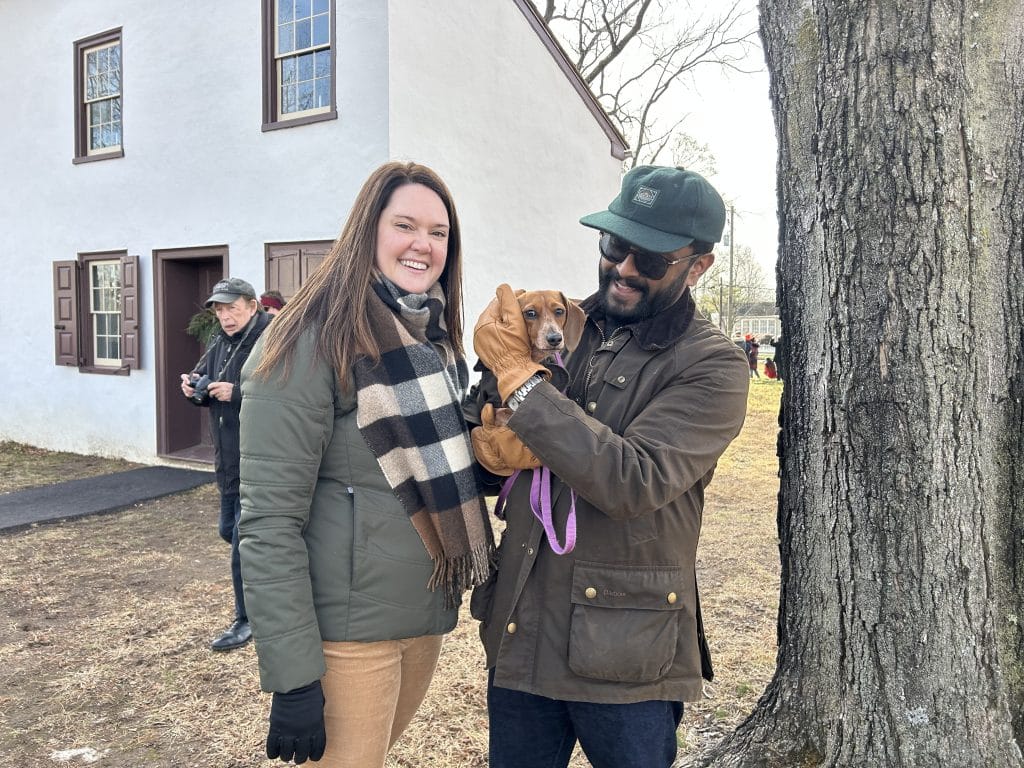
Flaherty said she believes the crossing reenactment provides a relief from the heated political atmosphere.
“In such a politically charged world, it’s nice to see a lot of people come out on a major holiday and show solidarity,” Flaherty said.
Blanka Petyusne-Szecsenyi of Princeton came to the reenactment with her parents and eldest son. Petyusne-Szecsenyi is originally from Hungary, and she said the event is noteworthy for her and her family because they come from a different country.
“This reenactment is special enough for a foreign family to enjoy,” Petyusne-Szecsenyi said. “For us, it’s important to understand the history of where we live now.”
Jessica and Tim Evans from Morrisville brought their children Peyton and Finn to see the crossing.
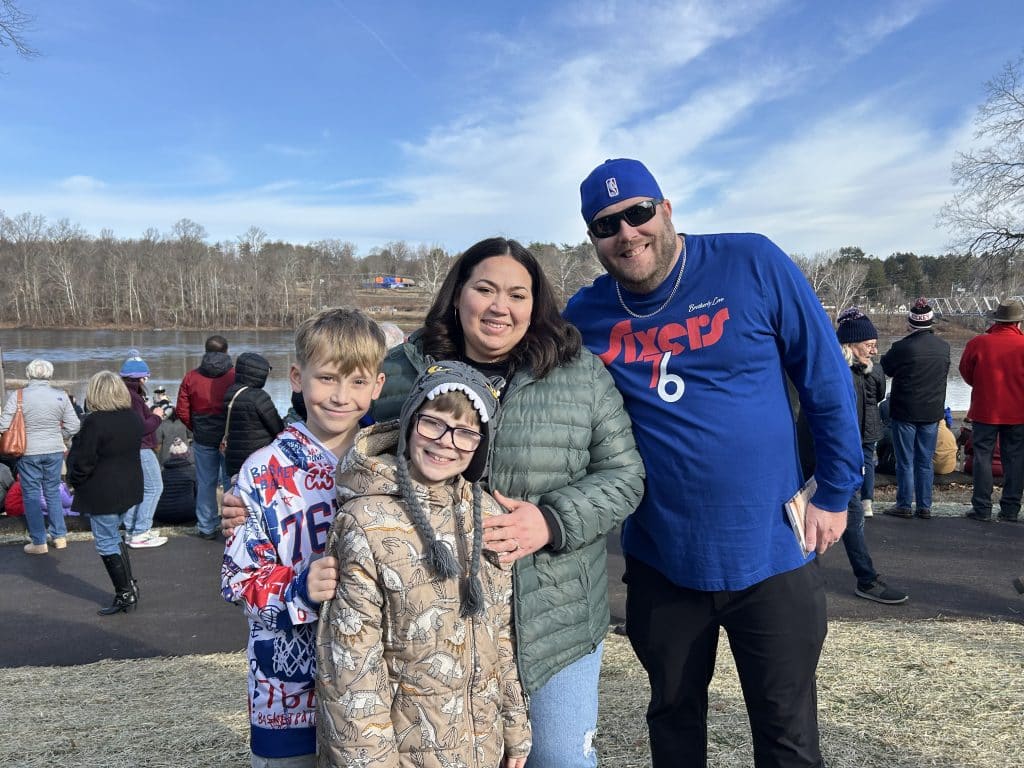
The Evans family watched the new Ken Burns PBS documentary about the American Revolution, which they all enjoyed very much. Jessica said she hopes the reenactment teaches her children about U.S. history and the diversity of its beginnings, especially in a politically-divided era.
“Current affairs aren’t all we want our kids to know about our country. We want them to know the history of our country,” Evans said. “I’d like to think that our country started as a safe harbor, and I pray that that’s what America stays as.”
Randy and Nora Schenk from Newtown rode their bikes to the crossing.
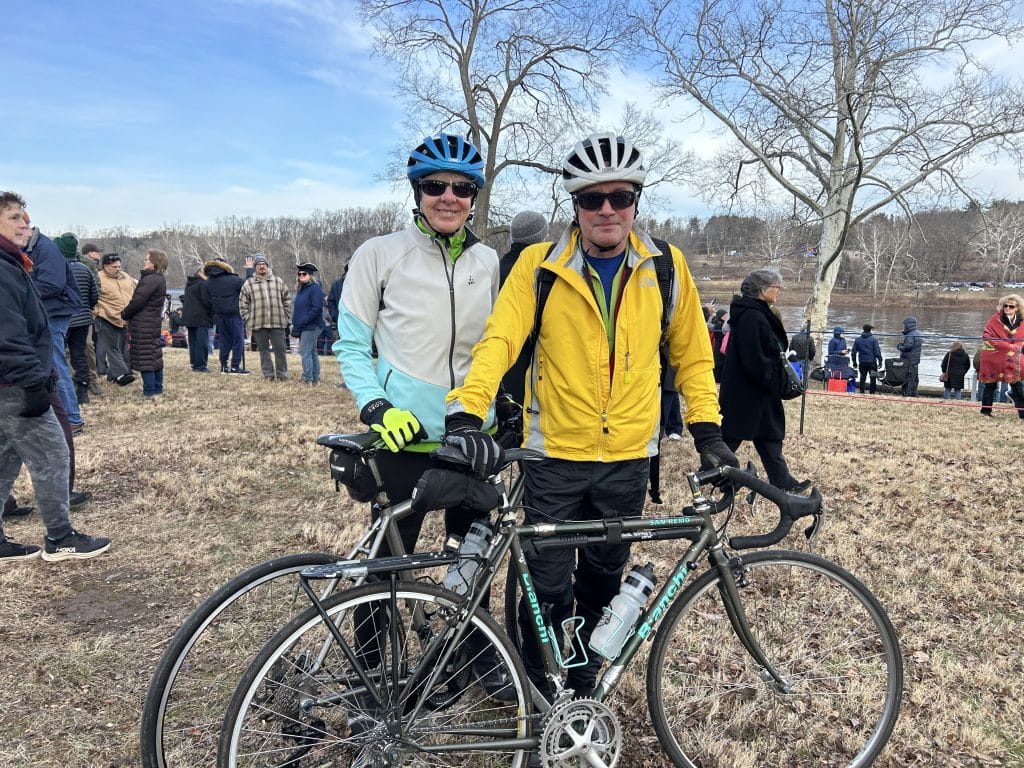
Nora said watching The Crossing movie and coming to the reenactment are part of their Christmas traditions. Because Bucks County is rich in U.S. history, Nora said, it’s easy to appreciate it.
“In this area, it’s hard not to be interested in history,” Nora Schenk said. “It’s just a part of living here.”