
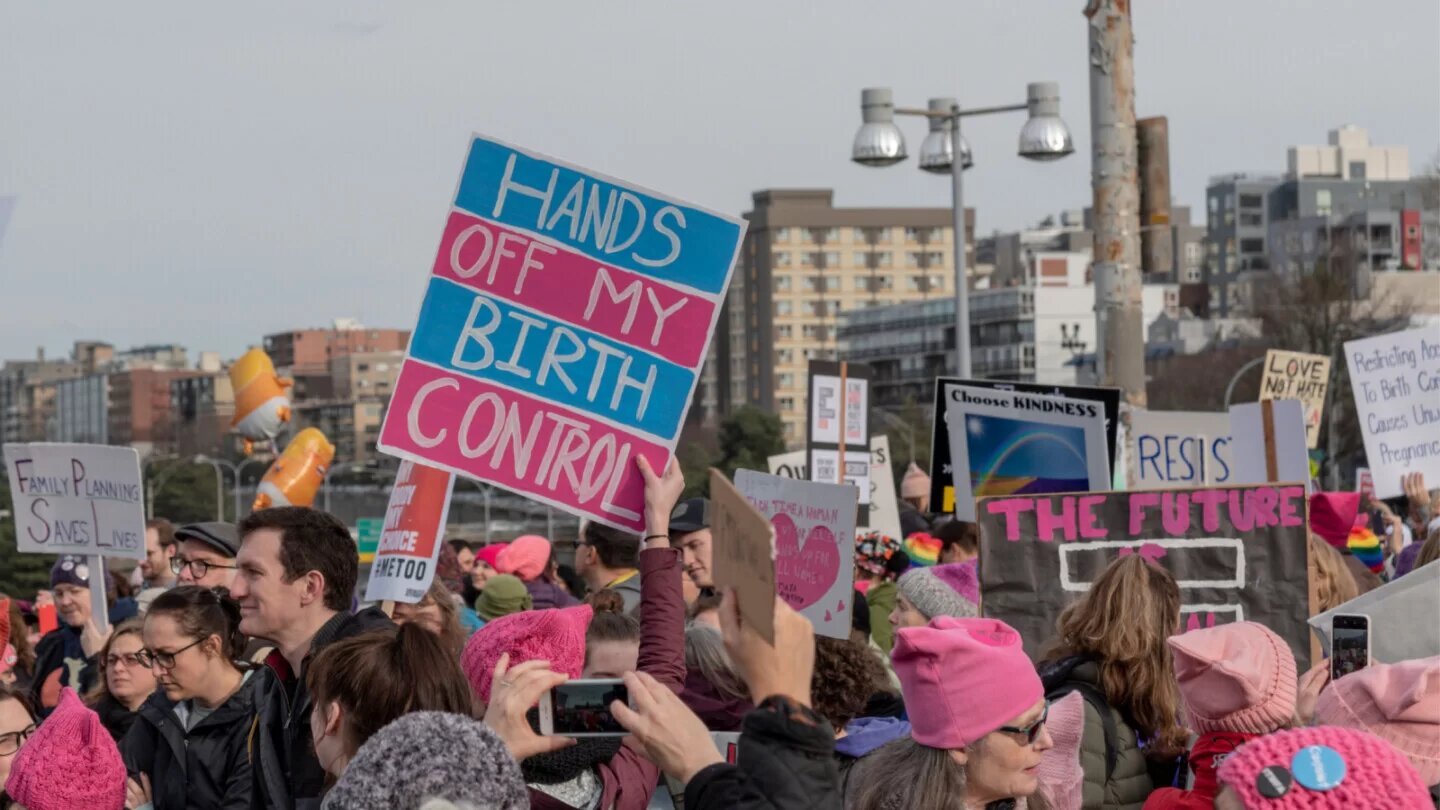
Democratic state senators are introducing legislation in Harrisburg to require insurance companies to provide coverage for contraceptives. The legislation aims to ensure access to contraceptives after the Dobbs v. Jackson ruling hurt reproductive health care access in Pennsylvania.
Senators Amanda Cappelletti, Maria Collett, Judy Schwank introduced the Senate Bill 1112 “Contraceptive Access for All Act” as a companion bill to Rep. Krueger’s House Bill 1140. In addition to requiring contraceptive coverage, the bill eliminates most co-payments for related coverage, removes pre-authorization requirements for certain contraceptives, and authorizes insurers to cover up to 12 months of birth control at one time.
The Dobbs v. Jackson Women’s Health Organization Supreme Court ruling eliminated the federal constitutional right to abortion, leaving it to the states to decide. Since the ruling, many clinics have closed regardless of a state’s abortion access due to reduced funding from Title X under the Trump administration.
The closures have decreased access to reproductive health services provided by federally funded clinics like providing contraception. In Bucks County, there are three health centers offering the full range of birth control methods for an estimated 22,000 women in need of publicly funded contraceptives.
Cappelletti said she felt the bill, introduced in past sessions, was important due to the “shifting culture” and the “lack of trust in science” from the federal government.
“So this is something we felt like we needed to do, and we’d like to really see passed here in Pennsylvania to ensure that no matter what is coming down from the federal government, people here in Pennsylvania will have access to contraceptive care,” Cappelletti said.
Requiring insurance coverage for contraceptives and eliminating co-payments for related coverage will improve the affordability of reproductive health care, while removing pre-authorization and coverage for up to 12 months will increase access for Pennsylvanians. With coverage up to a year, Pennsylvanians in health care deserts can spend less time reaching a pharmacy every couple of months.
Contraceptives are used for a variety of medical reasons in addition to preventing pregnancy. Contraceptives can be used for hormone regulation, endometriosis, dysmenorrhea, and polycystic ovary syndrome (PCOS).
“There is a spectrum of reasons why somebody might need or want to access this care, and they should be able to do that without input from politicians who don’t know or don’t understand your own medical or personal health,” Cappelletti said.
Cappelletti noted the science demonstrates the positive impact of access to reproductive care. Maternal morbidity and mortality numbers have gone up in states with restrictions on reproductive health care.
“We know people are dying all over the country because of a lack of access to reproductive health care, because they’re not able to because of laws that are being passed or falsehoods — falsehoods or narratives — that are being pushed by non-medical providers,” Cappelletti said.
While Cappelletti can’t say if the majority Republican state senate will decide to move forward on SB 1112, she says there is bipartisan support for the legislation. Cappelletti said she’s focused on finding the “bipartisan pieces” and agreement to push legislation like SB 1112 to improve access to reproductive health care.
“People don’t necessarily think about contraceptive access when we’re talking about health care, but it is something that is out there and needs to be addressed,” said Cappelletti. She says Pennsylvania needs to fight to ensure it protects contraceptive access for Pennsylvanians and pick up where the “federal government is lacking.”
In addition to Cappelletti, Collett, and Schwank, the following Democrats are also listed as sponsors: Carolyn Comitta, Jay Costa, Art Haywood, Vincent Hughes, Tim Kearney, Katie Muth, Tracy Pennycuick, Steve Santarsiero, Sharif Street, Tina Tartaglione, and Lindsey Williams.