For more than a century, the NAACP has stood as a defender of civil rights, democracy, and human dignity. Founded in 1951, the NAACP Bucks County Branch has carried that mission forward here at home—advocating, organizing, and standing with our community on the ground in Bucks County.
From that perspective, one year into Donald Trump’s presidency offers a sobering reminder: progress is never guaranteed, and the rights we rely on must be actively defended, especially when power is exercised without accountability.
From the outset, this administration tested the foundations of our democracy. Attacks on the free press, the judiciary, immigrants, and political opponents were often dismissed as political theater or rhetorical excess. But history teaches us that rhetoric shapes reality. Language that dehumanizes and divides does not remain confined to speeches or social media; it becomes policy, practice, and permission.
For Black communities and other marginalized groups, this language was not unfamiliar. It echoed earlier chapters of our nation’s history, when fear was weaponized and difference was treated as a threat. What was different was the scale, the speed, and the normalization of it all.
Policies targeting voting access, immigration enforcement, policing, and civil rights protections sent a clear message about whose voices mattered and whose could be erased. Efforts to weaken enforcement of the Voting Rights Act, expand aggressive immigration enforcement, and elevate “law and order” rhetoric as a substitute for justice did not occur in isolation. They reinforced long-standing inequities and placed already vulnerable communities at even greater risk.
At the same time, we witnessed a coordinated national attack on truth itself. Across the country, books were banned, curricula were censored, and educators were silenced for teaching honest history—particularly Black history and the lived experiences of marginalized communities. These efforts were framed as neutrality or parental rights, but the intent was clear: to control narratives and limit critical thinking. The NAACP Bucks County has long understood that when history is distorted or erased, injustice becomes easier to justify and harder to challenge.
Here in Bucks County, those national choices translated into real and immediate local consequences.
We have sat in town halls and community conversations and listened to our neighbors—people directly impacted by the government shutdown, the loss of critical funding, and ICE raids that have torn families apart. We have heard from families living in fear and distrust; from residents whose benefits were reduced or eliminated, increasing food insecurity and disrupting access to medical care; from small businesses and community organizations struggling after funding was pulled; and from students navigating classrooms where hate speech has increased because harmful rhetoric has been given permission to exist.
Local businesses felt these impacts as well. The imposition of broad tariffs—often framed as economic protection—had tangible consequences on the ground. Small businesses across Bucks County faced rising costs for goods, supplies, and materials—costs that were difficult or impossible to absorb. For many locally owned and minority-owned businesses already operating on thin margins, tariffs meant higher prices, delayed growth, reduced staffing, or painful decisions about staying open. Economic instability is not neutral; it disproportionately harms working families and communities of color, widening gaps civil rights organizations have long worked to close.
When discussions emerged locally around participation in the federal 287(g) program—which would have deputized local law enforcement to act in coordination with ICE—the fear intensified. Although sustained community advocacy helped stop that effort in Bucks County, the damage was real. Families questioned whether everyday interactions with local government or law enforcement could place them at risk. That erosion of trust does not make communities safer; it makes them more isolated, more fearful, and less likely to engage with institutions meant to serve them.
This same pattern of targeting and exclusion extended to the LGBTQ+ community nationwide. Marriage equality, once considered settled law, was openly questioned.
Gender-affirming care — recognized by major medical organizations as essential, evidence-based health care — was politicized and restricted. These attacks sent a chilling message, particularly to LGBTQ+ youth: that their identities, their families, and their futures were negotiable. The NAACP Bucks County has long affirmed that civil rights are human rights—and that includes the right to live openly, safely, and with dignity.
Our schools became another front in this struggle. Students were caught at the intersection of censored history and rising hostility toward difference. Educators were pressured to avoid honest conversations. When leaders fail to condemn hate — or worse, actively fuel it — classrooms become unsafe spaces rather than environments for learning and growth.
Yet, Trump’s first year did not only expose harm. It also revealed resilience.
During this first year, the NAACP Bucks County moved from concern to action. We hosted two Talk About Diversity, Equity, and Inclusion and Critical Race Theory town halls to confront misinformation and create space for honest, community-centered dialogue. We led Empowered: Building Conscious Student Citizens & Empowering Parents workshops to ensure students and families understood their protections and how to advocate for themselves. We conducted voter registration drives in local jails, affirming that civic participation does not end at incarceration. We joined Senator Art Haywood’s Food Dignity Tour to educate Bucks County residents about the changes to SNAP Benefits and what they could do to protect and provide for them and their families. Alongside our partners we served as a plaintiff in the lawsuit to stop the Bucks County Sheriff’s Office participation in the federal 287(g) program, and we hosted public education events to inform residents about immigration rights, community safety and policing and the dangers of 287(g). These efforts were rooted in a simple principle: when systems fail to protect people, communities must organize to protect themselves.
Across Bucks County, residents organized. They showed up to the courthouse, legislative offices, school board meetings, borough councils, and county hearings. Faith leaders opened their doors. Parents asked hard questions. Young people — and those who have been here before — led with courage and clarity. The NAACP Bucks County, alongside our partners, fulfilled our mission by educating the public, advocating for accountability, and standing with those most impacted.
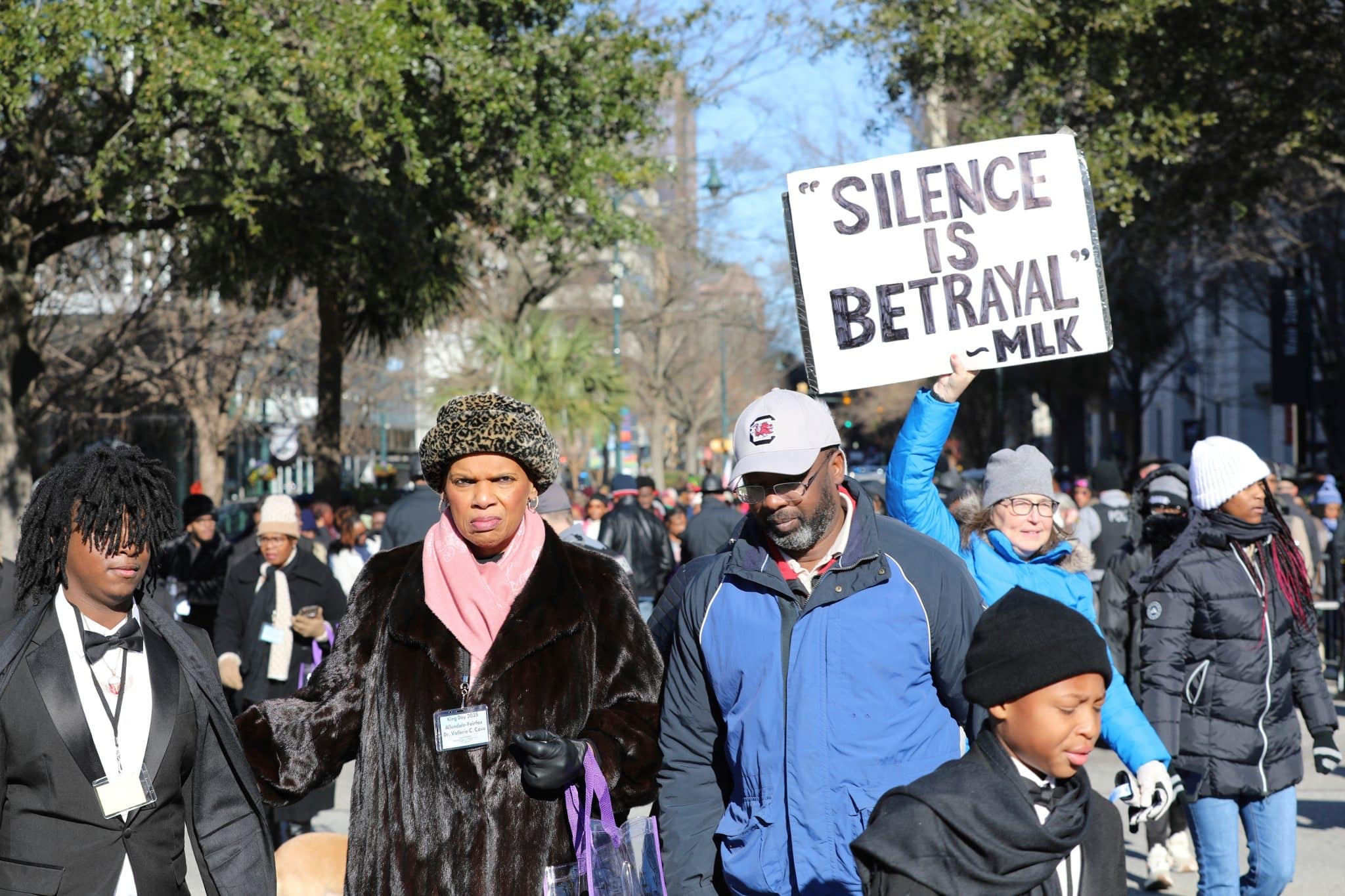
This moment reaffirmed a truth central to the NAACP Bucks County’s work: democracy is not self-sustaining. It requires participation, vigilance, and moral courage. Rights are not preserved by silence; they are protected by action.
The erosion of norms we witnessed during this first year is dangerous. When cruelty becomes normalized, when truth becomes negotiable, and when accountability is treated as optional, the consequences extend far beyond any single administration. Expectations shift. Standards erode. And injustice finds new ground to take root.
But history also teaches us that progress has always been driven by organized resistance and collective resolve. Every civil rights victory we celebrate today exists because ordinary people refused to accept injustice as inevitable.
So our responsibility is clear.
We must organize locally and think nationally. We must defend voting rights, protect honest education, support workers and small businesses, and stand with Black and Brown people, immigrant families, and the LGBTQ+ community. We must demand transparency, accountability, and leadership grounded in dignity, equity, and truth.
Trump’s first year reminded us why the NAACP Bucks County exists. The work continues—not because it is easy, but because justice demands it.