
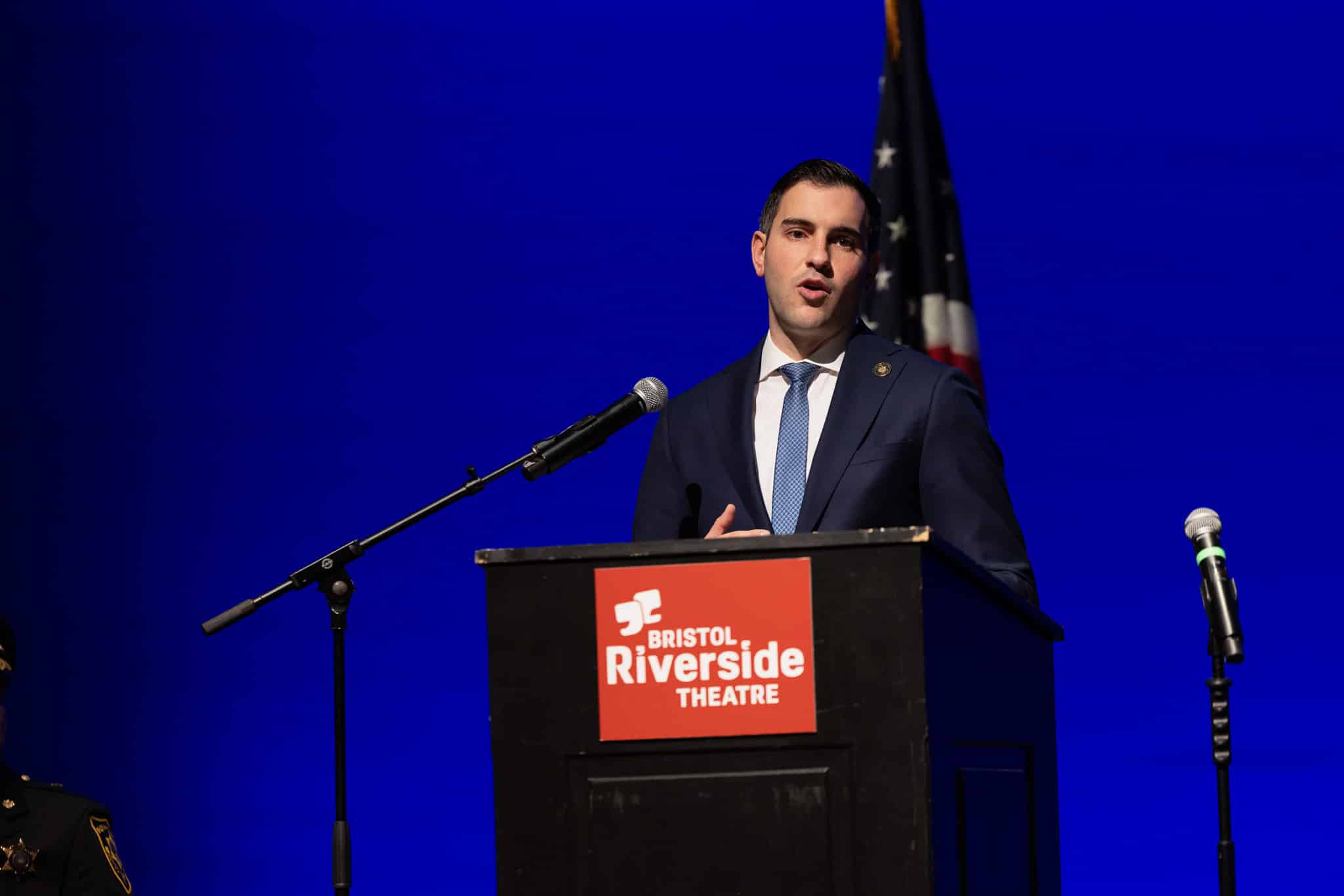
Newly elected Bucks County Sheriff Daniel “Danny” Ceisler, of Bristol Borough, kept a major campaign promise last week.
Democrat Ceisler, 33, announced during a press conference he had signed an order to cancel former Republican Sheriff Fred Harran’s controversial 287(g) agreement with Immigration and Customs Enforcement (ICE).
Among Ceisler’s priorities is to restore and rebuild public trust in the Bucks County Sheriff’s department.
Ceisler beat 61-year-old Harran in November’s election by tens of thousands of votes.
Ceisler may unofficially be the youngest person to hold the office of sheriff in Bucks County. He was sworn in on January 7 along with a slate of Democrats who’d beaten Republican incumbents to take over Bucks County’s five row offices.
“We don’t know of a younger elected sheriff in Bucks County,” Ceisler said during a phone interview.
According to 6ABC News, at age 30, Delaware County Liberian-American and Democrat Siddiq Kamara is the youngest person ever elected to hold the office of sheriff in the country.
Ceisler is an attorney, former Army Intelligence Officer and he served in Gov. Josh Shapiro’s administration as a public safety official.
Harran’s divisive ICE 287(g) partnership agreement split voters into opposing camps, was the genesis of multiple protests in Bucks County and galvanized immigrat rights advocates. The move was the basis of an American Civil Liberties Union of Pennsylvania (ACLU of PA) lawsuit arguing that based on state law, the sheriff’s office could not enter into such an agreement without the approval of the county commissioners.
Ceisler credits his confidence and leadership abilities to his training in the military.
“[Being sheriff] doesn’t feel out of the ordinary, as the military grants extraordinary authority to young people. Our country fights its wars with 18 to 30 year olds – so being held accountable and responsible because of my military background – is by design,” he said.
Ceisler is troubled by ICE and federally ordered acts of violence on immigrants, protestors and citizens across the country, including the recent killing of Renee Good in Minneapolis by an ICE agent.
“Bucks County is fundamentally different from Minneapolis or Philadelphia. I’m not concerned about ICE establishing a major presence in Bucks County as they have done in major cities,” Ceisler explained, “but is very troubling to see [this] happening around the country.”
He said a scheduled meeting with ICE officials in coming weeks aims to clarify his position of cooperation with the federal agency around those who are incarcerated and found to be in the country illegally.
“I don’t want my actions to invite additional [ICE] presence, and I want to make it clear we already cooperate with ICE for those incarcerated and our immigrant community does, too,” Ceisler explained.
He said returning to the previous cooperative position with ICE means his deputies and officials will not do the work of “going after” names on an ICE database list, but will instead work together based on verified facts and judicial warrants about those already in custody or incarcerated.
“That is what the 287(g) was about – that we would go after people for them, and it allowed our deputies to perform immigration enforcement. We had 16 deputies that had that certification, and I have pulled them off of that (duty),” Ceisler said. “Bucks County deputies will not do immigration enforcement, full stop.”
He noted the ICE function under 287(g) “never actually started because of the ACLU of PA lawsuit.”
“We are heartened to see that the new sheriff did the right thing by terminating the illegal 287(g) agreement. But we continue to press our appeal from the harmful Common Pleas decision in this case. Now that Mr. Harran is no longer sheriff, there are no ongoing claims against him individually, but the appeal continues as to the Bucks County Sheriff’s Office and the other parties who intervened in the case,” said Stephen Loney, senior supervising attorney at the ACLU of Pennsylvania in an email.
Ceisler said at the press conference beginning February 1, Trump plans to withdraw funding from so-called ICE sanctuary cities and counties. Politico posted a report on the upcoming Trump funding cut strategy.
“By any definition of a sanctuary county we are not one. If the president wants to say differently, he would be completely inaccurate,” Ceisler said.
Ceisler’s mission is to refocus the sheriff’s office on its “core duties and responsibilities.”
“I think Sheriff Harran got away from what sheriffs actually do: Allocate resources to our core mission. We have a narrow set of responsibilities and if we don’t do those well the justice system grinds to a halt,” he said.
Among those duties are to serve judicial bench warrants, which means deputies are authorized to arrest those who do not follow court orders, miss a scheduled hearing, fail to pay child support or fees or violate probation requirements.
On January 24, Levittown Now reported that under Harran’s leadership bench warrants dropped from 7,800 in 2022 to 6,626 as of January 2025.
Ceisler said public safety considerations informed his decision to terminate the ICE 287(g) partnership.
“This action will restore the trust between tens of thousands of our residents and the brave officers who protect and serve them,” Ceisler said.
In addition to cancelling the 287(g) agreement, Ceisler signed an additional order prohibiting deputies from asking crime victims, witnesses or court observers about their immigration status.
He said police chiefs and immigrant advocates confirm “there is a real rift” between law enforcement officials and those they are charged with serving.
“When large swaths of the population don’t want to call 911 to report a crime or come to court to testify” everyone is less safe, Ceisler added.
“The easy part was ending the [287(g)] agreement; the hard part is improving the office. It’s not sexy, but it’s really important,” Ceisler added.
Among the new sheriff’s top initiatives are:
- Refocus core duties of the sheriff’s office.
- Rebuild trust and confidence among Bucks County’s citizens.
- Provide professional development opportunities to deputies to “put them in the best possible position to succeed.”
- Create a domestic violence task force to reduce violent behavior “to the greatest extent possible.”
- Improve firearm safety.
“I’m approaching this job as I have four years to get done what I want to get done. The bigger the problem, the more fun it is to solve,” Ceisler said.