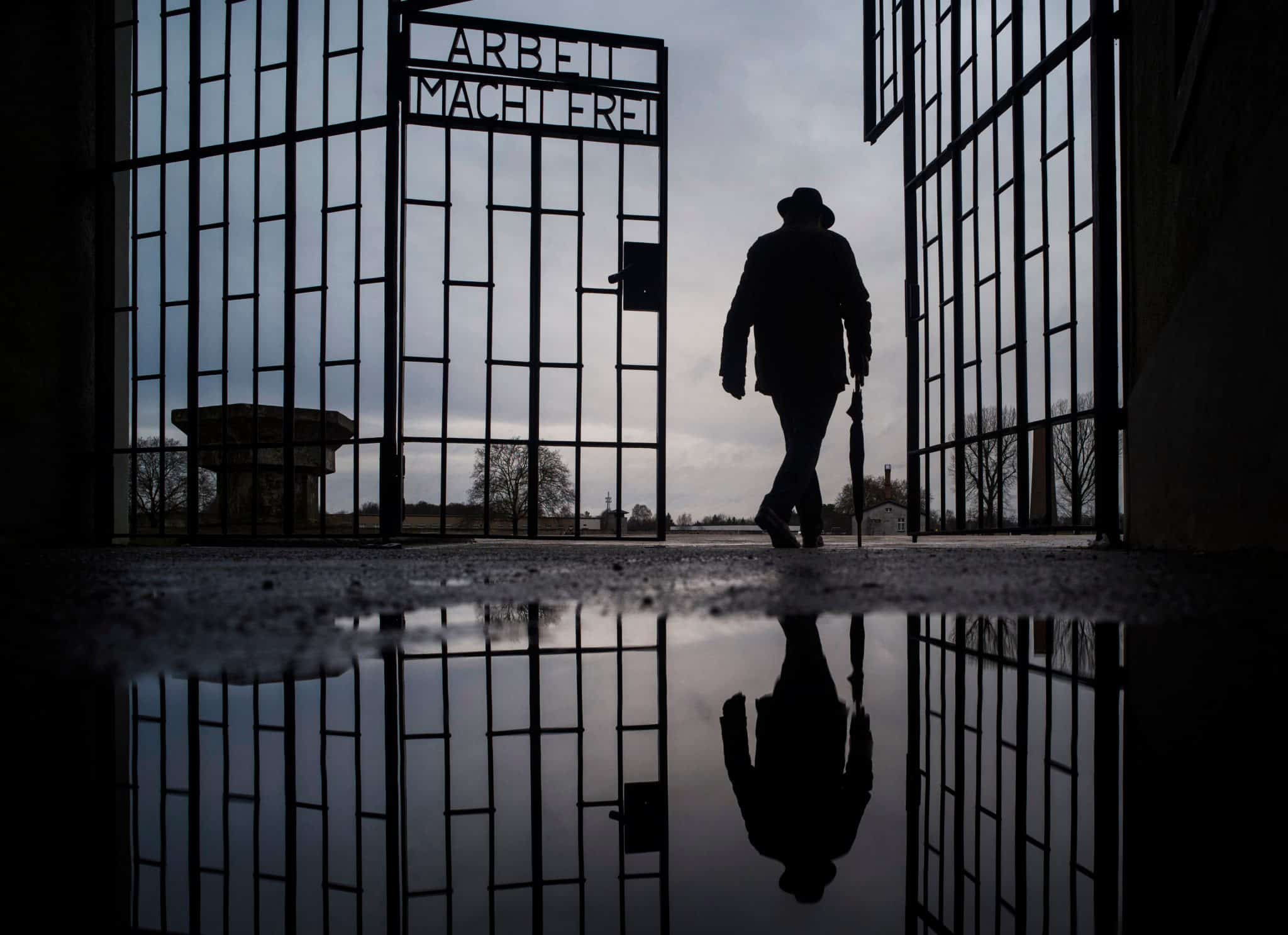
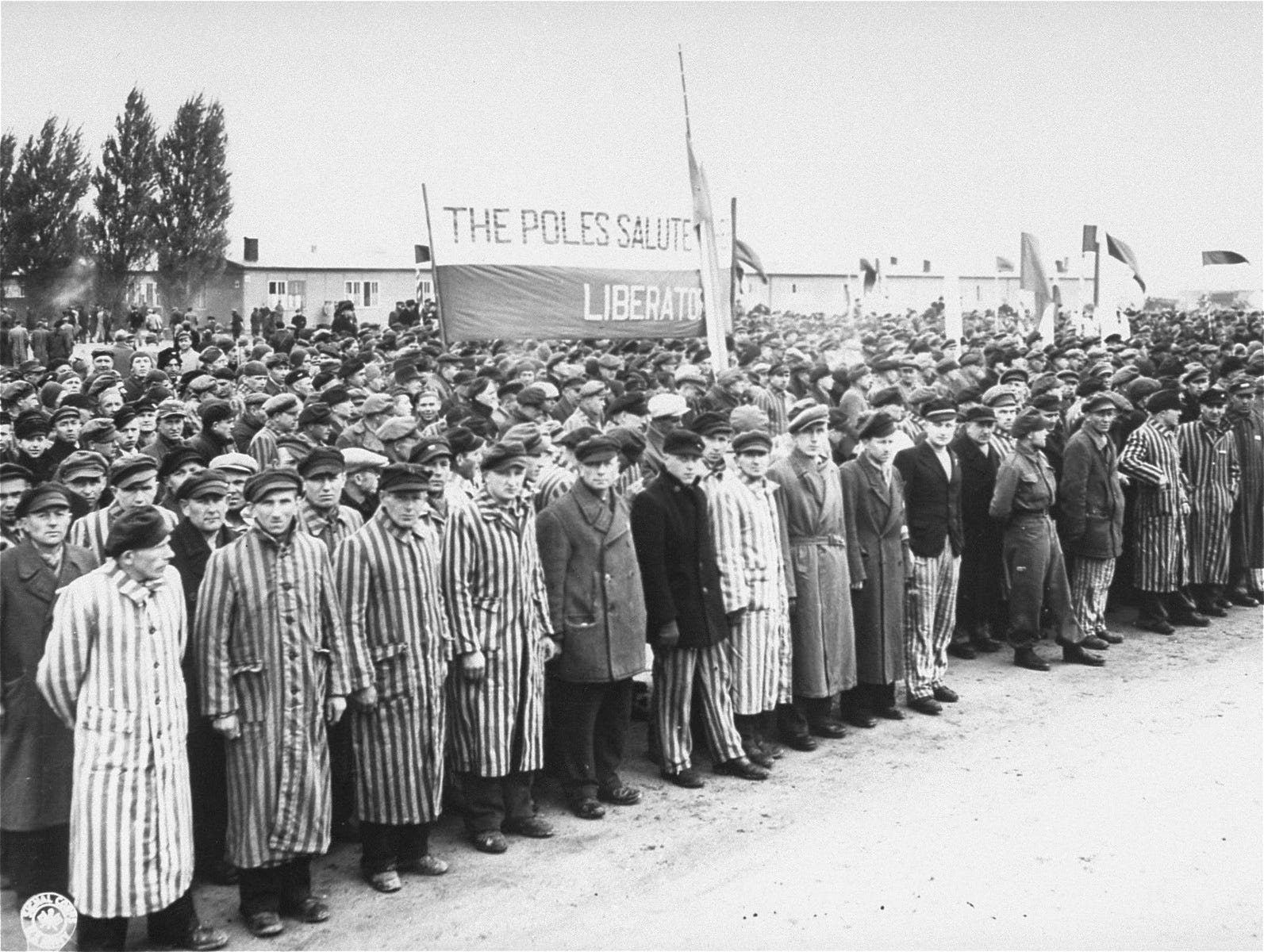
January 27 is International Holocaust Remembrance Day, designated since 2005 by the United Nations General Assembly to commemorate the anniversary of the liberation of Auschwitz-Birkenau. On this annual day of commemoration, the UN urges every member state to honor the six million Jewish victims of the Holocaust and millions of other victims of Nazism and to develop educational programs to help prevent future genocides. Never was this message more vital.
The American Jewish Committee (AJC) State of Antisemitism in America 2024 report reveals that 77% of American Jews feel less safe in the U.S. due to the Oct. 7, 2023, Hamas attacks, with 56% having altered their behavior. Notably, 90% report rising antisemitism, and 33% have personally experienced it. (Please read my Dec. 16, 2025 Bondi Beach Massacre Substack for a chilling history of the roots of the twin hatreds of anti-Judaism and antisemitism.)
Immediate relevance
This article – an excerpt from my memoir-in-progress, The Girl Who Flew was originally published in PBS’ online magazine, Next Avenue, has heightened relevance given the astounding rise of Holocaust denial and American anti-Semitism, coupled with the horrific rise of the Trump Administration’s own form of fascism currently playing out in Minneapolis, Minnesota, my home of 25 years.
There is a bright line to be drawn from remembering and telling the facts of Holocaust, decrying its denial, and witnessing and recording the Trump Administration’s version of Nazi Brownshirts, appropriately named for their ICE-cold blooded murders of innocent Americans like Renee Good and Alex Pretti in the past weeks in Minneapolis, and its whitewashing of history and the facts.
A childhood devoid of Holocaust discussions
Why did my Jewish parents withhold facts of the Holocaust to me? I grew up in Mt. Airy, a working-class Philadelphia neighborhood comprised equally of Jewish, Catholic and Protestant neighbors where I was seemingly shielded from that world-shattering genocide.
One explanation comes from Deborah E. Lipstadt’s 1996 article, “America and the Memory of the Holocaust, 1950-1965,” in the Journal of Modern Judaism that suggests a combination of forces led my parents and other postwar American Jews to dodge the topic entirely. She writes, “that throughout the 1950s and most of the 1960s [the Holocaust] was barely on the Jewish communal or theological agenda.”
Lipstadt posits that postwar America, with its new-found prosperity, was simply “not ready to confront the issue.” An economic and baby boom “was in full swing,” and the overall atmosphere was one of optimism. Americans in general, and Jewish Americans in specific, did not dwell on the gruesome past.
Survivors of the horrors were discouraged from discussing their experiences. Soldiers who had liberated camps, bringing home horrific pictures of skeletal survivors, gas chambers and ovens, found that the newly hopeful Americans who were building houses in the suburbs, buying shiny new cars and convenient modern electronics that made life better and easier, were not “interested in those things.”
Whatever my parents’ reasons, my personal discovery of this horrifying historic event as a 12-year-old child, coincided with Hanukkah 1962, which began at sunset on December 21st.
Well-intentioned expedition
I intended to surprise my parents at sunset on Saturday the 22nd when we would light the second Hanukkah candle.
About a mile from my home, at Philadelphia’s city line with Montgomery County, across from the busy intersection of Cheltenham Avenue and Upsal street, sat the newly completed Gimbels Department store, a 20th century modernist building. The store, the distance from my home, and the intersection were entirely off-limits for me.
READ: Ruth Kapp Hartz Speaks to BCCC Students About Surviving the Holocaust
But that December day wings had sprouted inside the oversized pocket of my fashionable dolman sleeved Buffalo Plaid jacket, where two, ten-dollar-bills seemed to flap, propelling me towards my mission. This Hanukkah I was about to buy my first gift for someone else.
The money, like the jacket, had been a gift from my Brooklyn-born, Tanta Rose, whom we visited monthly at her stately high-rise condo overlooking fabled Coney Island. At the end of our last visit, her husband, Uncle Joe Leitner, who owned Leitner Furs and Uniform Shop in Manhattan, had slipped the twin Hamilton bills in the pocket of this jacket he’d designed for me. In his thick Yiddish accent, he kissed my forehead whispering, “Do something nice with your gelt, Suselah.” And so, I would.
Confronting the horrors
Entering Gimbels lower-level side door, I encountered the book department, boasting spacious wide aisles and broad pedestals always stacked with the most current offerings.
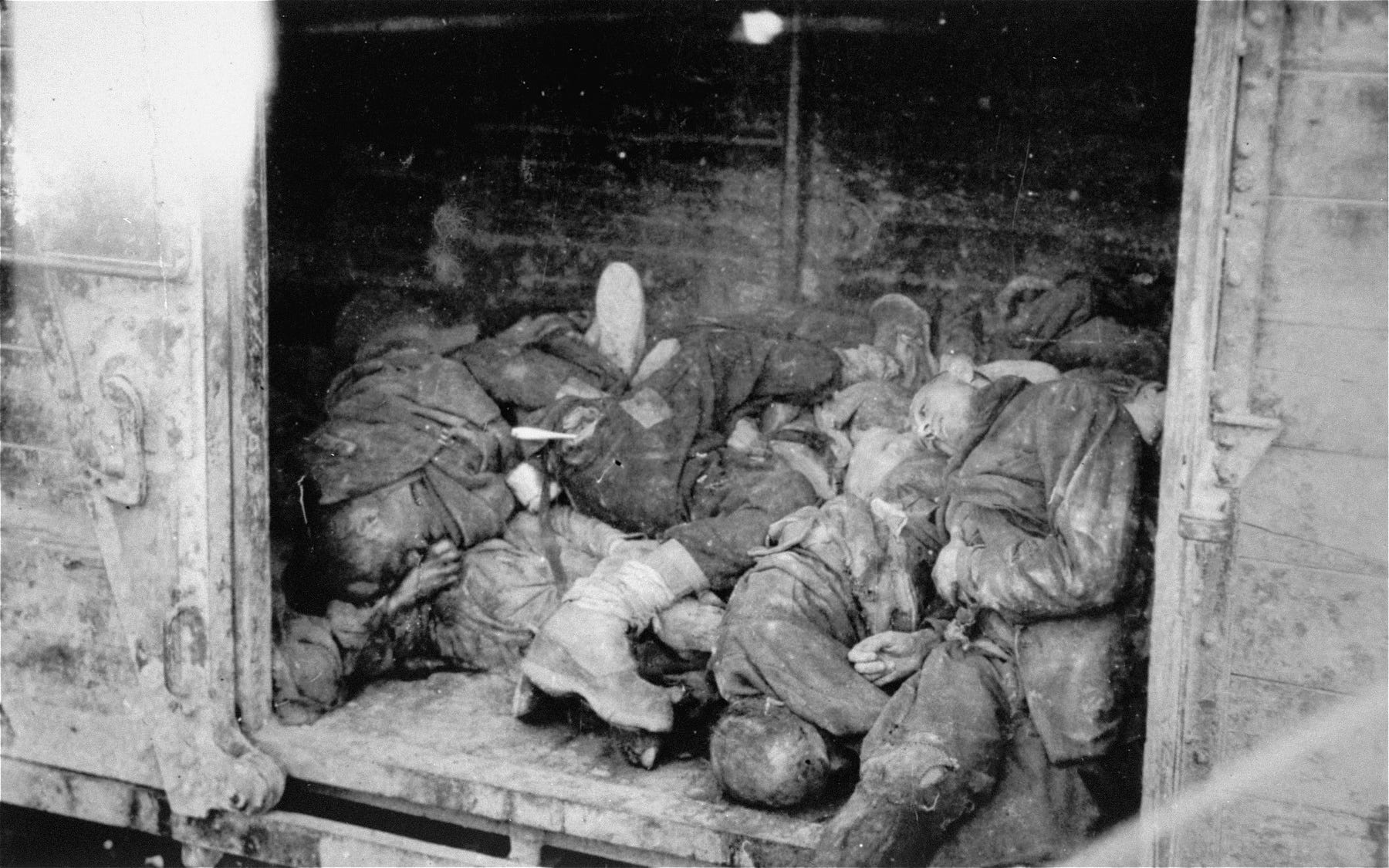
Planning to dart up the escalator to the main level to buy a scarf for my mother and flannel shirt for my father, I was immobilized mid-stride by a display on the center pedestal. There, arranged in soaring pyramids, my eye landed on the two featured books. The cover of one presented ghastly, emaciated creatures wearing stripped clothing festooned with large Jewish stars. The other, a much larger book, was opened to a center spread of grainy black and white photos of skeletal humans, guarded by men with rifles, or stacked in heaps.
I was riveted in place, my eyes glued on these images, with the innocent and morbid fascination of a child.
As I beheld these repulsive confirmations of atrocities, hot fear and anger and surged through me; shock and a sense of betrayal burned from the pit of my stomach up to my heart. Until that moment, I was entirely innocent of the Holocaust. I was held by as if by an evil sorcerer’s spell. Unable to stop myself, I turned pages, transfixed by inhuman images. Hollow-eyed, hairless men, some wearing soiled stripped suits with Jewish stars, others with naked sunken chests, stared from the pages directly through me. Emaciated women and children in various poses were imprinted, page after page. But it was the stacked skeletal remains, on carts, in ravines, or heaped on the ground that most assaulted me.
READ: Faith Leaders Condemn a Pennsylvania Halloween Parade Float With an Auschwitz Sign
My bold, disobedient spirit leaked tears that splashed onto the glossy paper, puckering these lurid scenes with salt puddles. My mind raced to understand, to comprehend. The words “exterminated,” “Jews,” “Nazis,” “concentration camps,” and “horrors,” peppered the captions.
Suddenly, a bony hand gripped my upper arm, ripping me away from the horror before me.
“Little girl,” a sharp voice pierced me, “Where is your mother? You shouldn’t be here alone. You don’t belong here. This is not for children.” The book clerk, an older, matronly woman, meaning well, only terrified me more.
Softening slightly as she perceived my shock, she began leading me towards the cashier station, scanning the aisles for any sign of a missing, inattentive mother.
Not for children pinged through my brain as I wiggled to free myself from her grasp. “Now you stay right here,” she admonished. “What’s your name? I’m going to page your mother,” she said, reaching for the black phone at the desk.
Seizing the opportunity, I bolted, racing up the escalator, making a beeline for the large front doors, sprinting like the devil was on my tail, carelessly crossing the wild six lanes of traffic, running the entire mile back to my front door.
Confronting my parents
My heart pounding in my ears, hot tears scalding my eyes, I thrust the front door open so hard that the brass knob dented the facing clothes closet door. That bang that matched my anger; the dent remained forever.
Almost dropping the ubiquitous cigar planted in his mouth, my father jumped from his lazy boy. Enveloped in her easy chair, my mother also bolted. Both were stricken by my wild entrance.
And then I screamed. A bloodcurdling yell from some primal place no child should ever visit.
“Why were those people…? Who were those Jewish people…?” The words wouldn’t match my enflamed thoughts.
READ: The Holocaust Survivor Writer Who Can Help Us Through This Ominous Era
My father assumed I had been harmed in some way and raced to gather me up in his arms, asking “Who hurt you, Sue Sue, where have you been?” My mother mustered as much concern as she was able. Postpartum depression sadly had rendered her a taciturn observer to our life together.
I pulled abruptly away from my father, something neither of us was accustomed to. My father was my beloved protector and provider. He was both mother and father, dependable, loving and until that moment, I thought truthful.
“How could there have been an event that warranted two books? A horrific massacre of Jewish people, and I hadn’t been told?”
“What are you talking about?” my father implored. “Where have you been? What did you see?”
As scholar Lipstadt explained, many Jews of the 1950s and 60s didn’t discuss the Holocaust at all. The proximity of the horror was still too fresh and too awful. Many Jews had chosen to distance themselves from the trauma, even changing their names like my father’s friends the Goldsteins who had become the Goldsmiths. European Jews in America wanted nothing more than to assimilate – to NOT stand out.
The irony
For me to explain where I’d seen these horrors, I had to admit that I’d disobeyed my parents and had traveled farther than allowed and had crossed Cheltenham Avenue – alone. But that transgression paled in comparison to the one I believed my father had made – keeping a secret of such gruesomeness and importance from me.
My father and I had never had such a standoff. Despite my willful independence, I was basically a good girl who gave him no cause for concern. But those scenes of massacre and despair had laid waste to my soul. I demanded answers. What had happened? How could I not know this? Did my friends all know?
Though loving, kind and responsible, my father, a first-generation immigrant, had only gone to the third grade to work to help support the family. He felt unequal to the task of discussing such momentous annihilation and was careful in handling my traumatic reaction.
Acknowledging that I had meant well by wanting to spend my own Hanukkah gift money on him and my mother, he gently reprimanded me for crossing that major road and asked if we could wait to talk. We negotiated a deal. I would not be in trouble for disobeying my boundaries, and I would withhold punishing him for not teaching me about the Holocaust.
READ: White Supremacy Fueled American Religious Leaders’ Support for Nazi Germany
What I didn’t know is that the next day he rang up my principal, his friend, to seek advice. That Monday, I was called to the principal’s office at Pennypacker Elementary, where to the best of his ability, Mr. Israel Lerner, explained an abridged, child-appropriate version of the Holocaust to me.
The real gift that Hanukkah was that I came to understand the different ways parents try to protect their children. And my father learned that his daughter deserved the truth about many of life’s difficulties.
Today children are more sophisticated and sadly, more aware. The internet, media, and social media bring the daily travails, as well as the triumphs, to everyone.
The UN’s recommendation, and the work of the United States Holocaust Museum in Washington, D.C., to develop education programs to help prevent further genocides have never been more vital. We must never forget.
This article was originally published at Susan Schaefer’s Substack.