ECHO Systems, which stands for Environmentally Conscious Habitat Organization, is serious about reducing single-use food packaging waste from businesses in the Philadelphia region through reuse and circular economy practices.
The goal is to transition from single-use food packaging waste to sustainable practices such as switching to reusable containers and on site “warewashing solutions.”
“What we realized is a lot of businesses care about this issue – they care about their packaging – and they don’t know what to do. They are concerned about the costs and where to start,” said Alisa Shargorodsky, director of ECHO Systems, based in Southampton, Bucks County.
ECHO Systems serves the greater Philadelphia region. The organization primarily provides community education and empowering information to food, beverage, event, hospitality businesses and institutions about waste reduction and\warewashing, Shargorodsky said.
Among ECHO System’s goals is to create public and business awareness to impact legislation that makes sense for people and the environment.
“We want to make sure when we’re passing legislation, people know how communities are impacted” by these and other harmful substances, Shargorodsky said.
The organization’s goal is to replace single-use plastic with equitable, community-centered reuse models.
At least a dozen states have banned the use of polystyrene, along with some major cities like New York City, according to the Plastic Pollution Coalition. Pennsylvania is not among them, although many municipalities have either banned them or are actively pursuing banning them.
Pennsylvania and Illinois are noted on their maps as considering state-wide bans, the Plastic Pollution Coalition said.
Newtown Township in Bucks County had enacted a ban on some single-use plastics. Other neighboring communities and counties have done likewise, Bucks County Beacon previously reported.
ECHO Systems received an Environmental Protection Agency Thriving Communities / Green & Healthy Homes Initiative federal grant, which supports communities disproportionately impacted by pollution and inadequate waste systems, Shargorodsky said.
She said the grant was in jeopardy last year.
“When we first submitted our application we got a letter that Thriving Communities was going to be shut down by the Trump administration,” Shargorodsky said.
READ: Downwind: The Shared Cost of Philadelphia’s Trash
Three organizations filed suit, and $600 million in environmental justice grants were restored last year. ECHO Systems joined the suit, which was won after a Maryland judge ruled the grant’s termination was unlawful, the National Association of Development Organizations website said.
Shargorodsky said the $101,000 federal grant – a one-time award which runs from November 2025 to November 2026 – would provide for the publication of a plastics transitioning toolkit to share with businesses. The grant will also fund a platform to host six community events, four of which will be held in person, while two will be virtual events.
According to an ECHO Systems press release, the federal grant money will help scale a “preventative, circular approach to reducing environmental burdens before the start, and includes:
- Expansion of Philly Unwrapped, a citywide coalition representing 38 organizations across business, community development, EJ groups and universities.
- A free multilingual waste-reduction toolkit for food service and event operations.
- Neighborhood-led reuse pilots in communities disproportionately harmed by pollution.
- Partnerships with local agencies and institutions to modernize waste-prevention practices.
Changing a long-standing mindset to move from these decades-long materials to newer practices isn’t easy.
The issue is compounded by Pennsylvania’s longstanding and historic manufacturing-based economy, which contributes $111 billion annually to the state’s economy and employs 1 in 10 residents – as well as initial impacts to a business’s bottom line.
Polystyrene (specifically EPS – expanded polystyrene or Styrofoam) packaging is widely used in the food and hospitality services sector. These products have been linked to human diseases and cancers, are rarely recycled, are not biodegradable and are a primary source of ocean pollution.
The material is a potential human carcinogenic, with links to leukemia and lymphoma, especially among those who work in its manufacturing processes, along with other cancers and health problems, according to the National Institute of Environmental Health Sciences.
Exposure to hot foods can cause it to leach directly into food and it can be a “micro plastics” contributor, polluting waterways and entering the food chain.
It is also linked to deaths and health issues among marine and aquatic life and typically ends up in landfills and as environmental pollution because it’s hard to recycle.
“Our organization has been working on this for about two years. It was born out of a meeting with organizations and businesses and we invited businesses from the Philadelphia Hispanic Chamber of Commerce to discuss food packaging,” she explained.
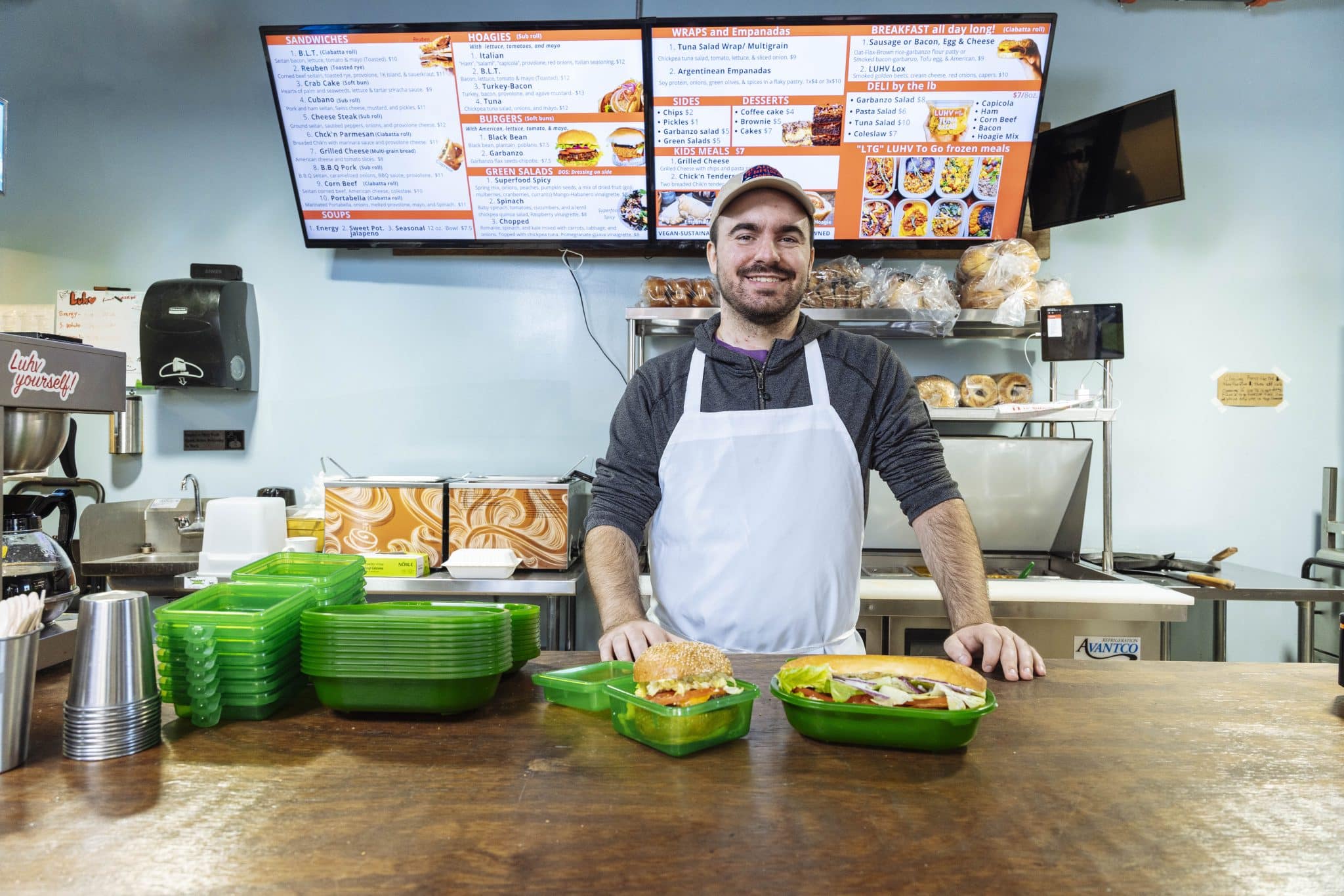
Among the regional organization collaborators are: Sustainable Business Network of Greater Philadelphia, Circular Philadelphia, Green Line Access Capital (a lending firm), LUHV Foods, Echo Systems, The Story of Stuff Project and Sustainable and Rethink Disposable/Clean water fund and Trash Academy.
“We offer technical assistance to businesses who want to make the change,” Shargorodsky said, “and we want people to understand they are being poisoned every day.”
She said studies show there are up to 16,000 chemicals of concern in food packaging, and these chemicals leach into the food contained in them.
READ: Microplastics Lurk in Freshwater Environments Across Pennsylvania
Compost facilities don’t want so-called “compostable” materials, as many are coated with PFAS and PFOS containing chemicals, even if the materials themselves do not have these materials intentionally added to them, according to Shargorodsky.
She said many people think switching to a compostable package “will solve all their sustainability” problems, except composters don’t want them.
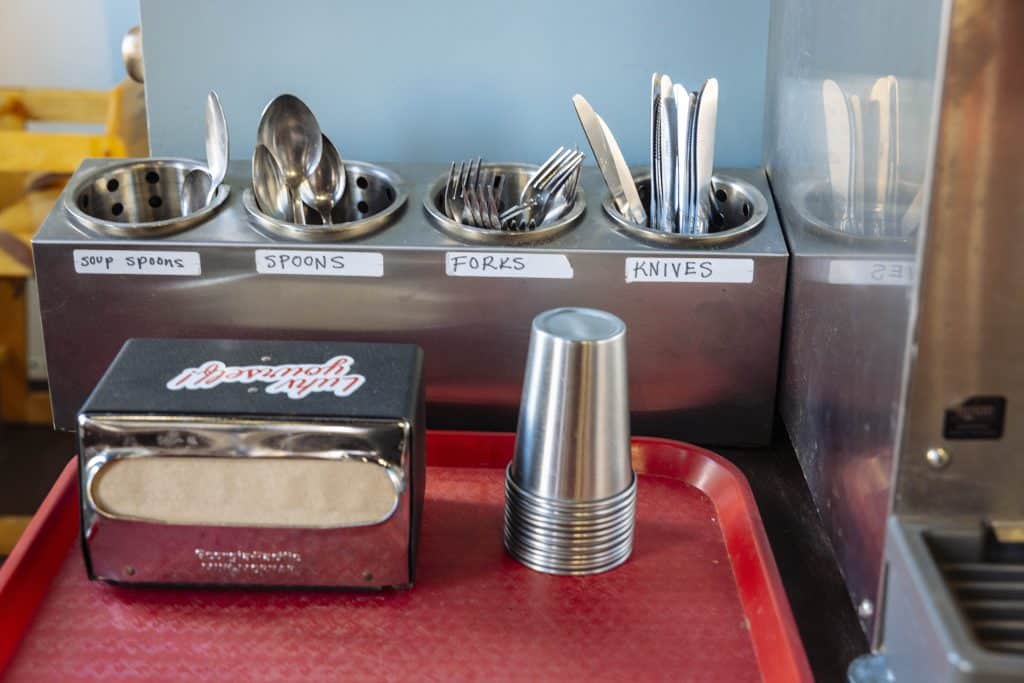
Shifting to lower-impact onsite warewashing, can make a profound difference.
Among ECHO Systems goals is “to get businesses to understand the hazards associated with packaging and the cost savings.” Case studies from Clean Water Action’s ReThink Disposable Team “illustrate that businesses who adopt reuse for on site dining have saved between $3,000 and $22,000 each year, depending on the size of the operation. This creates favorable conditions to move to reuse,” she explained.
Target businesses include eat-in food and beverage providers and coffee shops.
“We are not targeting takeout businesses” in the reuse campaign, Shargorodsky said. “We aren’t there yet, but that will come in the future.”
To learn more, register for an upcoming event visit: www.https://echosystems.org/events/.