
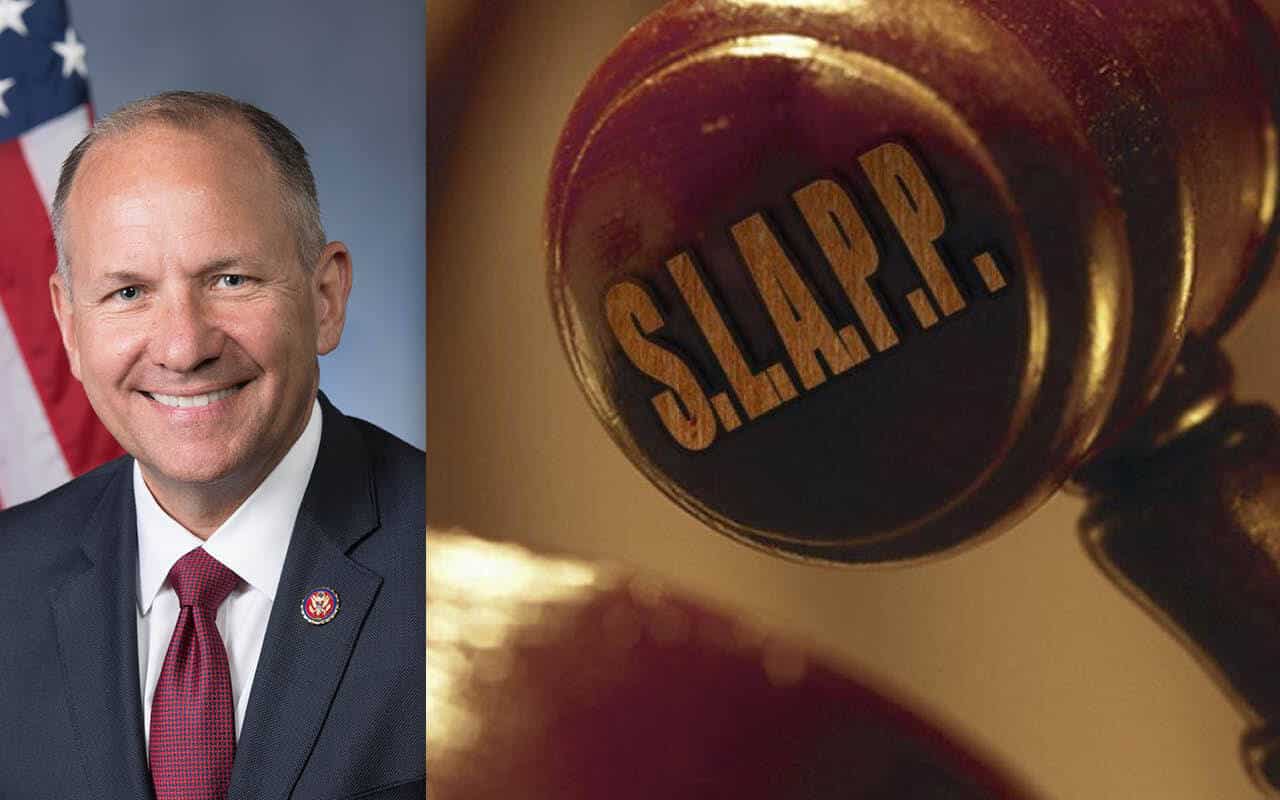
When a public figure like a sitting U.S. Congressman sues a local newspaper over its political commentary, courts do more than ask whether feelings were hurt. They ask whether the First Amendment – and, in Pennsylvania, now a new anti-SLAPP statute – bars the courthouse doors before the case begins to inflict severe defense costs on the newspaper.
Congressman Lloyd Smucker’s lawsuit against LNP Media Group, publisher of LNP | LancasterOnline, arises from a sharply worded editorial accusing him of “lying to his constituents” and “stretching and contorting reality to sell a falsehood” in the fight over federal healthcare policy. The editorial uses tough language. It is undoubtedly political. And that combination is exactly why Smucker’s lawsuit looks like a prime candidate for early dismissal under Pennsylvania’s new law designed to protect “public expression.”
A Law Designed for Cases Like This
Although our divided state legislature has been unable to accomplish much of anything, in 2024 Pennsylvania enacted a statute aimed at so-called SLAPP suits – lawsuits brought to chill speech on matters of public concern. The law, appropriately called the Uniform Public Expression Protection Act, took effect on July 17, 2024 and covers claims based on “the exercise… of the rights of freedom of speech or of the press” on public issues.
READ: Why The Associated Press Is Standing for Your Right to Speak Freely
An editorial about a sitting member of Congress and a looming federal government shutdown easily qualifies as the exercise of the rights of freedom of speech and of the press. This is core political speech, not commercial advertising or a private dispute. The statute allows a defendant, like the Lancaster newspaper, to file a special early motion to dismiss such claims, halts discovery while that motion is decided, and authorizes courts to dispose of weak cases at the outset – before the defendant is compelled to spend hundreds of thousands of dollars defending against the claims.
In Smucker’s case, before the parties engage in discovery, costly depositions, and document demands, Smucker may have to show that he has a viable defamation case. If Smucker’s claims fail at this preliminary stage, the court must compel Smucker to reimburse the newspaper for all reasonable fees and costs incurred in the defense of the lawsuit.
“Lying” or Mere Political Rhetoric
The editorial’s statements that Smucker was “lying to his constituents” and “playing a cynical game of Twister” lies at the center of Smucker’s complaint.
The “Twister” line is classic opinion – colorful, figurative, and not capable of being proven true or false. Courts have long protected that kind of rhetorical hyperbole.
The word “lying” is closer to the line, but also not actionable in context. Accusing someone of a lie can, in some circumstances, imply a factual claim about what the speaker knew and intended. But, in defamation claims, context is everything. Here, the editorial did not present “lying” as a secret insider revelation. The editorial tied the accusation to a public, documented policy dispute and directed readers to thoroughly researched, underlying reporting – including outside academic sources. That structure is significant. When an opinion writer establishes facts and draws harsh conclusions from those facts, readers are invited to agree or disagree with the conclusion themselves. Courts often treat that as protected opinion, not an actionable statement of hidden, defamatory fact.
A Policy Fight is Not a Binary True or False Question
Smucker’s lawsuit argues that the statements he made during his campaign – framing Democrats’ position as demanding “taxpayer-funded free healthcare for illegal immigrants” – was literally true, and therefore, the editorial characterizing it as a “lie” is itself false.
The reporting underlying the editorial, however, paints a more complicated picture of the debate. It describes the now well-known GOP talking point as “an exaggeration”, while also acknowledging that, because of how Medicaid funding works, some federal money would “almost certain[ly]” indirectly cover costs of care for undocumented immigrants.
That nuance is likely fatal to Smucker’s lawsuit’s attempt to frame this in a simple “true vs. false” narrative. The debate is not about whether any federal dollars ever touch healthcare involving undocumented people. It is about whether Democrats “demanded” a policy of “free healthcare for illegal immigrants.” The reporting says they did not, and thus labels the GOP formulation as an exaggeration.
Under the First Amendment, an editorial board for a prominent newspaper like LancasterOnline is allowed to look at that record and conclude that a politician’s framing is misleading enough to deserve the label “false” or even “a lie.” That is classic political commentary, not some kind of laboratory measurement, where the “false” result lands you in court defending an expensive defamation lawsuit.
The Constitution Raises the Bar Even Higher for Smucker
Even if Smucker could get past the opinion problem, he faces another wall: he is a public official. Under longstanding Supreme Court precedent, Smucker must prove “actual malice” – which, in the context of a defamation lawsuit means that the newspaper published a false statement knowing it was false, or with reckless disregard for the truth.
That is an extraordinarily demanding standard. It is not enough to show that the editorial was wrong, slanted, or unfair. Smucker must show that the editors subjectively knew that they were publishing a falsehood.
READ: Local Journalism Is How Democracy Shows Up Close to Home
But Smucker’s complaint itself highlights that the newspaper’s own reporting acknowledged the underlying complexity of the debate, and offered competing interpretations, including the likelihood that some federal funds indirectly cover care for undocumented immigrants. At the same time, that reporting called the GOP’s framing an exaggeration.
That is not evidence of a newspaper knowingly spreading a lie. It looks far more like a newspaper reviewing contested facts and then issuing a forceful editorial judgment about how a sitting member of Congress characterized them. Under the First Amendment, that kind of judgment call – however sharp – is protected, unless made with deliberate or reckless falsity. Proving that is notoriously difficult, as it should be.
Exactly Why We Need Anti-SLAPP Laws
Pennsylvania’s statute declares that courts should guard against lawsuits that chill speech on matters of public significance and should dispose of meritless claims early. A sitting Congressman suing a local newspaper over an editorial criticizing his messaging on a national policy fight is almost a textbook example.
None of this means that politicians cannot ever win defamation suits. But when the speech at issue is an opinionated editorial, grounded in disclosed reporting, about a public controversy – and the plaintiff is a public official who must prove actual malice – the law sets an appropriately high bar on purpose.
Pennsylvania has now added a procedural fast lane to enforce that principle. Congressman Smucker’s lawsuit may be one of the first high-profile tests of whether that lane works as intended.