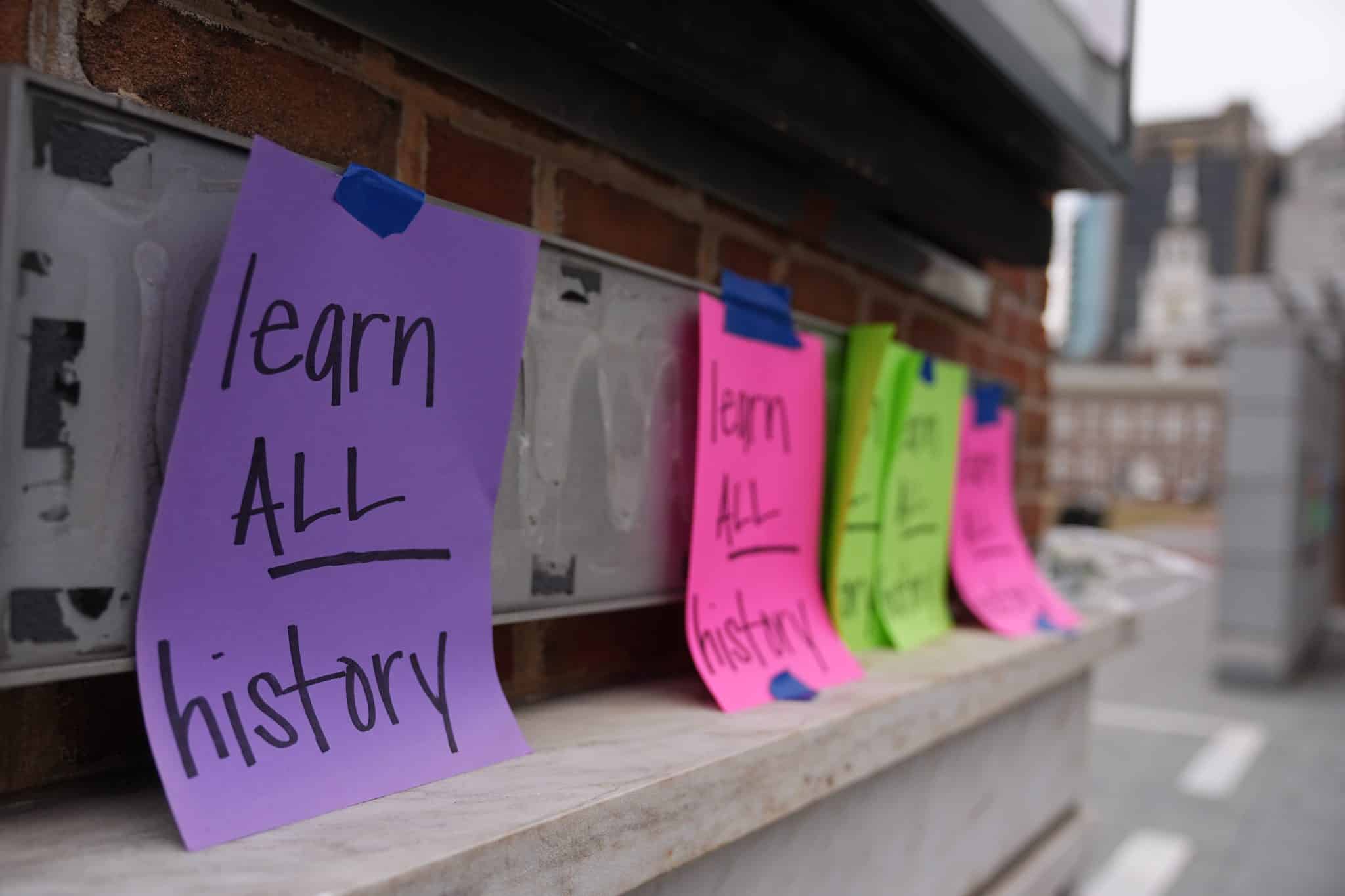
Bucks County joined Philadelphia’s other “collar communities” of Chester, Delaware and Montgomery counties and signed an “amicus brief” today supporting Philadelphia’s lawsuit to restore the history of slavery exhibits at the former President’s House Site on Independence Hall.
The U.S. National Park Service removed the panels and disbanded the exhibit on January 22 without the city’s agreement or consent. Now Philadelphia and others are suing the federal government for the installation’s return.
The county’s decision was announced in a press release.
“Attempts to erase evidence of our history do not heal the stains of the past – quite the opposite, they make us weak and vulnerable to repeating our failures,” said Diane M. Ellis-Marseglia, Bucks County Board of Commissioners chairperson.
The former property ruins have been restored as a free open air museum for visitors to consider the contradictions between America’s fight for liberty and freedom against the shadow of many Americans who practiced human enslavement.
An amicus brief, or “friend of the court,” allows those not directly involved in a lawsuit but with a strong interest in it to provide information, “expert perspectives” or legal arguments with the goal of influencing a judicial decision.
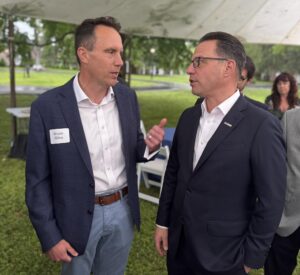
“As someone who spent decades in the classroom teaching young people about American history, I have always believed that our history, all of it, deserves to be taught,” said Bucks County Commissioner Bob Harvie in an email.
Harvie is among a field of Democratic hopefuls to challenge incumbent Republican Brian Fitzpatrick (PA-01) in November’s midterm elections.
INTERVIEW: Reading George Orwell in Trump’s America, With Laura Beers
Philly Voice reported the site’s removed panels and artworks depicted the lives of nine enslaved people who lived with then-President George Washington and his wife Martha from 1790 to 1797.
The enslaved people’s names were: Moll, Christopher Sheets, Hercules, Richmond, Ona Judge, Austin, Giles, Paris and Joe, according to People Not Property.
“As someone who spent decades in the classroom teaching young people about American history, I have always believed that our history, all of it, deserves to be taught.” – Bucks County Commissioner Bob Harvie
These Philadelphia individuals represented a fraction of the more than 300 enslaved people on Washington’s Mount Vernon farm, a roughly 7,400 acre plantation in Virginia. An estimated 517 enslaved people worked at Mount Vernon during the first American president’s lifetime.
“What happened at the President’s House in Philadelphia is not an abstract footnote; it’s a real chapter in our nation’s past that teaches us about liberty and slavery, about contradictions and courage,” Harvie said.
He said supporting Philadelphia’s lawsuit isn’t about politics or convenience but rather about honoring the truth.
“It’s about the names and lives of enslaved men and women who lived and worked just steps from Independence Hall. Making our nation better means acknowledging the mistakes of the past and celebrating how far we have come and the progress we have made. There is still work to be done, but we can’t build a better future by ignoring our past,” Harvie added.
The full lawsuit may be found here.