What do we do when our elected leaders become so comfortable bending the truth that facts no longer matter?
That’s not a rhetorical question. It’s one the Souderton School District community is now forced to confront—again.
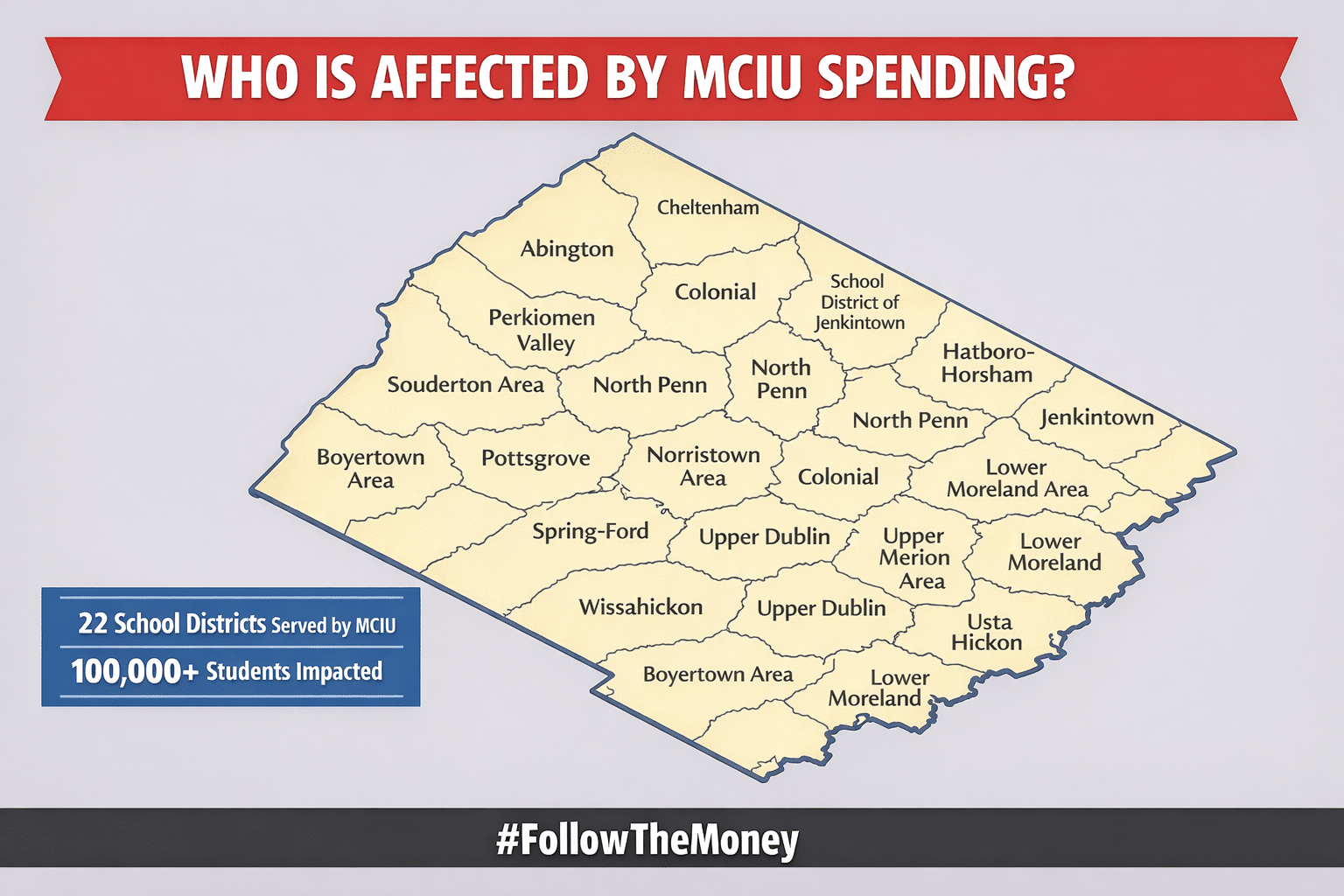
The Philadelphia Inquirer’s recent reporting on the Montgomery County Intermediate Unit (MCIU) revealed MCIU-funded international travel, including a 14-day African safari and other lavish trips tied to agency leadership. Executive Director Dr. Regina Speaker earns approximately $298,000 per year—roughly 250% higher than the median salary at Montgomery County Intermediate Unit 23. MCIU director Sandra Edling, who also benefited from these trips, earns about $226,395—approximately 166% higher than the median MCIU salary. At the same time, MCIU teachers report being forced to pay for their own professional development. These expenses raise serious questions about oversight and priorities. But what followed at a Souderton School Board meeting may be even more concerning than the spending itself.
Instead of demanding answers, some leaders rushed to defend.
Former board member Janet Flisak, who served as MCIU board president when these expenses were approved, has not commented—despite three weeks passing since the story broke.
Current board member Kim Wheeler did.
Wheeler defended the MCIU, praising its programs and emphasizing that Dr. Speaker was “remorseful”—as people often are once their bad behavior is exposed. More troubling, Wheeler claimed Philadelphia police were investigating the Philadelphia Inquirer journalist who broke the story—a statement she later walked back, admitting it “was not as accurate” as she thought and based on information provided to the MCIU board. (From whom?)
Let’s be clear.
An elected official publicly suggested a journalist was under police investigation when that was not true. The effect was to shift attention away from irresponsible taxpayer-funded spending and toward discrediting the messenger. Wheeler aligned herself with those who benefited from the spending rather than the students those resources were meant to serve.
At best, it was reckless. At worst, it was intentional deflection.
Either way, it’s unacceptable.
And it’s not the only concern.
At that same meeting, MCIU teachers described working with limited supplies, low pay, and being expected to fund their own professional development. Some said they feared retaliation for speaking out.
That should stop us in our tracks.
READ: Souderton Taxpayers Deserve Answers Before Another Tax Hike
Because when educators are afraid to speak openly about conditions affecting students, the problem goes far beyond questionable spending.
So we must ask:
Is fear of retaliation just as serious as the misuse of taxpayer dollars?
Both point to a system where accountability is lacking—and where those closest to students feel the least protected.
Outgoing Superintendent Frank Gallagher also weighed in, offering a character defense:
“I know Mrs. Speaker personally… she loves children, and she loves making sure children’s needs are met.”
But this isn’t about personal feelings.
It’s about priorities.
While $40,000 was spent on travel, that same money could have:
- Increased access to assistive technology
- Provided equipment for multi-handicapped students
- Expanded psychological services for students in need
- Expanded support services for students with special needs
- Funded professional development for educators
- Helped move teachers toward a living wage
Instead, those funds were diverted away from classrooms.
That is what makes these defenses so troubling.
In that moment, local leaders had a choice: Stand up for students and teachers or protect the system and those responsible for letting students and teachers down.
READ: A Tale of Two School Board Meetings: Leadership Matters in Souderton
They chose the latter.
They defended leadership instead of advocating for students and educators.
That is not leadership.
It is a failure of responsibility.
School board meetings are not venues for loyalty or damage control. They are where facts should be presented and accountability demanded.
When elected officials substitute facts with feelings—or worse, falsehoods—they erode trust.
And once trust is lost, rebuilding it is not easy.
This moment is bigger than one meeting. It’s about expectations.
We should expect leaders to ask hard questions, rely on facts, and represent the public—not protect their peers.
When truth becomes optional, accountability disappears.
And when accountability disappears, students, teachers, and taxpayers pay the price.