Last week, my boyfriend woke up to someone banging on the front door of his Northeast Philadelphia home. It was 6 a.m.
“Boom boom boom boom,” he described the sound to me later. Then a pause. Then the pounding again. Since the bedroom of his rowhouse is above the front door, he could hear a man’s voice, saying something about a camera. That jolted my boyfriend into opening the app for his front-door camera so he could see what was going on.
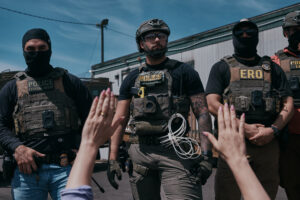
The burly man at his door wore all black under a green flak jacket that read POLICE ICE in big yellow letters across the chest. No name or badge. By backing up the camera footage a few moments, my partner saw a large unmarked black car pull up outside his house. Three agents got out. Two idled in the street and the third “walked straight to my door.” That agent continued pounding on the door at intervals for about three minutes, and then all three of them got in the car and left. Perhaps, in referencing the camera, they knew they were being observed.
“At first, I felt very confused,” my partner told me later. “And then very angry. Why would an ICE agent come pounding at my door at 6 a.m.?”
We have a pretty good guess.
My boyfriend’s parents, who immigrated from China more than 40 years ago, are naturalized U.S. citizens. My boyfriend was born here. He’s an actor, artist, and avid reader. As a child, he heard anti-Asian slurs from other kids on the South Philly block he grew up on. Now U.S. immigration agents were at his door.
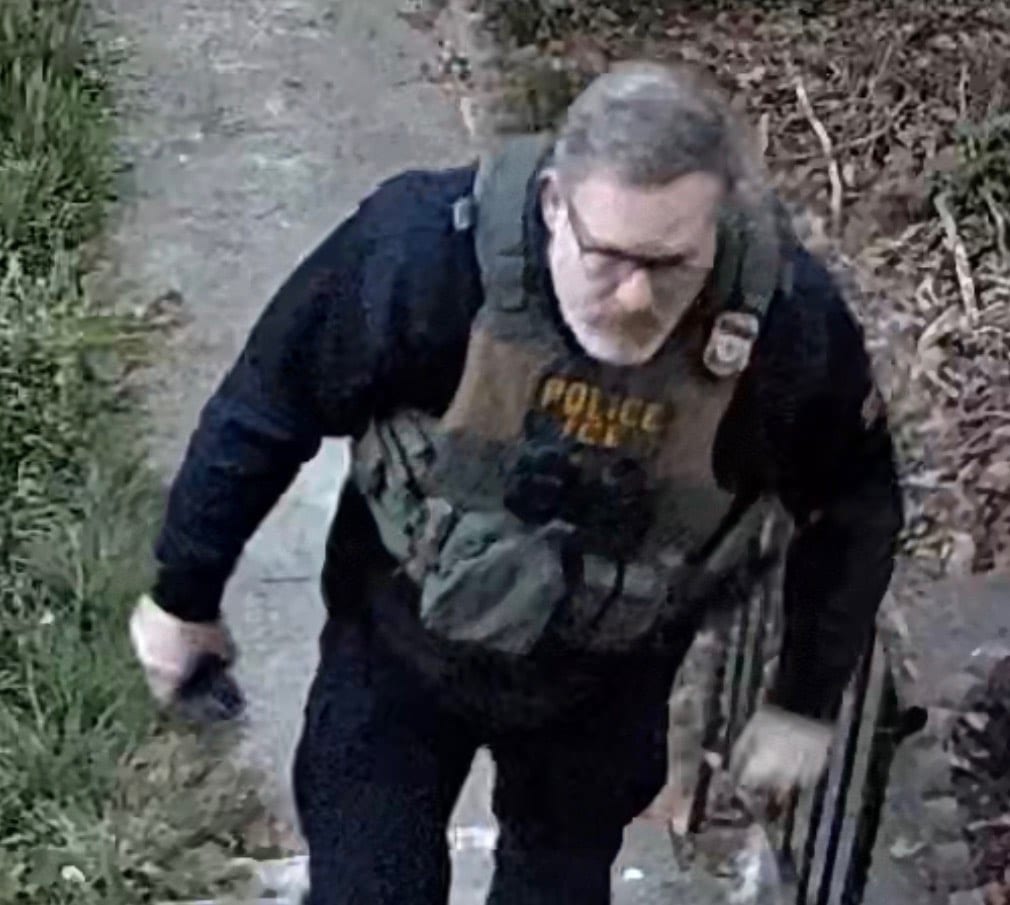
“I felt we were being targeted,” he said. Both of his now-elderly parents live in the house. What if one of them had opened the door? Would agents have demanded their documents despite the whole family being U.S. citizens, or dragged them away in the waiting car?
The images have been pouring in from across the country over the last several months, including an elderly Hmong American man hauled out of his St. Paul, Minnesota home at gunpoint by ICE agents last January, wearing nothing but his underwear and a blanket against the snow. He was returned home later when the agents realized he is a U.S. citizen. Parady La, a Cambodian immigrant living in Upper Darby, was seized by ICE on his way to the store; he died at the Federal Detention Center in Center City Philadelphia on January 9.
When my boyfriend told me about the ICE agents at his door, I felt sick. We had feared it was coming and hadn’t waited quietly for it to happen. We have been joining pro-democracy protests together for years, despite growing evidence that the federal government is targeting peaceful protestors with violence, arrest, and killing, as in the case of Renee Good and Alex Pretti, US citizens shot dead in the streets of Minneapolis by immigration officers last winter.
Members of President Trump’s cabinet have warned that protestors will be labeled as agents of domestic terrorism by the administration. Two women volunteering as legal observers in Maine are suing the Department of Homeland Security (DHS) after receiving chilling comments from ICE officers.
READ: How ICE Will Spy On Protesters, And How You Can Protect Your Privacy
“If you keep coming to things like this, you are going to be on a domestic terrorist watchlist. Then we’re going to come by your house later tonight,” one agent said to a plaintiff, according to the suit. “We have a nice little database,” another agent says to the other plaintiff, on camera, “And now you’re considered a domestic terrorist, so have fun with that.” By many reports, DHS is increasingly using AI to crunch facial recognition data, social media posts, and license plates to target and intimidate protestors.
Democrats in Congress have been trying to rein in worsening abuses by ICE. They refused to fund DHS (which also houses agencies like the Coast Guard, TSA, and FEMA, in addition to immigration enforcement) until ICE agrees to follow some “guardrails.”
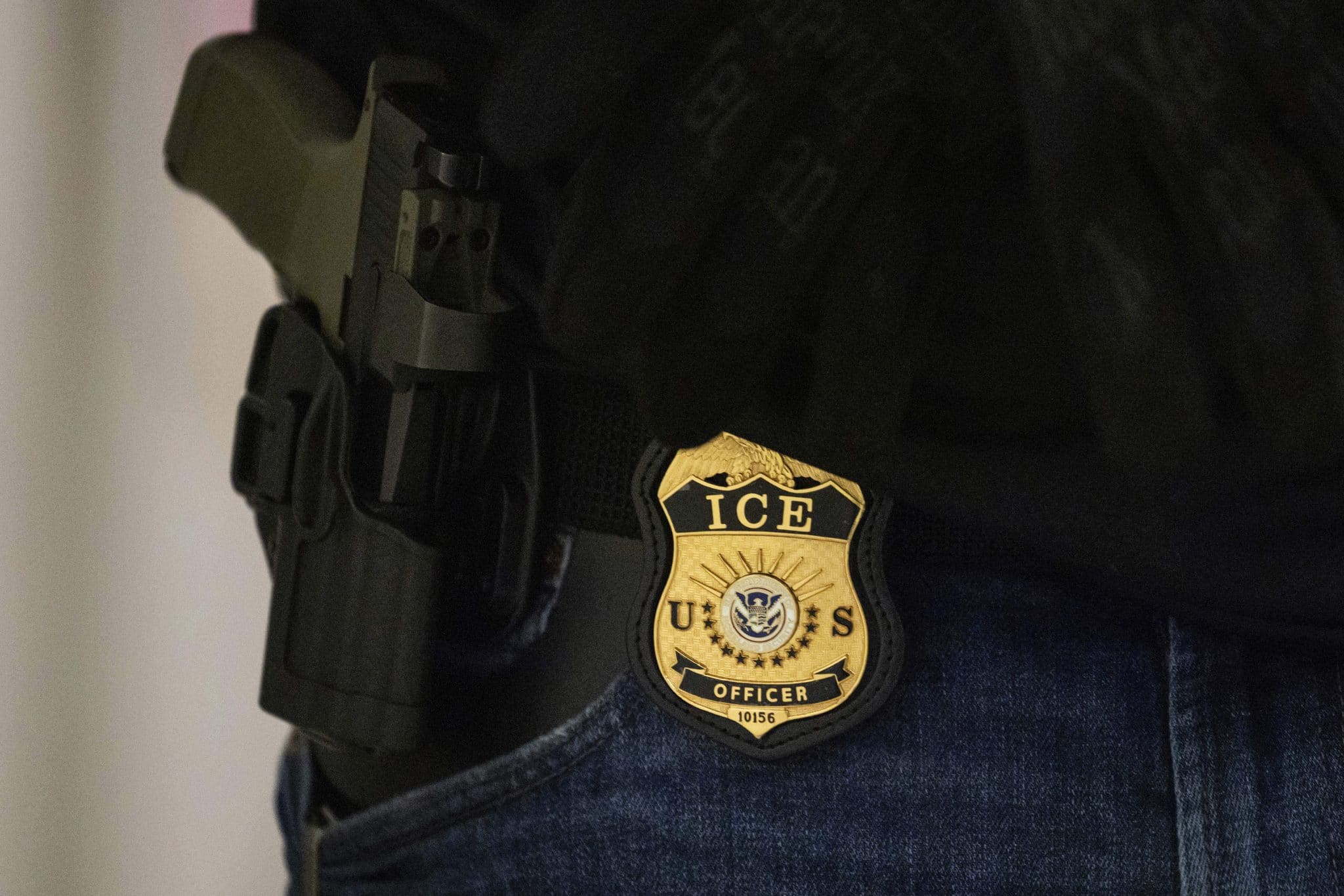
They must have a judicial warrant to enter private property. US citizens must not be held in immigration detention. ICE cannot use racial profiling. They cannot cover their faces and remove their badges. They must conform to standard use-of-force policies and ensure detainees receive their constitutional rights.
These are often framed as “reforms” in the press. In reality, Congress is asking ICE agents to follow existing laws and the Bill of Rights. But that was too much for Congressional Republicans. Even after the US Senate passed a bill that funded all of DHS except for ICE and Border Patrol (which are still rolling in cash regardless, thanks to last summer’s budget bill), House Speaker Mike Johnson called the legislation “a joke” and refused to bring it to a vote.
Finally, after a historic 75-day DHS shutdown, House Republicans blinked and passed the Senate funding bill, which was signed by Trump on April 30. Fights over the ICE funding and limits on violent immigration enforcement remain, as Republicans gear up for a Senate maneuver to overcome the filibuster and vote another $70 billion for ICE and Border Patrol through the rest of Trump’s term, with zero promises to observe constitutional rights on U.S. soil—or as Johnson put it, no “crazy Democrat reforms.”
If we don’t stand up, that means many more families will wake up the way my boyfriend did, sleepy and startled and vulnerable. That day, I channeled my rage into phone calls to everyone who represents me at every level of government. A staffer in Governor Shapiro’s office regretfully suggested that my boyfriend, a U.S.-born citizen, carry his documents with him at all times because he is Asian American. What went unspoken is that I don’t need to do this because I am white.
READ: Immigrant Beaten by ICE Agents Suffered 8 Skull Fractures and 5 Life-Threatening Brain Hemorrhages
I shot back that he’s already been doing that for months. He takes his passport everywhere. And now we know he’s on some kind of list for harassment by federal agents. “That is not acceptable to me,” I told Shapiro’s office. “That is an apartheid state.” It’s not just happening to us. My friend, whose Japanese mother is a U.S. Green Card holder, shared that her mom was terrified to see ICE agents in her Philadelphia neighborhood recently. The family has decided that she will no longer leave the country, for fear of being detained upon her return.
Now, instead of saying good morning, my boyfriend texts me first thing to say that ICE has not been back. Yet. Nobody, citizen or not, should have to live with that kind of fear in the “land of the free.”
I’m telling these stories with permission. We could choose to be silent: let fear control us and hope the terror passes us over. But that will only increase the danger to everyone. Open your eyes to what is happening to your neighbors. Speak up. Do it before federal agents bang on your own front door, or the door of someone you love.