
“A Republic, if you can keep it.”
These seven words by Benjamin Franklin still ring true 234 years later. And that’s not lost on Bucks County’s commissioners.
In a unanimous, bipartisan vote on July 1, Commissioners Diane Ellis-Maeseglia, Bob Harvie and Gene DiGirolamo passed a resolution in support of the Constitution and in defense of democracy to mark America turning 250.
“This is a statement we shouldn’t necessarily have to make,” said Harvie, who is also running against Congressman Brian Fiztpatrick in November. “But I do agree that we are in unprecedented times and as elected leaders I do think it is important for us to say something.”
The resolution was passed unanimously as part of a national movement to oppose any federal actions that compromise the fundamental principles of our nation’s oldest document. This grassroots citizens movement, inspired by the “resolutions of condemnation” that were used to gain support for the American Revolution, has been gaining traction with over 100 local resolutions approved or in progress across the country.
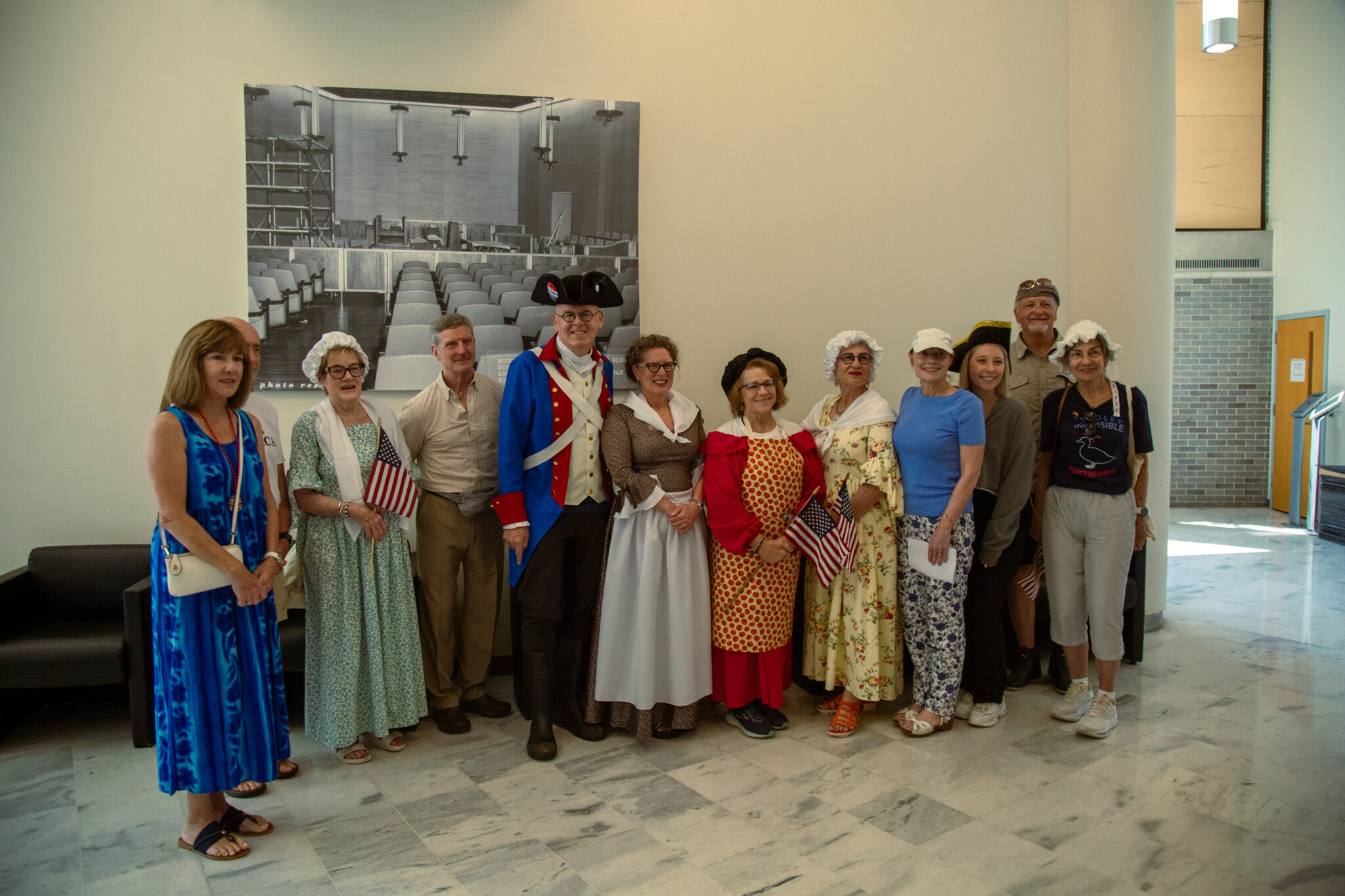
Steve Worth, a board member of the Doylestown Historical Society, was dressed in colonial-era garb at Wednesday’s meeting to imitate a town crier.
He read the county resolution aloud that reaffirmed its upholding the ideals and values of the Constitution.
Craig Peters, a Bucks County resident, is a leading member of this movement. He was joined by many others on Wednesday wearing colonial-era dressing to support the resolution.
READ: Rep. Brian Fitzpatrick Wants to Change the US Constitution and Radically Transform the Country
“Many unconstitutional actions of the federal government are harming the people of Bucks County,” said Peters. “Passing these resolutions might prompt fears of retaliation by the Trump administration, but that illustrates why they are so necessary.”
The first of these resolutions was passed in Bernalillo County, New Mexico, and was organized by Deborah Potter. Potter is a veteran television journalist who has worked for CBS News and CNN.
“Just as our founders were called in their moment in time, now we are the ones being called to meet the moment,” Potter said.