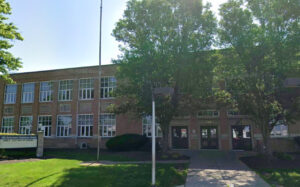
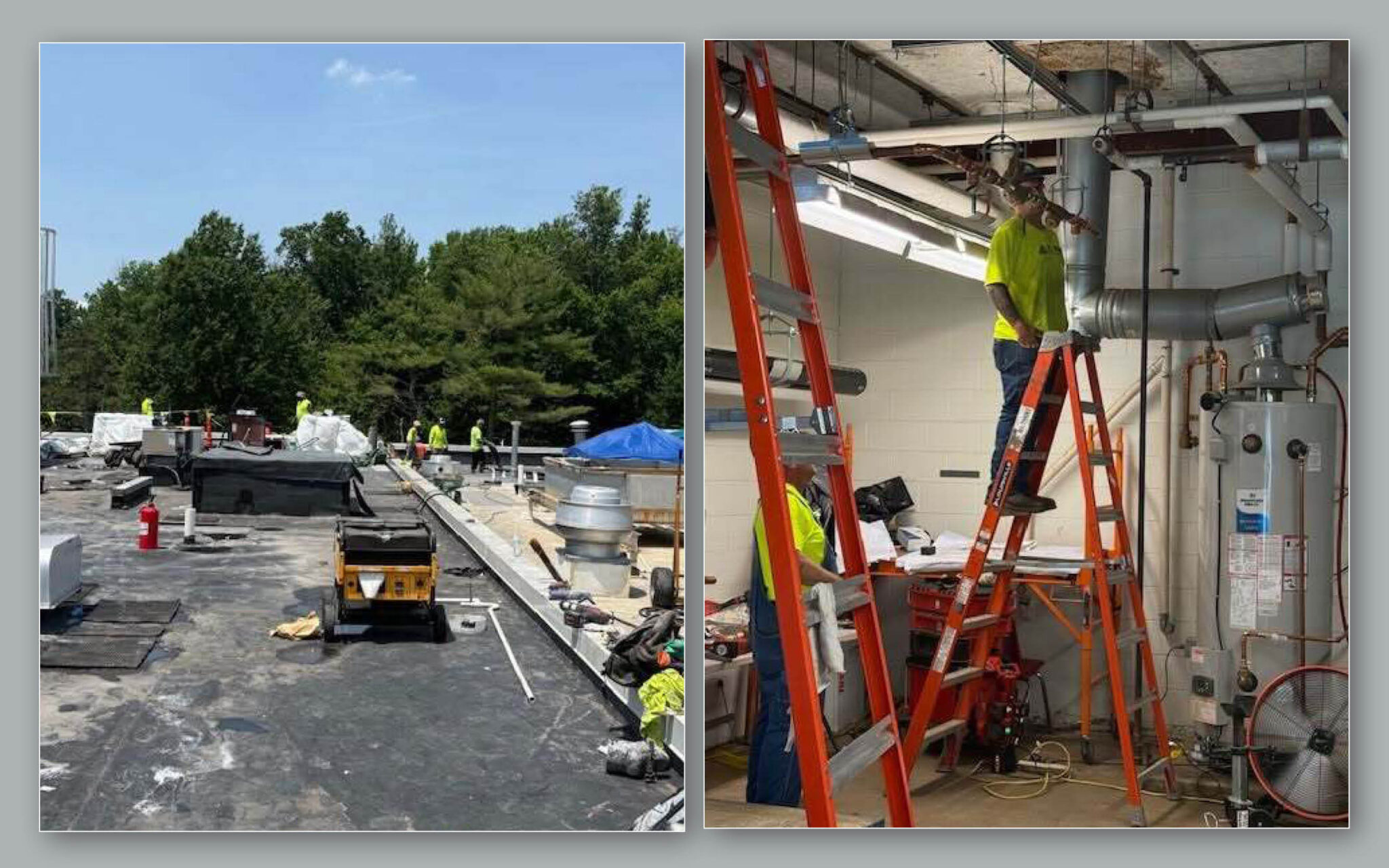
Renovations to Bensalem’s Benjamin Rush Elementary School’s heating, ventilation and cooling system are underway, part of a $10.9 million capital improvement project by the Bensalem Township School District to modernize the building.
In addition to upgrading the building’s climate control, the elementary school will be outfitted with energy-efficient lighting, new carpeting in the library and a comprehensive roofing project to replace aging infrastructure and prevent water infiltration.
The Bensalem Township School Board approved an initial $2.5 million to $3 million estimate for the HVAC project in February, funded by the Guaranteed Energy Savings Act.
GESA allows schools and municipalities to upgrade older energy infrastructure like HVACs with no upfront cost, financing them and paying contractors back over time with savings from the newer, more efficient systems.
Though the district faced a $12 million budget deficit in April — leading to the termination of over 30 positions — this project was able to move forward because it was pre-funded through a capital improvement fund. This money cannot be moved to the operational budget to prevent layoffs or ease deficits.
“For the past ten years, I have had the privilege of watching generations of students learn, grow and thrive at Benjamin Rush Elementary,” said Joan Richey, principal of Benjamin Rush. “These renovations are much more than building improvements, they are an investment in our children, our staff and the learning environment they deserve.”
A fluctuating indoor climate
Melissa Adams is the building principal’s secretary at Benjamin Rush.
She explained the old climate control system was in constant need of daily repairs. In some areas of the building, heating and cooling did not work at all.
Benjamin Rush was built in 1964 and many of the building’s mechanical systems have not been updated since its original construction, according to Victoria Velazquez, Bensalem School District interim superintendent.
“I went to school here, my kids went to school here — I pay taxes here. I think it’s a great thing.” – Melissa Adams
During the past year, Adams said there have been days the heat in her office worked and in others offices it did not. These situations required staff to bring in a space heater and layer in the colder months, until the maintenance staff could repair the faulty HVAC.
In some rooms at the elementary school temperatures could reach 90 degrees Fahrenheit, while other areas in the building would be comfortable. Adams said parents became unsure of how to dress their children for the school day.
“When you’re sending your kids to school, you never know if (the HVAC is) going to die out that day,” Adams said.
The elementary school secretary thinks that a new climate control system is “absolutely a great idea.”
Greater need for temperature regulation
Pennsylvania needs to spend $5.2 billion on HVAC equipment — the fourth most in the country — to adequately cool schools and manage rising temperatures according to a report from the Center for Climate Integrity.
Russell Zerbo is an advocate at Clean Air Council, a Philadelphia-based non-profit focused on climate change and sustainability in the Mid-Atlantic region. He explained that due to ongoing rising temperatures, June and September months are quickly reaching similar temperatures to July and August.
“If you’re scheduling classes in September and June — even outside of that — you need air conditioning,” Zerbo said.
READ: As Climate Changes Fuels Hotter Temperatures, Kids Are Learning Less
This need for updated HVAC systems extends beyond just temperature regulation. With increasing environmental catastrophes the demand for clean air becomes equally essential.
Smoke from Canadian wildfires resulted in a Code Red Air Quality alert on July 16 in Bucks County. This comes three years after smoke covered the skies of the greater Philadelphia region in 2023.
Research has demonstrated that HVAC systems are potent combatants of wildfire smoke effects in the classroom. An Environmental Pollution study found that central HVAC is needed to protect indoor spaces and “achieve necessary air exchange rates within school classrooms.”
“If there was a wildfire event during the school year, you absolutely need these safe indoor environments,” Zerbo said.
Renovation timeline
While an exact date has not been publicly released, students and staff can expect the upgrades to be finished ahead of the upcoming school year.
To outfit the school with the updated HVAC system, construction crews have been at work throughout the summer, removing old window ventilators, installing new ductwork throughout the school and completing electrical work in the hallways.
“By modernizing critical building systems today, we are creating better learning spaces for our students and staff while reducing future maintenance and operating costs for taxpayers,” said Velazquez.
In the past, weather on a given day would regulate the temperatures inside Benjamin Rush, according to Adams. With the new HVAC system installed, she hopes that is going to change.
“I went to school here, my kids went to school here — I pay taxes here,” Adams said. “I think it’s a great thing.”