
This story was originally published by The 19th.
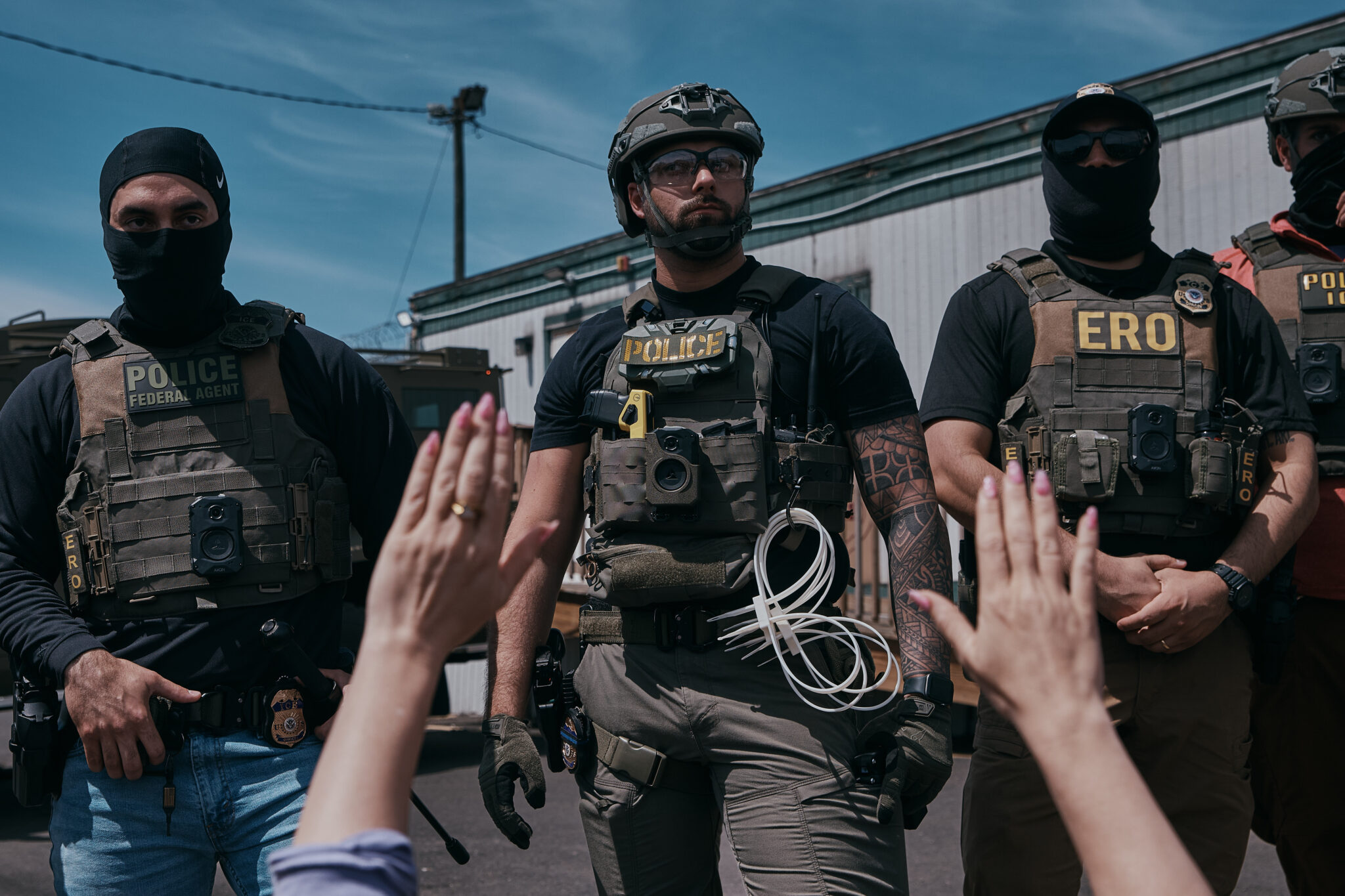
No comprehensive, publicly available data exists tracking immigration agents who have a record of violence against women and children. One organization is attempting to fill some of that gap. The Ohio Immigrant Alliance, a grassroots advocacy group, has compiled a list of 152 agents from Immigration and Customs Enforcement (ICE) and U.S. Customs and Border Protection (CPB) who have either faced administrative disciplinary action or criminal penalties for allegations of violent crimes.
The report, published Tuesday, is an expansion of findings released by the advocacy group in July. The organization identified cases involving the arrests of ICE or CBP personnel by looking at court documents, reports from the Department of Homeland Security’s Office of Inspector General, the Department of Justice website, news reports and other publicly available records. The group then compiled a list of 152 ICE and CBP agents who have been accused, arrested, charged or convicted in connection to a range of violent crimes between 1982 and 2026. All but one of the alleged offenders on the list are men.
Critics have raised concerns about the vetting and training of immigration and border patrol officers as the administration continues a historic hiring spree.
The report notes that the dataset is not “a comprehensive review of every ICE or Border Patrol agent who has ever committed a crime,” adding that they “chose to focus on agents who committed sexual and violent crimes.”
An analysis by The 19th indicates that 73 percent of the people on this list were categorized by the Ohio Immigrant Alliance as being criminally charged or convicted and sentenced related to sexual offenses. Fifty percent were categorized as being criminally charged or sentenced related to crimes against minors. The alleged crimes include abduction and sexual assault of a minor, unauthorized access and use of intimate digital photos, possessing child sexual abuse materials, aggravated assault with a deadly weapon, domestic violence and strangulation.
One of the hopes in releasing this report is to get “law enforcement to start tracking data about family violence” among their officers, according to Lynn Tramonte, executive director of the Ohio Immigrant Alliance. During a call with reporters to discuss the findings, she also encouraged researchers and other organizations to get involved with collecting data and building on the work her organization has started.
“We’re giving you these 152 names,” Tramonte said. “We’re giving you the dates of their last activity — whether it was a charge, whether it was a conviction — and we’re giving you links to information about them. There’s so much you can do with this information that we didn’t get into in our report.”
In response to a 19th request for comment, a DHS spokesperson wrote via email: “the ICE Office of Professional Responsibility diligently applies the proper personnel vetting regulations, including guidelines for national security, and evaluates all available information for every applicant based on these factors.”
The statement continued: “We take allegations regarding misconduct seriously and cherish the public’s trust. We work tirelessly to uphold the rule of law and hold ourselves accountable.”
Acts of violence, including sexual and gender-based violence by immigration agents, have received more attention during President Donald Trump’s second term. Though videos documenting use of force by ICE agents against women while on duty have flooded social media, comprehensive data tracking these incidents is basically nonexistent. Another key frustration for critics of the administration is the alleged history of violence committed by immigration agents.
“We need to make civil immigration enforcement truly civil, so that it won’t be an attractive job to people who want to run around carrying a gun.” – Lynn Tramonte, Executive Director of the Ohio Immigrant Alliance
In July, the Associated Press reported that ICE agent David Brouillette, who fatally shot 25-year-old Johan Sebastián Durán Guerrero that month, had a documented history of domestic violence against two previous wives and his daughters.
His first ex-wife, Ashley Brouillette, told the Associated Press that in late 2025 — around the time David joined ICE — he left a three-minute voicemail in response to her filing for a restraining order against him. He also suggested that she and the other women and girls in her “bloodline” should die.
“And all of you should have your f——–g throats cut,” the voicemail said. “Yeah, you should. Am I threatening that I’m gonna do that? Nope. Nope. But do I think that you should have your f——-g throats cuts? Or should have had them cut? Yep.”
READ: Democrats Disagree Over Abolishing or Reforming ICE at DNC Meeting
Federal law enforcement agents can be criminally prosecuted or sued in civil court for excessive violence while on the job. But in many instances, broader legal protections make it nearly impossible to win these cases. Organizations like the American Civil Liberties Union are working on legal avenues to hold the federal government accountable for alleged abuses. Law enforcement officers who face non-criminal disciplinary action or firings for misconduct can be rehired by other agencies, a pattern often referred to as “wandering officers.”
In its report, the Ohio Immigrant Alliance calls for the government to freeze ICE and CBP budgets and hiring, implement real accountability measures and vetting processes and to restrict the ability of immigration agents to carry weapons and wear disguises given that they represent a civil rather than criminal sector of government.
“We need different paths for protection. We need a different system that doesn’t just protect agents,” Tramonte said in the conference call on Tuesday. “We need to make civil immigration enforcement truly civil, so that it won’t be an attractive job to people who want to run around carrying a gun.”
The 19th is an independent, nonprofit newsroom reporting on gender, politics, policy and power.