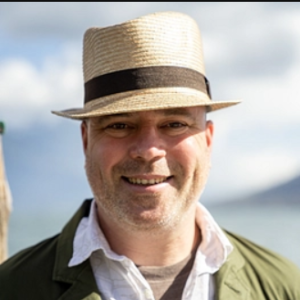

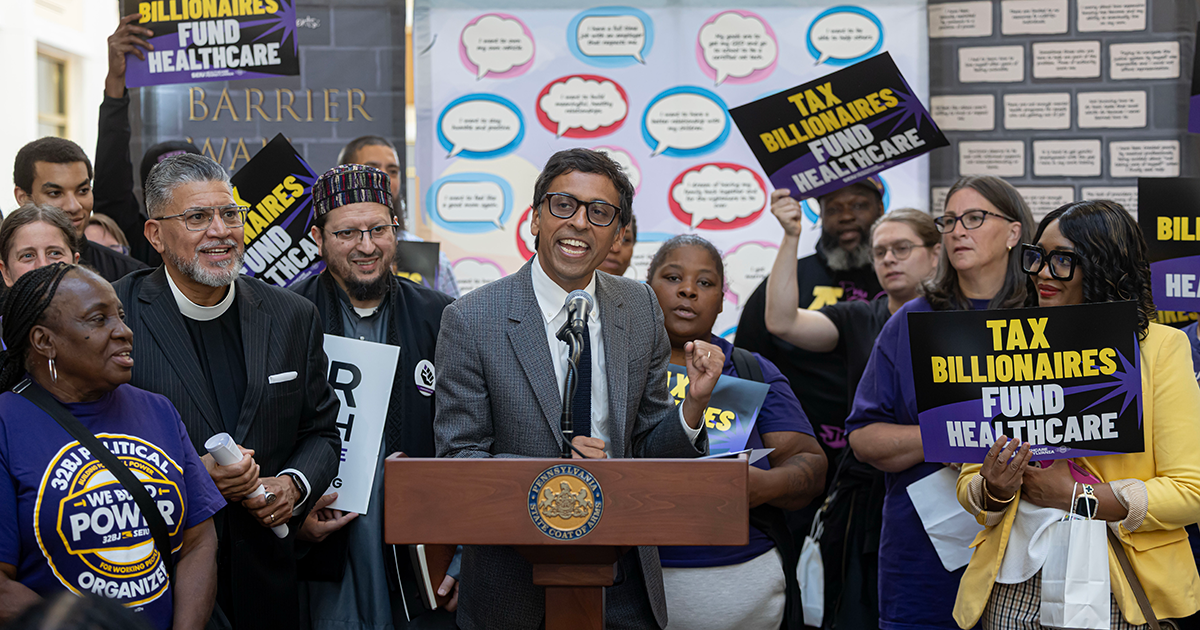
Nikil Saval, a member of the Democratic Socialists of America, was just reelected to the Pennsylvania state Senate in the first district in Philadelphia.
He has championed the Whole House, Whole Home Repairs Act, sought to change zoning regulations to allow for constructing affordable housing, advocated for prison reform, has been a longtime proponent of Medicare for All and aggressive climate action. He’s been a champion of working families in Philadelphia and the entire Commonwealth. Kevin Mahoney and I spoke with Senator Saval about the Populist Blue Wave that that swept across Pennsylvania and the country and what it means for Democrats in Harrisburg and the working families who gave them this mandate for change.
Kevin Mahoney: So to say the results of this year’s midterm elections were historic does not even seem to capture the full potential of this moment. So we’re not gonna waste any time, let’s dive right in. So Nikil, I thought maybe you can kind of start us off here by giving us a sense of what the results of Tuesday’s elections look like from where you sit, particularly in how it’s gonna impact or potentially impact things going forward in Harrisburg.
State Senator Nikil Saval: So the change in the state legislature is historic in ways that I think many of us may not even fully understand. So the last time that Democrats controlled the state Senate in Harrisburg was the early 90s. That was just by happenstance.
A member of the Republican Party switched sides briefly, then returned to Republican control soon after that. The last time that we’ve had an election like this where voters delivered a Democratic trifecta to Harrisburg was the late 1970s. So it’s been nearly 50 years.
The other thing I would say about the nature of this trifecta is it was delivered by a “Populist Wave” in addition to a blue wave. It was voters, of course, rejecting Republican dominance and all that it meant from Washington to Harrisburg, to more locally. But in particular, people were aghast at the level of corruption in Washington and Harrisburg.
They were horrified by the war in Iran and the effect that it has had on ordinary working class people here in Pennsylvania, and of course, across the country. They rejected the dominance of Big Tech corporate billionaires, their attempt to buy elections, their dominance over policy everywhere. And you saw that in the mass revolt against AI data centers in particular, across political party lines, across geographies.
But I think in other ways, I think people saw choices being made by the party in power. They saw that the party in power, the Republican Party was choosing tech billionaires and over health care. They were choosing to fund ICE and ICE terror over solving people’s ordinary needs for housing, childcare, and the like.
And Democrats largely campaigned on these issues. They campaigned against billionaires. I mean, even so-called moderate Democrats in, for example, to think of the national level, James Tallarico and others were very clear that there were enemies and the enemies were the wealthy corporate elite and they were against working class people.
And that was true in Pennsylvania as well. I think we had a lot of people who won their elections who were winning against the Republicans who would kowtow to tech billionaires. There was in fact one big billionaire who tried to buy virtually every election here in Pennsylvania, that’s Jeff Yass.
And he took a big L.
That’s very satisfying of course, but I think it points to the nature of the democratic trifecta that we have that people didn’t do that because, just because they hate Republicans or just because they hate billionaires, frankly.They did it because they want us to deliver on behalf of working class Pennsylvanians.They expect more.
We’ve said that we’re of course gonna raise the minimum wage, fund transit and the like, but I think they want us to really reshape the rules of the American economy and how it works. I mean, so that people can see the trajectory of their lives changing or changing for the better. And I think that’s what’s happened in Harrisburg.
So, it’s very exciting, but it’s also a huge, it’s a huge responsibility.
Cyril Mychalejko: I think you describing it as a “Populist Wave” really kind of captures the moment. And I think populism is something that’s become more popular on both the left and the right. Although, the shapes and forms and messaging around that populism kind of differs depending on who’s delivering it. So, what would a progressive populist agenda look like in Harrisburg? How would you lay that out and describe that?
Listen on Apple, Spotify, Podbean and iheart
Senator Saval: So, the interesting thing is I think that while not every person may have run a progressive campaign or be openly self-described as a progressive or even endorsed by progressive organizations, although there were several, right? Three of the four state Senate winners who flipped seats were endorsed by the Working Families Party. I’d say that there is a broad progressive cast to what people have been saying and what they claim to want to do.
So, I’ve gone all over the state during this election, from Luzerne County to Lancaster to, of course, Bucks and Monaco, spent time in the Lehigh Valley. And overwhelmingly, people are very interested in, for example, universal healthcare. There has been, regardless of what sort of political faction or affiliation they use, they were interested in that because they thought it would work for them.
It would make their lives better. People were interested in making childcare more affordable. People were interested in affordable housing.
I heard that in Luzerne, I heard that in Lehigh Valley, I heard that everywhere. So, regardless of what the elected officials sort of felt was where they kind of aligned on the political spectrum, there was actually, there were many, many common touch points. And that I think actually, of course, speaks to the nature of the progressive tradition, even the socialist tradition that I come out of, which is that we don’t leave anyone behind.
We wanna deliver on behalf of working class Pennsylvanians, frankly, regardless of political affiliation or party or where they live. And so that is, I think that’s gonna be critical to building a majority politics in Pennsylvania, one that sustains the frankly slim, majority that we have in the state Senate as Democrats, but sustains and helps grow it. I think that that’s, that the notion that we can deliver, and again, change people’s views of how their lives are gonna be led.
The last time we ever created a sustained, durable majority politics in this country was, of course, the New Deal. And I think you saw people, not just their lives changing in the immediate moment, people struggled in the 1930s and 1940s, but they saw that the coordinates were changing. They saw that they could organize a union at their workplace. They saw that they, were able to really get real relief from government, that they might be able to retire in dignity.
I mean, those are the sorts of things that people need to be able to see, that their control over their lives and the shape of their lives is changing. I think we have a lot of the desire for us to do that. So I think that’s what I hope that majority looks like.
Mychalejko: So are you confident that you can pass universal healthcare in Pennsylvania, something that you’ve championed yourself? And then what would that look like and how would that impact Pennsylvanians should it pass the Senate, the House, and Governor Shapiro sign it?
Senator Saval: So I think this is one of the big questions. I feel optimistic about it, given the kind of interest it has garnered, even to a degree that has surprised me, honestly. And I found that it is something that people bring up everywhere I go and in ways that are unexpected, to me. And I think that’s really incredible to see.
I would say that as we go, unfortunately, one of the reasons that people might support universal healthcare is the state, the sheer broken state of our healthcare system, even before the effects of HR1 kick into gear, as we start to see people deal with Medicaid work requirements. We’ve already saw hundreds of thousands of people lose access to the ACA, exchanges to health care through that mechanism.
The ACA is being hit by rising costs and people are gonna be coming off Medicaid and that’s going to affect hospitals. It’s going to affect, of course, it’s going to affect patients. It’s going to affect providers.
I heard from a lot of people who work in healthcare doctors who feel that the health care system is broken for them as well. That they, as ordinary doctors, they’re not able to care for their patients with the attention and the way that they need. And at the same time that they’re going, they’re having to deliver uncompensated care for their patients. They’re having to ask them and what their health care, what kind of insurance they have, and increasingly they don’t have it. And that’s a terrible thing you want to have to deal with and to know that they’re going to be dealing with burdens and costs.
So in that system, the desire for a public system that guarantees health care for everyone makes sense. I mean, I think it’s always made sense, but it really, really makes sense for a lot more people in a way, because they know that their employer giving insurance doesn’t work for them. They don’t get access to private insurance. I think it’s going to be a huge conversation. I think we’re going to have a lot of opposition, of course, from health insurers, I think in ways that we haven’t yet seen.
I know that in New York state, where they have tried to pass a single payer system, the closer and closer it got to potential passage, the more the health insurance lobby kicked into gear. That said, health insurers are not very popular in anywhere in this country, and for good reason. And so I think we can use that against them. I think, as FDR said, I welcome their hatred, right? And I think we need to operate in that context.
I think there are also things that we want to think about. I think as we talk about Medicare for All, which is absolutely my preference. I think we should work towards passing a federal single payer system. But as we move towards that system, we know it may be difficult under the current conditions with this president, but who knows, right? We want to be able to make Medicare changes.
I think we want to maybe approach single payer in that way as well. We want to be open to that.
What can we change in stages? How can we change it so that we phase in a single payer system over time? Some of those things we’re going to have to learn.
And so I think it’ll take time. I’m not saying that we’ll pass it immediately. I think we’re going to have to build a broad coalition to counter the spending and the power of the health insurance lobby.
But I think the overwhelming popular sentiment is for it. And I think that will carry us to victory eventually.
Mychalejko: Yeah, I think one of the things that they can do on the federal level is, I believe there’s legislation called the Choice Act, which would reinstall the public option into the Affordable Care Act or Obamacare.
So that could be potentially a stepping stone to Medicare for All, having something like that. And then people can opt in and then they can see how successful it is, how much more affordable it is, et cetera.
Senator Saval: Yeah, and there’s already some leeway at the state level, but I think Representative Ro Khanna, for example, at the federal level has wanted to give more leeway to states maybe than we currently have.
So there’s a lot of interplay between the federal and state levels that we’re going to be exploring in real time. So while I feel optimistic, I also want to be sober about the obstacles that we face and the kind of effort and time and coalition it’s going to take to deliver this.
Mahoney: One thing I was curious about, like what your take is on this is, I don’t want to draw too close of an analogy here, but one of the things that I thought has been fascinating watching Mamdani in New York.
Again, he’s an executive, it’s a different setup that we’re talking about with the legislature, but one of the things he did out of the gate was come out with deliverables, right? Very concrete, everything from fixing bike lanes, to pass a universal childcare for two-year-olds and very concrete proposals that we got through that I think was able to kind of like relieve a little bit of that stigma around, here’s the first Muslim mayor, here’s the first like democratic socialist, but then people started seeing that direct improvements in their lives at the small scale, or at the kind of initial scale that he could deliver. Do you see particular things like Shapiro, for example, he in his victory speech said minimum wage, right? We’re going to raise the minimum wage, we’re going to fund mass transit, made a whole bunch of other guarantees about codifying kind of women’s reproductive rights. Are there things like that, that you see that are going to be potentially useful to begin with so that people can see that say government can deliver for them?
Senator Saval: Yeah, absolutely.
I think that’s really important. I think the moving to transform aspects of the economy that people see as privileging the wealthy over them. And so, some of this may be as simple as ending dynamic surveillance pricing that takes place in grocery stores. No one wants to think that they’re going into a Target or Walmart or a supermarket, and that they pay more for one thing than the next person who comes in.
I mean, that’s patently unfair. We can end that right away. I think that’s an example of something we can end right away.
We can make it cheaper for people to access housing by making it so that rental application fees aren’t burdening them. Why can’t you apply for housing to as many places you need to rent and have those fees which just go to landlords? Why should that stop you from getting access to housing? Why, when you have an eviction filed against you, and this is true in Pennsylvania, and you aren’t evicted, do you still have a mark on your record saying that you have been evicted in data sets that landlords used to screen for you? We can change all that right away so that you suddenly have more access to housing than you did. You suddenly are paying less than you did for groceries.
These things will happen really fast.
Junk fees. There’s so many different things that we know that concentrated corporate power has been able to enact on American life and make it worse.
And I think you mentioned bike lanes. We can’t build parking-protected bike lanes on state roads in Pennsylvania. I mean, this has been a longstanding fight.
It’s passed one or either chamber unanimously. I think it’s also just a nature of kind of what Republican obstruction has been that some of these things that are hugely bipartisan, we haven’t been able to change. We’ll change them right away.
And I think there’s probably a whole host of those things. I think there’s some bigger things like capping insulin prices, maybe even creating an insulin manufacturer here in Pennsylvania. I know that California has been doing that to make our own good and to make them cheaper.
So that you won’t see right away in your pocketbook, but people will know that they’re changing, right? That we’re changing things to make the economy and to create a real system where people’s lives get better fast. And so I’m confident that we can do a lot of that really quickly. And I’ll mention … we’ll see, but I’m very likely to be the chair of the housing committee in the Senate.
And so the ability to move a lot of priorities around housing across the board is going to be key. And that’s one of the top issues that people face when it comes to affordability.
Mychalejko: Has there been any thought or discussions around wealth tax, maybe a billionaire’s tax, so that they’re actually paying their fair share or maybe something like similar to what happened in Massachusetts with their millionaire tax where they’re generating billions of dollars that could be used for like housing and public education, as well as other priorities.
Senator Saval: Yeah, maybe in the last, we began a project of calling for at least a few forms of taxing wealth and corporate power. And some of those have even passed at least one chamber of the legislature. So I’m the sponsor of a bill to raise taxes on certain forms of passive income, forms of dividends, for examples … what helps create a class of like rentiers, essentially who have outside control of the American economy and don’t get access as much as working class Pennsylvanians.
We have legislation that’s passed the house to create a tax on digital ads. The ads that were fed by Meta and the like, they don’t pay for those in the way that they could. We’ve had versions of this that have been in other states. Maryland is one. We have legislation, actually it’s a longstanding democratic priority, I will say, to close a loophole on corporate taxation, the so-called Delaware loophole. I feel very confident that we would move on that in the near future.
It’s even been something that Governor Shapiro has proposed in previous budget addresses. We’ve also talked about punishing companies, creating a tax on companies that don’t pay their workers enough to be above the Medicaid threshold because that’s an expense that we have to pay, that everyone has to pay.
If you don’t pay your workers enough, that such that they have to actually go on Medicaid, something is wrong with your business model. You’re skimming too much off the top. I think we’re considering all these.
“There’s so many different things that we know that concentrated corporate power has been able to enact on American life and make it worse.” – Senator Saval
One big obstacle to the kind of wealth tax that tax on higher incomes, I should say, that you can see in other states is the uniformity clause in the Pennsylvania Constitution, which mandates essentially a flat tax across different classes. We don’t have and can’t have constitutionally the kinds of progressive taxation that so many other states have that you can see across the river in New Jersey. And that’s also a big project of ours.
We want to repeal that. That’ll take longer. It requires a constitutional change. You’d have to pass it in successive sessions of the legislature through both chambers, but we want it. It wouldn’t just change the ability to do the billionaire’s tax, like you’ve said, or a millionaire’s tax. It would change a lot of different kinds of forms taxation, make a lot of things easier, and ultimately reduce the tax burden on working class Pennsylvanians.
So that’ll take longer, but it’s also part of this project. So the answer is yes, we want to do it.
Mychalejko: I’m already going to just like imagine like what critics are going to say. They’re going to say, well, all these people, all these wealthy people, these quote unquote job creators or these corporations, well, they’re going to leave Pennsylvania if the Democrats are able to do this. So let’s just go ahead and preemptively respond to those types of attacks.
Senator Saval: I think that the real issue that people face when it comes to Pennsylvania is where a lot of corporations don’t want to locate here or businesses don’t want to locate here because of fundamentals in what their workers want.
We are the worst state when it comes to funding higher education, the worst. It is cheaper for many Pennsylvanians to go to school in Ohio. They come out with less debt than it is to go to school at a state school or a state related school in Pennsylvania.
We are one of the worst states when it comes to funding inequity for K through 12 education. Of course, we have some places with great schools. We have a lot of places that, where we don’t fund our schools enough.
We’re trying to change that’s a big issue. There are so many quality of life issues that we face in Pennsylvania, we’re unable to make life for future workers good enough for companies to want to locate here. And so that’s really hurting our competitiveness.
Pennsylvania is a good place and has been a good place to be for people to retire. So we have an aging population in that regard because the income tax is so low, but that’s not a good right? That’s not the kind of economy we want.
We want a dynamic economy that attracts more people, that attracts younger people to more places in Pennsylvania. And a lot of the reason that people don’t want to do that is because they don’t have the fundamentals here that many other states have. We don’t have a system of paid leave.
Childcare is hugely expensive. If those things become more available and cheaper for people it’s a much more attractive place to live. Of course, I love this state and I live here. And I’m, I moved here and I want to stay here, but I want more people to move here.
I want more people to come to Pennsylvania and to make it easier for people to locate businesses and stay here.
Mahoney: Well, I think that a perfect example of building toward that, it was amazing to see Sarah Innamorato signing legislation out there in Allegheny County, right, universal childcare, parental leave. This is amazing, right?
I think another one of these things to kind of like, puts a crack in that kind of idea that there’s nothing we can do, that this is beyond something that we can do.
As a second point is that I teach at Kutztown University and to your point around higher education and the future workforce, I can tell you the solution thus far, in the system that was built for working class Pennsylvanians, all we’re hearing is austerity, consolidation, and shutting down of programs. I have students who could no longer get the courses that they need, right? And they’re finding out that in order to get to campus, they have to spend $75 to fill their tank to get to campus.
No longer able to afford to be able to live on campus anymore as the tuition keeps on going up. And we’re seeing what they’re doing up in Bloomsburg, for example, the state system, we’re gonna lose over 100 faculty members if they get what they want. And this kind of, and this goes right to your point, and it seems to be right across the board we have a whole lot of people that are ready to step up behind this kind of agenda that are not just in Harrisburg in the legislature, but also in all these other constituencies who’ve been arguing for the need to secure up the futures of working class Pennsylvanians for a long time.
Senator Saval: That’s absolutely right. Right now the direction, just focusing on exactly on higher ed, for example, is the wrong one, right? We’re not going in the right direction to build a world-class higher education, affordable higher education state system, which we have had, right? And to be clear, we have great institutions in the state system in PASSHE, we have great teachers, but we’re not paying them enough. We’re not creating the conditions under which they can teach and do research and survive. And our students, I mean, it is a crime that we have students who are dealing with hunger and food insecurity on our campuses.
“Join organizations, show up to community events, hold your legislators’ feet to the fire and be involved. We have to develop a politics and a way of governing that builds on the strength of ordinary people.” – Senator Saval
That’s insane in the wealthiest country in the history of the world, that we shouldn’t have that, let alone levels of student debt and the sheer cost of housing and the like. And not finding that they have access to the programs that they should have, in a system and in a state as great as ours.
Mahoney: 100%. I know you’re coming up on time so Cyril, do you have some other things that you want ask Nikil?
Mychalejko: One thing I think maybe took a backseat in this past election cycle, and largely because of just the astronomic affordability crisis that the Republican party created, is climate change.
And so I was wondering if you could just take a few minutes to talk about some legislative reforms that you think that should be addressed in Harrisburg to address this existential threat and crisis that we’re facing, whether it’s addressing the environmental impacts of data centers, of fracking, et cetera.
Senator Saval: I think that one of the ways to bring climate back into the picture, which I agree it has been out of it, even among very progressive legislators, is to remember that the climate crisis is in fact deeply intertwined with the affordability crisis, that for ordinary Pennsylvanians, they are paying way too much in energy costs. They are struggling with pollution, with heat deaths. Those have economic impacts. The fact that many people do not have access to reliable public transit means that they are spending far too much time and far too much money on driving their cars.
That’s all part of the climate crisis.
And so if we can change and invest in people’s lives and show that their lives will be better; if we build a true green economy, if we are not subsidizing data centers and the gas and coal-fired power plants that they use to power them; if we actually invest in people’s homes and housing, reduce their utility bills by retrofitting their homes and giving them access to clean energy, community sola, for example, I think we would start to see not just, of course, the efforts that we need to pull back from the brink of climate catastrophe and to reduce our greenhouse gas emissions and all the measures that we need in order to mitigate the catastrophic climate future that we are staring down and which we contribute to disproportionately as the second highest fossil fuel extracting state in the country. Not only would we reduce those greenhouse gas emissions, but people would see measurable improvements in their lives, in the air that they breathe and the access to clean water, in the bills that they pay.
And I think we would also be employing a lot of people in the clean energy industry and the energy efficiency industry. We have, on very simple matters, we have legislation to put solar on warehouses across Pennsylvania. There’s of course the incredibly successful Solar for Schools program that my colleague Representative Fiedler has gotten adopted.
Our whole home repairs program has immense climate implications. We are able to keep people in their homes, retrofit them and insulate their homes to reduce their energy bills and give them access to clean energy. But bigger changes around the requirements around clean energy, of course, for AI data centers, which again I also think we should pause the construction of, so we actually create true clean standards.
But when it comes to what are aspired or sunset alternative energy portfolio standards that we actually build clean energy in Pennsylvania, I think there’s a lot we can do. New York state has done a lot of great stuff. We’ve seen many other states take the lead.
We’re not reinventing the wheel here. I think we can do more and it’ll change people’s lives.
Mahoney: Well, that’s fantastic.
I mean, I think there’s so much hope kind of going forward. So one last thing before we let you go, you’ve got a busy schedule ahead of you. If you had to leave our listeners with one thing about looking forward, we know that we’ve heard this message again and again for people who’ve won across the country and throughout Pennsylvania, is that this election is just the beginning of the process. We haven’t solved the problem now, but we need people to stay involved and kind of engage.
So what message would you want to leave folks with as we’re looking forward to the new year and the new sessions ahead?
Senator Saval: People have to stay organized, and I think with organizations and forums of work that they got involved in to deliver this election for us, because it’s not, I didn’t do it. My colleagues didn’t do it. Pennsylvanians did it.
Pennsylvanians knocked thousands and thousands of doors as volunteers. They spoke to their neighbors, they organized across the Commonwealth in order to give us, as elected officials, this result and this mandate, but we need to be pushed. I actually found it exhilarating to go out of my house the day after the election and just have so many people be excited in many ways for the first time around Harrisburg. And also, many people said to me, no excuses now. Like you have no, like no, and I love that, that’s awesome. You want to feel like, God, like I got to do stuff.
People need to feel that, but they only feel that if their constituencies are organized and engaged. And so, join organizations, show up to community events, hold your legislators’ feet to the fire and be involved. We have to develop a politics and a way of governing that builds on the strength of ordinary people.
As AOC said: They have money, we have people. And that only true if the people are part of the political process. So I also not only hope that we’re able to do things, but I think the way that we do big things is we start legislating on policies for which there are no lobbyists, for which there are no organized interests, tenants, nursing home workers, low income homeowners, people fighting fossil fuel plants in their neighborhoods.
There’s just a mass of working class people who don’t have people working on their behalf – they don’t have lobbyists in Harrisburg, they have themselves, they have their voices and they have us, right? And so … we need to have them governing.
And I’m excited for that process.
Mahoney: Well, that whole message on organizing, we’ve certainly had right here in Bucks County with the school board fights and people have stayed involved and it’s been paying dividends right down the road. So I can’t echo that enough. Well, listen, I appreciate so much the time that you spent with us.
You’ve been incredibly generous with your time. Once again, want to thank Nikil Saval. He’s the PA Senator, newly elected, reelected, I should say, from the first district in Philadelphia.
Thank you so much. Appreciate the time you spent with us today. Thank you so much.
Senator Saval: Thanks, Kevin. Thanks, Cyril. It’s great to be with you.
Looking forward to talking more.