Voting is often described as an individual act: one person, one booth, one ballot. It is true that our votes are deeply personal. And yet, every time we vote, we take part in something larger than us. Our votes are also deeply communal. With each vote, we make decisions about the places we live, about the kinds of schools our children will have, and about the types of regulations that will protect our privacy, our health, our environment, and so, so much more.
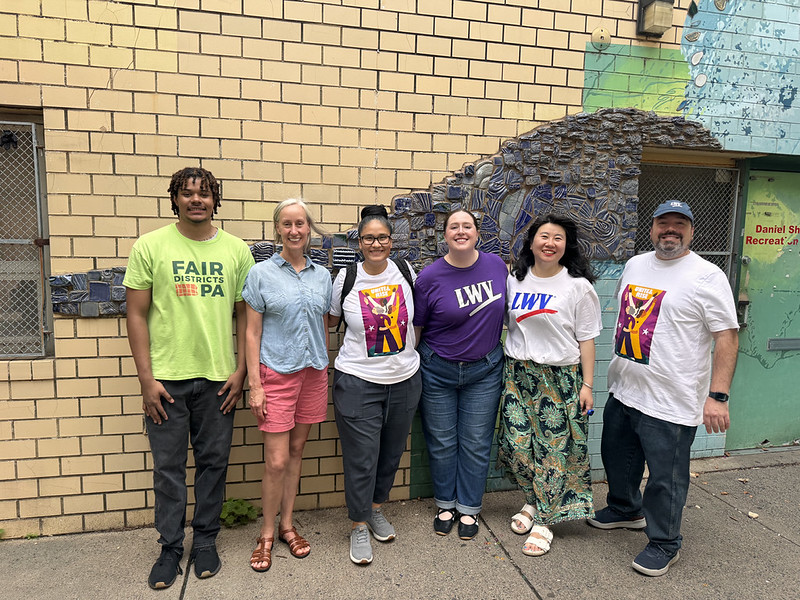
In other words, voting isn’t just an individual act; it is also a communal act. We each vote as individuals, but we can go to the polls together. When you vote, you are saying you trust the process of shared government enough to take part in it. When you go to the polls in a community, with your family and neighbors, you help others build trust in the process and you are building connection within your community. Giving someone a ride to the polls, sending a reminder text, having a conversation at the kitchen table about what’s on the ballot, these small acts are how communities stay connected and how people with different views and experiences take part in the collaborative decision-making process.
After all, solidarity happens in community. Many people can’t easily make it to the polls. You might have a neighbor who works two jobs, or an older relative who relies on mail ballots, or know a first-time voter who isn’t sure where to start. Helping them vote is a way of saying that their voice is important.
It is easy to feel worn down by the news, the noise, and the sense that our individual votes don’t matter, but action is the best response to that feeling. Casting a ballot is a concrete action you can take and it gets easier when you do it alongside others. So take that step, and bring three friends with you to vote. Your energy is contagious. Offer to go together, share what you’ve learned from nonpartisan voter guides like Vote411, and help someone make a plan for when and how they will vote.
If you and your friends plan to vote by mail, remind everyone to request their ballots early and return them early. Don’t wait until the last day or the last week. Early action leaves time to fix a problem if one comes up. Check your registration status, your polling place, and who’s on your ballot at Vote411.org or vote.pa.gov.
Don’t forget that whether you go to the polls alone or with friends, or whether you vote in person or by mail, organizations like the League of Women Voters are standing by to help ensure your voice is heard. Your ballot is protected by multiple safeguards run by local election officials and supported by democracy organizations who all work hard to make sure every eligible vote is counted.
And remember, this work can also be fun . Our civic duty doesn’t have to feel like a burden. Make a plan with people you like: a walk to the polling place, a coffee afterward, a text chain that confirms everyone got their ballot in. Democracy works best when it is something we do together. If you need support, the League of Women Voters of PA is here. Head to Vote411.org for your searchable election guide. If you have trouble or a question, call 866-OUR-VOTE.
Vote. Vote early if that’s your practice. Vote at the polls on Election Day and make it a party. Vote with friends. Vote with family. Just Vote. We show up, together, on (or before) November 3.