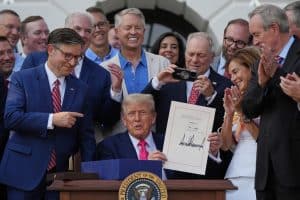
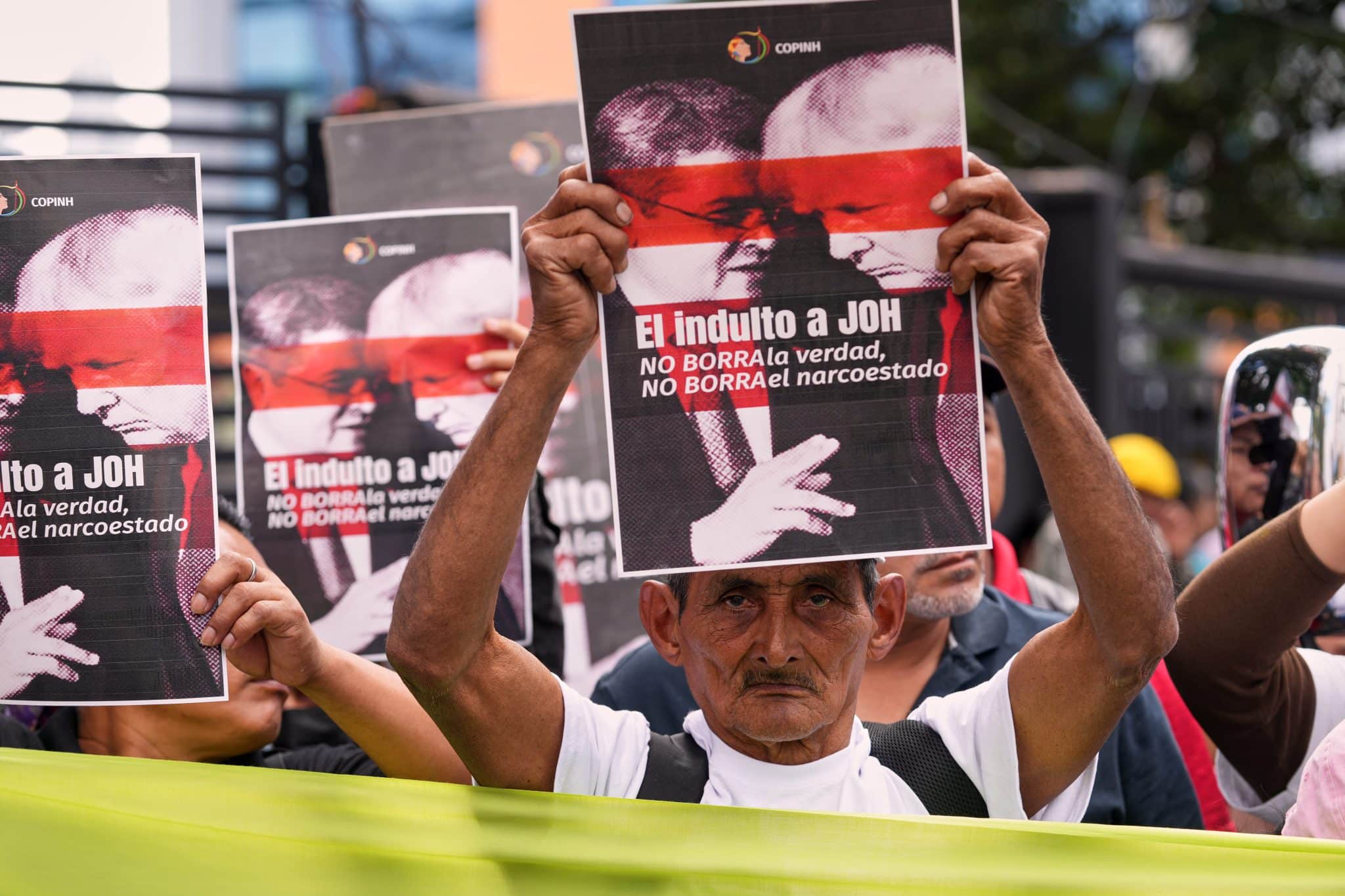
If Juan Orlando Hernández was a poor fisherman accused without evidence of transporting illegal drugs by boat, the Trump administration might blow him and his crew up without a trial. But because Hernández is a former president of Honduras who shares Trump’s right-wing politics, he received a presidential pardon Tuesday and was released from a New York prison, despite having been convicted in 2024 of conspiring to traffic over 400 tons of cocaine into the U.S. and taking millions in bribe money from cartels.
Meanwhile, the unilateral strikes against alleged “narco-terrorists” like the one that murdered a Colombian fisherman off the coast of Venezuela on Sept. 15 have extrajudicially killed over 80 people since Sept. 2. And now, Congress is investigating Pete Hegseth and an entire chain of command for potential war crimes.
The hypocrisy of Trump’s pardon makes perfectly clear the deadly farce that is the administration’s “War on Drugs.”
But while Hernández walking free so suddenly was a shock to many Hondurans, it deserves more scrutiny for a U.S.-based audience who might not know the extent of the violence and repression he was responsible for while turning Honduras into a “narco state.”
As early as 2015, Hondurans mobilized en masse and called for Hernandez’s removal from office.

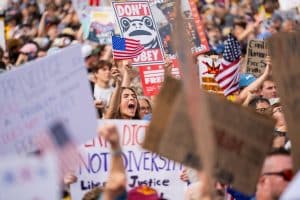
At the time, the United States backed Hernández against mass protests, upholding him as our biggest ally in the region while hundreds of thousands marched with torches in cities across the country denouncing both money stolen from public institutions and political authoritarianism. “Fuera JOH!” (Get out, JOH!, Juan Orlando Hernandez’s initials) became the battle cry of a generation tired of a narco-state regime that also ushered in one of the most dangerous periods for environmentalists, land defenders, and journalists. In 2017, Hernández subverted the Constitution to run for a second term. When he declared victory despite accusations of fraud and the OAS calling for a repeat election, Trump’s State Department was quick to accept his Presidency. The country yet again erupted in pro-democracy demonstrations; this time violently repressed by State forces. To say that Hernández’s extradition and conviction in the U.S. were long awaited is an understatement, although some were weary of justice coming from a foreign power like the U.S.
Hernández was found guilty on March 8, 2024, of three counts of drug trafficking and weapons conspiracy. Prior to that, in 2019, his brother, Juan Antonio “Tony” Hernández Alvaro, was sentenced to life in a New York prison, convicted of distributing 185 tons of cocaine and engaging in illegal arms trafficking.
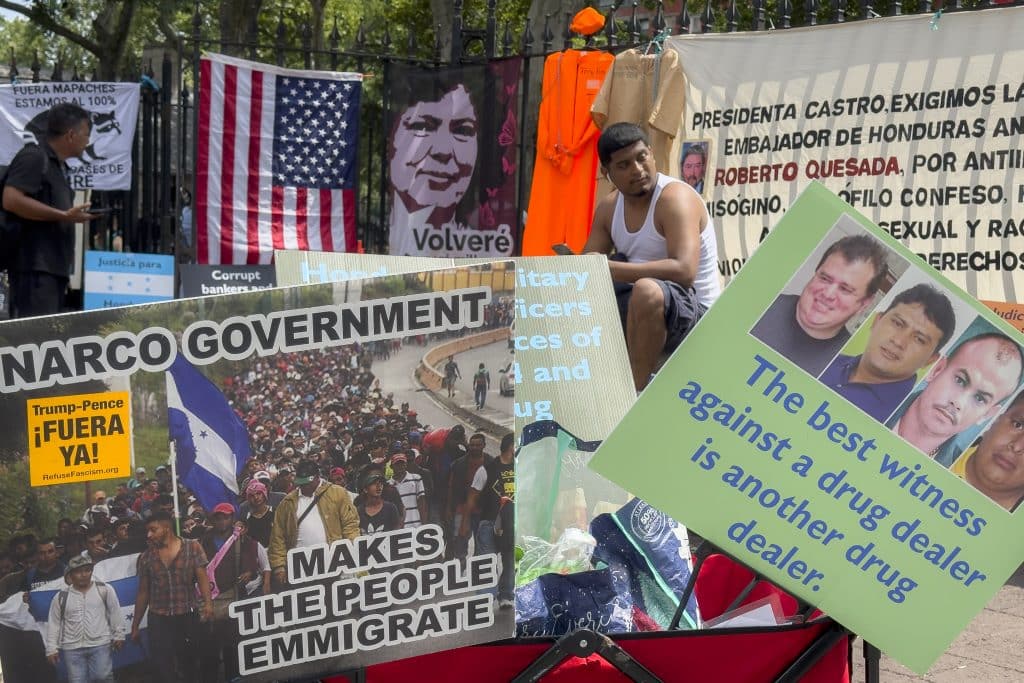
Tony Hernández was not just a bought out Congressman with political influence; he was a leader in illicit rings. According to U.S. Attorney Audrey Strauss, the ex-Honduran president’s brother was “involved in all stages of the trafficking through Honduras of multi-ton loads of cocaine destined for the U.S. Hernández bribed law enforcement officials to protect drug shipments, arranged for heavily armed security for cocaine shipments, and brokered large bribes from major drug traffickers to powerful political figures, including the former and current presidents of Honduras. Hernández was complicit in at least two murders.”
President Hernández denied all knowledge of his brother’s activities before his term ended and the U.S. called for his extradition.
So, why would the U.S. government engage in such vicious attacks against civilians in the name of blocking drug trafficking while releasing one of the most known, convicted drug traffickers in the Western Hemisphere?
The answer lies in age-old geopolitics and what the Carnegie Endowment for International Peace’s Sarah Chayes calls the “kleptocratic operation system” — a profit-seeking network in Honduras linking transnational capital, national politicians, organized crime, and US military assistance.
Juan Orlando Hernández, in addition to enforcing many neoliberal economic policies and privatizing state services, was instrumental in ushering in a libertarian experiment in creating private jurisdictions led by investors called ZEDEs, a pet project supported by some of Trump’s closest tech/crypto mogul supporters and strategists.
Investors had waited for Hernandez to secure a second term to take the leap on this politically risky project that had previously been ruled unconstitutional by the Supreme Court in a prior iteration. Indeed, the first of these jurisdictions, the Próspera ZEDE, was authorized behind closed doors soon after Hernández claimed victory in the 2017 elections. Even though the ZEDE jurisdictions have since been ruled unconstitutional by the current Supreme Court and repealed in law by the Honduran Congress, some US and foreign investors still hoped a return to National Party rule would help to re-legislate the techno-libertarian dreamscapes.
In this context, Trump inserted himself into Honduras’s 2025 elections at the last minute, first encouraging Hondurans to vote for the National Party candidate Nasry Asfura on social media, and going so far as to threaten to cut off aid to the country if Asfura did not win. On Sunday, Hondurans voted, leaving Asfura and Salvador Nasrala neck and neck. When Nasrala inched ahead, Trump took to social media once again, accusing the Elections Board of “trying to change” the outcome, and threatening that “there would be hell to pay” if they did.
Trump’s election interference has been repugnant and flagrant, but it is not surprising. The contradiction in U.S. foreign policy itself is predictable: prop up a friendly right-wing party and politician in Honduras while threatening to militarily attack the government of Venezuela for allegedly committing the same crimes. However, the predictability doesn’t minimize the incredible harm that Hernandez’s pardon and Trump’s brazen electoral meddling could have on the region, both in normalizing unfettered 21st century U.S. intervention in Latin America and in launching Honduras back into what historian Dana Frank has called its “long, night” of narco-oligarchic control.