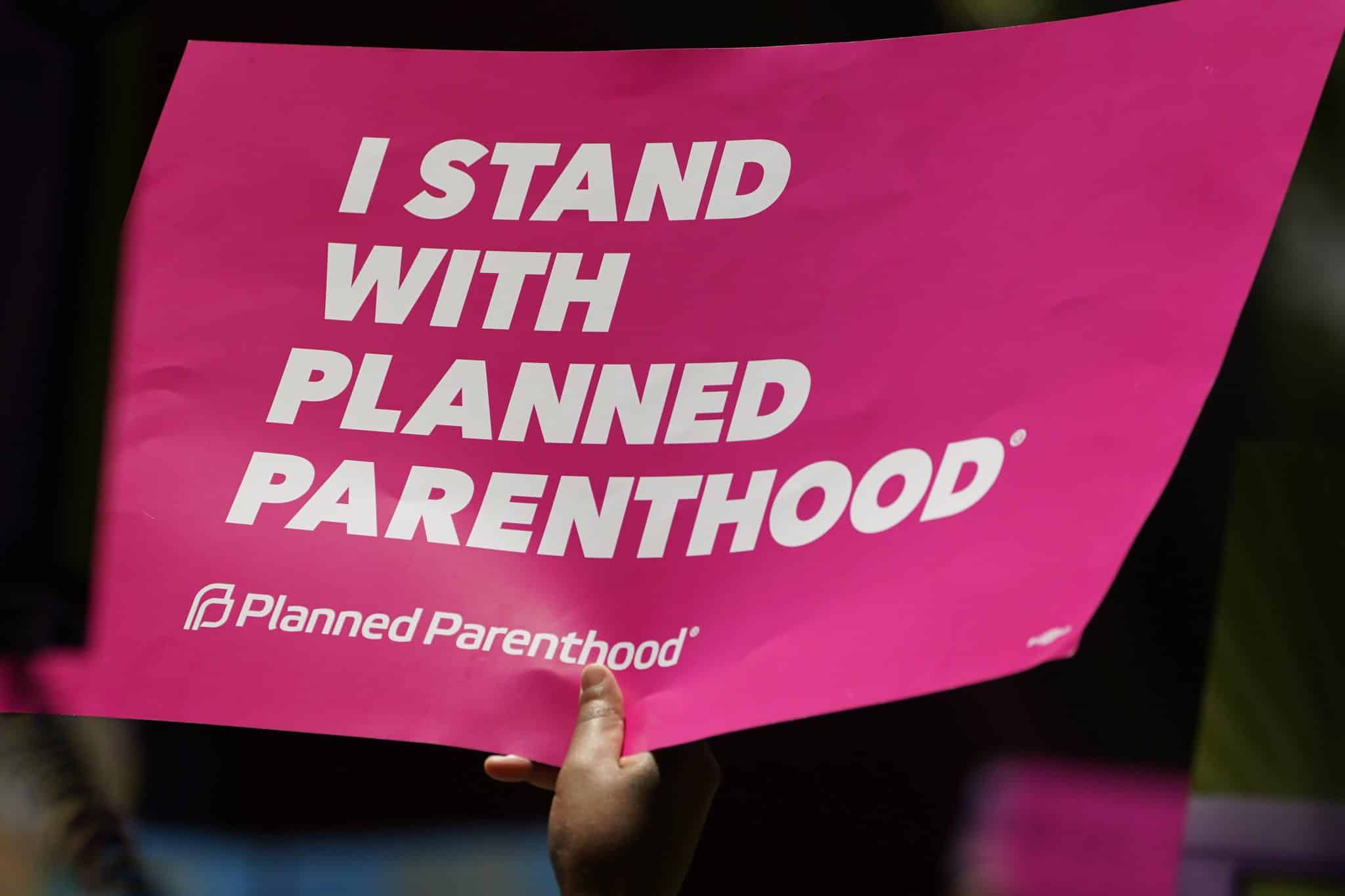
Nine months into the rollout of President Trump’s Big Beautiful Bill, Planned Parenthood Keystone says it can no longer offer essential reproductive health care services to Medicaid patients in the communities it serves.
The organization announced last month it will no longer see Medicaid patients for wellness exams, cancer screenings, birth control, and STI testing.
According to Planned Parenthood Keystone President and CEO Melissa Reed, about 80% of its patients across its seven health centers and telehealth operations are uninsured, underinsured, or rely on Medicaid. Locally in Bucks County, the Bensalem Health Center has the highest population of Medicaid patients at 69%.
Since it stopped providing care to Medicaid patients, Reed said staff have been working to connect people with other providers who are considered “Federally Qualified Health Centers” (FQHCs). “Unfortunately, Bucks County does not have any FQHC’s,” Reed added, noting the closest one is in Philadelphia County.
Casi Scully, Planned Parenthood Keystone’s associate medical director, said patient traffic has dropped significantly. On what she called a “typical family planning day” prior to the Medicaid switch, she said she’d consult between 20 and 25 patients. Since the switch, she now sees about four per day.
READ: Planned Parenthood Pennsylvania PAC Endorses Bucks County Candidates for State House and Senate
Kearasten Jordan, a resident of Lancaster County, is a PP Keystone patient with Medicaid insurance. They said PP Keystone helped them identify Planned Parenthood West Chester Health Center – the closest Planned Parenthood outside the Keystone network that is still accepting Medicaid. Jordan will have to take public transportation to get there.
“Being told you have to go to a completely different county to receive care is life altering,” they said.
How we got here
The One Big Beautiful Bill Act, formally known as House Resolution 1, includes “defunding” provisions intended to funnel taxpayer dollars away from Planned Parenthood and other abortion facilities which it labels “prohibited entities.” This means patients with Medicaid could not use their insurance for non-abortion services through Planned Parenthood (abortion was already prohibited through Medicaid via the Hyde Amendment).
Up until recently, Planned Parenthood Keystone said it continued to see Medicaid patients, often performing those key non-abortion services for free.
But the financial toll of servicing patients without reimbursement eventually became too high – impacting not only PP Keystone but also the rest of their patients, due to the sliding scale pricing model.
“It feels like a cruel, targeted undermining of people’s autonomy.” – Dr. Audrey Tashjian, OBGYN and Committee to Protect Health Care Member
Combining the loss of Title X funding in December with the loss of revenue from Medicaid patients over the past nine months, Reed said PP Keystone’s budget has dropped by $1.5 million.
In response to questions on the campaign trail last year about defunding Planned Parenthood, Vice President JD Vance said, “our view is we don’t think taxpayers should fund late-term abortions.”
However, according to Planned Parenthood’s 2023-2024 Annual Report, abortions accounted for just 402,200 of the 9.4 million services rendered during that data period (roughly 4.2%). The bulk of patients received “STI tests and services” (5.2 million) and “birth control services” (2.2 million).
“The things they’re cutting off are not even the things they’re fighting over in the culture war,” Scully said.
Planned Parenthood patients say the care there cannot be replicated
Jordan visited Planned Parenthood for the first time prior to leaving home for college and were impressed with the level of care they received.
“I felt like I learned more about different types of birth control [at Planned Parenthood] than I did in school.”
In 2021, Jordan said a traumatic experience “really solidified [their] love and respect for Planned Parenthood.”
After experiencing a sexual assault, Jordan said they went to Lancaster General Hospital and asked for an STD test. They met with a doctor who was “very dismissive” and would not provide an STD test unless they agreed to “submit to a rape kit.”
“They basically wouldn’t help me unless I agreed to get the police involved,” they said.
They left the hospital and went to Planned Parenthood, where they met with a nurse practitioner who was “obviously trauma informed” and gave them the help and answers they sought.
“Since then, I kind of only feel comfortable going to Planned Parenthood,” they said.
READ: Abortion Restrictions on Young People in the United States Cause Trauma
Another patient, Katie Ellis of Bensalem, has traditional insurance and said she has had similar challenging experiences with traditional providers. She remembered a doctor who made an inappropriate joke that embarrassed her, and another doctor on a separate occasion who laughed at her when she asked for clarity after taking a pregnancy test.
“After that, going to the doctor became something I dreaded,” Ellis said. “It’s such a vulnerable experience and I started to feel like I couldn’t trust people who were supposed to help me.”
Despite her anxiety, she made an appointment when it came time to update her birth control and arrived in hopes of receiving an IUD, but the doctor said they “couldn’t get it placed.”
She left feeling defeated, and that’s when someone recommended Planned Parenthood. She said she was treated with compassion for what felt like the first time, and, after another failed attempt at placing an IUD, she received a birth control implant in her arm, which none of the previous providers had recommended.
“Finding Planned Parenthood and getting the implant was so impactful in my life,” Ellis said.
While she is not currently barred from her regular services through Medicaid restrictions, Ellis said she believes that she and others can and should speak out for those who are losing access.
At a recent event in Doylestown organized to petition Congressman Brian Fitzpatrick to reinstate funding to Planned Parenthood, Ellis shared her testimony with the gathering, which included members of the American Association of University Women (AAUW), MomsRising Together, Pennsylvania Together, and the Committee to Protect Health Care.
Providers fear for the future
Another attendee in Doylestown was Dr. Audrey Tashjian, a member of the Committee to Protect Health Care and a private practice OBGYN who has been in the industry for 30 years.
Early in her career she volunteered at Planned Parenthood in Trenton, New Jersey, where she performed abortion “as a public service.”
“I really treasure Planned Parenthood,” Tashjian said, noting that having worked there, she understands first-hand the kind and non-judgmental care patients get.
Tashjian said in recent years since the current administration took office and Planned Parenthood Keystone’s Warminster clinic closed in June 2024, her private practice appears to be treating an increase in “emergency obstetric situations,” including some patients who have forgone prenatal care and show up for their first visit when they’re in labor.
In addition to heightened medical risk, Tashjian said the increased traffic has overwhelmed the staff of 28 providers at her practice, who are “overwhelmed and brimming over” trying to fit people in.
“We provide great health care at my office,” Tashjian said, “but we can’t care for everybody.”
She noted the issue is compounded by “maternity care deserts,” or rural areas where hospitals have stopped offering obstetric care.
If the current trajectory continues, Tashjian said patients will go untreated and “people will suffer.”
“It feels like a cruel, targeted undermining of people’s autonomy,” she said. “Undermining of their safety … the ability of people to take care of their families.”
Scully said she worries about the patients she previously treated for emergency and specialized care that she believes most traditional providers are not equipped to handle. She also said she feels for the people who are not in crisis but still choose Planned Parenthood.
She remembered an 18-year-old patient who came in for a birth control consultation. After discussion, she asked the patient if she wanted a prescription for the pill. The patient said she already had one.
“Even after seeing a regular doctor, she chose to come here,” Scully said. “She came to the place where she knew she could get those answers.”
For now, Planned Parenthood Keystone is making plans to move forward. Scully said the organization is looking at possibilities to adjust the fee schedule, and Reed said they are “exploring doing more” through their virtual health center to benefit people in rural areas.
The one-year defunding provision expires at the end of June, and stakeholders and patients say they’re hoping it won’t be reinstated.