Bensalem Township School District students are another step closer to being protected against discrimination based on their hairstyle after the school board approved the second reading to a change in their dress code at Wednesday night’s meeting.
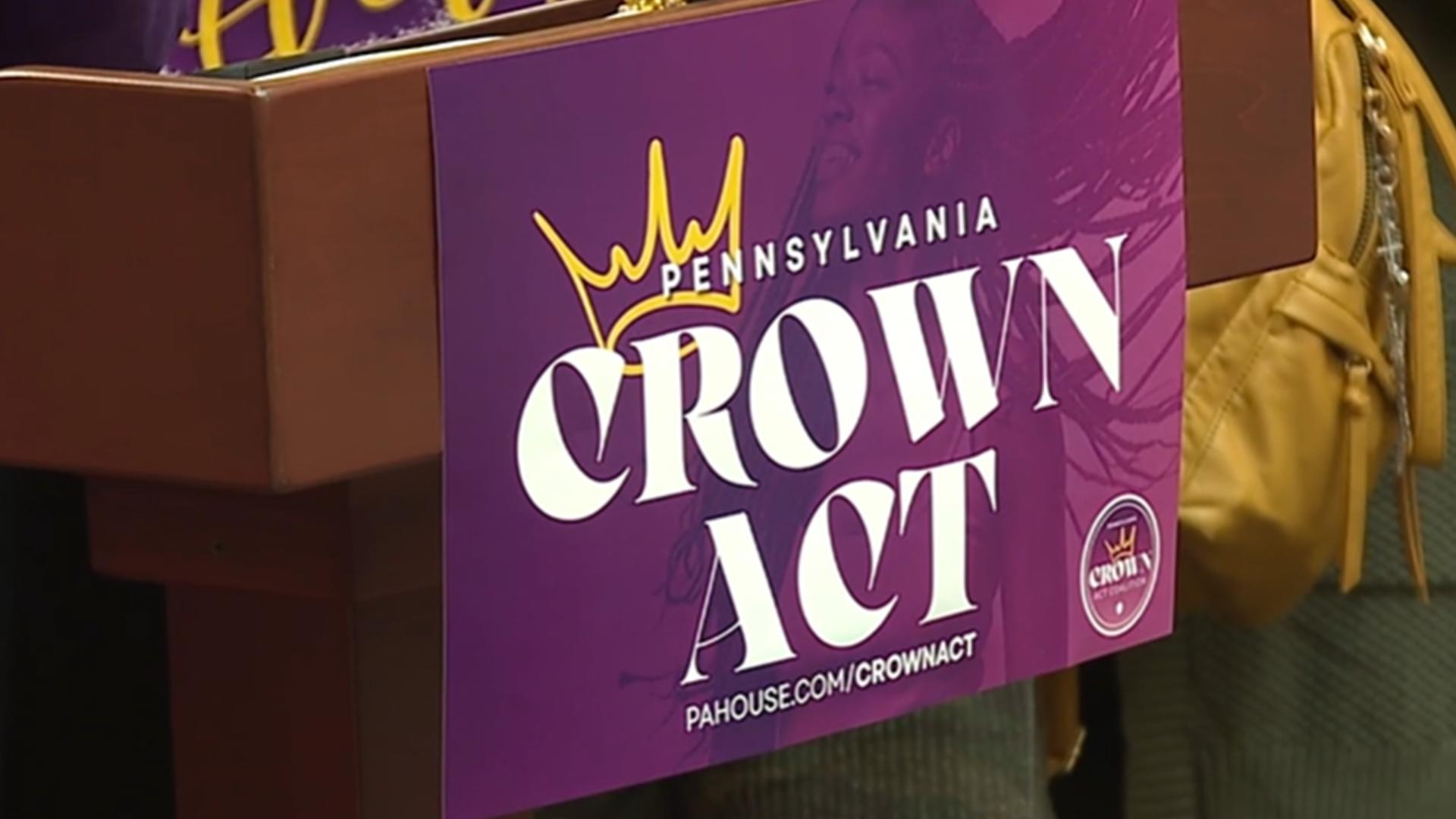
Pennsylvania became the 28th state to adopt the CROWN Act in November 2025. Philadelphia enacted similar legislation in 2020.
These changes are based on the CROWN Act, or Creating a Respectful and Open World for Natural Hair. The legislation was created in 2019 in California and protects against discrimination based on hairstyles historically associated with a race such as locs, braids or twists.
The new dress code policy also protects both religious hairstyles and head coverings.
Safeguarding student style
Restrictions on students’ hair in dress codes disproportionately affects Black students, according to a 2022 study from the Government Accountability Office.
Through a series of interviews, the GAO found that one in five school dress codes reviewed by the organization included subjective language about student’s hair: “natural”, “clean” and “well-groomed.”
In Bensalem’s previous dress code, the district used similar phrasing, asking staff members to demonstrate “positive attitudes towards neatness, cleanliness, propriety, modesty and good sense in attire and appearance.”
The updated version of this school policy removed those phrases entirely, instead advising staff to simply demonstrate compliance with district guidelines. These rules state that employees should “set an example in dress and grooming for students and the school community.”
A final vote of the updates to the dress code will take place at the Sept. 23 board meeting.
Removal of charter revocation guidelines
School board members also introduced changes to a policy that will — if passed — change Bensalem’s relationship with charter schools in the district. The policy was rewritten to bring the policy in line with the Pennsylvania School Boards Association.
Under Bensalem’s current charter school policy, the board has specific stipulations in which a charter can be revoked or not renewed. These grounds include failure to meet student performance requirements set by the state, violations of Charter School Law and fraud.
The proposed rewrite of the policy removes these explicit reasons, only leaving in that the district can revoke a charter when “the health or safety of the charter school’s students, staff or both is at serious risk.”
Nothing is final yet though as the board will go through the second reading at next month’s school board meeting.
An ongoing clean energy project
Beyond policy changes, the board received an update on Bensalem’s ongoing effort to offset district energy costs with solar panels. The board had previously approved the project on June 29.
The project would see solar panels installed on five schools and the district’s office. Once completed, the panels are estimated to offset Bensalem’s total energy use by 56%.
READ: Benjamin Rush Elementary Students and Staff Will Return to Cooler Classrooms in Late August
Despite debate surrounding the use of ground arrays, they are still being considered and would offset an energy use by an additional 10%.
GreenWorks Development and Solar Energy Renewables — the two companies Bensalem tapped for the clean energy renovation — estimated that the solar project would save $22 million to $25 million over the next 40 years, depending on whether or not ground arrays are used.