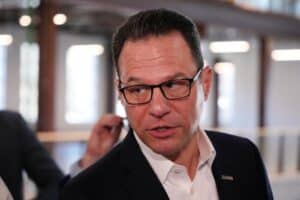
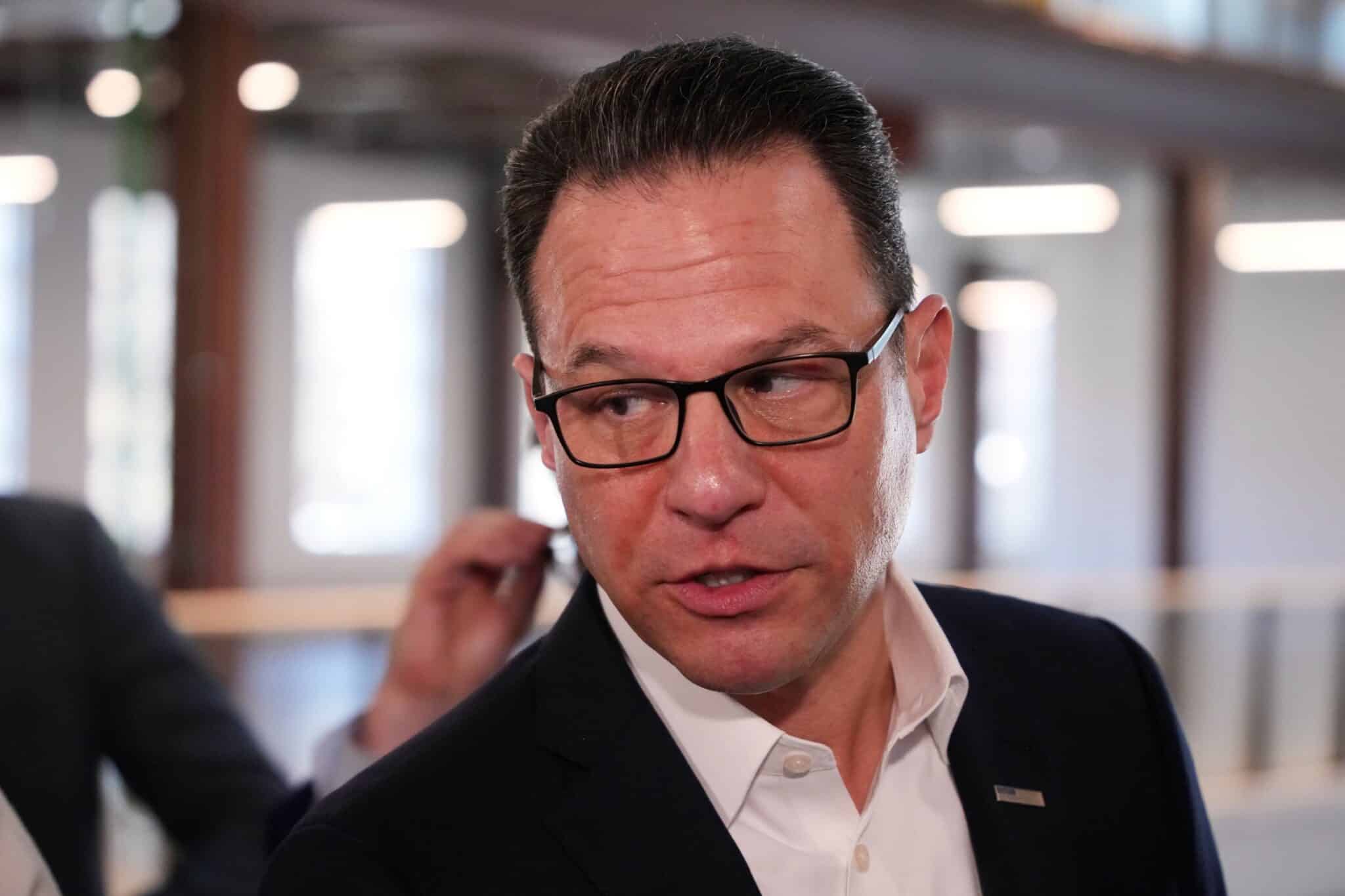
Donald Trump’s Big Beautiful Bill included federal school vouchers, a long-time dream of education privatizers like Betsy DeVos. Governors have the choice to opt their states into the program, and pressure is mounting on Governor Josh Shapiro now that the Treasury Department has released the rules for the program. The governor should say no to federal vouchers; here are nine reasons why.
Before we discuss the reasons, let’s review.
What are these vouchers again?
The vouchers would be funded by taxpayer contributions of $1,700 per taxpayer. The taxpayer would, in turn, get a dollar for dollar deduction—like signing over part of your tax liability to the government. The $1,700 goes to a scholarship granting organization (SGO) which in turn gives the money to students (minus a 10% handling fee). The students’ families may use the money to pay for educational expenses, including private school tuition.
Now for the reasons Pennsylvania should not opt in to the federal vouchers:
1. An entitlement for the wealthy
Vouchers are usually sold as a way for poor students in poor schools to escape to a better school. But after years of voucher programs in many states, we know who usually benefits—wealthy families whose children were already in private school.
Pennsylvania has had its own pair of tax credit scholarship school voucher programs (Educational Improvement Tax Credits (EITC) and Opportunity Scholarship Tax Credits (OSTC)) for over twenty years, at a cost of $2 billion in tax revenue lost to the state. By law, the state collects very little data about those programs, but Keystone Crossroads found that a sizable chunk of voucher money went to schools that enroll zero low-income students. If the vouchers are helping poor children escape, they aren’t getting into those private schools.
Eligibility requirements for the federal vouchers are set at 300% of area median gross income, which means that families in Fox Chapel on the Philadelphia Main Line are eligible if they make up to 300% of the median gross income in their communities. The federal voucher program is designed to reach almost all American families—not merely the poor ones.
2. Federally funded discrimination
Education Voters of PA found that of the schools accepting EITC/OSTC money, 100% had rules that allowed them to discriminate against students. Common discrimination includes rejecting or expelling LGBTQ students. Many schools also reject students with any special needs or require those students to waive their rights to accommodations. Some reject students for low academic achievement. And a handful go even further, like the Red Lion Christian School, which claims the right to reject a student “at our discretion” and also “reserves the right of not defining the criteria or reason” for rejecting an applicant.
READ: In Pennsylvania, School Vouchers Fund and Fuel Hate
Federal vouchers will fuel more discrimination at taxpayer expense.
Once again, school choice turns out to mean school’s choice. The private school will decide which students can have their choice.
3. Absence of quality control
Nothing in the federal law calls for oversight or accountability. There are no provisions to insure that the dollars are being spent appropriately or that the vendors accepting the dollars are providing qualified or quality educational services. We already know that where state oversight of school choice programs is low, fraud and waste are high.
The program has very few guardrails of its own. SGOs do not need to prove they have educational expertise or experience. There is no explanation of how much money a single voucher might carry, and there is no requirement to account for how the money was spent.
4. Public schools can’t cash in unless they start pay-to-play
One of the arguments tossed at blue state governors is the notion that federal vouchers can also benefit public schools. They cannot.
The vouchers are not given directly to schools, but to the families of students, who then use the vouchers to pay for services. But public schools do not ordinarily charge for services. To see any of that money, a public school would have to create programs that come with an “extra” fee for students. What should your local school do? Should AP courses become an up-charged extra? Should the school start an after-school tutoring program that charges?
Should schools start offering, as one researcher suggests, separate K-12 Basic and K-12 Premium programs? Offering tiered programs seems counter to the mission of public education. And creating extra programs just to collect money to pay for the cost of proving the extra program produces no actual gains for the school district.
5. Widening economic gaps
While there are some organizations launching national multi-state SGOs, SGOs in Pennsylvania tend to be specific to one community or set of schools. Fans of the federal program suggest publicizing the program in order to get a maximum participation by donors contributing their $1,700. But the $1,700 deduction only works if you owe at least that much in federal taxes.
Which community is likely to yield the greatest financial contributions for the SGOs that serve their community—Berwyn or South Chester?
This program will result in the rich getting richer and the poor getting poorer.
6. None of this can be altered by the state
When the program was first introduced, school choice fans like Mike Petrilli (Fordham Institute) argued that Democrat governors like Shapiro would have flexibility:
There’s no excuse for blue states that want to get to a “yes,” especially since jurisdictions can set their own requirements for scholarship-granting organizations. They can target their state’s program on poor and working-class families. They can also add requirements that participating students take standardized tests, allowing comparisons with traditional public schools.
Turns out that none of that is true.
The Treasury Department rules are quite clear. While the state must require SGOs to meet the state’s requirements for charitable organizations, the state may not put restrictions on how the SGO operates “such as by limiting the type of school that scholarship recipients may attend or the types of qualified elementary or secondary education expenses for which scholarship funds may be used.”
READ: The GOP House Budget Bill Also Takes Aim at Public Education with Its Private School Voucher Scheme
SGOs may set their own rules, determining exactly what sort of school or program they want to serve. SGOs may even set income limits beyond the generous ones set in the law. But the state may not do any of that. The feds do not grant the state the power to address any of the problems I’ve listed above.
The state may not require that the vouchers prioritize poor students. The state cannot require additional accountability measures. The state cannot block a school from the program because of lousy academic results. The state cannot add guardrails to stop waste and fraud.
7. Strain on other charities
The dollar-for-dollar tax credit offered in this program is more generous than the deductions offered for other charities. How much will those charities lose if contributors decide to shift for greater tax advantage?
And for Pennsylvanians who are fans of school vouchers, it is worth asking—how much will the state’s tax credit scholarships suffer if Pennsylvania donors decide to shift their donations from the state program to the federal one?
8. The federal deficit
When Pennsylvania gives taxpayers credit for EITC/OSTC contributions, the state has to figure out how to balance the budget without the revenue it has redirected to vouchers. The feds can just put on its tab the potential billions of dollars redirected to the voucher program. The Treasury Department estimates that the program may cost $26 billion by 2030. If you have any concerns about federal deficits, know that federal vouchers will add to the bill.
9. Protect public education as a public good
The federal voucher program is designed to redirect tax dollars to private schools. It will be most useful as a tool for letting wealthy taxpayers redirect their money to supporting private schools that can exclude and reject any student for any reason (or no reason). It continues the framing of education as the responsibility of families alone, and not a shared societal responsibility, a private commodity rather than a public good.
Governor Shapiro has shown himself to be voucher-curious in the past, but even then, it’s not clear how the federal program would provide voucher supporters with anything that EITC/OSTC do not already provide—and that includes many negative features.
What actual new benefit would Pennsylvania receive from this program, and what would it cost us? The governor should not opt in.