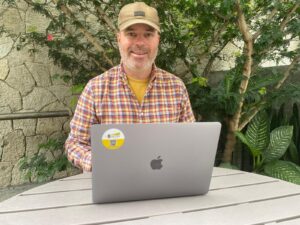
Chris Gambino is an independent candidate for Bucks County’s 143rd state House district. He is running against incumbent Republican Shelby Labs and Democratic challenger Tim Hayes. Chris joined me today to talk about his campaign and positions, what he believes it means to be a progressive, why the two-party system is failing us, and why we need to stop letting outrage shut down conversations.
Listen on Apple, Spotify, Podbean and iheart
To start off, would you tell listeners where you grew up and what your childhood was like?
Yeah, absolutely. So I’m actually Pennsylvanian born and bred. I grew up in Montgomery County, just across the county line, and spent most of my years there. Lived a little bit of a suburban lifestyle, biked to the community pool, biked to my friends’ houses, played sports at the local sports team, traveled up here, competed against Buckingham United. And so I know the area really well. And I’d say, you know, my my upbringing was pretty much similar to a lot of the folks in in the district I am hoping to represent.
How did you first become politically involved and engaged?
I think it’s largely been what I’ve been doing for over the the last decade, adjacent to actually running to be a legislator has been informing food and agricultural policy, really trying to align ag production with environmental outcomes because we need to produce food, but we also need to sustain our soil and all of those things that make sure we can produce food into the future for the next generations. And that’s been super important to me. And so I’ve been engaged in this arena for some time. But I go about it a little bit differently. I think my scientific background really wants to create more informed, better informed decisions.
When I decided to make the jump, it’s largely been due to exhaustion of what I would say is the circus of of the two-party system right now. I’ve been discussing and and talking about this in regards to a seesaw where you’re sitting on one side, one party, the other side the other party, and you know everyone’s pushing for one party to win. You you get to go up or down on the seesaw and then the next election cycle they the other party blames the one party and then you’re just in this vicious cycle of up and down, up and down, never moving forward in some regard. And that’s when I really decided we need to get off the seesaw and we really need some legitimate, qualified, independent candidates.
So this was something that you felt like engaging within that two party system wouldn’t have allowed you to kind of put forth a political platform and program that you’re championing now?
Yeah, largely I think the nuance has been lost. I think the two party system requires you to take a party line and you get bullied from the top to to stand in line, to kiss a ring without the nuance, the complexity, the conversation of a middle ground of of finding common goals and solutions. And I’d say one of thebiggest things, I don’t know how this is gonna land with your listeners, but watching the debate the other night, Shapiro dodged the question around Gaza. They they pulled out the facts. They they said that his own party is is strongly polling in wanting to see the conversation shift, wanting to see the war end, I don’t know, I forget if they use the word genocide directly, but they showed the polling numbers and and he stepped around it. And I think that that to me was a large one when I first got into us, the Bucks County Democratic chair drafted and wrote the bill that said if any Pennsylvania institution defunds from Israel, de-invests from Israel, we will stop giving them state dollars. And Shapiro immediately said, as soon as that hits my desk, I’ll sign it. And to me that was that largely did not resonate with me and my faith background. It’s it has nothing to do with the Jewish people. It has everything to do with with how we engage and think about war and violence and also freedom, right? Why, why can’t an institution, if their stakeholders say we don’t want to invest there, that’s on them to where they want to invest. If they lose money, then then that’s on them. But they should have a choice in where they want to invest. And both the Bucks County chair and Shapiro largely stood ground saying, absolutely not. We’re not, we will not allow deinvestment.
So besides feeling disenfranchised, if that’s the right word, by the two party system, I’d have to think that you are unhappy currently with the state representative now, which is incumbent Shelby Labs, as well as her Democratic challenger, Tim Hayes. What sets you aside from both of them?
Yeah, that’s a good question. I think when we ask questions like that, it kind of muddies the water more than than needs to be had. Absolutely, you can see my policy positions in terms of solutions. I think at least four of the eight on the website directly call out Shelby’s ineffectiveness. And I’ll speak directly to that quickly.
Essentially, based on the last time I ran the numbers of the bills she’s primary or co-sponsor of, only about 14, 13.8% have passed. Right? Then of those primary ones, the one she specifically introduced 7%. That is ineffectiveness. And she’s been there long enough to be effective. And we’re paying her. We’re paying her about $107,000 a year. She’s getting way more in per diem per session. That’s almost more than 50% of the median income for people in this district, right? So we are paying her tax dollars, she’s not effective. That is it it has nothing to do with Shelby. It is largely policies I disagree with, but it’s about effectiveness. We need effective leadership and representation in Harrisburg, and she’s not bringing it.
Tim, I would say, is also bringing a perspective that I don’t think resonates with people outside of his party. And that is also the problem. And Tim, being most junior, will have to, despite what he says, serves the Democratic Party. And that’s why I’m running. You can we can talk policy all day and I can talk nuance. Neither of the two parties bring that nuance. They really bring that two party rhetoric. But more so than that, it’s really about that you have to serve and represent the people here and that has to be a local conversation. That cannot be handed down by operatives and strategists that don’t live in the community. And that’s largely how the two parties operate.
In our correspondences leading up to this, you mentioned wanting to address what it means to be a progressive and expand what people might think that means. So first, just to clarify, do you consider yourself politically progressive? And then, what does that mean to you?
I would say if I can coin my own term, it’d be a progressive independent. But that word has been co-opted in some sense to me because it doesn’t necessarily connect strictly to progress anymore. I think it’s been taken to mean only around social issues. But if we’re talking progress, we have to talk about innovation. We have to talk about these things that are moving us forward. And part of that forward looking is getting away from
progressive in how we think about election, progressive in how we think about the infrastructure of government and governance. And I’ll give you one key point, right? I think largely the left, I think there’s some people coming closer to a a moderate position, is anti-nuclear energy. And if we if we literally want to have a zero carbon future with our energy, we have to at least have the dialogue of nuclear energy, right? And to me, that’s progress. That’s progressive in the energy space, but that’s not a conversation most people that call themselves progressives are willing to engage. And if we talk about it, right, it’s largely the outrage around it, right? We think about the lack of control we have with the nuclear power plant, how we’ve seen, these these these small catastrophes, well, I guess large catastrophes, but but small in frequency, and we hang on to them.
But at the same time, I think we need to recognize that the U.S. naval forces have nuclear submarines with a small nuclear reactor in them. And we put naval service members in those tin cans, put them under the ocean, in in the ocean, and largely, to my knowledge, unless it’s this huge conspiracy has been covered up, there’s no higher rates of cancer in those service members than in in the normal population.
And so we have to step back and start thinking about things differently. To me, that’s the part of progressive and progress that is getting missed.
Yeah, I think with the whole nuclear debate, and I think France uses nuclear energy quite a but … I think I’m a bit older than you, but I remember during the Bush administration there was a debate around nuclear energy around a nuclear repository Yucca Mountain in Nevada. And I think one of the arguments or concerns that progressive environmentalists had was the dangers around storing the nuclear waste that is created and as well as the transportation of it, which a lot would be over the rail system, which, if you know anything about freight trains, there’s often a lot of accidents and derailments. So how would you speak to to those concerns?
Yeah, they’re all fair, but it doesn’t mean you shut down the conversation. And I think that’s where we’ve gotten is that the outrage has largely shut down the conversation. And to your point, that was then science has leaps and bounds since that. And so the conversation becomes How do we safely store it? Or how do we use every little bit of that that element, that particle, to pull as much energy out of it as possible?
And so I think those are some of the questions that science can start to answer if we invest in the space. And, we absolutely need the regulatory framework that is not burdensome, but also makes sure that we’re not just trying to push nuclear energy without the safeguards. And so I think all of that is part of it. But we see oil spills, right? We haven’t gotten rid of oil and we’re still damaging the environment over and over again with our with our need for oil. So it’s yeah, it’s it’s six dozen one way, whatever that phrase is. And so I think for me it’s it we at least need to engage the conversation and it’s largely been shut down out of what I would say is mostly outrage and not so much the the scientific knowledge.
Keeping on the theme of technological progress, or what some might describe as technological progress, let’s talk about AI and specifically data centers, because I think that’s a kind of a hot political topic, not just here in Bucks County, but across Pennsylvania, as well as the United States. Where do you land on this debate around data centers specifically, because it’s something that’s actually kind of united quite a bit of the left and the right together, their opposition of it.
Yeah, I would say again, and this is this is not pointing fingers at you Cyril, but the the conversation of landing on a debate largely means there’s there’s only two pieces to that. There’s one side or the other. And that’s that’s what we get. It’s either one side or the other or you sit on a fence. And it doesn’t leave room for, and that’s why it’s so hard for independence to break in, because people have been told there’s only two sides. The [Bucks County] Herald’s column coming out is the both sides column, right?
I emailed John [the editor], I said, hey, this this really already frames the issue as there’s only two options. What about races when a when a third person comes in? And so I would say much more nuanced in that absolutely a moratorium. We need to think about, but we shouldn’t have even gotten to that point. We should have we should have had the foresight to see this coming so that local municipalities had the infrastructure in place to deal with the issues. But there’s there’s so much getting conflated to real that is that is problematic, right? We are conflating data centers with AI slop, with AI ethics and governance. And they’re not all the same issue … but they’re all getting piled into the data center conversation because that’s what that’s kind of what the rhetoric wants to happen is let’s take this issue. I knew it was gonna be the issue in November that people are gonna vote on. And so you end up with pointing fingers to Republican candidates that are bullish, to the the Democratic candidates that are much more like anti- or don’t want. But in some regard, we need some of them, but it is a bubble. And that’s the conversation we need to have. That they’re a bubble. It will burst every other bubble that bursts. How is our community going to be able to deal with that when it does burst? And so what we absolutely need is we’re going to build with making them pay for their own infrastructure, upgrading the grid, upgrading water infrastructure, taxing them so they’re paying their fair share of taxes that benefit the community, and having them, the entity, whoever it is, put millions in escrow for when the bubble does burst and that thing needs to be decommissioned or renovated.
And I don’t know kind of where you reside in the county, but we’ve got a bustling youth sports epicenter here. And we don’t have the indoor space. And so taking a data center, what it does burst, and having that money in escrow to then renovate it into an indoor sports complex for our youth programs is a win-win. And so I think that’s gotta be part of the conversation is what do we do? And I’ve had I back on May 8th, when this thing was starting to to go off and I was a part of that forum and upper bucks, I had said, when we just say no, Right. And I will I will I will be very forward in in my who I identify as, much less of a nimby, much less of a not in my backyard. I’m willing to think, I’m willing to engage and learn and understand all the perspectives, not immediately say no. And when we immediately say no to something that’s that’s scary or or or even if there’s valid rational reasons, we in the second wealthiest county in Pennsylvania, can say no at the same time, they’re gonna keep pushing them and that burden is gonna go on to a community that does not have the political wealth or power to say no. And that to me is why we need to have the conversation at the state level, or it just keeps getting pushed to those more disenfranchised communities.
I will just say I think you can have a debate that’s just not either/or that can bring multiple perspectives like you just did. So, framing something as a debate, I would say isn’t necessarily a bad thing. There is a debate about it. Whether that debate is kind of informed with varying perspectives, I think that’s a different matter. But …
No, I don’t disagree, but when when we say sides, people often immediately their cognitive model is there’s two sides. They think about a coin, right? Versus there could be a third side, a fourth side, a fifth side. But people we don’t we don’t we don’t think three, four, we don’t think in that dimensionality. And so when we say sides, it gives them the out of there’s only two options.
And just to be clear to listeners, both the Democratic and Republican parties wrapped their arms around data centers from the beginning, right. Especially when the one in Bucks County was announced. The Dems, just as much as Brian Fitzpatrick, they were cheerleading it and all for it. And they were like jobs, jobs, jobs. Now, when actually people started raising some concerns and the political winds shifted, then we’re seeing both parties move with those winds.
Now, whether that’s a sincere thing or it’s just about political expediency, I think you and others and myself can kind of debate that. But, you know, just to be clear to listeners, there was a bipartisan consensus from Josh Shapiro to Brian Fitzpatrick that data centers are a good thing. And I think part of the problem is, I think there is an imbalance with corporate power having just an exponential amount of influence than local communities. Would you would you agree with that?
I think that that is where the outrage needs to be pointed. It it should, I think it’s become more about AI. And I think the conversation in some levels is still about that imbalance. But I think that needs to be the focal point is that there are there are influences that are not part of the community shaping the community. And that to me is where we need to have the conversation. That’s to me where we need to make sure a community wants something, understands something.
But the problem is largely the dis- and misinformation around a lot of it, and because it gets framed and filtered through party rhetoric or through these nonprofit adjacent organizations to a party. For example, right, we’re we’re pushing this issue around the data centers, but it largely you and I, right … And the jobs, I guess the jobs thing. Let’s go back to the jobs thing.
They may create, and this is my biggest problem with the argument for jobs. When we do projects like this, they they create temporary jobs that that do not last. And so it’s a false metric. Data centers actually, though, once they’re built, run themselves. And people are and why people might say, the job, that’s why they they decrease the conversation on jobs. Well, that actually would be if there’s another industry that could do that, that’d be great. If we could build them, they push tax revenue into the community, but then you don’t have all the workers and families moving into the community that then drain that revenue sources because you need bigger schools, more water, more infrastructure, more road infrastructure, all that stuff that when you get a larger population influx, you need to do from the municipality standpoint. That’s huge. We need more industries where we get the tax revenue from them, but we’re not taking on all the burden and the stress of bringing that much more population here because of that industry.
And data centers are one of the only ones that can do that. And so that’s why we need to think about it in that way. But I absolutely understand, the diesel generators from a noise perspective, from a from a climate perspective, and an air quality perspective. Those are pieces to the puzzle. But when you think about air quality, and this is something I studied, you have those contain you have those containment zones, and essentially it’s a decision that that this community, the state needs to make. It’s like, do we bring this industry in to stay under that threshold or do we bring this industry in? There’s a threshold regardless and you can’t go past it. And so it’s just a decision of which industries are we gonna bring in to stay within that attainment of those air quality standards.
You had just mentioned this was something you studied. Can can just take a few minutes to talk about your background and how that kind of best situates you to take on these policy discussions and policy creations that you potentially would deal with in Harrisburg?
Yeah, absolutely. So I got invited to be a part of a pretty prestigious cohort that the National Science Foundation funded that looked at how nitrogen and other elements, nutrients cycle through ecosystems, air, terrestrial, aquatic. I specifically looked at how do we manage nitrogen, carbon, phosphorus in animal production systems, which goes back to my goal, my entirety of my career, the last 15-ish years from studying at that doctoral level to starting to engage in the space, is around aligning agricultural production with environmental outcomes. And we need to have both. We can’t just have one or the other. And that again is the independent conversation. So I studied production systems, I studied methane, nitrous oxide, ammonia, emissions from production systems. I looked at it running off into waterrays, how do we prevent that? Riparian buffers, all of these things that we actually have a lot of solutions for. It’s just to your point, do we have the political winds? And then in line with that is the problem is the election cycle. Ttwo years is not enough to see outcomes from a policy.
I don’t know if this is a I imagine this isn’t a PC term anymore, but you’re but you’re largely held to the fire when you create a policy and policies don’t happen overnight. And that’s a problem in our our political system and our election cycle, is holding people to that. At the same time, I forget if we’ve talked about this, but this is something that I’ve talked about in the past, is when when we have people, and I think this is what scientists can bring to help bring trust back into government is humility. I do not think largely the people representing the communities have the humility to say when they’ve made a mistake or to recognize when something didn’t work, right? We can build a policy, a program that we wanted to do something and then recognize well, we invested, the outcomes aren’t there, but you have to measure the outcomes to know they’re not working and we don’t do that well. And then pivot. But no one, in my perspective, is willing to do that, to be humble in that regard, because then you get lit by the other party. They blame you for failing, X, Y, and Z, wasting, spending, all of those things. And we can’t do that anymore because we have to come together realize we’ve got to try policies. And if it doesn’t work, then we pivot.
And that means we all have to have the conversation of like something might not work regardless of what letters next to someone’s name. And we have to be able to be humble enough to be flexible and and try the next best thing to get the result.
I will give one example when when that’s happened and and that would be in Oregon. They decriminalized drugs a few years back. And it turned out to be a disaster. But so then they they ended up reversing it. It’s no longer decriminalized. But there’s an example of them trying something very outside the box. That’s happened in other countries, right? It didn’t work there and then what we saw was by maybe 2024 was that it got reversed I believe via referendum…
Yeah, let let the people speak, right? Referendums, we don’t do enough of them.
So in your conversations with voters in in your district, what are some of the other concerns or issues that you’re hearing them talk about?
Yeah, I think that’s the the biggest thing that I wanna address is to your point of the earlier conversation, I think the parties push the conversation they want to have. I would say out the door, much less people saying data centers. Right? If I’m knocking a door and someone says they’re in IT, computer sciences, tech, I’ll follow up with, okay, can you … I know this is a hot issue. Can you give me your stance on data centers? And largely a lot more nuance than the conversation you’re seeing come from the party platforms. But without that, very few people actually bring it up as the piece that they’re talking about. People are actually just wanting to live their life. And so that to me is the biggest thing missing from both parties, is because you get … this is my experience, and this might frustrate your audience, your readership a little bit, but you’ve got the local committees and they have their platforms, and it’s five, six people on these local committees that are have leadership positions on the committee, and they blast the platforms and they get some likes, but largely it is them pushing a conversation when the majority of people may not actually be having that same conversation. And I would say a lot of them aren’t, regardless of what their affiliation in terms of party registration is, people just want to live and they really want the circus and all the chaos and craziness to stop. And you don’t do that if you keep operating the same way. And so I think that that’s the biggest thing I hear at the doors is like we I mean the fact that I got on the ballot and I’ve got of the valid nominators, 44-ish percent were Democrats, 37, 38% were Republicans, 19% were were not affiliated with either of the two parties. That largely maps to the district. It flips a little bit. The district is 44-ish % Republican, 38-ish% Democrat, but 19% not affiliated. That to me is because people across the political landscape really want to see a qualified, valid third option. And I would say more than a third option, but it’s hard enough to get someone else in the race. We need more people and more options.
You were talking about people just wanting to be able to kind of live their lives. Part of that is tied to the economic conditions that they’re dealt. How would you improve, how would you work to improve the economic conditions of working class Pennsylvanians in your district and across the state? What kind of programs would you support?
Yeah. Absolutely fair conversation. Two things that are not being promoted or championed by either of the other two candidates or the parties. First and foremost is a standard tax deduction in the state. Pennsylvania does not have a standard tax deduction.
And that could look any which way, right? You’d have the economic budget offices crunch the numbers. It could be the first $30,000, the first $50,000 of income untaxed, right? That number’s not set, but we need something to give people a leg up. Instead, you have the Republican Party talking about tax holidays on things that people get excited about, something, anything to do with like diapers, right? A child. Diapers are expensive. But that tax holiday is marginal in terms of what stays in your pocket compared to a standard deduction. And that standard deduction obviously would phase out over household income levels. But we need it. We need to start with that conversation. And then you get the argument well, how do you fund the budget and stuff? There there are spots I can guarantee with I mean, I don’t dig into the budget it because I have a full time job that is not this.
But when you get to the budget, there are absolutely places where we can look at, one effectiveness, measure effectiveness, and pivot, like we said before, or two efficiency. First is it effective, though. That’s the problem that I see with political conversations, right? You can target anyone, you can yell at anyone and say wasteful spending. The first thing I learned is before you get to efficiency, you’ve got to be effective. Is the thing working? And then you start chipping away at can we do it cheaper?
And I’ll give you a prime example and then we’ll circle back to an another piece. Is a house on fire, right? The firefighters don’t go in and use a bucket of water and be like, that was the most efficient thing we could have done. Throw a bucket of water in the house. You don’t stop the fire. You douse the house with as much water as possible to stop the fire. And then eventually you reflect and say, okay, we solved that. We we stopped the house from burning. How do we do it using less water next time or less resources? That’s a problem that I see. So, first effectiveness. Then we can tackle efficiency.
READ: Affordability Is a Vanishing Promise for the Middle Class
So circling back, right, we talked a little bit about the the tax deduction. The other big one is the Democrats champion these housing policies that are buyer side, right? Let’s give the low income, the young family, the first-time homeowners a $10,000, $15,000 down payment, dollar amount.
That when we step back and think about it, that’s taxpayer dollars largely going into, depending on who owns the house, which is a lot of private equity, which is a lot of people outside of the community owning these homes. We are spending taxpayer dollars to fund someone else’s bottom line because that house is so costly in the market. Instead, you can see on my website, the only one thinking about it from one, an innovative standpoint, but then two, there are two members of our communities that we need to think about when it comes to housing. It is not just the young families, first-time homeowners. It is also our aging population, our seniors, that largely one of their biggest pieces of equity is probably that house that they have paid off. What are they gonna do to retrofit it for aging in place? What are they gonna do to downsize? What are they gonna do to be able to afford assistant living or senior communities?
We need to be thinking about them. And when you have the conversations back to the doors and understand the community, when you have the conversations, they actually want to see the young people in the community be able to stay in the community. And so why not if a senior who needs need that equity, but still really wants to invest in their community sells under appraised value, the state provides some percentage of that difference back to them. And that gets young people in the community, so qualified buyers into those homes. So we continue to make sure this community is well situated, well funded, versus we just do a buyer side program and that money could go to any absentee owner, anyone outside of the community, an investor, versus the seniors that actually are living in our community that want to downsize, that want to move and want to give back and reinvest in the younger population. And then you can do something with that difference.
They can use that difference to go to buy a smaller home. They can use that difference to go and pay their rates in those retirement communities. Or I even suggested, and I don’t know the exact percentages, right? This is all stuff that can get worked out. We we give them even a little bit more of that difference if they invested into 529-style plan. So they’re actually then again reinvesting in the next generation education.
Let me ask you about a couple more economic issues. First, would you support a wealth tax or a millionaires tax like they did in Massachusetts or like something independent Senator Bernie Sanders has proposed and maybe other kind of what whom you might classify not you particular, the general you, who you might classify as progressive democrats?
Yeah, so I think the conversation, if you have you read the book, Second Estate?
I haven’t
Oh my gosh. Unbelievable. My father-in-law recommended it to me and he’s a CPA. I read it, I think it came out in in in 2025. I think people immediately get put off by it when you say it’s by what is her name? Her last name’s Madoff. I forget her first name. But as soon as you say Madoff, you’re like, well, do I want to take advice from someone named Madoff? Unbelievable book. And it opened my eyes to what is happening in the tax code, which is clearly blindsiding all of us payroll earners. Where I disagree, and this again comes back to party rhetoric, and it’s why an independent is so important, because the only way to get the breadth of the population to actually come to a common goal and find solutions is not by having a letter after your name, because you don’t get people on the other, the quote unquote other side voting for that letter.
And so you need people that aren’t representing that, that are representing broader ideas. When we say wealth tax, right? Especially again, going back to Bucks County, second wealthiest county in Pennsylvania. We get a lot of people during COVID moved from New York City into Bucks County. These people make a lot of money. Most of them, regardless if they’re millionaires, most of them are getting payroll tax, like you and I are getting.
READ: Pity the 1%? Why Taxing the Ultra-Wealthy Would Be Good for 99% of Americans
And when you say tax the wealthy, tax the rich, they hear we’re coming for you. Instead, we need to broaden the umbrella to say, even the working rich, right? There is no reason, I’m here for I affluence is important. There is no reason we can’t get to everyone having a million dollar in assets by the time they retire. There’s no reason we can’t get there.
Again, we’ve gotta we gotta talk taxes in the system, but we cannot target the working rich. We target the people that are skirting the system that are not paying a single diamond payroll taxes. There’s absolutely no reason, and I think in the “Second Estate” she brought it up, I think it was Bezos. There’s absolutely no reason that people like him and the tech billionaires should be applying for and getting child care tax credits because they have their income listed as like one dollar.
Wild to me and and they do it. That is that is absurd. We should all be disgusted with that, regardless of where you sit in the political spectrum. There’s no reason someone as wealthy as Jeff Bezos, his tax return should be giving him that child care tax credit because technically under the code he qualifies due to his income level.
I guess and one other thing is a lot of these millionaires, billionaires, like Musk, also receive a lot of government subsidies or what you might say is corporate welfare. Do you think that’s something that should be reformed? Or is it, or do we need more of a balance? I think it’s a good thing for maybe government to help the private sector develop strategic industries. Where where do you stand?
Well, think in those cases, yeah, I mean it goes back to the data center thing, right? I don’t think we should be pouring into to tax breaks for a lot of these industries that are already making hand over foot. Right? They should be investing in the community. Not I mean, I’m gonna use this word, not pillaging it, right? We we there are plenty of examples where the idea of capitalism works when it when it works from what it was supposed to do. Right. Robert Reich’s book, Saving Capitalism. You know, you read the title, and you’re like, this guy. But if you know who he is, he’s reframing it. It’s like capitalism’s not working the way it’s supposed to work. And if it does work the way that it was designed to work, then there’s again no reason we can’t all have a million dollars in assets when we exit. Right? It’s not from getting what is Trump offering? Like a hundred bucks, a thousand bucks to like every kid born or something like that qualifies? It’s not from that, but it is from man, we don’t do enough financial education. Right? If people are are not gonna go to college and they’re going into the trades, the trades make such good money, especially if they’re in a union and stuff. The people in in our district, right? $80,000, $90,000 a year. But when I when I talk to people that are adjacent or talk to spouses, that that money, you have the freedom to do what you want with it. But at the same time, what if there were they there was financial education they started investing and they started putting money away because they may not be getting a 401k. They might not be getting these pieces to the puzzle, right? I’m lucky enough in an organization that has that built infrastructure. But there are so many workers that don’t have that built infrastructure and they need to be able to invest in themselves.
And that’s something we gotta one create the financial literacy around. And then two, help them do it. So those are pieces to the puzzle I think need to exist that don’t exist. And we’re not doing enough to to help those people in that regard. Absolutely all the things I’ve talked about. To to get them there, right? They need to have money outside of their paycheck immediately going to all their expenses. And so how do we get those standard tax deductions to those families so that they have some extra money that they can spend and invest in themselves and things like that. So there are pieces to the puzzle that need to be fixed. It’s not just this pie in the sky idea that everyone can be a millionaire. It is we need to set the system up in a way that helps people start right and not be buried. And I know there are systemic issues that need to get addressed.
Talking about helping people start right, do you think it makes sense to raise the minimum wage in Pennsylvania, which hasn’t been raised since 2009 and is set at $7.25 an hour?
So I did an analysis, right? Livable wage. It it’s wild how these things got set. And off the top of my head, I can’t exactly remember it, but the at the federal level our SNAP program is based on one-third of someone’s income being spent on food. Well, we know that’s not the case anymore. We’ve made food cheaper, so it’s like 10% of someone’s income. So you’ve got all these other things in your income that don’t qualify anymore. And so we’re basing these poverty thresholds off way outdated numbers. So a livable wage, we need to get everyone to a livable wage. I don’t know exactly how we do that, right? There’s all the conversations and trade-offs. Losing business, businesses leave. We gotta figure out a way.
I think that is part of the conversation. I am 100% for getting people to a livable wage. I don’t know all the policy solutions to get there. I’m sure raising minimum wage is one of them, but there’s gotta be more to get people to a living wage. And I don’t know all of them off the top of my head, but we need to get people to a living wage because right now, the way the system is set up is those numbers don’t pan out to what they were calculated for. And I think a large part of that, Cyril, is regardless of the minimum wage conversation, right? When you get back to the whole SNAP conversation, is it’s and I’ll and I was on SNAP, right? There’s no real gray area. It’s like you’re on it, you’re off. How do you how do you get people, it’s supposed to be, and I hate using this reference, but it’s supposed to be a safety net, right? Well, if someone falls on hard times or and fall suggests something happened to, they did it to themselves, but a lot of these things are the systems doing it to someone. If someone doesn’t have the means to when they’re starting out, they need to be able to get successful, still have some access to these funds, these programs, so that they can get more successful till they get off. But we have this threshold that cuts them off and then they’re right back in the same spot again. There needs to be a phase out, there needs to be a tier and a lot of states aren’t operating that way, and a l and the federal government needs to fix that too. So I don’t know exactly if minimum wage is the only solution, but we need to find every possible solution to make sure our population is at a livable wage.
Would one possible solution include universal health care, which is something that state Senator Nikil Saval just proposed in the state senate?
I think before I even get to universal health care, universal childcare, like you just saw in the piece I wrote, is absolutely a first step, right? What if we want people to survive and be able to step into having a family, we need universal childcare. That’s the place to start. Then we start, we build up to part of that health care conversation. And I think again to the nuance, is why why are we, it’s just like one or the other. It’s like not universal or universal? What about we make pieces to the puzzle universal? What about we have demographics that are universal? Let’s give all of the seniors universal health care. Let’s start with pieces of it, right?
Well that’s Medicare, right?
And well, to some extent, but they’re still paying their own premiums or add-ons and things like that, right? So, but why not again back to testing piloting? Why not pilot and see how it works in specific parts versus let’s get zero to 70 involved, right? That is such a big lift that you’re not gonna get people to agree on it. But we could get people to agree on specific demographics and say, let’s do universal here. Let’s see how it works. Hey, it worked really well. Let’s add another demographic. That is that to me is why we cannot get things past because we miss that common ground. It becomes black or white. And that’s the problem with just two party rhetoric.
Yeah, I think, and this is a federal kind of issue, but I think the public option would have been what you’re kind of speaking about, would it have not? I mean, it got taken out of Obamacare or the Affordable Care Act. Although there is a bill that was proposed, I think by Senator Whitehouse called the Choice Act, which would kind of put that back into Obamacare. Is that what you mean, or am I not understanding what you’re saying?
No, I think what I’m trying to say is that when I have heard people talk about universal health care, I fully believe everyone needs access to health care. I think back to the piece I wrote. Without it, this is this to me is the idea of freedom and liberty. This is the positive aspect of it. We often refer to it, and and that was a generalized we, and I apologize if that’s not you, it’s not me. But liberty and freedom get referred to most often as don’t infringe on my rights. Whereas the positive aspect is someone cannot be truly free or have liberty unless they have all the means and tools to live out their full God-given potential. And that means health care. That means education. That means that means all of the things we’ve talked about in this conversation.
How we get there is what we need to figure out. And what I’m trying to suggest is the way that it’s been discussed is largely framed from two parties. And it’s why we can’t ever move forward. I think we can start agreeing when we start talking about the positive aspect of liberty and freedom for people to live into their fullest potential, they need to be healthy. You cannot be productive in the workforce. And from a fiscal conservative conversation, largely the economic side, talk about it from workforce productivity, right? They’ll resonate with that. But on the left, the left doesn’t talk about it from that perspective, right? It’s the same conversation. We’re just not talking about it in a way that forms a common goal.
READ: Thanks to Republican Medicaid and ACA Cuts, Pennsylvanians Find Themselves in a Health Care Crisis
If we want a productive workforce, people need to be healthy, not be taking days off from work due to being sick or all of those things that could be prevented with health care or could have them bounce back faster with health care.
I know you have a hard out in about a little less than ten minutes. So I’ll just ask a couple more questions. What’s been…
Well, before you ask that, can we go back to the you said taxing, back to the wealth conversation. The thing that is again disgusts me is that we can’t I I don’t see people in parties stepping outside to open their eyes. When it’s their own party, they stay silent. Shapiro is outspending Garritty 32 to one. I mean, he’s gonna he’s gonna win, right?
He has spent almost $32 million in in the campaign. He’s raised another like 13, 14 million. These are wild numbers. They’re disgusting. And yet, people, I think, I don’t want to alienate your audience, but it’s it’s so hard for me to see Democrats talk about this and the Shapiro squad, right? And it’s just, without saying this is disgusting. This is the same conversation. This is so much money. For what? It’s wild to me that we’re we’re willing to step aside and not challenge things that we know are gross, that we know aren’t how you build a better society.
I mean, even in the debate, right? No one’s willing to speak up against him in terms of the Democratic Party. They’re all just saying he won the debate. And he spoke well. If you close your eyes, to me, he sounded a lot like Obama. There were parts where he said statements that sound a little bit like Trump. But largely I closed my eyes, calm and well spoken. But he dodged almost every question. Is no one gonna hold him accountable? He answered maybe two direct questions, reframed five or six of them, and I broke down the numbers.
And then he spoke for about 40% of the time. He had seven more minutes to speak than Garrity did. I’m not saying anything about who won what, but there’s gotta be that accountability. And so back to the money part, that disgusts me. We can’t, the Democratic Party can’t be the party that’s like, tax the rich and then be like, we’re okay with spending $32 million on this governor campaign and raising 14 million more. And if I read my texts verbatim that I keep getting from Shapiro, he campaign’s using the same tactics that scammers do to force you into urgency to do something stupid. They’re saying, if you care about democracy, you have to invest right now. Give us some more money. And then post-debate, he was like we got a $100,000 goal. He doesn’t need any more money. When I when I got trained from some of the organizations locally, they were saying, do not give Shapiro money from your PAC.
One, because then you have to report in all those statewide reporting cycles. And two, he doesn’t need it. How are we not willing to have that conversation, Cyril?
I think election reform is absolutely necessary, whether it’s overturning Citizens United or maybe pushing for like full public funding system of elections and getting that private money out of it. Before I let you go, just two quick questions. One, what’s been the most difficult part of running as an independent?
(Laughs) Most of it, right?
There’s no infrastructure. Everyone wants to tear you. Well, I won’t say everyone. The people within the parties want to tear you down. There are there are people stepping out. There’s a lot of there’s about 8,000 independents in in the district. and there are people registered to parties that are important.
I think you guys posted one article. I know the Herald covered it mostly, the House Democratic Campaigns Committee, even, Tim Hayes’ campaign manager, were all involved in trying to throw out signatures, right? Which slowed my ability down to make decisions to think about what I’m gonna print, who I’m gonna talk to, what I’m gonna say. Because if I got kicked off the ballot, I wasn’t gonna, I wasn’t gonna waste people’s money that invested me. And yet I did have to waste over $8,000 to defend those signatures because they took me to the Commonwealth Court to throw out signatures. Then they appealed to the state Supreme Court. The judge of the Commonwealth Court denied it. The Supreme Court affirmed that denial. I’m on the ballot. But those are the tactics that are just not necessary. You cannot be the people that scream from the hilltops that democracy is under attack and then be the same people that attack signatures in your district that you want to vote for you. These are constituents that you’re trying to lead and represent, and yet you’re saying their voices and desires are not, what we want. So we’re gonna try and toss them.
And finally, Chris, how can people get involved in your campaign?
At this point, right, it’s to get the word out. It’s to actually just do the research, right? I’m not asking much of you, but know that there’s a there’s a real choice now. That’s all I’m after is giving people choice. That is what a representative democracy should look like. You now have a real choice because there is more than just the two party candidates on your ballot for state representative.
You don’t have to vote the party line down ballot.
You can do whatever you want at the top of the ballot, but you have you have a real choice here. And so it’s the conversation of do your research. Hey, I may or may not be the right person for you. That’s fine. I think I bring a lot to the table, especially my willingness to bring disagreement and listen and get people to come to agreement and find common goals, spread the word and and really vote, right? Vote. If it’s for me, great. If it’s not, great. But exercise your right to vote.
Well, we’ll link to https://gambinoforpa.com/ in the show notes as well as to your guest column that you published with us. Chris, thanks so much for taking the time to have this conversation with me and thanks for running for office. I appreciate it.
I really appreciate the opportunity, Cyril. Thanks.