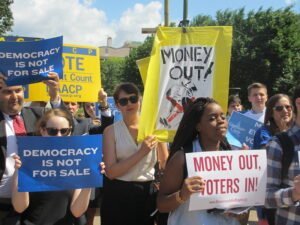
Pennsylvania households have seen their water bills increase by an average of 65% over the past decade, while private corporations buy out municipal and county water systems across the state exacerbating the affordability crisis.
Between 2015 and 2025, the national advocacy group Food and Water Watch studied the 17 largest community water systems in Pennsylvania covering 42% of the population. The report found that for-profit corporate water systems increased typical household bills by an average of 69%, while local governments increased them by 63%. But for-profit corporate systems charged 82% more than local governments. The average annual household bill from a private system was $1,172, while the average annual household bill from a local government system was $643.
Federal data from the EPA’s Safe Water Drinking Information Systems (SWDIS) shows that 31% of Pennsylvania residents are served by corporate-owned water systems. Four out of the 10 most expensive community water systems in the United States are owned by the two largest private water corporations in Pennsylvania, American Water and Aqua Pennsylvania.
Mary Grant, Water Policy Director for Food and Water Watch, said that the situation in Pennsylvania has become increasingly predatory since the state passed Act 12 of the Public Utility Code in 2016, which allows for private companies to inflate the valuation of local utility systems during bidding.
“There’s a huge incentive [for local boards] to sell,” Grant said.
To make the money back from the sale, Grant said that the corporations have turned around and hiked residents’ rates.
READ: What’s Behind the Push Toward Privatizing Water Systems?
And while Act 12 was reportedly intended to help municipalities sell off struggling or failing utility systems, private companies are now seeking to acquire many that are fully functional and thriving, said Bill Ferguson, resident of New Garden Township and founder of the Pennsylvania-based organization Keep Water Affordable.
“I’ve had the opportunity to tour many of these facilities,” Ferguson said. “They may be in need of some maintenance here and there, but for the most part, these [local and county] water systems are equipped to deliver the service that residents need. And they’re more likely to listen to them.”
Pennsylvanians feel the squeeze
Ferguson said his community, New Garden Township, sold its wastewater and sewer authority to Aqua Pennsylvania in December 2020 for $29.5 million. He and most of the other residents were oblivious to the rate hikes they would experience until shortly after the sale when a neighbor knocked on his door with a bill in hand. He and his neighbor combed through the rates and discovered they had risen by more than 30%.
“It’s a real David and Goliath situation,” Ferguson said, noting that he believes corporate entities use their unlimited budgets to trick local municipalities. “They have to make their money back somehow, so they go after it in their rates.”
He helped to establish Keep Water Affordable as a platform to educate residents in other communities about the pitfalls of corporate buyouts of public utilities. He said he’s spent the past few years traveling across the state to speak at meetings where deals are on the table, including a proposed buyout of his community’s water system (Chester Water Authority) and the Bucks County Water and Sewer Authority. In both cases, backlash from residents led to the deals being terminated.
“Corporate control is driving people’s water bills through the roof at a time when everything is getting more expensive.” – Food and Water Watch Water Policy Director Mary Grant
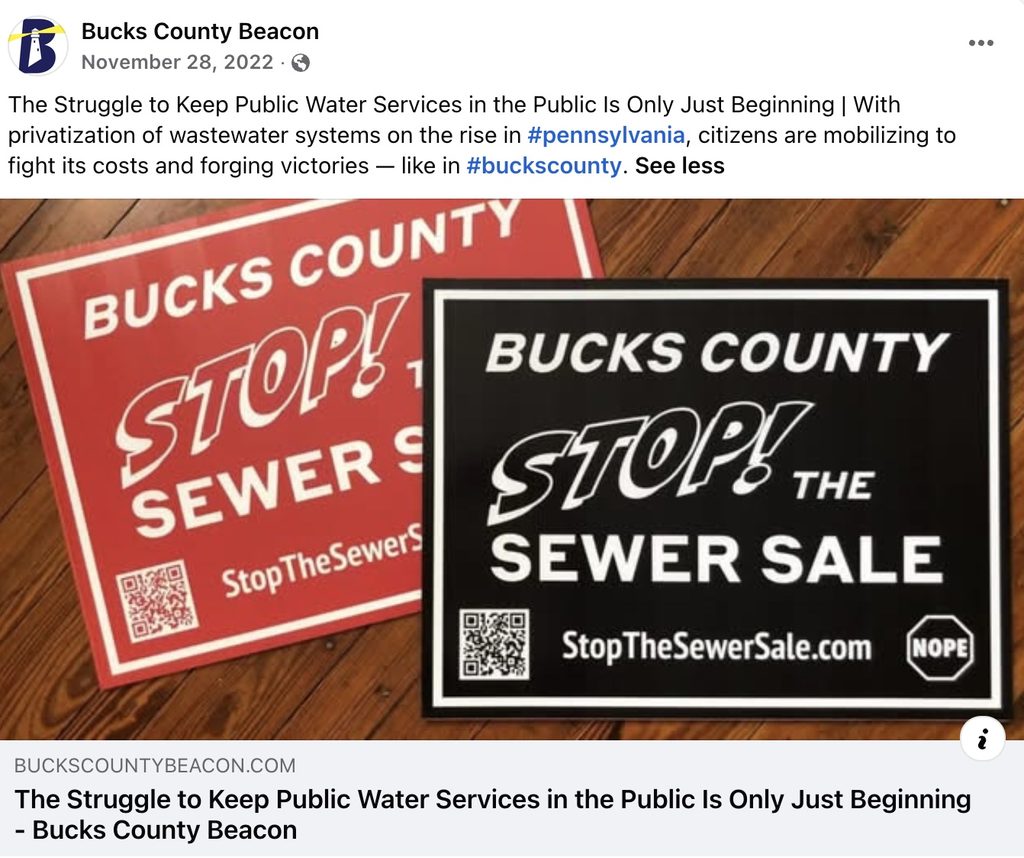
Across the state, the citizens in Towamencin Township organized against a proposed buyout of its wastewater management system in 2022 and successfully enacted a Home Rule Charter through the ballot that would prohibit the privatization of its public utilities. In 2024, the township’s board officially terminated the sale with American Water.
Kofi Osei of Towamencin Township said he learned about the sale when he was bored one day and happened to scroll the township’s website.
“I thought, something’s off here,” Osei said. “This sounds like a terrible idea.”
He became involved with the anti-privatization movement in his community and later became a township supervisor, where he took part in enacting the charter.
“It’s about getting out there and knocking on every door,” Osei said. “Making sure everyone in the community knows what’s going on.”
Moving forward with awareness
When it comes to safeguarding other communities, Osei said the responsibility is two fold: not only for citizens who must stay involved with local government actions, but also with public officials who must remain honest and up-front with residents about decisions that impact them.
Grant added that the rising costs in other areas (health care, groceries, etc.) make it difficult for citizens to stay vigilant, leaving them more vulnerable to predatory rate hikes with water. According to Food and Water Watch, water bills across the U.S. increased by 1.6 times the rate of inflation and more than 2 times the rate of groceries between 2015-2025.
“Corporate control is driving people’s water bills through the roof at a time when everything is getting more expensive,” Grant said in a press release. “It’s time for all levels of government to rein in the rampant corporate abuses of water and support adequate funding to prioritize safe, affordable and keep water in communities’ hands.”
Grant noted that she hopes incoming and returning state legislators will prioritize repealing Act 12.