Feeding America’s 2023 Map the Meal Gap data shows that nearly 64,000 Bucks County residents are food insecure, representing about 9.9 percent of the county, or roughly one in 10 people.
“Child food insecurity is even higher, impacting about one in nine children,” said Elizabeth Zbinden, food program manager at Bucks County Opportunity Council (BCOC), a Hunger-Free PA (HFPA) member food bank. “Over the past two years alone, food insecurity in Bucks County has increased by approximately 60 percent, highlighting how quickly need is growing in our community.”
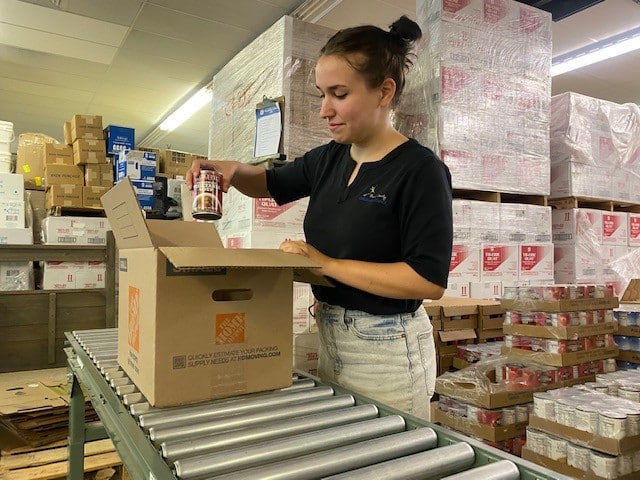
BCOC is seeing these trends reflected across all of their food programs, including their pantries, mobile markets, and senior food distributions.
“The level of need we are serving at has now surpassed what we experienced at the peak of the COVID-19 pandemic,” said Zbinden. “Not only are more households seeking assistance, but families are also returning more frequently as housing costs, utilities, healthcare, and food prices continue to stretch already tight budgets. For many, food assistance has shifted from a short-term support during emergencies to a regular part of making ends meet.”
BCOC is also seeing more working families and seniors on fixed incomes who previously never needed help.
“Hunger exists across every part of Bucks County and is often invisible,” said Zbinden. “It may be the grocery store cashier, a caregiver, or someone working full-time but still struggling to cover basic expenses.”
Gov. Josh Shapiro’s proposed 2026-27 General Fund budget preserves the modest increases allocated to critical anti-hunger programs just a few months ago to continue the fight against food insecurity in the commonwealth.
“The level of need we are serving at has now surpassed what we experienced at the peak of the COVID-19 pandemic.” – Elizabeth Zbinden, food program manager at Bucks County Opportunity Council
The governor’s spending plan holds the line on funding for the State Food Purchase Program (SFPP) at $30.688 million. The program received a $4 million boost in the late budget that the administration and General Assembly approved in November.
“While we are grateful for the stability this budget offers, we cannot lose sight of the fact that this is a critical time of record demand for our most vulnerable neighbors across Pennsylvania,” said Stuart I.R. Haniff, CEO of Hunger-Free Pennsylvania. “We look forward to working with the governor and General Assembly to bridge the gap between ‘steady’ and ‘sufficient.’”
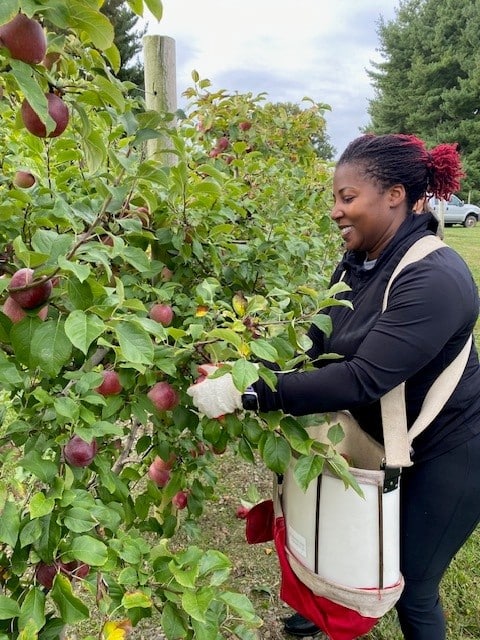
Haniff said his organization aims to secure an additional $11.8 million for the State Food Purchase Program (SFPP) and $4.5 million for the Pennsylvania Agricultural Surplus System (PASS). SFPP provides cash grants to counties to help them provide food to low-income families and to supplement ongoing efforts by food pantries and organizations like BCOC. PASS redirects millions of pounds of Pennsylvania-grown agricultural products that might otherwise go to waste to organizations that provide nutritious meals, as well as the Senior Food Box Home Delivery Program.
“We remain committed to our mission of ensuring no Pennsylvanian goes hungry and will continue to advocate for the resources required to meet the unprecedented scale of food insecurity across all 67 counties,” Haniff said. “Even as we work to close this gap, we are chasing a moving target; federal budget cuts and fluctuating inflation continue to shift the landscape beneath us.”
To effectively address the growing need in Bucks County, sustained investment is critical, not only in food purchasing and nutrition assistance programs like SNAP, but also in the people and systems that make food access possible.
“Investment in valued staff, strong operations, and reliable infrastructure is essential to maintaining the level of service our community now requires,” said BCOC’s Zbinden. “Our pantry partners are also facing increased strain. Beyond food and funding, many sites need greater support with volunteer recruitment and consistent staffing. Even when food is available, limited volunteer capacity can impact how much assistance pantries are able to provide.”
READ: With SNAP Cuts, Rising Hunger and Funding Reductions, Bucks County Food Banks Feeling Squeezed
Continued community investment in volunteers and operational support is just as important as the food supply itself. In addition, families consistently need basic household items that are not covered by nutrition programs.
“Hygiene products, pet food, paper goods such as toilet paper and paper towels, and household essentials like dish soap and cleaning supplies are in high demand and make a meaningful difference for families trying to stretch limited budgets,” said Zbinden. “We often see seniors in particular choosing to feed their pets before themselves, which speaks to both the financial pressure they are under and how essential these non-food resources are.”
Business and Professional Women/PA (BPW/PA) selected HFPA for its year-long statewide project.
“We look forward to working with the governor and General Assembly to bridge the gap between ‘steady’ and ‘sufficient.’” – Stuart I.R. Haniff, CEO of Hunger-Free Pennsylvania
Quakertown BPW President Melissa Wieand said in support of the BPW/PA State Project (Hunger Free PA), Quakertown BPW has been working to combat hunger in their community in the following ways:
In October, they assembled and distributed over 55 “Dinners in a Bag” for the Quakertown Food Pantry. Each bag contained a meal that would feed a family of four.
Since September, Quakertown BPW has been collecting food donations at each monthly meeting for the Feast Food Pantry located at Christ’s Evangelical Lutheran Church in Trumbauersville.
Over the holiday season, Quakertown BPW made a monetary donation to Angel’s Table in Quakertown, and their members served meals on Christmas Eve Day.
READ: Nearly 1 in 3 Families with Children in Bucks County Are Struggling Economically, Says New Report
In addition to a monetary donation, in November Quakertown BPW members packed over 300 food bags for children as part of the Bean Bag Food Program.
“We will continue our efforts to positively impact food insecurity in our community throughout this membership year,” said Wieand.
Hunger-Free Pennsylvania, in partnership with 18 food banks serving all 67 counties, represents one of the largest charitable food distribution networks in the commonwealth. HFPA, in collaboration with state and federal governments and other nonprofit organizations, works to ensure food security for all Pennsylvanians.
“Our partnership with BPW/PA is vital as food demand hits record highs,” said Haniff. “We are so grateful to their 1,400 members for this year-long, 67-county effort. Their impact in Bucks County is a testament to how local action strengthens the entire state’s food system.”