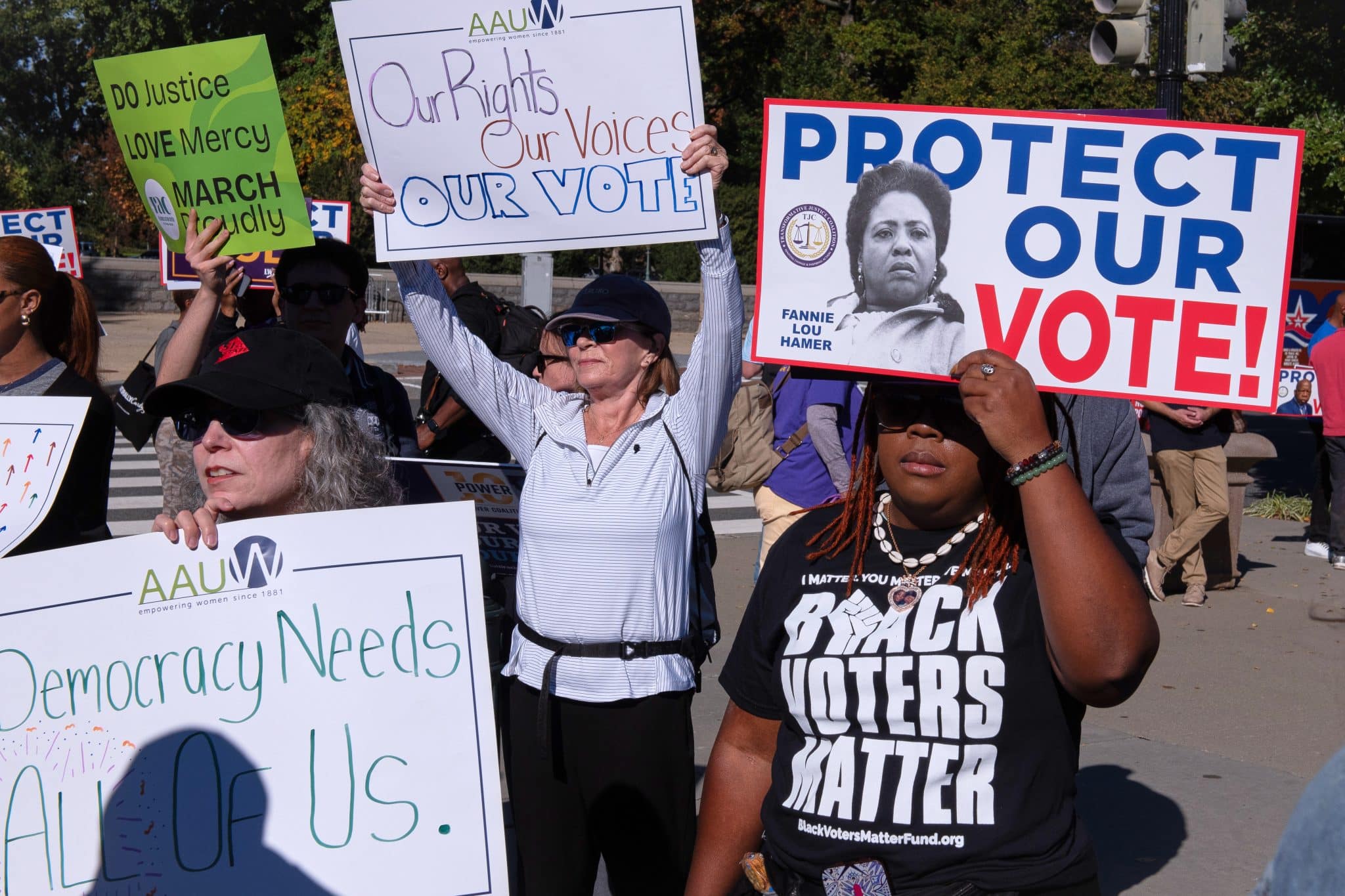
Imagine being a legal American citizen and eligible voter, walking to your long-time voter precinct – where many know your name – and not being allowed to vote.
For millions of married women, new voters and older Americans who don’t have their birth certificates handy or a valid U.S. passport, that scenario could easily play out after Wednesday’s House vote to advance the Safeguarding American Voter Eligibility (SAVE) Act.
After last year’s previous failed attempts to change voter identification requirements, the U.S. House of Representatives narrowly passed the SAVE America Act by a 218-213 vote, and Rep. Brian Fitzpatrick helped push it over the finish line with his vote.
“As chair of the Bucks County Board of Elections I know what it means to run elections that are free, fair and secure. That’s why I oppose the ‘so-called’ SAVE Act. Policies that put new obstacles between citizens and the ballot box don’t protect democracy, they undermine it,” said Bucks County Commissioner Bob Harvie, a Democratic candidate looking to unseat Fitzpatrick in Pennsylvania’s 1st congressional district.
Fitzpatrick voted with House Republicans (and Texas Democrat Rep. Henry Cuellar) to advance the controversial bill. For more than a year, numerous attempts to reach Fitzpatrick for comment over his votes in Congress and his support of Trump’s policies and executive orders have been unsuccessful.
The GOP’s sudden push to change voting rules at the start of the midterm elections season is raising red flags, the Associated Press reports. Trump, who continues to insist the 2020 election which he lost was “stolen,” wants to completely overhaul how elections are run.
In fact, 24 Democratic governors released a joint statement Thursday to sound the alarm about Trump’s threats to “nationalize “elections.
“President Trump’s threats to remove the ability of states to run their own elections is an undemocratic attempt to silence the American people who are rejecting his costly and divisive agenda,” the statement said.
Amy Widestrom, executive director of the League of Women Voters of Pennsylvania, said this bill will suppress voter participation.
“The SAVE America Act would create sweeping new ‘show your papers,’ residency and voter ID requirements that could block hundreds of thousands of eligible Pennsylvanians from participating in our democracy,” said Widestrom.
READ: Congressman Brian Fitzpatrick Votes for the SAVE Act, a ‘Dangerous Step Backward for Our Democracy’
Kadida Kenner, CEO of New Pennsylvania Project, said election integrity protections and safeguards are already in place, and the SAVE Act causes voters unnecessary obstacles.
“The legislation passed by the House, with a slim majority, is about requiring two very specific IDs that a majority of people do not have or can easily access – this includes women on both sides of the political spectrum. This isn’t about IDs needed to write a check, check out a library book or purchase wine,” Kenner said.
ABC News reported the bill would restrict mail in ballots, and require voters on Election Day to show either:
· Valid U.S. passport
· Real ID that indicates citizenship. Only five U.S. states currently display U.S. citizenship with an Enhanced Driver’s Licenses (EDLs): Michigan, Minnesota, New York, Vermont, and Washington.
· Birth certificate.
· U.S. Military ID card, with a service record and U.S. place of birth place.
· Federal, state or tribal ID card showing place of birth.
The Brennan Center for Justice, a nonpartisan law and policy organization, said the SAVE Act’s requirement for either a birth certificate or valid passport to register to vote will lead to widespread voter disenfranchisement.
“Our research shows that more than 21 million Americans lack ready access to those documents. Roughly half of Americans don’t even have a passport. Millions lack access to a paper copy of their birth certificate. The SAVE Act would disenfranchise Americans of all ages and races, but younger voters and voters of color would suffer disproportionately. Likewise, millions of women whose married names aren’t on their birth certificates or passports would face extra steps just to make their voices heard,” the Brennan Center’s analysis of the bill states.
The SAVE Act’s new, narrowly restrictive voting requirements now heads to the Senate where it faces an uncertain future.
Politico reported in the Senate the SAVE Act could face a “filibuster roadblock,” while conservatives “seek workarounds.”
“The SAVE Act would disenfranchise Americans of all ages and races, but younger voters and voters of color would suffer disproportionately. Likewise, millions of women whose married names aren’t on their birth certificates or passports would face extra steps just to make their voices heard.” – Brennan Center for Justice
According to the report, Senate Republicans “privately acknowledge” there isn’t enough GOP support to evade a blue filibuster. Republicans hold a narrow 53-47 majority. It includes two Independents that caucus with Democrats. CNN reported 10 races that will decide who controls the Senate after November’s elections.
“We already have safeguards to protect election integrity. This bill does not solve a real problem. Instead, it creates new barriers for eligible voters. Democracy should depend on participation, not on paperwork,” added Widestrom.
Kenner said the bill’s requirements are akin to Jim Crow-era poll taxes used to disenfranchise Black voters.
“If the Senate brings the SAVE Act to the floor, they will be voting on an unconstitutional poll tax and voter suppression,” Kenner said.