Natalie Scantlebury had known about CocoLife for a long time, but even after becoming a doula in 2024 she was not sure how to connect with the community of Philadelphia maternal wellness advocates.
She was new to the country — immigrating from Toronto in 2021 — and her doula background had been more focused on solo entrepreneurship.
“I really wanted to connect and gain a community in a space that was truly supportive of Black and brown folks,” Scantlebury said.
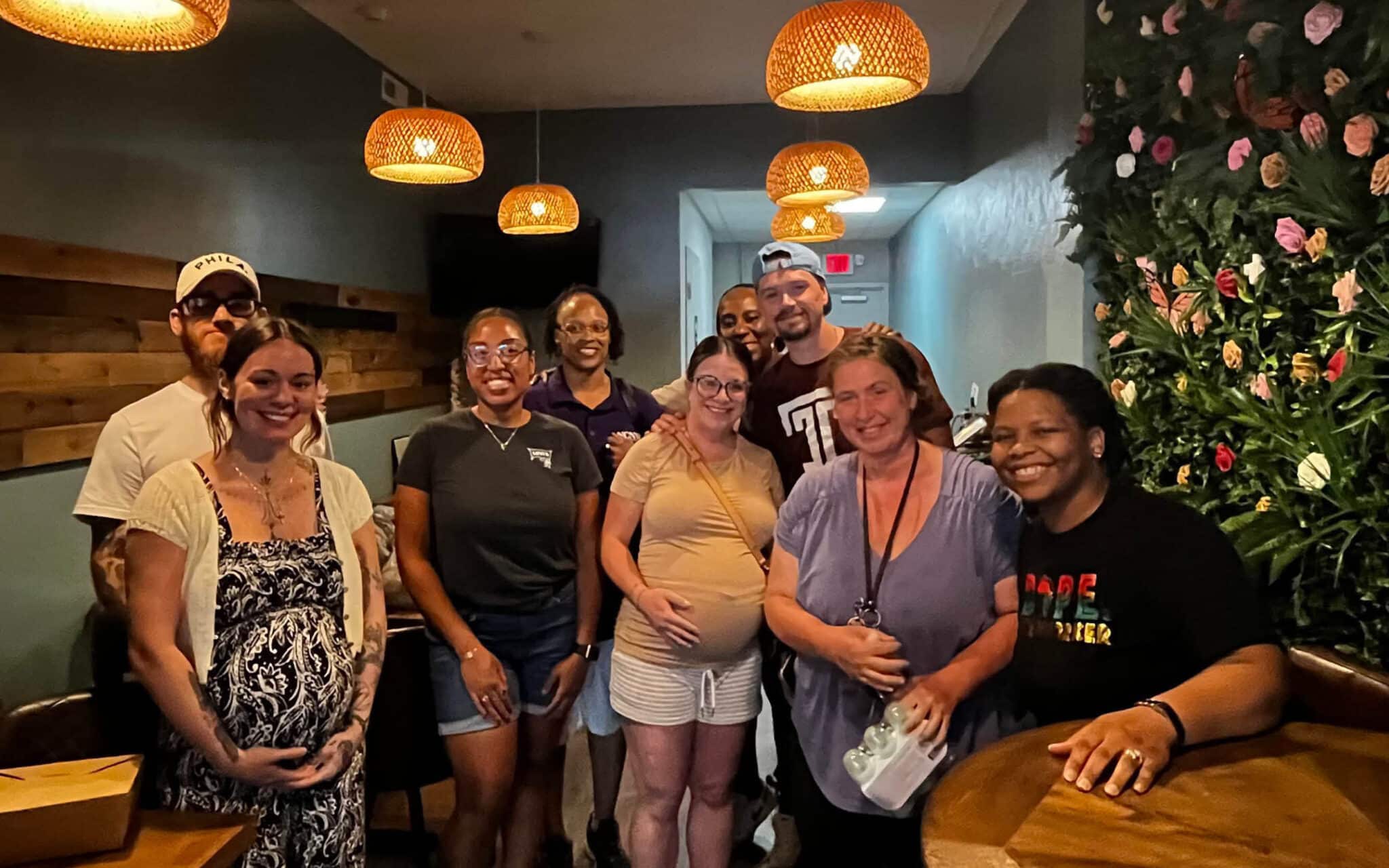
When CocoLife held a 12-week development hub with the city of Philadelphia in the summer of 2025, she jumped on the opportunity. The program taught 12 participants how to become Medicaid certified providers, support families holistically, and deal with doula burnout.
Since joining CocoLife about a year ago, Scantlebury now serves as lead coordinator for the organization in Bucks County and aims to expand the group she has found community in — now in the suburbs.
Building a doula community in the Philadelphia area
Alexia Doumbouya said founding CocoLife was “bittersweet,” stemming from her own experience with perinatal mood and anxiety disorder.
“Back then, I just know I felt incapable, defeated,” Doumbouya said. “The intrusive thoughts were intruding.”
A year into her postpartum journey, a friend noticed Doumbouya was different. The 43-year-old said that was where CocoLife was “birthed from.”
Initially, the idea for the organization was to create a space for moms to be heard and navigate pregnancy — dealing with loss of a child, loved one, or fertility challenges.
She noted the importance of such a group for Black and brown women. Black and hispanic births in Philadelphia make up nearly 60% of all births in the city, according to data from March of Dimes, a non-profit focused on maternal and infant health.
In addition to being a mother, Doumbouya is a doula herself and recognized the need for a community for caregivers just as much as for the families they support.
“We wanted to build community and then as we were doing that, I quickly realized that this was also an opportunity to build community for the birth workers who are serving these families,” Doumbouya said.
Combining these two ideas, she founded CocoLife in 2019. The organization now serves Philadelphia mothers with a “community empowered model of care” through education, engagement and empowerment.
The organization offers a variety of resources, programming and events to support moms throughout the pregnancy journey.
“After all of these words are said, spaces are created, love is shared and bonds are bridged, then we want people to take that and be empowered to take initiative,” Doumbouya said. “To be really encouraged about what they need to be.”

A network of caregivers
Scantlebury is still in touch with the 12 doulas she trained within the CocoLife development hub.
“We have a group chat to this day,” Scantlebury said. “I truly found community in CocoLife.”
The doulas will discuss various cases they are working on, the moms they support or share resources. Through CocoLife’s app, the community is expanded even further, connecting doulas and birth workers across the United States.
This expansive network allows doulas in the Philadelphia area like Scantlebury to further help families in any situation that arises.
“Anybody that’s experienced something that another doula hasn’t experienced locally, we’re able to reach out to those specific birth workers and ask them for support and resources,” Scantlebury said.
Expanding to Bucks County
A new CocoLife initiative — the Postpartum Transitions Program — started in May 2026. Scantlebury received an email calling for a Bucks County lead for the program and she decided to step up for the role.
“I thought it was an amazing idea,” Scantlebury said. “Postpartum is such an integral part of the perinatal experience and it’s often forgotten and lost.”
Scantlebury explained that on the clinical side of maternal care, health providers are more focused on the care of your baby and your health during pregnancy. She said that sometimes in our healthcare system, some expecting mothers do not receive care until six weeks from birth.
A March of Dimes report from 2025 shows that about a quarter of women in the United States do not receive prenatal care until after their first trimester.
READ: It’s Not Just Vaccines — Parents Are Refusing Other Routine Preventive Care for Newborns
CocoLife’s postpartum program focuses on support from 26 weeks and into the postpartum period.
“I was like yeah, sign me up for that,” Scantlebury said. “I’ll definitely be a part of that.”
Scantlebury lives in Bensalem and works with families across Bucks County, blending virtual calls, in-person postpartum and prenatal visits and staying on call for births if a mother is due.
“I’m ready to get in my car and go to the hospital wherever I’m at.”
Challenges in suburbia
Scantlebury did not sugarcoat the challenge she has faced creating a community in the Philadelphia suburbs. She said that there is still a “trust factor” that needs to be built.
Bucks is a predominantly white county, with white residents making up about 86% of the population according to recent U.S. census data.
“Looking into the research of the number of Black and brown folks in Bucks County, the numbers are small,” Scantlebury said. “It’s very challenging to find folks who are in need of this support.”
Finding residents that are lower income or simply do not have the information they need to carry out a healthy pregnancy has been difficult. Support from community partners like Kinder Care or NAMI have improved these outreach efforts.
READ: Crisis Pregnancy Centers in Pennsylvania Are Growing in Numbers–and Predatory Tactics
“It’s been helpful,” Scantlebury said. “Just their willingness to support us and the efforts that we’re doing has been a great help, and I look forward to seeing what unfolds in the future with those partnerships.”
The expansion into the suburbs has been progressing well, according to Doumbouya. However, she said the organization understands that it is going to take time.
Doumbouya spoke to Scantlebury’s creativity and strategy by building relationships with partners in the communities CocoLife serves, building in-person connections. While the team leverages technology and outreach on social media, Doumbouya explained that the organization cannot solely rely on the internet.
“We got to get out there, we got to show up at stuff,” Doumbouya said. “We got to show our face because that’s also how you build trust.”