This story was originally published by Barn Raiser, your independent source for rural and small town news.
There are very real reasons to be concerned about the future of our democracy and undoubtedly real stakes in the coming midterms. But after nearly a decade of organizing in rural and small town Indiana, I’ve come to believe that upholding democracy requires something much deeper than winning the next election.
For many Americans, democracy is an abstraction. It’s something we learned about in school or heard a politician talk about. We have little opportunity to experience democracy as something we actually do: a system we participate in to shape the world around us.
I came back to my home state of Indiana nearly a decade ago after a decade of organizing in Minnesota. My family has lived in southern Indiana for 150 years, and I felt called to bring the thing I loved — disciplined, effective people-led organizing — back to the place where my family and community lived.
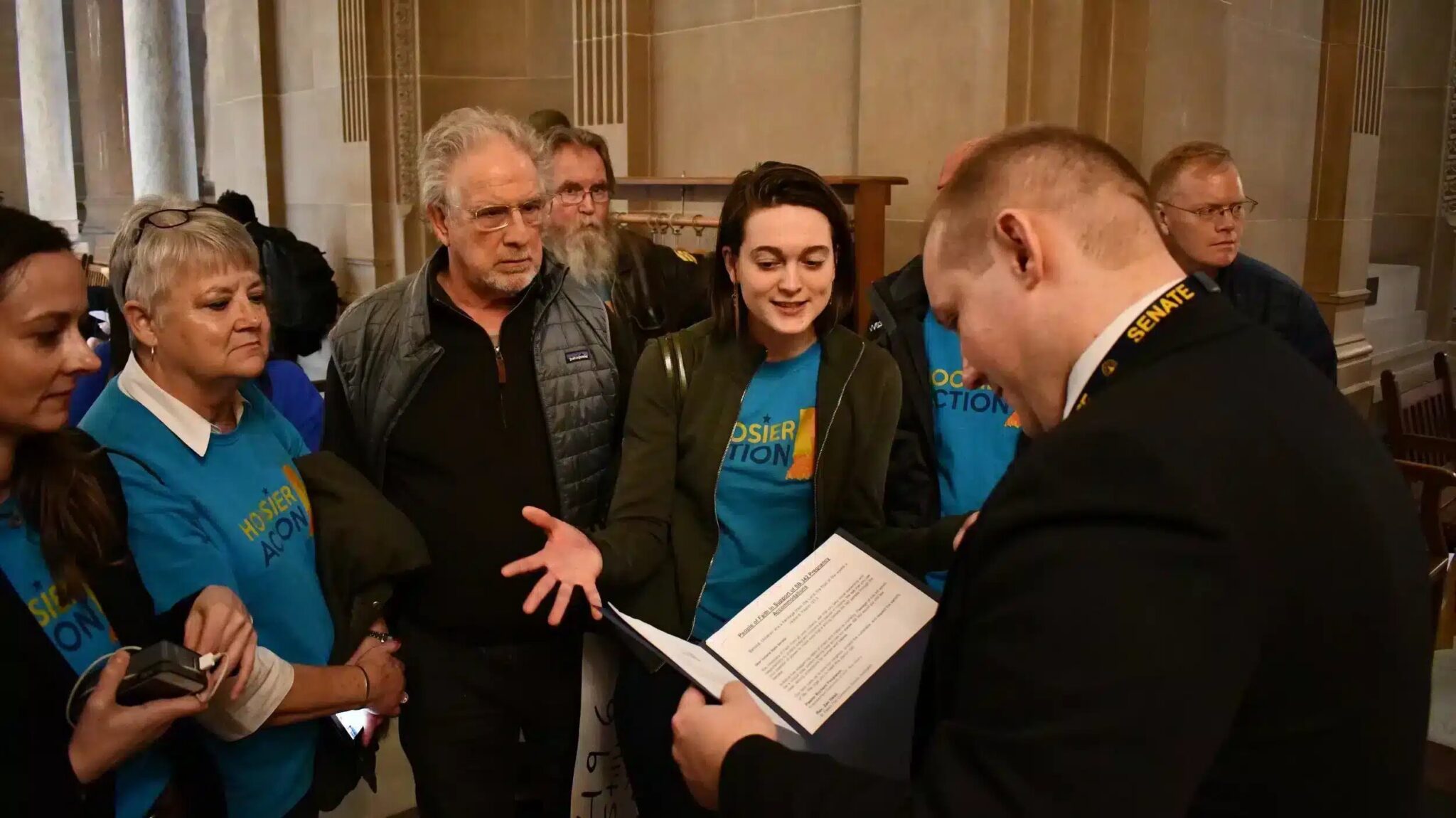
I came out of an organizing tradition rooted in relationships: bring people together around shared interests, develop leaders, build an organization, and use that collective power to change the decisions shaping our lives. I still deeply believe in the power of this kind of organizing, which in 2017 led me to found Hoosier Action, an independent, member-led citizen action organization where I serve as executive director.
Once I was back home, I began to see how much that organizing model rested on conditions I had taken for granted. It assumed a functioning “civic infrastructure”: places where people already gathered; local governments that had real governing authority and resources, and some expectation that they could be influenced; local media that would cover a public fight and be read; and a basic sense that what happened in your community was something you could have a role in shaping.
But what happens when those conditions disappear?
For a long time the conditions for democracy were almost invisible, just part of the atmosphere of community life. The Veterans of Foreign Wars (VFW) hall. The local newspaper. Serving on the stewardship committee at church. Volunteer organizations and neighborhood associations. Places where you could walk in and know people, take responsibility for something, make decisions together, and practice being part of a community.
I came out of an organizing tradition rooted in relationships: bring people together around shared interests, develop leaders, build an organization, and use that collective power to change the decisions shaping our lives. I still deeply believe in the power of this kind of organizing …
Across much of America, that civic infrastructure is rapidly hollowing out. And this isn’t just a rural or white working-class story. The collapse of community life is happening in different ways and in different kinds of communities all over the country. There are fewer places where people regularly come together, fewer opportunities to take responsibility for something larger than ourselves, and fewer experiences of actually shaping what happens where they live. At the same time, politics has become increasingly nationalized and something we mostly experience as spectators: two teams compete, we choose a side, and then watch the fight.
All of this is happening at a moment of extraordinary disruption. Technology is transforming our communities, local institutions have less capacity and presence in our lives, and people are being asked to absorb enormous amounts of disruption and change. Multibillion-dollar data centers are arriving in our small towns overnight, bringing decisions about land, water, energy and public resources that most residents had no idea was happening let alone any role in shaping the decisions.
Without strong local places and relationships, we have fewer ways to make meaning of that change together and less capacity to respond to forces that originate far beyond our communities but upend our local lives.
READ: Americans’ Pride in US History and Democracy Drops, and Fewer Are Proud to Be American, Polls Find
Once we understood that the conditions had greatly eroded, it changed the question we were asking as organizers. We couldn’t ask how to organize people around an issue or campaign. We had to ask: what would it take to rebuild the conditions for people to participate in public life at all?
We started by asking people what was happening in their own lives and communities. Why can’t you drink the water in your town? Why are there only dollar stores? Why can’t your family afford to live here? Who is making decisions about your community, and why don’t you have a say?
If democracy means only voting every two or four years, it becomes something distant and theoretical. But when people come together to win a school funding referendum, hold a local official accountable, protect their community from an unwanted data center, or make sure public money actually serves the public, democracy becomes tangible. You can experience what it feels like to have some power over the conditions of your own life.
That realization has changed how we think about what an organizing organization needs to be. We describe that thinking using three metaphors: church, bomb shelter, and vanguard.
“Church” refers to creating a place where people belong and are known. “Bomb shelter” means a place that takes seriously the material conditions people need in order to participate. And “vanguard” means a place where people learn how power works and develop the skills and confidence to exercise it.
We quickly learned that we couldn’t just run people from campaign to campaign. If we wanted people to develop a sense that they could shape what happens around them, we needed a steady presence: places people could come for community, to learn something, to solve a problem together, or eventually to take collective action. There is no single policy, election, or communications strategy that can substitute for that kind of community life.
For us, that has meant experimenting with rebuilding some of the civic infrastructure that has disappeared.
Our members created SoINformed, a community newspaper that reports on local government and helps people understand decisions being made on their behalf. We’ve also started holding Civic Saturdays, where people might share a meal, learn a practical skill, work on a community project, and ask bigger questions together about why things are the way they are and who has the power to change them.
So many communities have lost a lot of what made them feel like unique places. The clubs, associations, institutions, gathering places, culture, and resources that make community life possible are increasingly concentrated in places that are also prohibitively expensive to live. Rebuilding democratic life is also about restoring a more fundamental sense of agency: our lives matter, where we live matters, and our communities can be places where we create things, make decisions, and shape a future together.
That’s part of why we’re organizing a big Future Fest next spring, inviting people from small towns and rural communities around us to imagine together: What do we need the future to be? What do we want technology to do for us? How do we want to be connected? How do we want to change the spaces and places around us?
We realized that almost nobody gets asked these questions where we live. Asking them is itself a way of saying: your life matters, where you live matters, and you should have some role in shaping what happens here. Politics is not the same thing as democracy, and our political opinions are not the totality of our humanity. We need to build something big enough for many different kinds of people to imagine themselves in and to actually have some power to shape.
If we want people to defend democracy, then we have to build places where they belong, where their basic needs are taken seriously, and where they can make decisions, create things, solve problems, and exercise power together. Then democracy stops being a word people are told to believe in. It becomes something we embody.