Alaina Behan sits down with her children in the nearly empty Mill Creek Elementary School lunch room in Bristol Township School District. Three black styrofoam lunch trays carry a variety of snacks: goldfish, cheese sticks and Sun Cup apple juices.
The family is the first to arrive for Monday’s free lunch service at the school. Behan says she will bring her kids a couple times a week, either for breakfast or lunch — occasionally both when it is a rainy day.
Behan’s daughter is starting at the school’s kindergarten in the fall. Coming for the meal service helps get her used to the cafeteria ahead of the school year — she will know where the food is, where the line goes, where to sit.
“I’m glad they don’t discriminate between everybody because I’ve seen kids roll up on bikes, and it’s four kids and they have a lunch together,” Behan said. “No one has to say ‘put your ID in and okay you owe a dollar, but you are free.’”
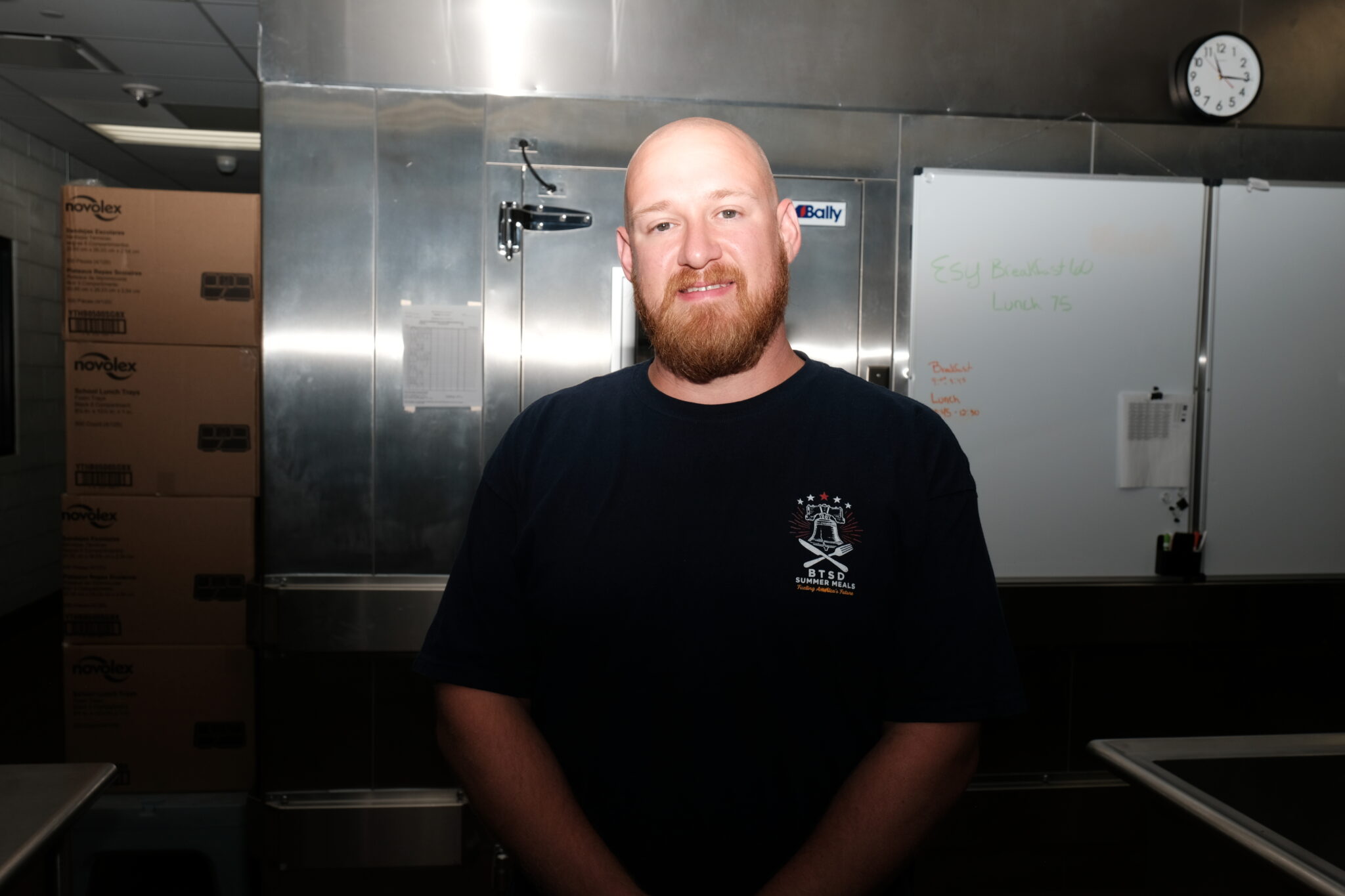
Since joining Bristol Township School District five years ago, food service director Brandon Lang has implemented free meal programs across the district, working to fulfill his mission to keep every child fed.
Keeping kids fed
This will be Lang’s fifth year in the school district. He has been in the school nutrition industry for nearly 11 years.
Previously, Lang worked for six years at Chartwells Schools — a food service management company — and served students throughout Bucks and Delaware counties and in New Jersey. At the company, he worked under management directives.
Coming to Bristol gave Lang his first chance to work in a self-operated district, with complete autonomy on how he directs food service.
“This is me running the ship here, and I take a lot of pride in making sure that the kids in the community have access to what they need to be productive,” Lang explained.
Lang said that he wanted to take advantage of every opportunity he could to feed Bristol’s kids.
“[I am] just making sure that they have access to nutritious food that, you know, fills their belly and gets their minds right ready to learn in the school year,” Lang said.
Starting a free meal program
At the start of the COVID-19 pandemic — in March 2020 — the U.S. Department of Agriculture issued nationwide waivers that allowed any child, regardless of economic background, to receive free breakfast and lunch.
Lang joined the district as food service director in October 2021 and only got to see these free meals in action for less than a year, with free food waivers expiring in June 2022.
After surveying the financial standing of Bristol Township’s students, he realized that the free breakfasts and lunches did not have to go.
“I was looking around at the district, and I was looking at the number of students who were either directly certified for free meals or who were eligible based on their income and realized that the district was eligible for community eligibility provision,” Lang said.
“This is me running the ship here, and I take a lot of pride in making sure that the kids in the community have access to what they need to be productive.” – BTSD Food Service Director Brandon Lang
Community Eligibility Provision [CEP] is a USDA program providing free meals for school districts in low-income areas, based on the percentage of students eligible for food relief services like the Supplemental Nutrition Assistance Program.
Similar to the COVID-19 free meal waivers, CEP is available to all students, regardless of income.
Following the expiration of these waivers, Lang implemented the CEP program in the Bristol Township School District for the 2022-23 school year.
“It’s definitely provided equality across the district,” Lang said. “It doesn’t matter who you are, if you are enrolled here you don’t have to pay for a meal.”
Expanding outside the school year

Schools across the United States provided a combined 33.8 million free lunches and breakfasts daily in 2025.
During summer months however, 87% of children that receive these meals during the school year lose access to daily breakfasts and lunches during the summer, according to No Kid Hungry.
Lang said he saw a need for free meals when school was out, and with the district’s eligibility, launched the no-cost food service in 2024.
Unlike the CEP, which operates during the school year, the Summer Food Service Program is not limited to students in the district.
“Any child — they don’t even need to be a student in Bristol Township — can come and participate in our meals during the summer months,” Lang said.
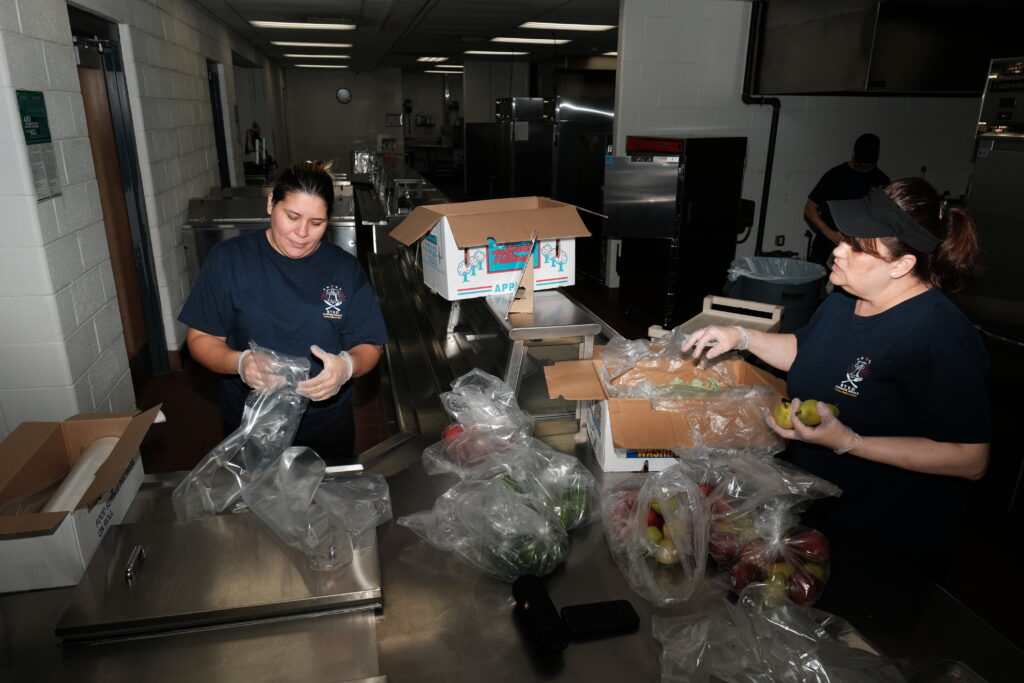
As of July 17, the free summer meal program has served 3,935 lunches and 2,982 breakfasts, through its two locations at Mill Creek Elementary and Harry S. Truman High School.
“Everybody’s really grateful that we have the program,” Lang said.
Leveling the playing field
Kristi Moreno is the impact director at United Way of Bucks County, a non-profit focused on strengthening the community with programs focused on combating food insecurity and instilling financial literacy.
Free meal programs create more equity in schools, according to Moreno.
“Research consistently shows that students who have access to nutritious meals, they’re able to concentrate, they’re able to participate in class and perform academically,” Moreno said. “It also improves attendance and behavior.”
However, even with this tool to create more equitable schools, not everyone readily adopts free food programs.
“Research consistently shows that students who have access to nutritious meals, they’re able to concentrate, they’re able to participate in class and perform academically. It also improves attendance and behavior.” – United Way of Bucks County Impact Director Kristi Moreno
Due to perceptions of the stigma associated with free meals, many families do not apply for these services, according to a study from the Journal of School Health.
When programs — like the one Lang instituted in Bristol — give universal meal access regardless of income, students do not have to worry about this stigma.
“They are not singled out based on their family’s income,” Moreno said. “It’s creating a more inclusive school environment, and they don’t have to worry about being stigmatized against their meal accounts.”
Mill Creek Elementary
Lang stands by the kitchen as families arrive for lunch service. Some drive, but others — including families from a large apartment complex next door — can walk to the free meals without crossing any roads.
He says he has seen kids come in from the playground, older kids either in middle or high school.
“It truly showed me that it’s not just small families with young children,” Lang said. “It’s high school kids and everybody in the community was able to come here and eat.”
Weeks ago, Lang sat at a table doing paperwork. Families sat nearby in the cafeteria.
“I texted my wife,” Lang said. “There are four families in this cafeteria that are able to eat and it just makes me happy to be able to do that.”