
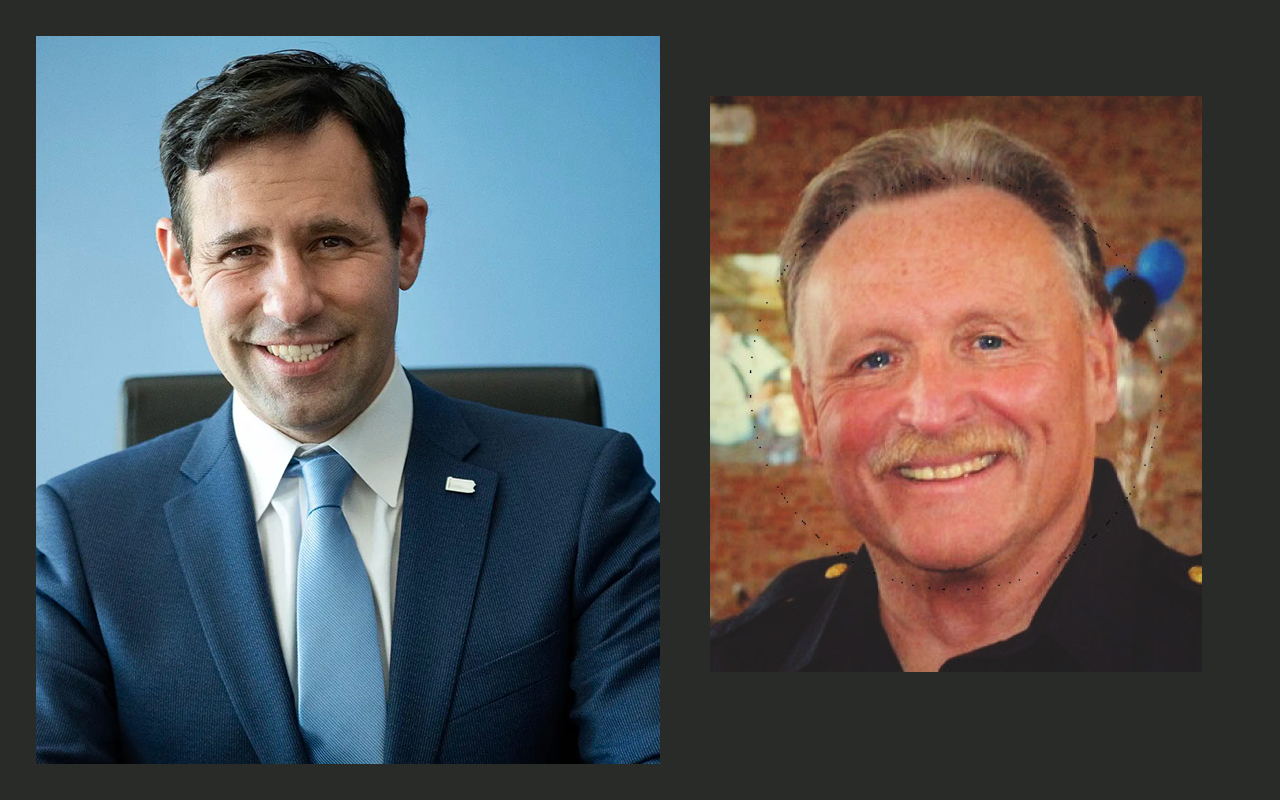
The Bucks County District Attorney will not bring any new charges against Quakertown Police Chief Scott McElree or the “Quakertown 5” students.
Following a five-month investigation, District Attorney Joe Khan’s office determined that neither McElree nor the teens would be subject to any further legal punishment, despite the report sharply criticizing the police chief’s actions as “calamitous.”
How did we get here?
On February 20, students from Quakertown Community High School walked out of class and into the streets to participate in a pre-planned protest against the U.S. Immigration and Customs Enforcement agency, known as ICE.
Despite the official cancellation of the protest by the Quakertown Community School District — which had received reports of “potential safety concerns” — around 35 students participated in the protest.
As the group marched through Quakertown’s streets, officers were called to the scene. Police alleged the students kicked cars — damaging property — and threw snowballs at the responding officers.
This eventually led to a violent confrontation in front of Sunday’s Deli & Restaurant, located at 44 Front Street and the arrest of five students, which were dubbed the “Quakertown 5.”
Following the protest, video was released showing McElree in plainclothes, appearing to place a student in a chokehold. Less than a month later on March 3, McElree was placed on leave. He returned to work on May 7.
Findings form an “exhaustive” investigation
To ensure an objective inquiry, the District Attorney’s Office tasked its Special Investigations Unit, assigning detectives and prosecutors that had no prior relationship to the Quakertown Police or were involved with investigations into the high school students.
Over the course of the investigation, detectives interviewed 22 civilian witnesses and four juveniles. The last of these interviews ended in July.
For video of the incident, investigators had to rely on securing bystander footage to build a record, since McElree was out of uniform and not wearing a body-cam.
Steve Nolan, a former Internal Affairs investigator for the Philadelphia Police Department, was tasked as an outside consultant to evaluate McElree’s use of force during the February incident.
Nolan determined that McElree was within the bounds of Quakertown Police policy and Pennsylvania law — despite holding his arm around the teen’s neck — since the alleged chokehold did not restrict “airway or vascular flow.”
“Applying the U.S. Supreme Court standard and Pennsylvania’s Peace Officer Justification defense, the Quakertown report stated that Chief McElree cannot be prosecuted for his use of force because the commonwealth would not be able to disprove beyond a reasonable doubt that McElree believed his physical actions were necessary to effect an arrest or defend himself while being struck,” said a Bucks County press release detailing the report.
In 2021, the U.S. Department of Justice released policy standards limiting the use of such restraints for federal law enforcement officers.
The District Attorney’s Office also investigated claims that McElree tried to stop the protest from going forward or acted as a counterprotester. These allegations were found to be false, according to the report.
“Some have insisted that all of the juveniles arrested should be severely punished for the assault on McElree; while others have insisted that all protestors were blameless and that McElree should be arrested and criminally prosecuted for his actions that day,” said Chief Deputy District Attorney Brendan Flynn in the report. “We acknowledge the depth and sincerity of these beliefs.”
Internal changes and restoring trust
Even without bringing new charges for McElree, Khan and his office have recommended changes for Quakertown law enforcement overall.
Despite commitments made in 2020, the DA’s office said the Quakertown Police remained one of the last departments in Bucks County to not update departmental policies to reflect Police Chiefs’ Best Practice Standard.
In November, 2020, Bucks County police chiefs and the district attorney came together to update their use of force policies. This included a ban on any arrest tactics — like chokeholds — that restrict oxygen.
The DA’s office has officially issued a recommendation that McElree provide a timeline for “adopting the standardized use of force reforms” that most of Bucks County has used for years.
Earlier this year, Quakertown resident and advocate Magan-Joanne Amy created a petition calling for the borough’s police department to update their current standards.
McElree’s actions are a result of this lack of regulation, according to Amy.
“I have to say that the reason why we are pushing for policy updates is because there are actually no laws or policies in place for the use of force in Quakertown, and there are no policies about identifying yourself as a police officer or accountability,” Amy said.
Khan and the DA’s office will hold community conversations for the next 45 days, in an attempt to heal and strengthen trust in local law enforcement. As of publication, no information regarding dates, times or locations for the community conversations has been released.
Following the community conversations period, the DA’s office will present their recommendations for law enforcement practices reform in Quakertown.
“Our office did what prosecutors must always do without fear or favor: follow the facts, apply the law and exercise sound judgment and discretion,” Khan said, “but no criminal investigation alone can heal the trauma and pain the Quakertown community suffered.”
Tim Prendergast is an attorney and represented one of the five Quakertown students arrested.
While he appreciated the report noting McElree’s wrongdoing, Prendergast thinks there needs to be additional steps taken to heal the community at large.
He said that Khan — going forward — should withdraw all adjudications against all of the students involved in the Jan. 20 incident and make them completely free from the legal system.
Prendergast’s other suggestion for moving forward as a community was simple.
“I think the chief needs to go,” Prendergast said. “ I’ll be honest with you, after reading that report, I would hope he thinks it’s time to retire at 72 years old.”