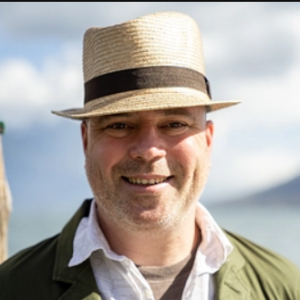
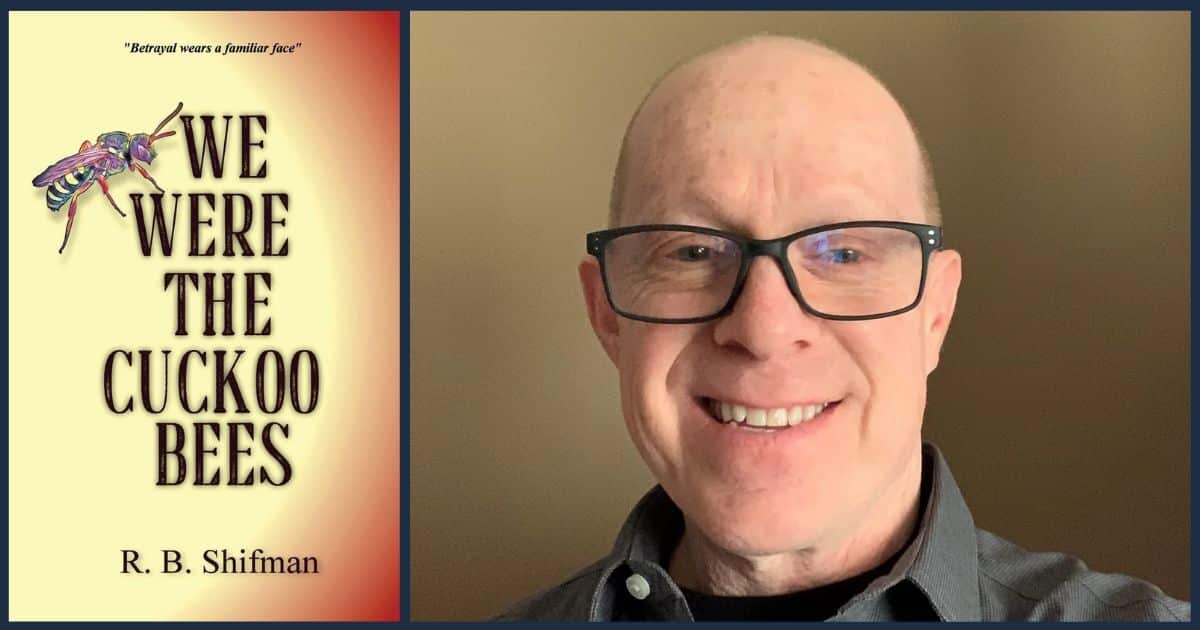
An anti-fascist, dystopian YA novel published last week, We Were the Cuckoos Bees, was inspired in large part by Central Bucks School District during a time when Moms for Liberty and right-wing Christian extremists captured the school board in the early part of this decade. This is a story the Bucks County Beacon has reported on in great detail. Today I speak with local author Rich Shifman, who writes YA stories under the pen name, R.B. Shifman, about his new book which he dedicated to local Bucks County residents who helped flip the school board in late 2023 to bring sanity, common sense and compassion back to the school district.
Listen on Apple, Spotify, Podbean and iheart
Transcript edited by Alexa Schnur.
Before we talk about your new book, I’d like listeners to know a little bit more about you. So to start off, where did you grow up and what was your childhood like?
Rich: Sure, great question. And some of that has informed my writing. I was born in Maryland outside of DC, in the Bethesda area. And when I was seven, my father had businesses up there and they went bankrupt. So I like to tell people we moved down to South Florida to be poor—but I don’t think we were poor per se, we just didn’t have much money. I grew up in South Florida, mainly in Fort Lauderdale. I went to the University of Miami and then took a year off after college bartending. Then, in the late 80s, I moved up to Philadelphia to go to Temple for grad school in social psychology. Everything I owned [was] in the car as I drove up there to Philly. I’ve been in either the Philly area or the New Jersey area ever since. We lived in Jersey for about 13 years, but we’ve been back down here near Doylestown—my job brought me here—18 years ago. I’m no longer with that job, but we’re still here outside of Doylestown, and we love it.
And you studied creative writing at the University of Miami for your undergrad?
Oh, that’s right! Yeah, I mean, I forgot that. It was a long time ago. I always wanted to be a writer. You know, when I was 12, 13, 14 years old, I really loved high fantasy. Lloyd Alexander, you know, C.S. Lewis, Narnia, all that stuff. And I typed a really bad high fantasy book using a Remington typewriter when I was like 13, 14 years old. So I always wanted to be a writer, and I was an English minor and I started taking creative writing classes, became a creative writing minor at Miami. I was a psychology major. One of the professors liked my work and they let me take a graduate level course with Isaac Bachevis Singer. Not a lot of people know him anymore. He’s a Nobel Laureate. But he was really old at the time and not really teaching the course. It was a guy named Lester Garand who was his interpreter.
And then, you know, my parents dissuaded me from being a writer. They were like, well, what are you gonna do with that? So I didn’t get into grad school right out of college. I bartended for a while, and then I got into grad school at Temple up in Philly, where a good friend of mine who I’m still friends with to this day was in the behavioral psych program up there. But I stopped writing after college and I didn’t pick up writing again until I started writing a little bit in ‘03, ‘04, because I was running my own business and there wasn’t enough to do to try to get business, which is probably why that business didn’t work out. But then I really didn’t start writing, I was with a large pharma company doing market research. I’ve been doing market research for about 35 years. And almost a decade ago, I left them. I was with another company. It didn’t work out. They let all of us go, and I decided to contract. So from 2019 right up till today, I’ve been contracting. And from 2019 to the beginning of 2024, I was part time contracting. There was not a lot of pressure and I could wake up at 5, 5:30, and write for a couple hours. Then from 2019 to the end of 2023, I probably wrote 21 novels—some of them good, some of them nobody will ever see. Then the last couple of years I’ve been working full time and I haven’t written as much. But I made a conscious decision to start publishing, to find a publisher, which I did with Paper Airplane Broken Bones, which came out last year. And the same publisher, Between the Lines Publishing, published We Were the Cuckoo Bees. And we’ve got a couple more that should be coming out this year. Long winded answer, sorry.
No, that’s great. What is your writing process like?
So, like I said, when I’m really dedicating time, like I was from 2019 through 2023, I wake up in the morning—I’m an early writer. I’ve tried writing later in the day, I can’t do it. My writing is just like, I look at it, and I’m like, who’s writing that? So I’m literally almost a different person writing—morning Rich, evening Rich. So morning Rich, writing, I draft. What I’ll do is, I’ll draft for like an hour and a half, and then I’ll edit it right there. Because drafting is—it’s not good. So I’ll edit it. I’ll give it a first round edit, and then when I was part time, later in the day for an hour or two, I would go through and edit what I had written.
Usually when I start a book, I have an idea. I know sort of what I want to do. Sometimes I’ll know where it’s going to go, but oftentimes, I’ll have a vague idea, I’ll write two or three chapters and I’ll realize, it needs to go here. This needs to be the end. Cuckoo Bees was a little bit like that. My process is very intuitive, but after three chapters, I’ll outline the book. And if I can’t do that after three or four chapters, I’ve had a couple novels that I’ve just said, I can’t do it. I don’t know where this is going.
So like you said, you had moved to the Doylestown area. And in fact, you regularly serve as a guest instructor for CB West High School’s creative writing class. And Central Buck School District happens to have inspired the setting of what you have described as your anti-fascist, near dystopian young adult novel, We Were the Cuckoo Bees. You actually dedicated the book, which you drafted in 2022 and 2023, to local Bucks County residents who helped flip the school board in late 2023, people who have either been interviewed or written about in the pages of the Bucks County Beacon.
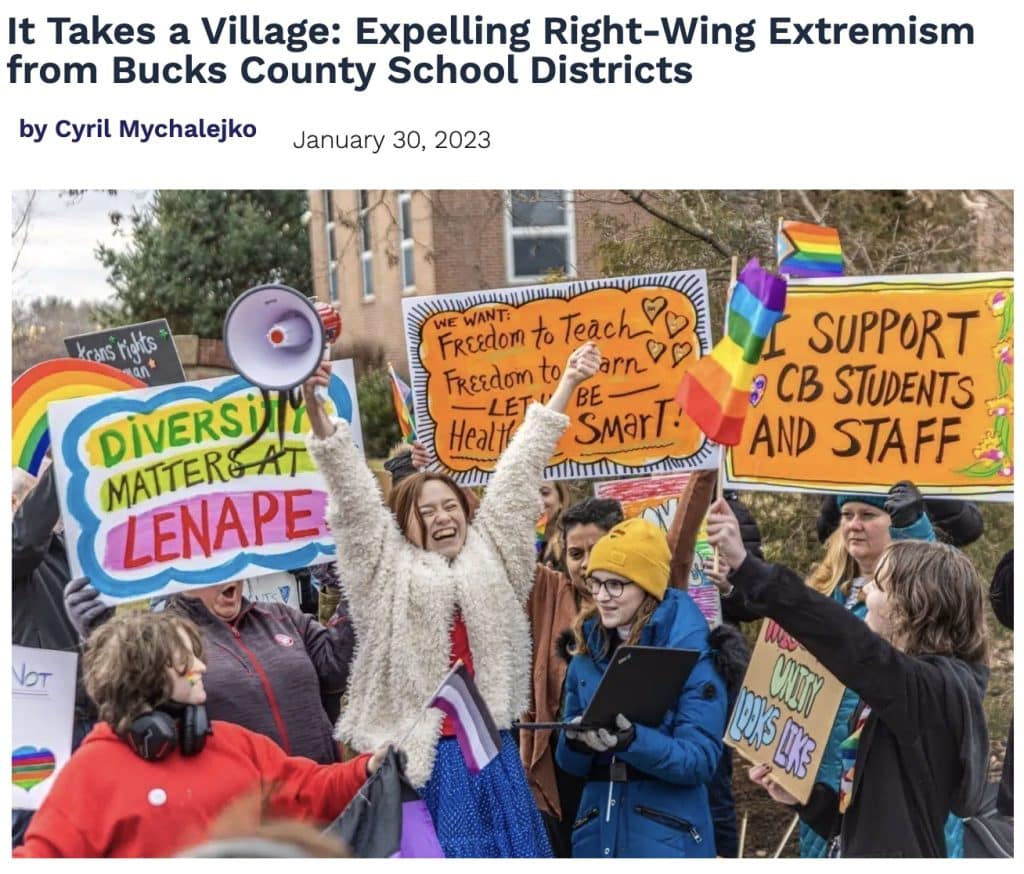
Why don’t you explain to listeners your experience or experiences witnessing Central Bucks School Board’s capture by Moms for Liberty and what I would describe as far right Christian extremists who sought to ban books, demonize librarians and teachers as groomers, and ostracize, if not push back into the closet, LGBTQ students.
I was doing a little work for one of the candidates, doing some copy editing, and I was aware—this was maybe the beginning of 2022 or the end of 2021—that there were these issues going on. And I decided to go see for myself what was going on at these school board meetings. It was challenging for me because I don’t like being in enclosed spaces with a lot of people, I get sort of anxious about that. And if you’ve ever been—I’m sure you’ve been—to school board meetings, you’re in folding chairs and you’re shoulder to shoulder with people. And the people, the sort of extremists on the right are on the right side of the room and then we’re all on the left. And, in a word, it was shocking to me how mean-spirited the right side of the room was. I had no idea what to expect, but they were getting up there and spouting these homophobic comments, and then the people on the board that were on that side, they weren’t saying anything to sort of—reprimanding isn’t the right word, but they weren’t calling out their behavior.
I think they often hid behind the kind of cloak of free speech as an excuse.
Yeah, and the policies were just really authoritarian. I’d never seen anything like that. It was troubling for me. I was, on my own, just for kicks, reading a First Amendment law book and just trying to understand the issues related to the school board better. And it really felt that A) what the far right extremists were doing was unconstitutional, but B) — and maybe that should be A) — more importantly, it was cruel. It wasn’t right, what they were doing. My kids at the time were older, at a school. One had just graduated college, one was still in college, but it doesn’t matter to me. It’s somebody else’s children, right? I just thought it was wrong. And then the kids that were getting up and speaking—and one of them actually lives in my neighborhood—were speaking so passionately and with such conviction and such sort of purity of spirit that, you know, that’s part of why I dedicated We Were the Cuckoo Bees to the people that helped flip the board. Because I saw what people did when I went out and they were doing voting drives, and I saw what people did just commenting in the meetings. It fell on deaf ears for what was at the time the majority of the board. But it changed me, right?
There are people that did a lot more and far braver than me in terms of helping to flip the board, which is now it went from 6 and 3 and 9 and 0. And surprise, you don’t see any news vans coming around. There’s no controversy going on. And I’m not saying everything’s good, because obviously we’ve had the 2024 general election and we’re living through something that I intuitively could see happening, but I was hoping wouldn’t.
That sort of inspired [the book]. So as an example, we had a guy on the left side of the room—and I would often sit in a chair on the end of the aisle, far left—who was just standing there, and he obviously was from the right side of the room, but he would stand there so that he could obnoxiously clap. He was sort of close to where the high school students were sitting on the side, away from the general audience and closer to the board members. And to me, it was like, this guy is just, being an agitator. And I believe he signed into the registry as Frank Castle. Which is a fictional character, right? So he’s having a good time, and guards, the sort of enforcers in We Were the Cuckoo Bees are called Franks. And that’s where I got that. It came from this guy signing himself in as Frank Castle, sort of identifying with the Punisher. Which I don’t think is what the originator of the comics meant, right? Things get co-opted.
So all that sort of led me to, one day sitting down and saying, what if things just kept progressing as they seem to be progressing, and what if it happened—I didn’t envision what’s happening now, sort of coming from the top down—through the bottom up? And that’s where We Were the Cuckoo Bees came from. It’s a world that’s not very far from ours in time, but as you saw reading it, it’s like monstrous, sort of nuclear changes. Not literally nuclear, but metaphorically nuclear changes have happened in the United States.
So can you just give us a kind of thumbnail sketch, or just a broad brushstroke of the plot of your story, for listeners?
Sure. It’s set in the near future, sort of the mid 2030s, and there have been a couple of pandemics. Not— I mean, the pandemic we went through in 2020 was bad and a lot of people unfortunately passed and got very ill, but these pandemics were sort of exponentially worse, and killed, you know, tens of millions of people. And people who didn’t get vaccinated—which we have, the anti-vaxxers and the right-wing extremists, and there’s a big sort of overlap on the Venn diagram there—lost their children, and the women became sterile and couldn’t have their own children. So we kind of find out that there’s more to this society in terms of what has happened. But, there is a young boy, he’s seven years old, he’s living on the farm with his parents. They’re prepping him that this group, the Patriots and the Queens of Freedom, are gonna come take him. And he’s like, well, we should run away. And he’s very, very bright. Extraordinarily bright. And they’re telling him, don’t let them know.
So the story opens with this sort of catastrophic occurrence where he gets abducted by the Patriots and the Queens of Freedom, taken to the borough and put into the house of the head queen. It sort of jumps back and forth to help you understand his backstory, and then the story really starts when he’s a teenager, and he becomes friendly with his quote unquote adopted sister. But they don’t see themselves as brother and sister because they don’t see the family unit as legitimate. He discovers, without getting into details, that there’s this resistance sort of under the surface of the borough.
And the borough, by the way, is patterned structurally after the Doylestown borough. So if you read the book, I don’t know if you noticed, there’s a lot of things in there. Like the Starbucks, and the house that he’s living in, which appears in other books of mine, is always—I call it the Dahlia dormer house, but it’s actually the Margaret Mead house. I don’t know if you know where the Margaret Mead house is, the big blue house that’s sort of a block or so from the school. So I’ve used that house in a couple of my books. There’s one coming out later this year where the Dalia Dormer house, it’s not, it’s just a secondary character who’s living there. But that’s the house that’s been taken over by the head queen for the Queens of Freedom, and she’s trying to make her family bigger. But he discovers this resistance, and he gets caught up in this sort of spy game, if you will. He realizes that, as dangerous and sociopathically insane—for lack of a better term—the Patriots and Queens of Freedom are, that the resistance group can be dangerous too, if he doesn’t do what they need. Because once he’s in, he’s in. He thinks that he can do this and that he’ll run away and be with his friends, but it doesn’t happen like that. Anyway, I probably told you too much. Hopefully I didn’t spoil it for anybody.
Yeah, not at all. But I was wondering, where did you get the idea to include in your book that the children would be taken or stolen from their parents? Because that kind of reminded me of how Native American children were stolen from their parents in the 19th, 20th century and kind of placed in boarding schools, essentially to, in essence, brainwash them? To kind of whiten them.
I mean, I’d be remiss if I didn’t say The Handmaid’s Tale [was] sort of in my head, possibly. So just the idea that they’re taking the children and sort of raising them. But this group, and one of the things I noticed listening to people at these school board meetings is like, this is not the best and the brightest. So this group is taking the kids, and if they’re seven and above, they’re not taking them, they’re executing them. And if they’re six and below—which, it seems like at five, six years old, some of the children would remember and be traumatized by whatever happens. But I sat down and I had the first scene in my head, where—I don’t want to give it away—where they abduct him. I’d like to say that I had it all thought out, but it was just that first scene. And then the sort of idea, which there’s this twist at the end in terms of the kids being taken in. That, I didn’t even know, until all of a sudden I was—what happens with me is when I get to the third chapter and I start outlining, I said, oh, that’s going to be the twist, right? So there’s a twist in terms of all these child abductions. I’d like to say that I had it all mapped out from the beginning, but it was just that first scene where he was abducted. Maybe it sort of came from the Handmaid’s Tale, or maybe it came from my experiences or thinking about how brutal a regime like that would be if left unchecked…I don’t know if that’s a satisfying answer, but that’s the way it happened.
Sure. And then you had kind of briefly mentioned that the main character, the protagonist, before he was taken from his parents, his parents warned him to hide his intelligence and that being intelligent is a liability, if not just flat out dangerous for your life in this society.
Yeah, I think part of it is also, you know, they’re taking him at six years old, which he actually was seven, but they say six. So they somehow got his birth records mixed up. They’re out on this farm, like 15 minutes away from the borough. And I think part of their concern was that one of the reasons they’re not taking children above six years old is that they want to be able to indoctrinate them in whatever they want them to believe, and lie to them essentially about what’s happened. So like, “all the Jewish people went over to Israel,” which is like, 15 million people went away. Right? Or your parents just went away to Nova Scotia. So I think that’s part of it. But then there’s also a part of it where the parents recognize that there’s not really a dedication to learning for its own sake. So he’s not just bright, he’s sort of genius level bright. He’s reading when he’s three years old. So I think they want to keep that low key. Don’t let them know that you’re like that. I think that’s part of keeping him safe, which is important to them.
Sure. And then as you created this world in your story, this kind of theocratic, authoritarian state marked by a distrust of science, anti-vaccine conspiracies, homophobia. You were just using what you saw and heard play out at the local school board meetings and kind of scale it out as if all levels of government and society were captured by this thinking and ignorance?
I mean, it was partly what I saw at the school board meetings and it’s partly just sort of what you know, what you see from people. Whether it’s in the news or online. I’ll never forget the first time I saw Moms for Liberty. It was women, who looked like they were mostly in their thirties, forties, wearing their t-shirts and walking across the room looking really smug. I was like, who are these people? Like, I don’t even know who they are. But then hearing the rhetoric coming out of that side, not just at the school board meetings, but just in general, and seeing this around the area. For instance, in Perkasie, I believe they had, was it the Hillside curriculum? That they wanted to instill.
In Pennridge School District, it was the Hillsdale curriculum.
Hillsdale. Yeah. I’m thinking of Hillside, New Jersey. So the Hillsdale curriculum, which was this Christian nationalist curriculum—I’m actually Christian, but I just believe that theocracy is ungodly. You’re sort of forcing yourself on people and that’s not the way. You can see that it seems to go hand in hand with a great deal of lying. What we saw from the school board in their communications were just untruthful, in my opinion, whether they’re lying or whether they’re convincing themselves. To me, just this idea that I know, there’s a faction in the United States that’s still trying to do this, from the top down to instill a theocracy in America and, how do you do that? I mean, you have to start with the education system. So the schools in the book all have Christian names, but it’s public dollars going into them. So people are being forced in one direction, which to me, that’s fascism.
Well, the good news is that the anti-fascism …
Is there good news? I don’t know. Please tell me some.
I’m saying the good news is at least, you know, in Central Bucks and in Pennridge, which also was captured by really extreme and, like you said, cruel, Moms for Liberty or Moms for Liberty-adjacent and Christian nationalist school board members, the tables have turned. The anti-fascist parents, who believe in secular and inclusive education, won the support of the broader general public. And both of those school boards flipped, not just in Central Bucks, which is 9-0, but in Pennridge, which is 8-1. So, there is a silver lining and I think the message is, and you had mentioned this before, that there were a lot of people who were organizing around this. People weren’t apathetic, they weren’t silent. They refused to stay silent. It shows, I think, the importance and the effectiveness of organizing—of educating your community and then organizing and mobilizing them to stand up for what’s just.
Yeah, I mean, that’s what it’s all about really. It’s about right and wrong to me.
What do you hope readers will take away from your book?
When I was writing it, I didn’t really think about that, but I have thought about it a bit lately. I’m not in contact with a lot of people who are still MAGA or MAGA-adjacent, or who still haven’t seen the light. Like, they don’t realize that there’s an entire city in the United States being occupied and terrorized. Just not getting it. So in my imagination, I conjured up some wild things which are satirical. And some of them, when I was writing it, I was like, well, this is crazy. But then, things similar to those have happened in the last couple of years at the national level. What I would hope is that there are still people I know who might read the book and recognize how bad it can get. Because these awful things that have happened in the book have happened in other places in the world, just not necessarily at a grand scale in the United States. You’ve got to realize there’s a problem before you do anything about it. Recognizing that you can go from here—where we were at the local level with the school board—to there, which is tragic, I think is important to get into people’s heads. So if one person reads it and it maybe changes their mind a little bit, I guess my work is done. I don’t have a lot of hope that—but also, I’m not trying to get people down. I just want people to be realistic. Like, what are you fighting for? You’re fighting so this world doesn’t happen, right? When I say fighting I mean in terms of struggling, in terms of making sure people vote, in terms of protesting—all the things that define what it means to be an American. You have your First Amendment.
I stayed away from whatever the State of the Union was the other night, but I heard a snippet that said, your fundamental duty is to protect America from illegal aliens. And no, your fundamental duty as an American is to protect and defend the constitution of the United States of America. If you don’t want to do that, you probably shouldn’t live here. So there’s a broad swath of people who I think, in their heads, think that somehow they are, but they’re not. That’s part of getting that book out there. I don’t know how helpful it is, but I hope it is in some small way.
I think it definitely is. I think it does serve as a warning and it just reminds readers that, you know, apathy is acquiescence, and the consequences are potentially a world like the one that you created in your book.
That’s right.
So Rich, thanks so much for joining us today on The Signal and for speaking a little bit about your experiences in Central Bucks and how that inspired you to write this extraordinary young adult novel, which can be enjoyed and appreciated by people of all ages. I want to encourage everyone to go to your local bookstore, whether it’s Doylestown Bookshop, Farley’s, or wherever you like to shop locally. Pick up a copy of We Were the Cuckoo Bees by R.B. Schiffman, and then go ahead and ask your local libraries, whether it’s a public library or your kid’s school library, to also order copies. Rich, thanks again so much for coming on the show and for just writing this extraordinary novel. I really enjoyed reading it.
Yeah. Thank you, Cyril. I really appreciate that. That means a lot to me. Can I say a couple things about the book? I’ll be signing at Doylestown Barnes & Noble on March 14th. I’ll be signing at the Doylestown Bookshop in a select local author expo on Indie Bookstore Day, which is April 25th. Fair warning, I was to list out all the content warnings, there’s a lot of them. So I suggest reading age, not middle grade. But just to clarify what you said, I would say mature 14 year olds and up. There’s stuff in there, and I think it takes a sort of more mature mind than a middle grade reader to read that. So I would say a lot of content warnings in there. Tough stuff. My publisher is actually in Minneapolis and has been dealing with what’s going on there.
I recognize that this can be a hard read for some people as well. I think it’s an important story, like you said, to serve as the warning for where things can go. It also is sort of about identity too. This person was taken at a young age and he’s trying to figure out, who am I? He feels obviously betrayed and hostile towards the people who have abducted him, but then comes to a realization in terms of where his place is in the world, which has changed greatly.
I also have another book out there, Paper Airplane Broken Bones, which is a finalist for a CBA, which is an independent book award. So when I sign We Were the Cuckoo Bees, I’ll also be signing copies of that. You can pick up both if you like. But definitely I appreciate the plug for Cuckoo Bees and I will be talking to the Doylestown branch of the Free Library soon. Thank you for having me on. Thank you for letting me talk about the book and the experiences that led up to it. I really appreciate it, I’m very grateful, Cyril. Thank you.
Yeah, and let’s hope Moms for Liberty doesn’t try to ban it locally.
You know what, I mean, what can they do? My publisher is an independent publisher. not with the Big Five. I don’t think the book is, anytime soon, going to get into high schools, because it would need to be a more recognized story. I don’t know if that’s going to happen. Maybe—never say never. But, I mean, people don’t like book bans. One of the candidates said that to me as I was doing copy editing for them. You’re never going to get the people that are off the edge on the right, but people that are moderately right leaning—and I know lots of people there—do not like book bans, because it’s controlling people. Yeah, I don’t know. I’m not worried about it.
Well, Rich, thanks again. And folks, we’ll include links in the show notes to the local events, to the local book signing so that you can kind of show up and say hi to Rich and talk to him when you get your copy of his book. And Rich, we’ll be in touch.
Thanks, Cyril. Appreciate it. Take care.