
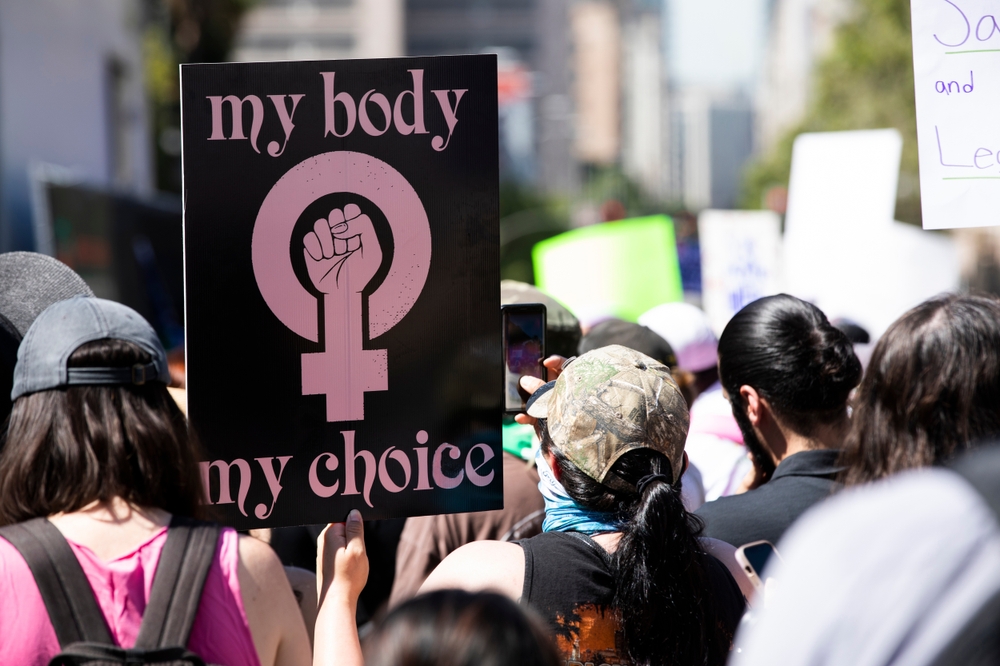
Women’s reproductive rights – and abortion access – won big Monday in Pennsylvania’s Commonwealth Court. The high court ruled in support of reproductive health care – including abortion – as a right under Pennsylvania’s Constitution.
The decision overturned the state’s previous decades-long law that banned Medicaid funds for women seeking an abortion, as well as enshrining the right to access to reproductive health care.
The Philadelphia-based Women’s Law Project reported that a study released by the National Women’s Law Center said 60% of Pennsylvanians receiving Medicaid are women. And nearly 51%, or about 6.82 million women, call Pennsylvania home.
Elizabeth Lester-Abdalla, staff attorney with Women’s Law Project, was quick to point out the ruling benefits go beyond Medicaid recipients to protect all women living in Pennsylvania.
She noted that the court’s decision removes barriers to health care access and will aid many in their ability to pay for it. She also emphasized the “real consequences” many women face with respect to paying rent, affording groceries, child care and paying for general health care services for themselves and their children.
“For women making health care decisions, whether or not they can afford care is real, and it can force women into really hard decisions,” Lester-Abdalla said.
“This ruling … is a lifeline to working families. Everyone deserves to decide for themselves if or when to start a family – including our neighbors who depend on Medicaid,” said Lucia Simonelli, a progressive Democrat running in the May primary for a chance to run against Republican Congressman Brian Fitzpatrick.
Bob Harvie, Simonelli’s opponent in the Democratic May 19 primary, also praised the ruling.
“The Commonwealth Court got it right: these decisions belong to women, not politicians. This ruling is a landmark moment for reproductive freedom in Pennsylvania,” said Harvie.
The opinion was rendered in the Allegheny Reproductive Health Center v Department of Human Services case, which challenged the statutory ban on using public funds for medical assistance to pay for abortion services.
“I’ve long opposed this unconstitutional ban, and as Governor, I did not defend it — because a woman’s ability to access reproductive care should never be determined by her income,” Gov. Josh Shapiro said in a statement.
Lester-Abdalla said Pennsylvania Attorney Dave Sunday, a Republican, has 30 days – or until May 20 – to appeal the court’s decision.
READ: Abortion Restrictions on Young People in the United States Cause Trauma
The seven judges on the lower court who heard the case largely sided with the plaintiffs on Monday. The majority opinion said the state should invest in maternal and infant health care and other resources if it believes that women should carry a pregnancy to term.
According to the Commonwealth of Pennsylvania website, the March of Dimes reported 7.5% of the commonwealth’s counties are “maternity care deserts” and that number is expected to climb. In addition, African American women are three times more likely to die from pregnancy complications than white women.
Federal funding cuts are expected to accelerate hospital and health care facility closures and slash needed health care services nationwide as a result of the Trump Administration’s One Big Beautiful Bill, which includes sweeping cuts to the Supplemental Nutrition Assistance Program (SNAP) and Medicaid.
“Today’s decision reaffirms that the Pennsylvania Constitution guarantees the protection of a woman’s reproductive rights, and that any coverage ban violates those rights. Access to health care is critical to all Pennsylvanians, and this opinion is a victory for women and families seeking health care. House Democrats remain committed to protecting the fundamental rights of all Pennsylvanians,” Pennsylvania Democratic House Leadership said in its statement.
According to the Women’s Law Project, yesterday’s ruling provides for:
- Reproductive autonomy is a fundamental right in Pennsylvania.
- Funding constraints should not compromise equitable abortion care in Pennsylvania.
- The ruling establishes a landmark precedent for state-based claims and aims to protect reproductive freedoms overturned byDobbs v Jackson Women’s Health Organization of (2022); which did away with the nation’s 1974 Roe v Wade abortion rights guarantees.
The Associated Press contributed reporting to this article.