Roughly 91% of seventh grade students in all Bucks County public middle schools are vaccinated against tetanus, diphtheria and pertussis, or Tdap, according to data from Pennsylvania Department of Health.
However, one school in Bucks County falls well below that average.
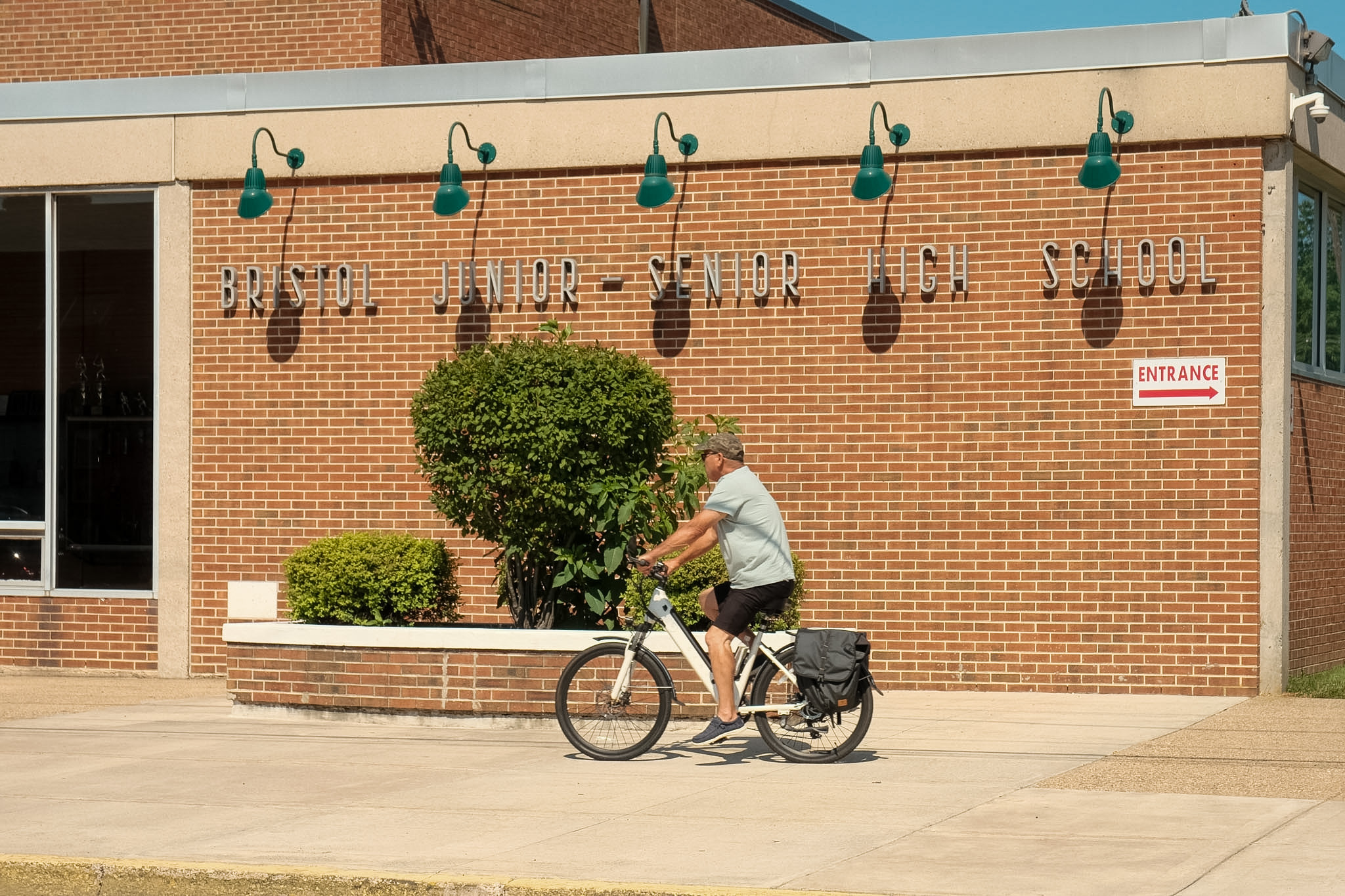
At Bristol Borough Middle School, just over 60% of the seventh grade population received the Tdap vaccine in the 2025-26 school year.
Who is not getting vaccinated
Along with the meningococcal conjugate vaccine, or MCV, the Tdap booster is one of two additional vaccinations required for entry into seventh grade at any school in the commonwealth.
According to state law, any child that does not receive these vaccines “may be excluded in that school year and each succeeding school year that the child fails to obtain the required immunization.”
Students can be exempt from mandated vaccines for medical, philosophical or religious reasons. At Bristol Middle School though, these exemptions only account for 2.2% of the student body.
The middle school has one of the highest noncompliance rates among seventh grade populations in all of Bucks County, with 38.5% of students not complying with vaccine requirements.
Out of the 91 seventh graders at Bristol Borough Middle School in the 2025-26 school year, 36 of them had not received an updated Tdap vaccine.
State Senator Steve Santarsiero: What You Need to Know About Vaccine Access in Pennsylvania
Bristol Borough School District officials did not respond to requests for comment on this story.
These numbers represent more than just a low compliance rate at the middle school. Public health officials have warned that drops in vaccination rates can lead to diseases taking root in communities.
The Tdap vaccine combats — among other ailments — pertussis, colloquially known as whooping cough.
Health officials advise that herd immunity for pertussis — the vaccination threshold needed to prevent diseases from spreading in a population — requires 92% to 94% population coverage. Bristol Middle School’s 60% vaccination rate falls far short.
To reach the lower end of whooping cough’s herd immunity threshold in Bristol Borough Middle School for the upcoming academic year, an additional 29 students need to be vaccinated.
A growing danger
Pennsylvania was one of the states with the highest levels of the disease last year, reporting 207 cases in 2025. The virus is also highly contagious, infecting 90% of household contacts.
Nationwide, whooping cough infected almost 29,000 people, killing 16. Dr. Paul Offit, an attending physician and director of the Vaccine Education Center at the Children’s Hospital of Philadelphia, explained these deaths mean we have reached a “critical point.”
Getting vaccinated against diseases like pertussis is a neighborly duty, according to Offit — these kinds of illnesses affect more than just you.
READ: Pennsylvania Reports First 2 Measles Deaths in the US This Year, Both People Unvaccinated
“Even though the deaths typically hurt young babies, they get it from coming in contact with people who are infected because they weren’t vaccinated or weren’t recently vaccinated,” Offit said.
The way outbreaks have spread — whether in Spartanburg, South Carolina when measles sickened just under 1,000 in 2026 or West Texas where the disease infected at least 762 in 2025 — stems from groups of unvaccinated people.
“It’s those pockets that experience the infection and then it spreads out from there,” Offit said.
Barriers to treatment
Not everyone that forgoes getting a vaccine believes in medical conspiracies or supports Health and Human Services Secretary Robert F. Kennedy.
Historically, studies have demonstrated the link between low-income households and lower vaccination rates in children. At Bristol Middle School, just under three-quarters of the student population is economically disadvantaged, according to data from Future Ready PA.
READ: It’s Not Just Vaccines — Parents Are Refusing Other Routine Preventive Care for Newborns
Kimberly Permar, director of the Bucks County Health Improvement Partnership, explained that for people in the community that are struggling financially, they might not be able to justify a trip to the doctor’s office.
Parents that have to work full time to support a household are not always able to take off time for appointments. If a caregiver schedules a visit and cannot attend, that could incur even more fees.
“These are people to whom a $20 copay is a big deal in their world,” Permar said. “Maybe they have insurance, but it’s a $20 copay to take their kids to the doctor to get immunization and they don’t have that $20.”
Closing the vaccine gap
Through Bucks County Health Improvement Partnership’s immunization program, Permar and the organization use vaccine clinics to combat these barriers to treatment lower income families face.
The team employs mobile clinics to meet communities in central locations for ease of access, and uses private foundation funds to cover both co-pays and full vaccine costs if a child is uninsured.
Bristol Borough School District held one of the mobile vaccine clinics on Aug. 19, offering all Pennsylvania school required immunizations.
“As long as they show up, their kids are gonna get the vaccine that they need because we’re eliminating those barriers,” Permar said.