Written by Carter Walker and Dion Nissenbaum
This article was originally published by Votebeat, a nonprofit news organization covering local election administration and voting access.
Each year, election officials prepare for the worst: A bomb threat at a polling place, power outages, natural disasters.
But this year, they are wrestling a potential threat they have never before considered: the possibility that the federal government might disrupt the administration of November’s elections.
It’s not clear what action, if any, the Trump administration may take to interfere with the 2026 midterms, but election officials from jurisdictions large and small are preparing for everything from immigration officers at the polls to federal attempts to seize ballots. They’re also acknowledging that most standoffs with the federal government would likely end in court, and they’re talking to lawyers and preparing legal filings in case they prove necessary.
Nevada Secretary of State Cisco Aguilar, head of the Democratic Association of Secretaries of State, said he is assembling “the Mad Libs of legal filings” in preparation for any and all election problems.
“You leave the plaintiff and the defendant blank, and the jurisdiction blank,” he said. “But as soon as we have a real situation, we can immediately put the information in there and file in the courts at a moment’s notice.”
President Donald Trump has repeatedly attempted to assert unprecedented authority over election administration, though many of his initiatives have stalled in the courts or in Congress. His administration is actively investigating the 2020 election, which he continues to falsely assert he won, and has seized years-old ballots and election materials from Fulton County, Georgia. Trump has also said he regrets not sending the National Guard to seize voting equipment after the 2020 election.
And he is carrying those sentiments forward into the 2026 midterm elections.
Last year, Trump said Republicans should take over running elections in some heavily Democratic jurisdictions. Senior members of his administration have stopped short of saying they would not send federal agents to polling places, though experts warn that would break federal and state laws. And Trump delivered a rare primetime address to the nation in July where he warned of a “crisis in election security” and said the nation’s systems fell “catastrophically short” of ensuring free and fair elections.
All of that has contributed to the growing concerns of election officials, especially in Democratic or closely contested jurisdictions.
“The only limit is our imagination,” said Minnesota Secretary of State Steve Simon, a Democrat. “To some extent, all of us are really shadowboxing here. We don’t know when – or if – the blow is going to land from whom, or under what circumstances.”
Lauren Bis, a White House spokesperson, said that Democrats are conjuring up irrational concerns that are undermining efforts to improve election security.
“The only ‘fears’ Americans have about our elections are being fueled by extreme liberal Democrats who refuse to support commonsense legislation that ensures Americans, and Americans only, decide our elections,” Bis said.
Aggressive federal actions spark local concern
It’s not just top state officials like Aguilar who are making sure their legal ducks are in a row. Around the country, local election administrators are working with experts, their attorneys, and one another to plan for a possible visit from the feds.
Earlier this month, county election directors from around South Carolina gathered in the Charleston County elections building, tucked away in a marsh next to the Ashley River, to game out responses to any scenario that could threaten a smooth midterm election.
Disruptive social media influencers could show up. Election officials might have to contend with bomb threats, like the more than 200 called into polling places in 2024, or cybersecurity attacks. What to do about drones buzzing over polling places on Election Day?
“Pull,” one director joked in response to the drone scenario, referencing the signal to release a clay pigeon at a shotgun range. He earned laughs from some of the dozens of other county election officials clustered in the training room.
But the conference wasn’t limited to preparing for the type of disruptions which have, unfortunately, become somewhat routine. The officials also heard from experts on preparing for and responding to federal investigations.
“The big thing that we wanted them to take away from this is that they need to contact their local government attorney and start that conversation now,” said Brenda Cabrera, a former election director in Virginia and one of the presenters.
GALLUP: Election Concerns Run High Ahead of 2026 Midterms
County lawyers often handle a wide range of legal issues and may need to lean on the expertise of local elections officials, she said.
Gary Restaino, a former US attorney in Arizona, suggested having legal motions “already sketched out” in the event that the county officials get served a subpoena.
Restaino said election directors asked him whether counties must comply with search warrants, even if they believe a warrant goes beyond what is allowed under law. The answer, Restaino said, is yes — at least until a court intervenes.
“Sticking your head in the sand like the proverbial ostrich and hoping that none of those things are going to happen, that’s just not realistic,” Amy Sams, a former educator turned election director for Pickens County, South Carolina said. “But waiting until you hit a crisis point to say ‘Oh, hi, by the way I’m the director of elections. I understand you’re the county attorney. Let’s work together on this crisis situation’ is really not a feasible plan either.”
Sams said she knows her county, nestled in the foothills of the Blue Ridge Mountains on the North Carolina border and home to roughly 80,000 mostly Republican voters, is less likely to face subpoenas or other challenges from the federal government than larger, more diverse jurisdictions. But she said she’d be “remiss” if she didn’t prepare.
“I can’t say never because you just don’t know,” she said.
All hands on deck
Preparations to take the Trump administration to court if it tries to interfere in the election are taking place at all levels of government.
In the past two weeks, two separate lawsuits — one filed by the city of Denver and voting rights groups, the other by unions and civil rights groups — have targeted the Trump administration in federal court, seeking to block it from deploying federal agents at voting locations.
Local district attorneys and state attorneys general are also preparing and coordinating with each other and local election officials.
“We have known this was going to be a legal fight from the beginning,” said Jose Garza, the district attorney in Travis County, Texas, home to the state capital, Austin.
“It’s going to be a fight about whether or not the legal framework that has fostered peace in this country for the last 150 years, relatively, still holds up under a Trump administration that is eager to shed all the legal standards and protections that we’ve come to rely on.”
Garza said he is working closely with local elections officials to prepare for any legal action that may be needed. He recently took part in a countywide exercise to strategize a coordinated response to a variety of potential problems that could arise in November.
BRENNAN CENTER: Five False Election Rumors to Watch For
Local prosecutors, district attorneys, and county attorneys “have not historically been accustomed to needing to challenge federal orders on behalf of their community, but we are, routinely at this point,” said Laura Conover, the attorney for Pima County, Arizona.
Congressional Democrats are also preparing to push back.
U.S. Sen. and Minority Leader Chuck Schumer, (D-N.Y.) launched the Senate Democrats’ Election Protection Task Force, which has held a series of simulated election scenarios that have wrestled with many of the most extraordinary fears: National Guard troops intimidating voters at polling places, federal officials seizing ballots, foreign countries carrying out disruptive disinformation campaigns.
Tina Barton, co-chair of the Committee for Safe and Secure Elections and a former Michigan election official, has been leading tabletop exercises like the one in Charleston for months. By the end of the year, she will have visited more than 40 states, some more than once.
She said that the prospect of “external interference” from entities such as the federal government is a concern that some jurisdictions, particularly large, diverse cities, have brought up and wanted to practice.
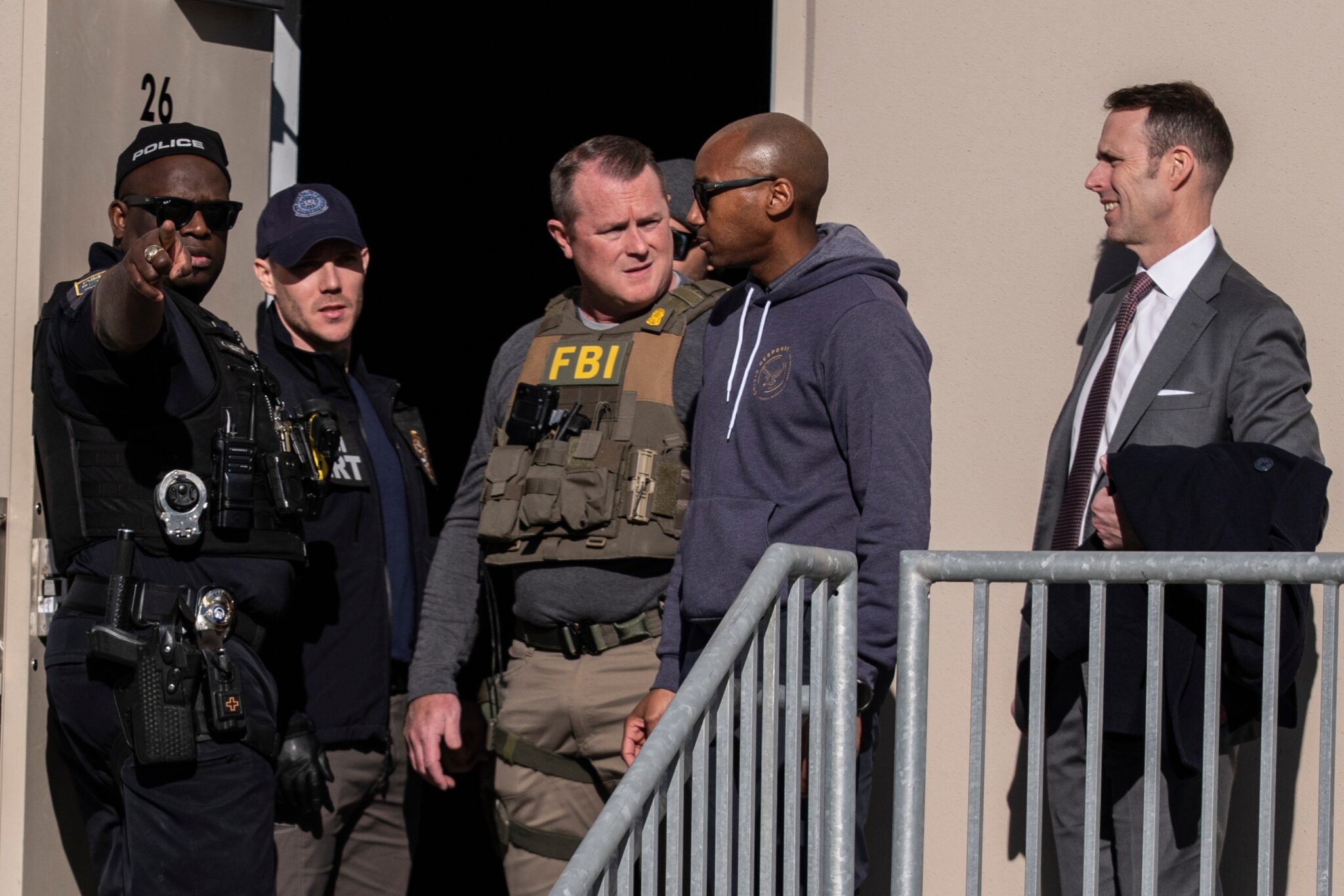
Barton said election officials are most concerned about the prospect of U.S. Immigration and Customs Enforcement agents showing up at polling places, and the potential for voter intimidation should that happen.
“We’re walking through what does that look like for voter intimidation, what does that look like for your law enforcement, how do you get your county attorneys involved in that moment, and what types of decisions are they going to need to make,” she said.
At an event in Washington, D.C. this week sponsored by the liberal think tank Center for American Progress, Michigan Attorney General Dana Nessel, a Democrat, said her office will have special agents, as well as state police officials, well-versed in election law prepared to respond to any incident.
Like Aguilar, she said, she has briefs prepared “for virtually every set of circumstance we could think of. Except the zombie apocalypse. I don’t have that down yet.”
County election officials on the front line
County election officials control polling places and possess the physical ballots and equipment that would likely be at the center of any court dispute.
TJ Pyche, the vice president of Ready for Tuesday, a nonpartisan group that has conducted dozens of simulated election scenario exercises across the country this election cycle, said his goal is to help those elections officials prepare without creating unnecessary alarm.
“Most of the scenarios that we go through are not going to happen to all of the jurisdictions,” said Pyche, who worked for several years as an elections official in Florida. “We’re sensitive to the fact that we’re not there to scare them; we’re there to help them get prepared.”
In the group’s scenarios, Ready for Tuesday sometimes presents this dilemma: Two individuals identifying themselves as investigators with a federal agency arrive at the central count facility and say they have credible evidence of voting irregularities. They request immediate access to observe what’s happening inside. How do you respond?
Michael Siegrist, Canton Township clerk and president of the Michigan Association of Municipal Clerks, said he is prepared to fight any attempt to seize voting equipment or ballots.
“Nobody is taking possession of any voting equipment,” said Siegrist, who expressed confidence that the courts would reject any illegitimate efforts to disrupt voting.
Of course, officials aren’t just worried about federal agents accessing equipment. In 2021 Republican commissioners concerned about fraud in Fulton County, Pennsylvania, allowed third party groups to access voting equipment, which the state later decertified.
READ: Pennsylvania Attorney Involved in 2020 Election Lawsuit Faces Possible Sanctions
In response to that incident, the Pennsylvania Department of State issued a new directive making clear that no federal, state or local officials should be given access to county voting equipment without a valid judicial warrant.
Elections officials in Texas are also seeking guidance about what to do if federal officials try to interfere with the election.
Celia Israel, the voter registrar in Travis County, described the prospect of federal intervention as “the biggest concern in my community” at a summer conference of election officials.
“How will you advise the secretary of state on if the federal government, who is threatening us as county officials, on whether and how you will engage with them should the outcome of the election not be what they want?” she asked Chuck Pinney, the legal director for the Texas Secretary of State’s Office.
Pinney said state law has specific procedures in place for election challenges.
But he didn’t directly say what his office would do if counties face federal pressure. His advice? Talk to your lawyer.
Votebeat reporters Sasha Hupka, Natalia Contreras, Alex Shur, and Hayley Harding contributed reporting.
Dion Nissenbaum is Votebeat’s senior national reporter and is based in Houston. Contact Dion at dnissenbaum@votebeat.org.
Carter Walker is a reporter for Votebeat in partnership with Spotlight PA. Contact Carter at cwalker@votebeat.org.
Votebeat is a nonprofit news organization covering local election integrity and voting access. Sign up for their newsletters here.