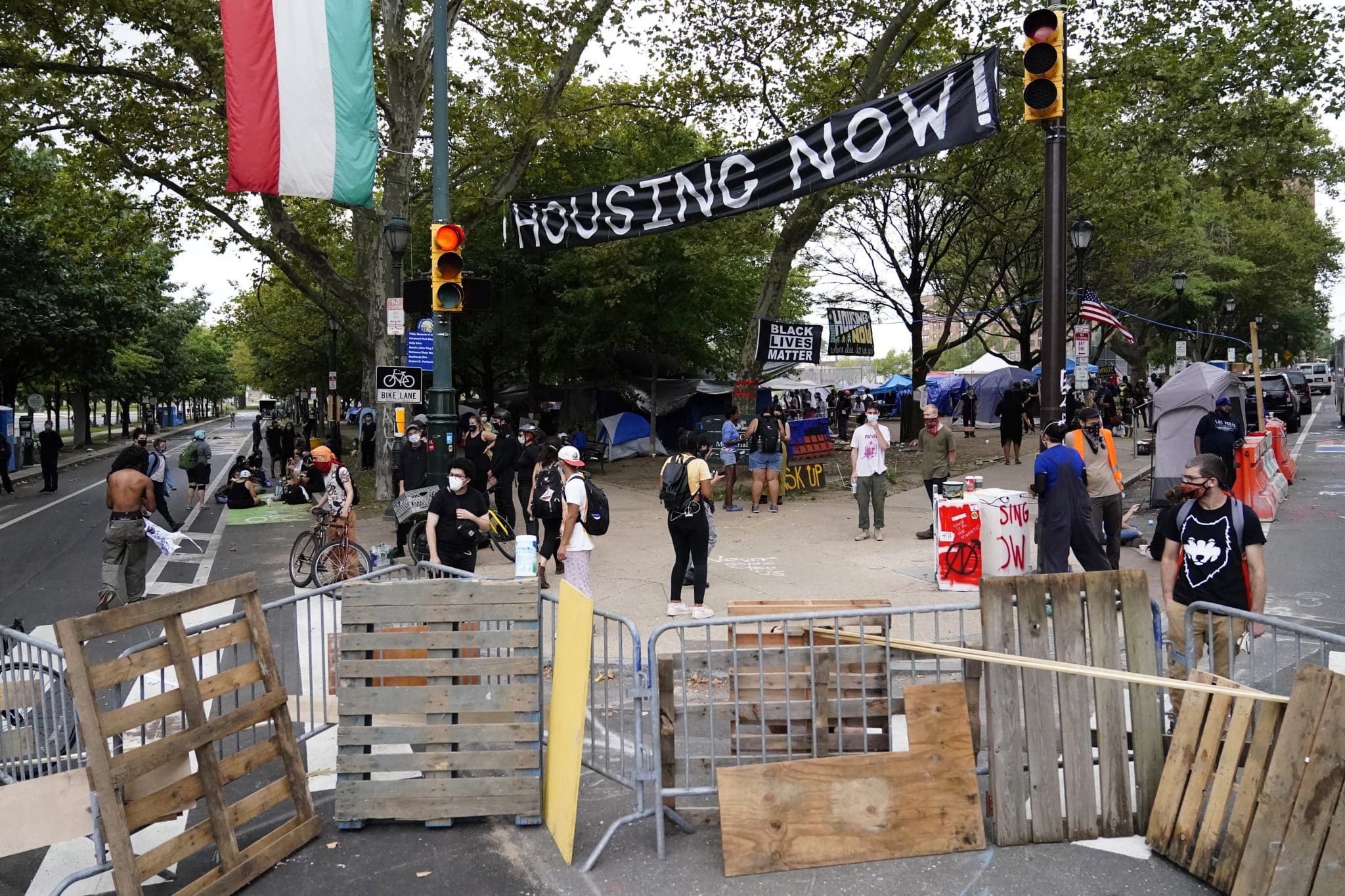
Over the last four years in Bucks County alone, the number of domestic violence survivors experiencing homelessness has increased 78%. That staggering statistic provided by Jen Locker, Executive Director at A Woman’s Place, Bucks County’s only DV organization, might have been a major news story – except that it wasn’t.
That’s because there’s a fundamental lack of media attention to youth and family homelessness, according to a new study released by the Institute for Children Poverty & Homelessness (ICPH).
This year, ICPH studied print media outlets in New York City. By selecting 15 different search phrases it discovered that when the press reported on homelessness, the stories focused on criminality and generally detailed issues of chronic adult homelessness.
News outlets seldom mentioned families and children.
Over a six-month period in a city where more than 30,000 children live in shelters, researcher Lucia Stein found only 62 articles referencing family homelessness. Fifty of those news stories merely mentioned children and families without homes, with fewer than 20% focusing directly on the issue of homelessness, itself.
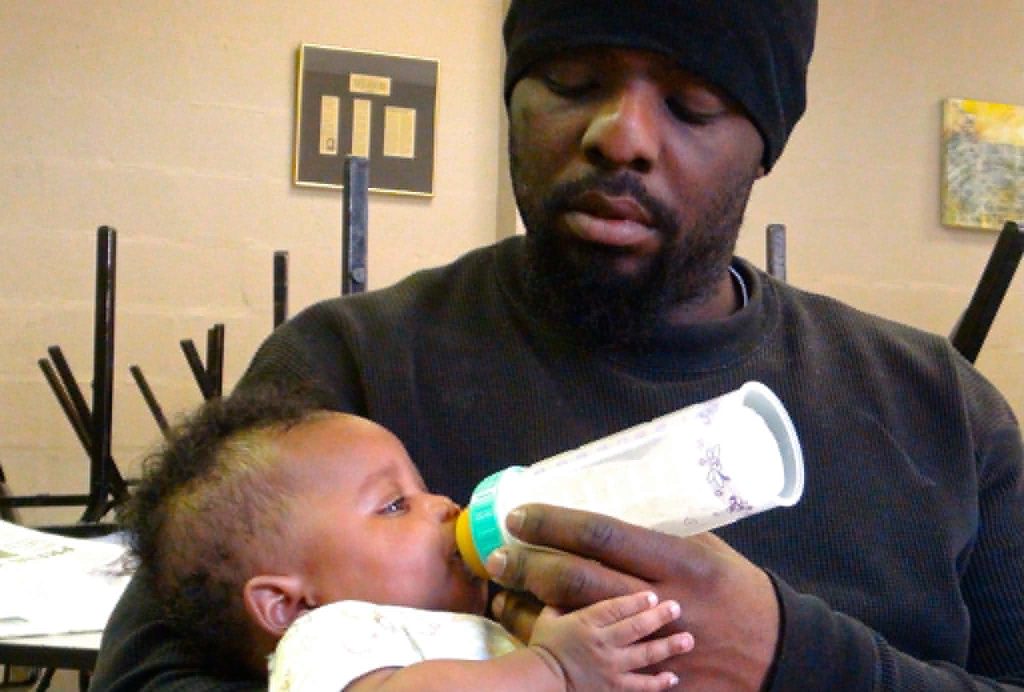
Stein and her colleagues broke the data down further. They found that when stories about homelessness were told, the articles neglected to discuss vital contributing factors like domestic violence – which was only cited in 2% of the stories.
Another absence surprising Stein and her colleagues was the scarcity of childcare mentions. Only 21% of the news stories referenced this primary challenge facing working parents in homelessness.
“That did surprise me because that is a topic that – in New York generally – has been in the news a lot,” Stein explained.
She elaborated that as a central issue of Mayor Mondami’s campaign platform, she would have expected a discussion about childcare as a complicating factor in homelessness. “It was a topic in the recent mayoral election and it is really important for families experiencing homelessness and yet it wasn’t connected in a lot of the coverage.”
Sonia Pitzi, one of Pennsylvania’s eight regional coordinators for the federal McKinney-Vento program guaranteeing the Education of Children and Youth Experiencing Homelessness (ECYEH), echoed the need to talk about day care and homelessness at the same time. “Daycare is a huge problem for anyone, homeless or not.”
Pitzi’s advice to policy makers is to remember that if it’s an issue for someone with a home, it’s an even bigger problem for those who have no place to live.
So why don’t news outlets include stories about homelessness when they talk about education, daycare, domestic violence or other difficulties that plague society? Pitzi supposed, “It’s not an easy topic. It’s not a comfortable topic.”
And the solution? “We need to be able to talk about our children who are suffering [in homelessness] as well as our families.”
When it comes to employment issues, Pitzi would like it if every reporter doing a story on jobs numbers added a question to their interviewees about how the jobs issues impact families in homelessness. “I work with unaccompanied teenagers who work and go to school. So, talk to me again about how no one [in homelessness] has a job.”
Pitzi added, “When we talk about jobs for the adults, we go back to the daycare question. Parents can’t work a job if they don’t have daycare. What are they going to do with their children when they are at work? Especially if they’re at a shelter or if they’re doubled up and living in an overcrowded situation.”
Murielle Kelly, Director of Housing Services for Family Service Association of Bucks County, wished more media outlets realized the varied nature of homelessness. “There are so many different faces of homelessness and what I’m seeing [in the study] is that they’re reporting on one type of homelessness, one face of homelessness.”
Kelly added, “Right now they’re talking more about just chronic homelessness, transient individuals or high barrier. And of course, because of that, there seems to be not a lot of progress being made.”
But the work she’s doing with families makes a big difference, especially in the lives with children and more reporting on that could help Kelly help more families.
Kelly invites the media to take a closer look. “When it comes to families experiencing homelessness, I feel like we are missing a lot of families who are doubling up, so you don’t get the true picture of the number of individuals experiencing homelessness, because they’re staying with family and friends, they’re couch surfing or bouncing around with family.”
She also echoed Pitzi’s take on jobs. Kelly says there are lots of stories that could be told. “You have the working poor. Where, if one thing happened – whether their car stopped working or they lost their income … right away, you’re seeing this family going into homelessness.”
Getting the word out could help. She said the media isn’t talking about these types of economic stories affecting families, like, for example, the impacts and consequences when a household loses a second income.
Kelly said reporting and narratives about the kids are missing too. “They’re not talking about the number of children who are experiencing homelessness. And I’m surprised that they’re not talking about transitional aged youth. Kids, you know, aging out of foster care and experiencing homelessness.”
Still, as Bucks County’s A Woman’s Place knows all too well, privacy can be a barrier to telling stories of homelessness. “We don’t historically do a lot of press releases.”
If they did, Locker could say that, “A little over a quarter of all of the survivors that we serve each year are homeless or experiencing some sort of housing crisis that will lead to homelessness.”
But who could reporters interview for a story?
Not residents of the safe house or others fleeing an abuser that might live in the community. Even though a story about the numbers in Bucks county that are sharply on the rise is newsworthy – storytelling options are limited.
Locker added what she’d like people to know. “Bucks County with the Point in Time (PIT) counts last year to this year, domestic violence is up about 30%.” That increase happened between January 2025 and January 2026.
So, what kind of stories do get covered? The ones that are easier to cover, Locker explained. “I will say the times that we have received responses is when there’s something a little more positive. Like, we’re celebrating our 50th anniversary this year, so we had our big 50th celebration last month and we were hearing responses from when we put out press releases,” on that event.
At Family Service, Kelly said that she has relationships with a few area reporters who like to know when people can help. Diaper drives and toy drives for the holidays.
READ: Bucks County State Rep. Jim Prokopiak Leads Roundtable Discussion on Housing Affordability Solutions
Pitzi added, “I’ve been told to get attention we have to have a hook.” Sighing, Pitzi responded to her own comment. “And my response has always been, ‘Children who are homeless is not a hook?’”
As the founder of Red Shirt Day, Pitzi has mastered the hook.
She’s even held press conferences at the capitol and gotten the powers-that-be to light the dome of the capitol building so that it glows red for an entire week.
Pitzi’s Red Shirt Day is one day during November’s Homelessness Awareness month when supporters across Pennsylvania (and increasingly around the rest of the country) wear red to raise awareness about the Education of Children and Youth Experiencing Homelessness.
For years, Pitzi has invited lawmakers and the media to learn more about homelessness and how it affects families with children and unaccompanied youth.
In the end, coverage for Pitzi’s events remains spotty. She says that’s because the story of suffering kids is too sad. “The hook [they] really want is about, ‘How can we make this story a happy story?’”
Pitzi explained that they want stories “where people can be happy that they donated stuff. Then you [might] have a follow-up story. And with the follow-up story it was, ‘Oh, look at this beautiful thing.’”
But Pitzi points out that that’s not the message that affects substantial change. “Not to discount that what happened was a beautiful thing.”
Pitzi says that the media, decision makers and consumers of the news don’t often look at what the effect is of a toy drive, for example. That it doesn’t make a lasting difference.
Pitzi adds that the bases of the news stories are much bigger than all that. “I’m talking about students who are living in tents or motels.”
In the end, Pitzi knows her work is sad and that makes raising awareness nearly impossible. Even though it’s her job to advocate for Pennsylvania’s more than 46,000 school children experiencing homelessness. She realizes that the hook the press is looking for must please an audience that is frequently in search of comfort.
As a woman protecting children, Pitzi finds that it’s often just too difficult to deliver what the media wants to report on. “I don’t have to get a student out there so that you feel good about this poor child.”
ICPH Managing Director of Communications & Policy Linda Bazerjian can’t stress enough that public discussions of family homelessness – including those in the media – are vital to achieving policy changes that will improve the lives of the families and children for whom they advocate. “The big thing is we’re talking about and looking at policy, right?”
What the ICPH study showed was that news stories had to be more frequent and focus on the facts because policy issues rarely came up. “In terms of family homelessness, when we looked at the types of stories out there, they’re either, if it bleeds, it leads … or about something bad that happened at a shelter, or if it’s a NIMBYism issue and somebody doesn’t want a shelter built in their area.”
Bazerjian said that the other kinds of stories are just as Kelly, Locker and Pitzi described: “The feel-good thing. The donation drives and the volunteerism.”
She explained that policy gets left out of stories because policy is complicated and harder to report accurately. Take for instance domestic violence in Bucks County where 30% of folks experiencing homelessness this year are victims.
If domestic violence is a major factor driving homelessness, but only 2% of the stories are about domestic violence, then there’s an information gap that’s not getting filled. Information that lawmakers and communities need to make things better for their neighbors living without homes.
Pennsylvania state Senator Nikil Saval – who wrote the Whole Home Repairs housing bill Elizabeth Warren modeled her newly passed landmark housing legislation after, agrees. (Warren’s 21st Century Road to Housing Act recently stalled when earlier this week President Trump refused to sign the bipartisan legislation).
Saval believes that communities act on what the people in those communities understand. He says it’s difficult. “Just following the notion that housing [loss] is not just housing events or evictions. These are violent events in people’s lives. They are parts of a trajectory.”
The state senator believes policy change is possible, “to the extent that people can really picture entire lives and picture people in moments on those journeys.”
He agrees that often it’s the media – or a book – that explains this journey. Saval recommends Brian Goldstone’s There Is No Place for Us.
Saval knows that informed people might demand policy changes as well. Empathy may even help a voter move from despising homeless camps and wanting them destroyed to seeking policy that provides housing and transitions people into it.
Saval says it’s not just constituents that can learn and change. Lawmakers may absorb public information that changes the way they feel about the housing issue – or any issue. “And so, do you think of the unhoused as your constituency? Do you think of immigrants across at various levels along a citizenship journey as part of your constituency? Do you think of incarcerated or formerly incarcerated persons as your constituency?”
Because those groups add up to thousands of people in a lawmaker’s district, learning more about their lives informs how policy gets made.
Saval said that his battle when advocating for sweeping change is that, “Often the answer … most people say … ‘is no.’” Saval says that maybe they don’t say it out loud, but lawmakers and community members alike may feel it.
“So, I think the media has a part in it. It’s a big structural problem.” Saval believes that seeing people experiencing homelessness for who they really are requires learning about them. One that more stories in the media – accurate ones that dig deeper – could help.