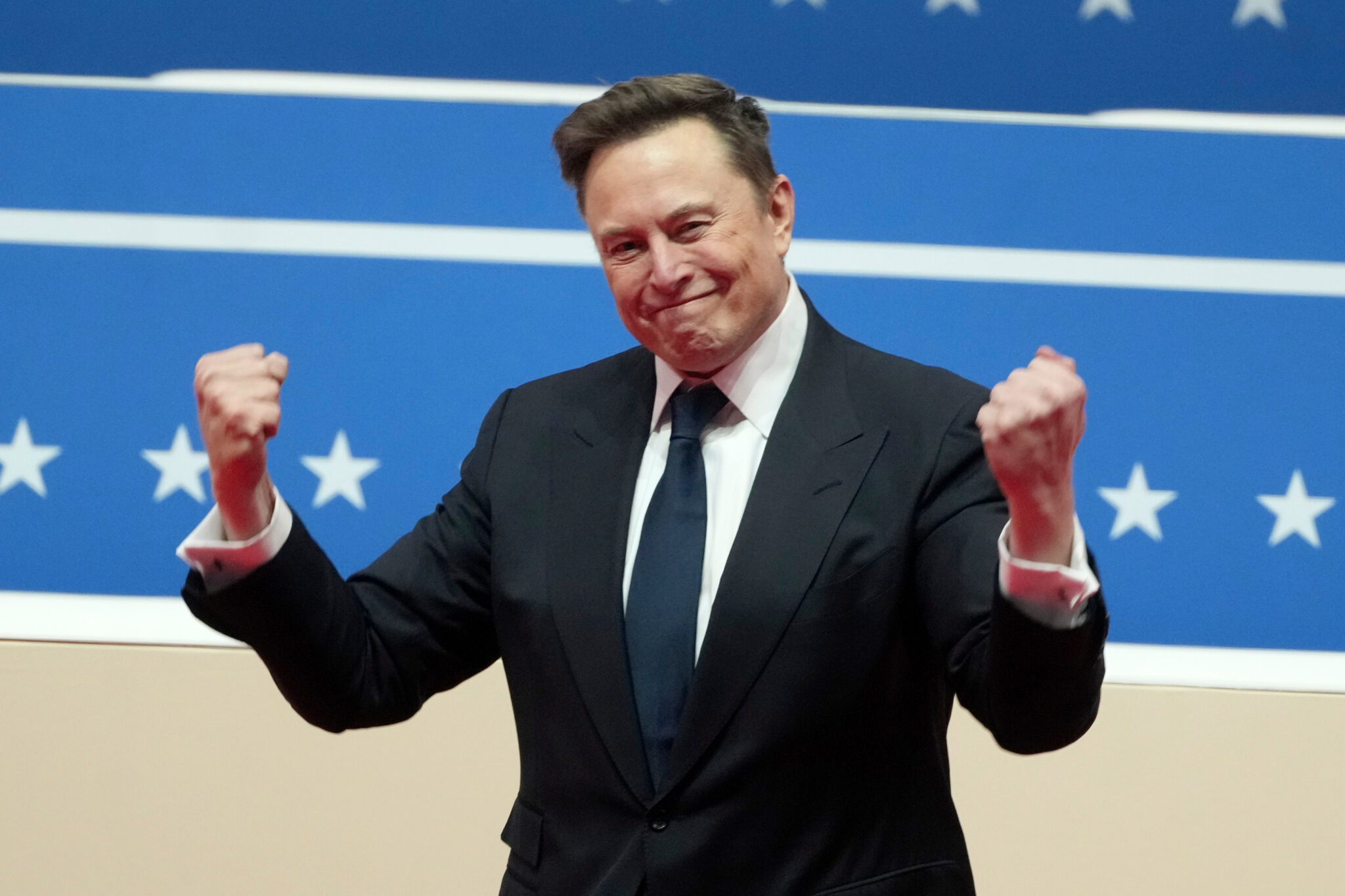
The 2026 midterm elections have been the most expensive in history, with more than $11 billion being spent on political ads. While Democratic candidates have outraised Republicans in individual donations by appealing directly to voters, Republicans have received the lion’s share of money from super PACs (political action committees) funded by a small number of the wealthiest elites in the United States.
The single biggest election-cycle donor is, unsurprisingly, the richest human on the planet. Elon Musk, the world’s first trillionaire, has poured more money into influencing the 2026 midterm elections than anyone has ever done in any election. His unprecedented contribution totals nearly half a billion dollars, all of it going toward electing Republicans. Musk is one of 50 donors whose combined political spending amounts to nearly $3 billion. Sixty percent of those donations are for electing Republicans.
This perversion of democracy can be traced to the 2010 Supreme Court ruling, Citizens United v. FEC, which dismantled the last guardrails against political spending in elections. Since then, according to the Brennan Center for Justice, “the composition of the top 40 donors in the midterms has shifted dramatically: more money, more support for Republicans, less transparency, and new industries like crypto surging while older sectors like labor disappear.”
There is no reason for such contributions other than an expectation of quid pro quo favors. Republicans (and to a lesser extent, Democrats) have long made it a central goal to reward wealthy elites and institutions. President Donald Trump’s 2025 One Big Beautiful Bill was designed to overwhelmingly favor tax cuts for the rich. The four top corporations that championed Trump’s bill—Musk’s Tesla, Amazon, Google, and Meta—enjoyed paying a paltry 4.9 percent tax rate on their massive $315 billion in profits in 2025 thanks to the new law.
In other words, Musk and his ilk see political spending as an investment that will yield windfall returns. For example, Michigan Republican Senate candidate Mike Rogers is urging voters to elect him so he can “protect Elon” and prevent an audit of the federal government.
There was a time when top policymakers, such as former President Ronald Reagan, justified enriching the wealthy by relying on the ludicrous claim that throwing money at the wealthy results in benefits trickling down to the rest of us.
With decades of documentation that the rich hoard their wealth, theories of “supply-side economics” have been thoroughly debunked. Even prestigious institutions, such as the London School of Economics, have published analyses concluding that tax cuts for the rich merely mean that “[t]he rich get richer, while unemployment and economic growth are unaffected.”
Today, instead of relying on junk economic theories, Republican politicians simply lie about the benefits of their tax cuts. Trump has repeatedly said that thanks to the One Big Beautiful Bill, people will pay no taxes on tips, Social Security benefits, or overtime pay—income that low-wage workers and retirees disproportionately rely on. He has even reframed the bill as the “Working Families Tax Cuts.”
What he doesn’t mention are the numerous caveats in the law that result in minuscule tax benefits. According to NBC News, on average, the refund for the 2026 tax season was only $350 more than 2025. But the president’s war on Iran has also led Americans to pay, on average, $471 more in gas prices since the end of February, while his failed tariffs cost households an average of $2,500. On balance, Trump has fleeced Americans in his second term while repeatedly claiming the opposite.
Sometimes, though, he can’t keep his lies straight. In a now-viral recording of a campaign speech in Texas, the president promoted his oft-touted bribe of gifting Americans $5,000 checks if his party wins the midterms. He then admitted that such an amount wouldn’t buy much more than “a hamburger and a small dessert” at the Florida resort he owns.
The fact is that wealthy people like Trump—who is now nearly $3 billion richer from gaming the presidency to benefit himself—are so cut off from the circumstances of ordinary Americans that their moral compass no longer works.
This is by design. Business schools are designed to train empathy out of humans and replace it with a self-serving ethos. University of Cambridge Judge Business School professor Chris Marquis argued in The New York Times that business schools ought to be abolished as they don’t follow curricula based on reality or include scientific inquiry into how businesses work. Rather, they train students to internalize what he calls “the ‘win-win’ story in which the conflict between private gain and public good simply evaporates.” Business school graduates walk away convinced that there are market solutions to all social problems and that when shareholders win, everyone wins.
This twisted logic is reflected in treating GDP growth as a measure of a country’s overall economic health. It explains why experts declare strong economies even when the majority of middle- and low-income people can barely make ends meet. The cognitive dissonance between people’s ability to thrive and the assertions that the US economy is strong shows the stark contrast between our hand-to-mouth existence and CEO compensation packages.
If we want to save democracy and ourselves, we need to stop unfettered capitalism in its tracks, and that means curbing the ability of wealthy people to influence our elections.
In Montana, voters will decide on November 3 whether their state can redefine corporations as entities that cannot influence politics. Hawaii already implemented this idea, called the “Corporate Power Reset” (CPR), through its legislative process in June 2026, and many other states are now considering similar legislation or ballot measures. Such laws render the Citizens United decision moot within any state that redefines corporations as politically neutral.
Tom Moore, a senior fellow at the Center for American Progress, who conceived of the idea, said in an email interview that CPR “only affects corporations,” not obscenely rich people. While it would not stop men like Musk from spending money in politics, “it would keep him and other wealthy individuals from laundering their political spending through dark money groups,” Moore said. And that’s because “CPR does knock dark-money groups out of the game.”
According to Moore, “Rich folks want to spend the money, fine. But they’ll have to have their names attached to it.” And while that’s not enough to reverse the flood of political spending, it is a good start.
This article was produced by Economy for All, a project of the Independent Media Institute.