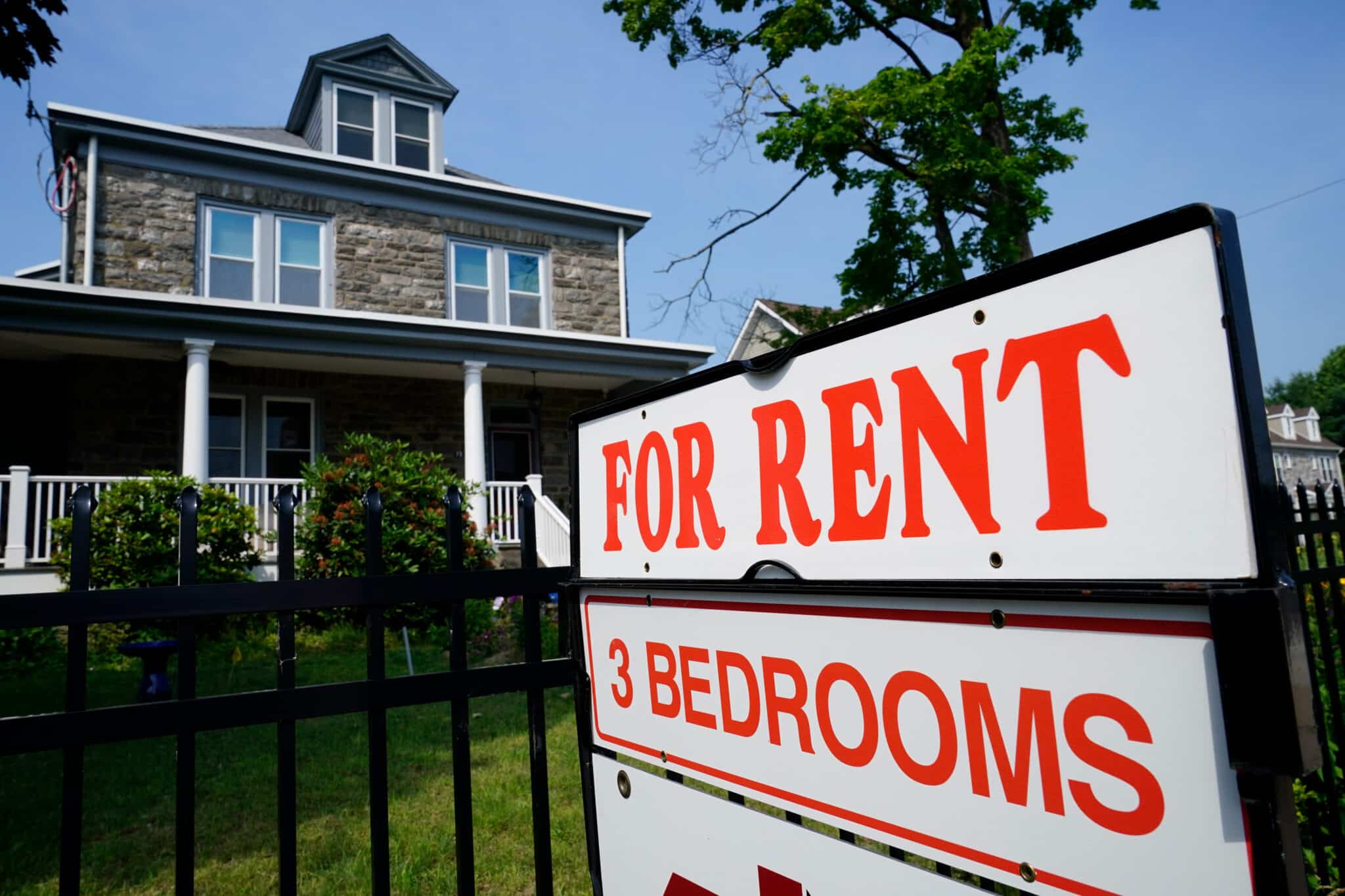
In the 12 months between May 1, 2025, and April 30, 2026, landlords have filed to evict 4,974 Bucks County households. The 9.42 % eviction rate in Pennsylvania’s third wealthiest county is much higher than the rest of the commonwealth – ranking fifth after Dauphin, York, Lehigh and Delaware counties respectively.
Bucks County state Representative Jim Prokopiak has noticed.
Early last year Prokopiak sponsored legislation he hopes will arrest the rapidly increasing rental prices that plague his district. And in the middle of last month, the legislator and his co-sponsor, Montgomery County’s Nancy Guenst, hosted a press conference to remind his fellow lawmakers, constituents and the press that relief is going nowhere because HB 914 has stalled in the Housing and Community Development Committee – since March 2025.
“Sometimes pressure helps move things forward, and that’s what we were trying to do is move it forward, because we do think it’s something that speaks to what working class families are facing right now,” said Prokopiak.
And that’s why the representative’s bill places a cap on rent increases and ties it to the consumer price index. HB 914 stops owners of multiple properties – it does not impact landlords with two or fewer rentals – from raising the rent by more than 6% (or 3% over inflation) whichever is lower.
“This is for those people that have large portfolios of buildings and are using it to generate income for their shareholders,” said Prokopiak.
In fact, recent reporting by the Bucks County Beacon revealed that private equity firms have been gobbling up Pennsylvania real-estate.
Prokopiak has been keeping his eye on that trend, offering his rental stability solution as one of the many to combat “rising housing costs – whether you’re renting or buying – and this [HB 914] is certainly something that targets rentals.”
With HR 914, Prokopiak hopes to amend legislation passed in 1951, known as the Landlord Tenant Act. His effort to “stabilize rent prices in Pennsylvania” is similar to legislation that has already passed in other states.
While consumer protections aren’t unheard of, in Bucks County and across the commonwealth – beyond the terms of a lease agreement – a landlord can raise the rent without limit and with very little notice.
Much to Prokopiak’s consternation, with less than four months left in the legislative session, the bill still hasn’t made it out of committee.
The Bucks County Beacon has reached out to both the Democratic and Republican committee chairs to ask when the bill will receive a hearing. As of press time, only Franklin/Huntington Counties’ Republican state Rep. Rich Irvin has responded. He explained that as the minority chair, “It is not my decision if a bill is going to run through committee.”
Pennsylvania housing data indicates that the counties represented by the two chairs have a fraction of the eviction rate that Bucks County has. In fact, Bucks County’s eviction rate is nearly four times that of Huntington County and 25% higher than both Allegheny (Democratic Chair Brandon Markosek’s district) and Franklin Counties.
Additionally, rent prices in Bucks County far outstrip the costs in those regions represented by both of the Housing and Community Development Committee chairs.
Rep. Irvin did state that should the bill find its way to a committee vote, “It would be hard pressed for it to get any support from our Republican committee members.”
The apparent lack of urgency moving HB 914 forward flies in the face of statistics published by the Housing Alliance of Pennsylvania. Their numbers indicate that 92% of evictions, “involve past-due rent demonstrating that non-payment of rent continues to be a main driver for eviction filings resulting in evictions.”
Prokopiak understands that housing costs are disproportionately impacting his constituents, that’s why he proposed the bill. He cautions that rent control legislation is a preventative measure – preventing an exodus of skilled and unskilled labor from the region.
The legislator fears that the Bucks County workforce is getting priced out of the communities where they’re employed.
“Affordability is a huge issue, especially in the southeast, and [whether] we’re talking about purchasing, or we’re talking about renting, we have to have a workforce that is close by to fill our jobs,” said Prokopiak. “We’re talking about home health aides, nurses and police officers. All the people out there who are having a tough time living in communities because of the unchecked increases in housing costs, including rent.”
Steven Chintaman, Pennsylvania Apartment Association’s vice president of government affairs, voiced opposition to HB 914 should state Rep. Markosek finally advance the bill.
The PAA represents the large landlords that would be directly impacted by Prokopiak’s bill. “We’re the bigger corporate landlords,” said Chintamen. “We, our members, tend to represent ten or more units.”
As for rent control that would impact his membership, Chintaman said, “We have concerns for limitations that may be placed on increasing rent, from our perspective, from a housing provider perspective.”
They aren’t just singling out Prokopiak’s bill, they’re against all income regulation.
“Any form of rent control legislation, again, from our member’s perspective, reduces an incentive to build new housing,” Chintaman added. “Developers may be less likely to invest in new apartment communities if future rental income is restricted. Our members argue that this can reduce housing supply over time, which potentially will worsen the housing shortage.”
“I think it’s a commonsense approach to protecting working families and allowing people to profit off of their investments. Yes, they can make money. It can’t just be unfettered.” – State Rep. Jim Prokopiak
As for improvements to the property, Chintaman is concerned that rent control would have a chilling effect on maintenance. “Number two from our members’ perspective, difficulty covering rising costs, property taxes, insurance, premiums, utilities, maintenance, labor, compliance costs often increase annually.”
Prokopiak says that – should his bill get a hearing – the PAA and others will learn that’s not an issue in his bill. “I will also say there are exceptions in there that allow them to raise [rent] higher if they’ve invested in renovations. There is language that allows for them to do those improvements, to do those capital improvements, and then they would be able to increase their rent accordingly, based on that investment.”
Eric Tars, Senior Policy Director of the National Homelessness Law Center – and a Pennsylvania resident – thinks housing is not a place for financiers to seek high yield returns. “Private venture capital investing into the housing market? They are literally treating our communities like mines. They are mining, not for minerals, but for our communities’ wealth.”
Tars says that venture capitalists looking to make more than six percent per year, (more than three percent over inflation) are syphoning inflated profits off the public’s most basic need. He says that housing isn’t optional. People have to have somewhere to live.
“Taking [money for homes] from individuals and giving it to profiteers. And so, yeah, this sort of measure [HB 914] targeted specifically at large corporate landlords is really needed right now.”
Tars endorsement of Prokopiak’s approach won’t matter much if the bill doesn’t make it out of committee. The representative hopes that contacting the media will encourage the committee to act on a bill that his constituents need. “I think it’s a commonsense approach to protecting working families and allowing people to profit off of their investments. Yes, they can make money. It can’t just be unfettered.”
Prokopiak added, unknowingly echoing Tars comments, “We can’t let unchecked profiteering destroy our communities.”