
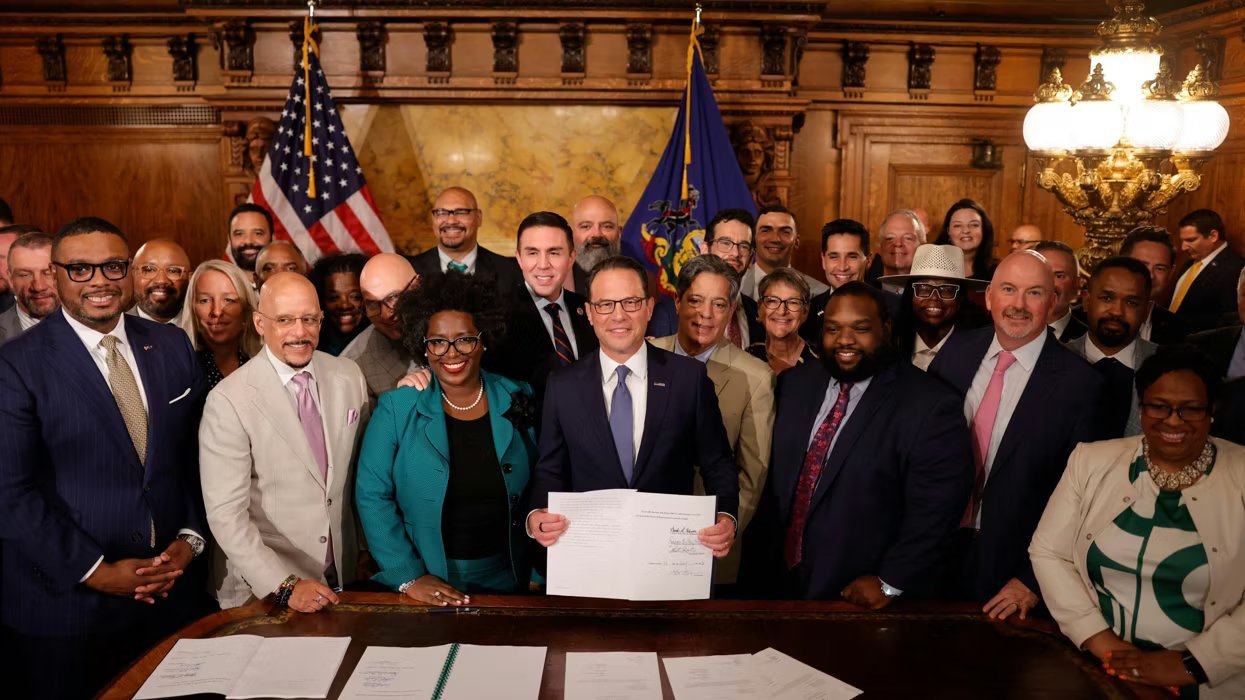
Bucks County public school districts will receive more than $7.9 million in additional funding from this year’s state budget compared to last. About 90% of those funds are allocated for Morrisville Borough School district, which faced closure last year due to a months-long budget impasse in Harrisburg and the district’s dependence on state funds.
Gov. Josh Shapiro signed the 2026-27 budget into law on July 12, investing $11.85 billion into the state’s K-12 educational system. Throughout Shapiro’s tenure as governor, his administration has increased funding for Pennsylvania schools by 35%, or $3 billion.
This funding includes $565 million towards the adequacy gap, aimed at bridging the divide between disadvantaged and well-off school districts.
The $7 million allotted for Morrisville Borough School District represents a 99.4% increase in funding from the previous year. The small borough in Bucks County serves roughly 847 students in Grades K-12, according to a 2024 Ballotpedia report.
The district has struggled financially for years. Damon Miller – president of the Morrisville School Board – said the increase in funding will make a “significant” impact on both the school district and the community at large.
“With the increased funding, Morrisville will be able to establish a long-term financial plan to establish a stable school district while improving the quality of education for our students, resulting in a better Morrisville community,” Miller said.
Sen. Steve Santarsiero represents the Pennsylvania Senate District (SD-10) that includes Morrisville. Santarsiero says he has fought annually since taking office to secure more funding for the school district.
“Morrisville deserves adequate funding, just like other school districts in our state that have received funding to close our state’s education adequacy gap since the 2023 Commonwealth Court ruling,” Santarsiero said in a press release. “I will continue to advocate for the Morrisville Borough School District to get the funding they need and work to secure grants to help make up for funding shortages.”