
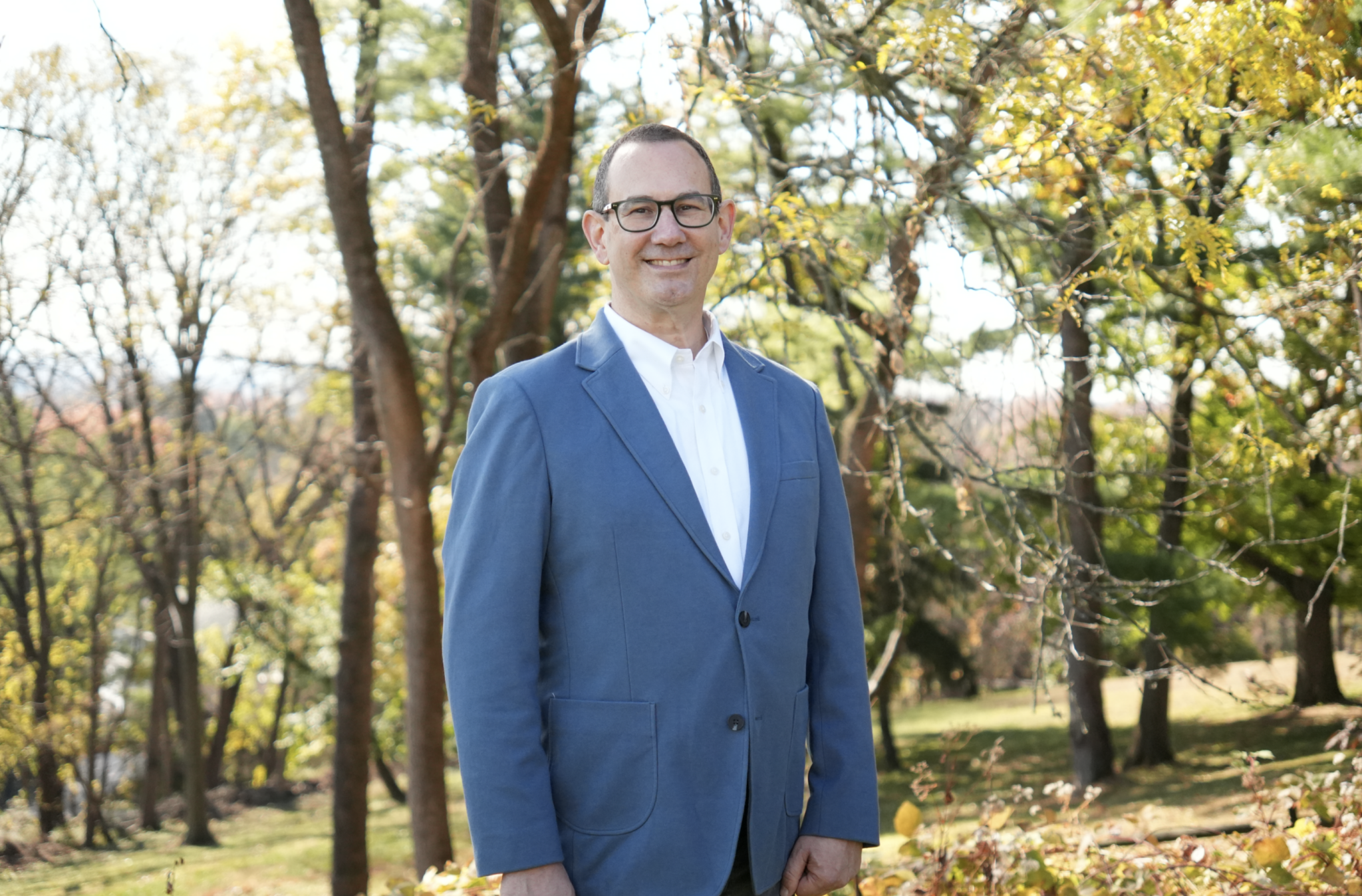
Lehigh Controller Mark Pinsley is running against incumbent Republican Jarrett Jarrett Coleman to represent Pennsylvania’s 16th Senatorial District, including portions of Bucks and Lehigh counties.
Republicans currently hold a four-seat majority in Pennsylvania’s state senate – and this seat is seen as critical for Democrats who hope to flip this legislative body and control all three branches of state government after November’s election. Coleman has a big campaign cash advantage, with $700,000 having come “from skill games executives with Pace-O-Matic, a top supplier of skill game terminals in the U.S., including Pennsylvania,” as Armchair Lehigh Valley reported. Coleman is a champion of this industry, and in July argued on the steps of the state capitol building in Harrisburg that “skill games should operate under no tax, and no regulation, because they are not gambling.”
Pinsley, however, is betting on his policy positions and approach to office to trump Coleman’s campaign cash advantage: “Follow the money, challenge waste and corporate abuse and measure government by whether it makes people’s lives more affordable.”
What follows is a Q&A with Pinsley on the election, his campaign and aspirations to make a difference in people’s lives should voters send him to Harrisburg.
What has being Lehigh County Controller taught you about public service and fiscal accountability? How would you translate that experience, if elected, to Pennsylvania’s SD-16?
Serving as Lehigh County Controller has taught me that public service is not about headlines, it is about asking hard questions, following the money and making government work better for the people who pay for it. As Controller, I have approached every issue with the same basic question: Are taxpayers getting what they are paying for?
That approach has produced real results.
My office identified ways to reduce prescription drug costs for county employees and taxpayers, strengthened oversight and challenged systems that were not delivering the results residents deserved. I have also learned that fiscal accountability is about more than cutting a line in a budget. It means preventing waste, demanding transparency, measuring outcomes and being willing to take on powerful interests when taxpayers are being overcharged. I would bring that same mindset to the state senate. Pennsylvania needs legislators who will scrutinize contracts, tax breaks, subsidies and spending instead of automatically protecting the status quo. In SD-16, I will fight to make the government more transparent, protect taxpayers and focus state resources on lowering costs and improving services for working families.
Top of mind for many Pennsylvania voters are AI data centers and their development. Concerns include water consumption, skyrocketing utility costs, noise, air and water pollution, and more. What’s your position on AI data centers? Do you support a moratorium? If you are elected, how would you work to regulate data center developments in SD-16?
I support a statewide moratorium on new hyperscale data centers. Pennsylvania is allowing some of the largest and wealthiest corporations in the world to race into our communities before we have adequate protections for our electric grid, water supply, environment or ratepayers. That is backwards.
My position is simple: Pennsylvania families should not pay one penny more on their electric bills so Big Tech can power massive data centers. These corporations should pay the full cost of the electricity, transmission infrastructure, water, roads and other resources their facilities require. And taxpayers should not be subsidizing them through special tax breaks and giveaways.
I also do not believe this can be left to individual municipalities to solve on their own. A data center in one community can affect electric rates, grid reliability, water resources and infrastructure far beyond that municipality’s borders. This is a statewide problem that requires statewide action.
I would maintain a moratorium until Pennsylvania establishes enforceable protections on electricity and water consumption; utility costs, noise, pollution, setbacks, emergency planning and environmental impacts. Any future projects should be required to pay their own way, provide substantial community benefits and create good paying union construction and permanent jobs.
Pennsylvania should not become a dumping ground for Big Tech’s enormous energy demands, while our residents are stuck with higher bills and the consequences. Until we can guarantee that communities come before data centers, we should stop approving them.
Flock cameras – and other automated license plate reader surveillance equipment like them – are a hot button topic on both sides of the political aisle. What is your position on them? If such cameras become mandatory in Pennsylvania, what regulations would you want to see to restrict their use? How would those restrictions be monitored?
Automated license plate readers can have a legitimate public safety purpose – particularly when police are searching for a stolen vehicle, an abducted child or a vehicle connected to a serious crime. But technologies that can track where people travel also create serious privacy and civil liberties concerns. I do not support giving government – or private companies – an unlimited database of Pennsylvanians’ movements.
If Pennsylvania authorizes or mandates the use of these systems, I would support strict statewide guardrails. Data should be retained only for a short, clearly defined period – unless it is connected to a specific investigation. Access should be limited to authorized personnel for legitimate law enforcement purposes, every search should be logged and agencies should be subject to regular independent audits and public reporting. Information should not be sold or used for commercial purposes, and there should be strong restrictions on sharing data with outside agencies or using it to monitor constitutionally protected activity.
READ: State Lawmakers Push Legislation to Protect Pennsylvanians Against Flock Camera Surveillance Abuses
The legislature should also establish meaningful penalties for misuse and a clear process for investigating complaints. Public safety technology should be a tool for solving crimes – not a system for tracking innocent people without accountability.
Pennsylvania is not alone in a growing health care crisis. In addition to proposals such as Pennsylvania state Senator Nikil Saval’s PA Universal Health Care Act, currently in circulation, do you support some form of universal health care? Do you have any other ideas about alternative proposals to make health care more affordable and accessible?
I believe health care is a right, and our long-term goal should be universal access to affordable, high quality care. I am open to serious proposals that move Pennsylvania toward universal coverage, including the PA Universal Health Care Act, but I also believe we cannot wait for one sweeping piece of legislation before lowering costs for families.
There are steps Pennsylvania can take now. We should aggressively lower prescription drug costs, hold pharmacy benefit managers and insurers accountable, expand access to programs such as PACE and PACENET; protect rural and community hospitals, strengthen mental health care, and make it easier for families to obtain primary and preventive care. We also need to address the underlying prices that make insurance and medical care unaffordable, rather than simply shifting those costs between patients, employers, taxpayers and insurers.
As Lehigh County Controller, I saw firsthand that challenging the way prescription drugs are purchased can save real money – without reducing care. I want to bring that same approach to Harrisburg to use the state’s purchasing power, demand transparency, eliminate unnecessary middlemen and excessive markups, and make sure every health care dollar is actually helping patients.
What are areas that Senator Jarrett Coleman has let his constituents down? And how do you plan to legislate differently if elected?
The biggest difference between Senator Coleman and me is that I believe this district needs a senator who will act before a crisis reaches the breaking point and who will consistently put working families ahead of powerful interests.
On data centers, for example, Senator Coleman now supports allowing municipalities to impose temporary moratoriums and has proposed ending the data center tax exemption. I agree that communities need stronger protections, but I believe Pennsylvania must go further. The strain on our electric grid, utility rates, water resources and environment is a statewide problem. I support a statewide moratorium on new hyperscale data centers until enforceable protections are in place, and I will insist that Big Tech – not Pennsylvania rate payers – pay the costs it creates.
More broadly, I will approach the senate the way I have approached the Controller’s office: Follow the money, challenge waste and corporate abuse and measure government by whether it makes people’s lives more affordable. I will fight for working families, organized labor, reproductive freedom, affordable health care, strong public schools and real property tax relief. I am not running simply to occupy this seat. I am running to make SD-16’s senator an active, accountable advocate for the people who live here.