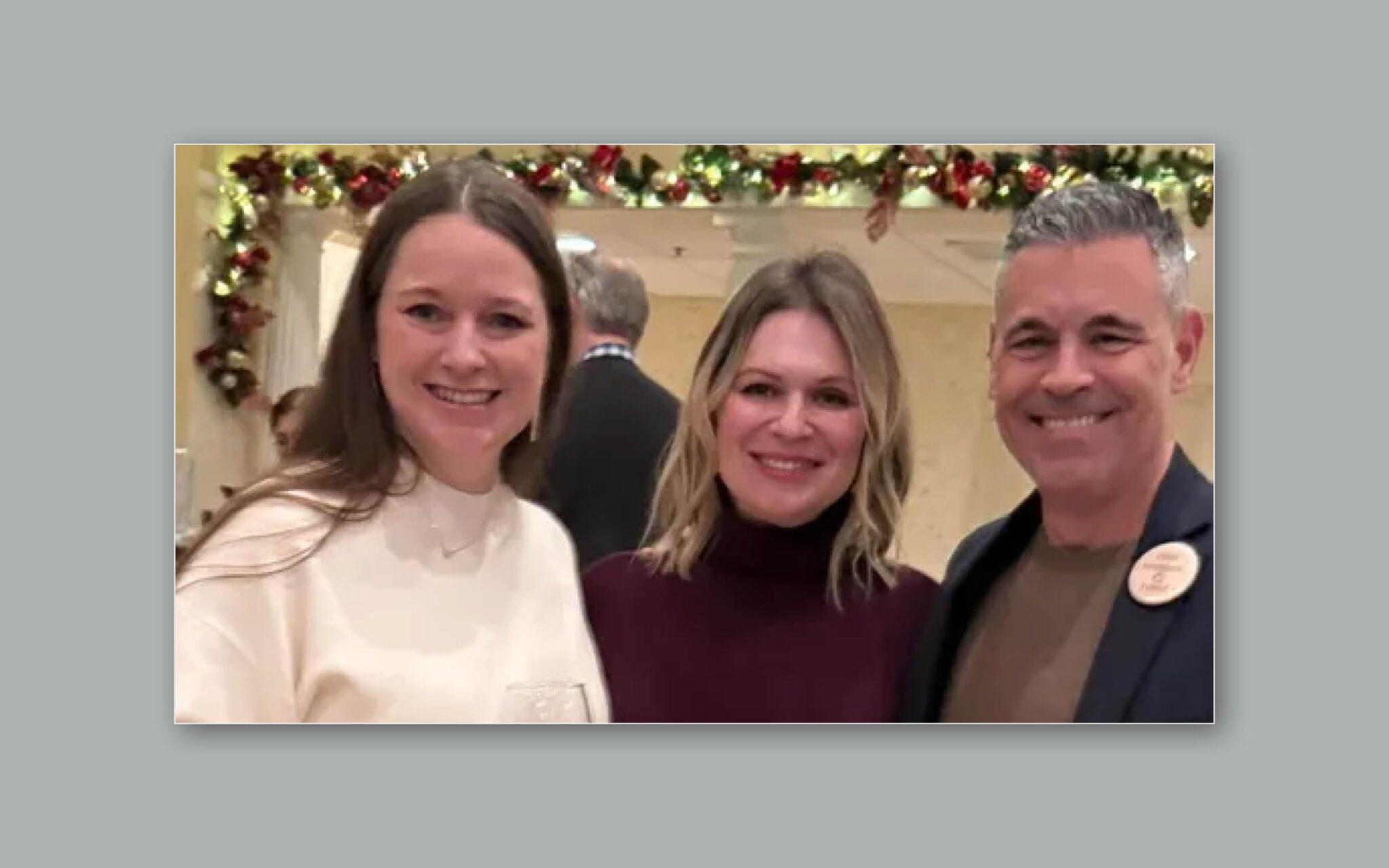
“CBSD Neighbors United Was a Revolution in Central Bucks School District.” This was the title of a recent column authored by Diana Leygerman, Tracy Suits, and Steve Sullivan, Central Bucks School district parents and the founders of the organization which helped save CBSD from Moms for Liberty, a local MAGA multi-millionaire, and other right-wing political arsonists who had captured the school board back in 2021 and were pushing a reactionary, and largely anti-public education agenda. The three joined me to talk about how CBSD Neighbors United started, the organization’s breathtaking success, and why even though they are closing its doors they are confident the movement they helped start will live on.
Diana Leygerman is a Central Bucks School District parent and the Director of Comms and Strategy of CBSD Neighbors United. Steve Sullivan is a CBSD parent and the Director of Fundraising for Neighbors United. Tracy Suits is the current chair of the Chalfont New Britain Democrats. She served on the Central Bucks school board from 2017 to 2021, and is the Chair and Director of Operations for CBSD Neighbors United. She’s also a CBSD parent.
LISTEN on Apple, Spotify, Podbean, and iheart
And a brief interview note, Tracy ends up joining us later in the conversation.
So I asked you to come on today to talk about CBSD Neighbors United, which you announced recently and in a guest column in the Bucks County Beacon entitled CBSD Neighbors United was a revolution in Central Bucks School District, that it would be closing its doors. This was an organization started essentially to take back the school board, which had been captured if not hijacked by right-wing extremists. To start, take us back to 2021 and the time leading up to your decision starting Neighbors United. What was happening locally in the district, which raised your alarms and caused serious concern among you and many in the broader community?
And Diana, why don’t you start off?
Diana: I decided, well, what was going on in the district is this this was the COVID fight. that’s how it all began. masks versus no masks, reopening versus not opening schools fully. And so there was a lot of safety talks, a lot of physicians who were, you know, coming to school board meetings saying we need to follow safety protocols, a lot of people on the right saying this is all a hoax. And so that’s when it all became very political. And that’s when I decided that I wanted to run for school board because I didn’t realize how political it had been and I wanted to be one of the people who work towards safety measures rather than saying everything is a hoax. So I decided to run along with four other people and none of us had any experience doing anything like this. We were just local parents in Central Bucks, and so we decided to throw our hats in the race and we had no idea what we were doing.
And before the primary, we were just kind of figuring it all out, learning as we went along. And then after the primary ended, we learned a little more and decided to start a PAC for all five of us. so we can kind of be more of a unified force rather than just five separate campaigns trying to figure it out on their own.
And Steve?
Steve: Yeah, I mean, I didn’t really get involved on my own volition. I really got involved because my wife was running for school board and she wasn’t really running because something was really going wrong or anything like that. I mean, COVID was challenging and she didn’t agree with a lot of what was what was happening from leadership, but she ran because she thought she could contribute to the school district. She had a background in education and she thought, okay, well, I’ve got some things I can offer, maybe my expertise might be might be welcome. And so I served as her campaign manager and kinda got involved that way and and that’s when I started really paying attention to what was going on. And and she got elected be in a red wave because we live in a very blue region of central bucks and found out very quickly that her expertise was indeed not welcome because they didn’t want anyone who actually had a PhD in education or anything like that, or someone who looked at data and informed their decisions that way. They wanted everything to be ideological and emotionally charged, and that’s how they ran things. And then while she served, that’s when the right-wing majority started basically running the school district based on culture wars they wanted to wage. And when COVID kind of died down, they brought in a kitchen sink full of everything else they wanted to get done.
Steve, had you been involved or engaged with the school board prior to this? And school board meetings? Yeah. What about you, Diana?
Steve: No, not at all.
Diana: Outside of sending him some emails about my kids, no, not at all.
Okay. And like you explained, CBSD Neighbors United was founded by this slate of Democratic school board candidates. And you wrote in your piece published Monday that “there was no roadmap, no millionaire donors, no political machine, just a shared belief that our schools, our teachers and staff, our kids, and our community deserve better.”
How did you figure this out as you were going along the way, Diana? You said there was no roadmap, so you know, what was this trial and error? Were you looking at what other maybe parents or campaigns were doing it in other parts of the state or country?
Diana: It’s a great question, Cyril. I don’t know, Steve. Maybe you could jump in in the middle, but I don’t know how we actually figured out. I, from my point of view, I read a lot. I read what other dist what was going on in other districts. I studied the propaganda just as in my in my education, slash just for fun. So I was just kind of paying attention to what was going on nationwide with all of these different groups like Moms for Liberty and the Heritage Foundation and this 1776 Project and all these different groups and seeing what they were doing in other districts. And it was kind of easy to see a pattern. So I we kind well not just I, but we kind of started to realize the pattern that was happening here was following along what was happening nationwide.
And they were testing out a lot of their policies here. Maybe not have been testing out, just throwing them in and you know, hoping it will stick. And then, I think some of it was kind of logical, like using their own words against them seemed like a good idea. You know, we really didn’t have to do much. We didn’t have to create any narrative, we didn’t have to lie, we didn’t have to do anything outside of just showing the community what the school board was doing because they were burying themselves with their own policies. So really what we needed to get was not an amazing strategy. Really what we needed to get was people to actually to pay attention to what the school board was doing. And so we found different avenues for that. We contacted local press, we put it out on social media, we just started screaming on the top of our lungs in every way: look, pay attention, pay attention to what is going on. What’s going on is not good. And I think that’s kind of how we went along with it, just kind of pushing that out there, their own words, their own policies, and saying, this is what’s happening around the country. This is coming here, because it was and it did.
Steve: I would say that the campaign in 2021 really helped inform what we would do in t2023 when we stayed together and reformed to try to win the majority in ‘23 after not being able to do that in 2021. So we had already been through what it means to make a mailing list or a knocking list for knocking on doors for canvassing, using the resources that were available to us from the party. We had a lot of people who were helpful with their expertise of having worked on campaigns or run campaigns or run for something. Tracy Suits joined us in 2023, who was the president of the school board for a little while. So she knew what it meant to run and win. And then we also had a lot of help from the municipal chairs, the chairs of the municipal democratic organizations like the Doylestown Dems or the Chalfot/New Britain Dems, et cetera, et cetera, et cetera. And so we had a lot of help from them. it was there was a lot of people involved. We had an amazing treasurer who took care of all of the finances for us, made sure that we had our our financials reported when they needed to be reported and the campaign finance reports and writing the checks and depositing the things … he was awesome and took a lot of that off of us, which was a really, really good thing for us because we didn’t know how to do any of that stuff. But like Diana said, we just really had to get people to pay attention to what the board majority from ‘21 to ‘23 were actually doing. And they were passing policies that were discriminatory to LGBTQ kids. They were allowing community members to get books banned from the libraries and from the schools. They were spending a ton of money on lawyers so that they could sue our teachers or actually so they could defend themselves on on wrongful termination suits because they would just fire our teachers that they didn’t like … hiring PR firms. All these things just had to get people’s attention. And it made it easy for us to fundraise so that we could pay for mailers and things like that and digital media ads because every time there’d be a school board meeting, the majority would do something so egregious that we would wake up the next morning and there’d be a ton of money donated to the campaigns when we didn’t ask for it. It’s just that everybody was paying attention, mostly because of the efforts of Diana to run our social media accounts and make sure and talk to the press and and get the word out that it was it was pretty easy to raise money for these campaigns.
What did some of the people to people or person to person organizing look like that you were doing? And was there any kind of resistance from people to get engaged in this who, especially those who aren’t like really maybe say active in the Democratic Party? Did you find people were kind of apathetic or didn’t care, or at this point was everyone tuned in to what was happening because Central Bucks in many way became the epicenter of these broader school board wars happening across the country.
Diana: I think every year was a little different in terms of engagement. In ‘21 because it was so new for everyone, we didn’t really have too, too many volunteers, but that’s when we kind of started to build our core group of volunteers, most of whom stayed with us until ’25. In ’23 I mean, again, Steve, correct me if I’m wrong, but people just were eager to get involved because I think we had spent from ‘21 to ‘23, so much time getting people hyped, telling them what’s going on and they were paying attention. So people were eager to get involved. And when you run a campaign like this with five candidates, five different regions, back then it was still five different, you know, nine regions from five people were running. It takes a lot of help. And we found that every person who did get involved. had something they were good at, whether it was knocking doors, whether it was research, whether it was writing RTKs, whether it was getting fundraising, postcard writing; there was a job for anyone who wanted to help, really, truly. And the people who were with the the teeny, tiny skeleton crew who were with us from 2021 brought more people in, and more people in throughout the years. And in ‘23 we had the most amount of volunteers ever, I couldn’t even count. I probably don’t even know all of them because they were all working on all different campaigns who were then filtering back into NU and it was just pretty amazing. In ‘25 I will say that I think partly because we had already the majority, there wasn’t as much controversy, I guess by the time 25 hit. We did struggle a little more with volunteers. some people or I would say a lot of people kind of fell off. We did have a little bit more difficult time to fundraise. I think people were a little relaxed because we already had the majority and they kind of went, you know, no news is good news, right? There wasn’t too too much controversy coming out in terms of politics. I mean, obviously there’ll be issues, you know, happening in the district, the size.
But yeah, I think it was a little more difficult in ‘25 to get volunteers. We did struggle a little bit. But either way, we did have a decent amount of people. We fundraised a decent amount and we’ve always kind of been open that if you want to help, we’ll find a job for you because there’s so much to do.
Steve: Yeah, and in 2025 we had a roadmap because we had done it in 2023. So there was very little uncertainty as to okay, how do we do this in 2025? So for Tracy and Diana and and our treasurer Steve and a lot of our our campaign managers for specific candidates, our municipal chairs, everybody kind of knew, all right we know what worked in ‘23, that’s what we’re going to do. So it was way easier in twenty-five than it was in ‘23. And ‘23, it was a full-time job. I feel like even though none of us was running, I mean, for the candidates, it was a full-time job. And for us, it was a full-time job. And I felt like we were doing so much. And I would say that to echo what Diana said, wasn’t hard to find … well, I should just put it this way. We didn’t have to convince people to care in 2023 because enough people came to us that we didn’t really have to recruit volunteers too much because there were people who were coming and saying, What can I do? And like Diana said, everyone had their own skill or what they were comfortable doing. If you weren’t comfortable knocking on doors, then maybe you’ll host a meet and greet at your house. And we had a lot of people doing that, hosting fundraisers at their home or meet and greets or writing postcards, like Diana said. I don’t want to just echo everything she said, but it was it was so many people that at one point in time after the election in 2023, I think I wrote up a Facebook post kind of thanking everyone and congratulating everyone. And off the top of my head I just started typing names into Facebook and I think I came up with 60 people off the top of my head. And I’m sure I missed people, and it was it was pretty impressive.
Steve, what kind of lessons, what are one or two lessons that you learned from when you guys started from twenty twenty one to twenty twenty five, whether it’s about organizing, messaging, et cetera?
Steve: That’s a good question. What kind of lessons did we learn? I mean, definitely learned some lessons. I would say one big lesson would be don’t try to convince people you’re never going to convince. It’s a waste of time, it’s a waste of money. So time and money are the the resources, other then the people.
But time and money are two of the the finite resources that we have in a campaign, and we can’t waste it. And so we all hear this all the time. There’s 30, 40% of the population that you’re never going to get to agree with you. And so the the big lesson I learned in ‘21 and ‘23 is leave those people alone. You’re not gonna get them. You’re gonna bang your head against the wall.
You’re gonna waste money, you’re gonna waste time. Focus on getting the vote out. Getting the vote out among the people that agree with you and that support your values and your candidates, that is the number one way. Because especially in a district like we have in Central Bucks, which is very purple – we’re pretty split down the middle. We’ve got, you know, among the among the affiliated people, we’re like 50-50. And then you know, 20% of the of the population is probably unaffiliated. So you just gotta get your people to vote. And that was the main thing was be spend your resources on that. And this is a tough one to convince candidates of. Right? They they wanna they they want to reach out to the to those people that are are never going to agree with them and they want to convince them. And they want to get that victory. And it’s really … in that amount of time you could get five people to vote who will vote for you. And that’s a big lesson, I think, for any candidate running for any office.
What about you, Diana? Was there one or two?
Diana: I have a couple. I think one of the lessons is … well in ‘23 especially, we ran against a lot of money. And I think that that could be really intimidating to people, to candidates, to campaigns and all that. Like, my God, we can’t ever come up with millions of dollars like our opposition, who is being bankrolled by millionaires, right? Or by PACs like in 2025.
And so I think that people will get scared of that or intimidated by that. And they’ll say well, we can never win against that kind of money. And it’s just not true. I think that the message or the lesson here is that you can win, and we did win against a lot of money, against millionaires, against PACs, because … one of the reasons is because we had good messaging and good people and good values. And as long as you know how to spread that message, sure, you’ll need money to do that to put it on mailers and all of that, but you don’t need that much money, as much money as sometimes is being poured in the campaign. So the one of the lessons is you can win without all that money. And you could win against rich and powerful people, as long as you have people willing to do the work.
And the other lesson is you have to work with people you trust. Because I think working with Steve and Tracy and the group of volunteers, the closest group of volunteers that we had – we had to trust one another completely. Because if you don’t, there’ll be issues, there’ll be infighting and nobody wants that. And I think, you know, not to toot our own horn, but Tracy Steve and I worked really, really well together. We trust each other wholeheartedly. You know, and I appreciated their trust in me in terms of messaging because you know we all know I could be a little spicy, but they trusted me regardless. And we did a really good job together and worked well together with our volunteers as well, those who really closely worked as part of the NU. Just find people you trust to do this with if you’re doing something like this because it’s important work. It’s grueling work. It’s very stressful work. You need to be able to sometimes be like, you know what, we can’t talk right now and just move away for a couple … a day maybe and then well, there’s no time, there’s no day. There’s no time like that, but maybe an hour, take a breath and then come back. So work with people you trust and have a lot of respect for and who respect you as well.
Steve: I’ll tell you another lesson that we learned especially in ‘23, but I’ll backtrack to ‘21 a little bit and talk a little bit of the results. We had five races. We only won two of them. It was a red wave across the county. Democrats lost throughout Bucks County, every countywide office. And and we missed getting four out of five wins by a 159 votes. It was very close.
And Diana ran in the reddest district of that year’s races. And still the difference in her race would have been the closest race in 2023. So they should have crushed us in 2021. And it was actually pretty close. And and then in ‘23, when we swept and won five out of five, this is the lesson I learned: smear campaigns do not work in local races. And the opposing candidates ran smear campaigns against our candidates. It was pretty ugly, really disgusting websites, disgusting signs they put up all over the place, calling our candidates pedophiles and pornographers and things like that, sending mail to people’s homes with pornography in it and blaming our candidates.
And that backfired on them enormously. And I think that that’s a a lesson that I’ve learned is that you can’t go negative local. People don’t like that because these candidates are their neighbors and their friends and their kids go to school with their kids. And they just don’t like it. It’s not the same as when it’s some anonymous congressional candidate that you probably never met.
I mean they even deployed an outside PAC against you guys, whose head I believe essentially said that his goal was to make it so that the Democratic candidates couldn’t show their faces in town. Like they essentially wanted them to chase them out of town.
Steve: Yeah, they spent a lot of money, but they spent a lot of it poorly. So that that helped us since we didn’t have the the pockets, the depth of pockets.
Diana: Yeah, I like that Steve. That’s a really good lesson. And it’s so true.
So where would you draw the line between kind of like going negative or into smear campaigns and then, but calling out what I would say is just extremism and and bigotry? Is there a difference? And and if so, how would you identify that, Steve?
Steve: So the difference would be that we would put actual policy on our mailers and on our digital ads and show people this is what passed last week in the school board and this is who voted for it, versus a smear campaign being sending mail to 17,000 people in Central Bucks that says this candidate wants to put pornography in the kindergarten classrooms, which is wholly false. And so I think that’s the difference. I think the difference is just laying out the facts. This is how much money they spent on a PR firm. Look it up. We’re not making it up. This is very easily retrievable. It’s right to know, versus just telling outright lies to get people to demonize the other candidates.
And so Diana, with with the success in in 2023, especially, when you guys really crushed the opposition, despite them being bankrolled by a local MAGA millionaire and some national astroturf groups, there had to have been some issues that resonated with independence and I would say, like, normy Republicans. What what were they? Was it was it just the book banning? Was it the kind of vilification of LGBTQ youth, policy 321, which in many ways kind of muzzled teachers.
Did did that kind of get through to some independents and Republicans and saying, well, you know, this school board’s just going way too far with with what they’re doing.
Diana: I think everyone grabbed on to something different in terms of independents, and some of the more moderate Republicans. We had a lot of moderate Republicans come to us asking to volunteer. And well, not a lot, but a handful, who actually wanted to get involved. And it was always a little different. Like some people, they would say, My mother, my grandmother was a teacher or a librarian. I don’t like the way they’re being treated. Some people would say, I have an LGBTQ plus kid or a brother or a sister. Some people would say, Well, this hits my pocket, right? Because a lot of people care about money. And despite everything else, this is going to hit your pocket because every policy that they pass, every lawsuit we have, every PR payment that is sent or a payment sent to some outside political group to write our policy, that is take being taken out of our kids’ education and out of the pockets of the people who live here. So it was something different for everyone. I think finances are probably one of … like fiscal irresponsibility of the board was probably one of the bigger hits. and I think honestly, people didn’t like that one man was trying to buy an entire school board. That was also some of the messaging that worked really well that we can’t just like allow one person with his political ideas, ideologies, to decide what our kids are gonna learn and how our money is gonna be spent. And I think that was one of the bigger sticking points for a lot of people here.
What kind of toll, if you’re comfortable talking about this, did your experience have on you over the last few years? Because, you touched on it slightly before, but things got nasty. Really nasty, where they wanted to destroy your livelihoods. They wanted you to be fired from your jobs, they wanted to cause problems in your marriage, or I mean anything and everythin. They would, the other side, the opposition, would deploy attempts to if not ruin your lives, just scare you enough to kind of cower away and just silence yourselves. How did you deal with that? And maybe Diana, if you could start and then Steve. And did you second guess yourself at any points as you were going through this?
Diana: I was attacked a lot, you know, personally from the time I ran. They couldn’t get over me, honestly.I don’t know what it is. I mean I kinda know what it is about me, but I you know, they just wouldn’t let me go. And my name was constantly brought up by all of them in public meetings, in school board meetings, on their websites, on mailers, whatever else. As far as the toll I mean, listen, I’m not gonna get into too much about it, but it was tough. There were days where I was just like, I’m done, you know, but then in the same breath I would be like, No, that’s exactly what they want. So that’s not gonna happen. I’m someone who will do things out of spite. So, once I would feel a little better after the latest attack, I would go back, come back even stronger. And I think that weirdly, even though I don’t want this to happen again, but weirdly the attacks gave me the fire to want to flip the board even more than I had ever wanted to flip it. Obviously that’s not the whole reason, but it was definitely the fire that was pushing me along.
So in some ways, it was, you know, not terrible. I mean, it was terrible, but it wasn’t, but you know, it was terrible, Cyril. But it didn’t kill the desire to want to do the right thing for our community. And the the the good thing is that like when I mentioned earlier, having people around you that you trust, the, you know, Steve and Tracy and some of the other volunteers, every time there was an attack on me, they would just surround me with their support and kindness and love and without that it probably would have been worse. So I think that that was that was that’s what that’s what helped i in in tough situations.
And and Steve, both you and Tabitha have been on the receiving end of this as well. How did you get through that?
Steve: Yeah, for sure. More so her than me. She served on the board for a couple of years. She ran in a special election, finished the term of someone who stepped down. And she served in the minority and the three that were in the minority really, really took it pretty hard. They went out for them pretty tough. And I never really understood why. I mean, I guess they didn’t want what they were doing exposed, and those three didn’t really allow them to fly under the radar. And so they would speak up and they would challenge them and speak their mind and call them out when they didn’t agree with what they were doing. And what surprised me about the the other side was that they weren’t satisfied with winning every single vote, every single meeting. And getting every policy they wanted. That wasn’t enough. They had to destroy people who didn’t agree with them. And so they went after the three who served in the minority, which was Karen, Mariam, and Tabitha. And they just wanted to crush them. We would get nasty letters to our house. She would get completely defamed in public comment and things like that. They just, it wasn’t enough. They were as people who would go after her job and they would call her the president of her college where she worked and her dean and make up lies to try to get them to consider firing her and things like that. It was pretty crazy. So I mean they went after my job a little bit too. They they you know, had a little campaign to try to get me fired from my job, which was never going to happen. And so that didn’t really get to me too much, mostly I was watching what they were doing to Tabitha and to Diana and to Tracy toward the end of her tenure on the school board. And that really, really got under my skin. But they came after me a little bit, but it was never really that big a deal. I guess they did put me on a website and call me a pedophile at one point.
At this point in the conversation, Neighbors United’s Tracy Suits joins us. We pick up our discussion after getting her situated.
So, Tracy, what did you learn from your experience being involved with Central Bucks Neighbors United? What did you learn about yourself and maybe about the community?
Tracy: I learned I have far more resilience than I thought I did. But I think I’ve learned that through the entire process from running for school board, myself being on school board during a pretty tumultuous time and then working through two campaigns.
Yeah, definitely think I’ve have learned that I’d probably never gave myself enough credit for my resilience and ability to stick to something when times are hard. And not that it would surprise anyone, but also that doing things with people you like makes it a lot more fun and helps your resilience to stay up. What did I learn about the community? I learned the community was much more aligned in terms of what was important to us and and values than I had maybe previously realized. Again, probably a reflection of my time being on the board. You rarely, rarely heard from people unless they were mad at you. so when the community started showing up in different ways, through the campaigns, pitching in in so many dozens of different ways. We’re a very talented community, we’re a very caring community and and hardworking and compassionate. And if given opportunity to work hard toward a cause, people will find a way to kind of rise to the occasion.
I mean have to admit, like I was going into 2023, I was cautiously optimistic about the success that you guys were gonna have. But but I did not think that you guys were gonna sweep.
Tracy: We were nauseously optimistic.
Diana: Ha, ha I knew it.
Steve: Nor did we. After the after the primary results, we thought, well wow, this could happen.
Diana: I did. I did. I kept saying it. No one believed me.
I mean it was inspiring and and and I think, you know, at least for me, there was a sense of relief because you know, the just the the past the couple years leading up to that just really made me question like where not only the country was, but locally where Bucks County was and and in your case like Central Bucks School District. And two years later you followed up and just kind of completely swept them out the door. But moving forward, do you do you think do you think things have calmed down a bit in a sense with like the toxicity and the nastiness? Do you do you think at least in elections moving forward, it it might be more like elections of years past, we’ll just say pre-Trump, because I think he was kind of like what let this all out.
Diana: You know, I thought naively that in ‘25 it was going to be calm. And it and it was for the most part. It wasn’t nearly as nasty, but I thought it was just gonna be like a local campaign. We’re gonna do our thing and and we’re gonna move on. But then once again, we have this outside PAC that came in out of nowhere and tried to meddle in our local elections. And again, people do not like that. So I don’t know, will they keep coming here because they’re gonna now we have a nine zero aboard? They could potentially win the majority next time, right? Six seats are up. So technically it’s possible. Will outsiders keep coming in and trying to buy our district or steal our district or pull it back into these wars? I think it’s very possible. I hope not. But I think it’s very possible.
Tracy: I think it’s possible those things could happen. But I also don’t think it’s possible, even if that doesn’t happen, that school board elections will ever go back to what it was like when I ran in 2017. When I ran in 2017, I knew my competition. our kids were in activities together. I didn’t know her well, but I knew her. I stood at the poll the whole entire day side by side with her husband, joking and you know it was it was like best per you know, may the best person win kind of thing. It was really nothing at all hostile about it. Also we just didn’t have very many people come out to vote in comparison. Now, part of the revolution here is that people are way more interested in municipal elections now than they have been since I’ve lived here. The turnout that we have at municipal elections just continues to grow and grow and grow every year. We broke records again last year for municipal turnout in Bucks County. I think people are just so much more aware now that this starts at our local level. And if we do not keep our eye on what’s happening at local level, how can we ever believe that we will be able to fight against things happening at a state and national level?
Steve: Yeah, it’s become so hyperpartisan since COVID. And I don’t think that that’s gonna go back. I think that if we risk losing the majority in the future, it’s going to be because the people who helped us win in the past have stopped paying attention and they forgot what the possibility is. Because we know, based on activity on social media, that the people who wanted to keep the majority in ‘23 and ‘25, they’re still there. And they still want the things they wanted then. They still want those book banning policies and things like that. And the partisanship of it really is is evident because I’ll tell you this story. So my wife ran in ‘21, but she was recruited by the local Democrat Party to run in 2019 because they wanted a Democrat and we had a Republican serving in the seat that for our region at the time. And Tabitha was like, you know what? I know her and she’s great. I’m not gonna run against her just because she’s a Republican. She’s doing a great job. And so she declined and did not run. And then when that person decided to step down, that’s when when Tabitha ran.
But she wasn’t gonna run against her just because she was a Republican. So now it’s totally different.
I do wonder if you know, Republican candidates moving forward, unlike the last few years, will stop proudly waving their Moms for Liberty banner in an effort to kind of like conceal what their agenda really is. I mean, we saw with Moms for Liberty Bucks County that in Council Rock, even though the Republicans filled out their questionnaire, they asked them not to publicize that because their brand essentially became toxic. They didn’t want the stink of Mom’s for Liberty following them on the campaign trail. Is that something that you guys have thought about or or worried about moving forward?
Diana: That their brand is toxic?
Not that it’s toxic, but the fact that publicly they’re gonna keep their distance from let’s just say Moms for Liberty or the Leadership Institute or local MAGA millionaires. But privately, that’s who’s gonna be setting their agenda should they get into power.
Tracy: Possible. Yeah, I think it’s absolutely possible, but you know, there two things that people have to remember. Number one, the internet is forever. And a lot of those people who thought they were hiding their previous affiliations from the last election and election you know p prior to that, it’s it’s easy to find what you’ve stood for in the past.
And the other thing is follow the money because if you don’t want an endorsement from someone that’s public, that’s fine. but if you take their money, that’s an endorsement and that’s easy to find out. so you can try to hide behind and you can do a bait and switch for sure. Everyone can, but I think it’s harder to separate yourself.
Steve: I mean, I don’t know if you asked them if what lessons they learned from ‘23 and ‘25, I mean, you would think that they would have learned maybe we should run as moderates.
But I don’t know that they can. honestly, I mean th and and and you know what? And I’m not gonna, you know, pat them on the back, but good for them for standing up for what they believe in, regardless of what we think of it. You know, you know, they they they think that most people are with them. And so so I d I don’t know. I don’t knowif they’ll do that. It would require a change.
Diana: I mean, they’ve they already tried though. They they tried to distance themselves. When when we hear poisoned the Moms for Liberty brand locally, many of them started running away. They’re like, What Moms for Liberty? We’ve never heard of them. We were never there, even though there are literal pictures of them at their meetings, right? The vice president suddenly is no longer vice president. I was never I was never the vice president, right? So they have tried already to do that. And then in ‘25, like I said, I thought it was going to be quiet because then like, hmm, none of these candidates seem to be affiliated with anything. And once again, the true colors came out with this pack that they received the endorsement from. Right. So I think that no matter how hard they try, if they align themselves with the local Republican municipalities and their leadership, the local Republican leadership, right? I’m saying that right, they are very closely aligned with all of those groups. So it’s really going to be really hard for any candidate to run, receive endorsement from someone like the Doylstown Republicans and say they have no alignment to Moms for Liberty because the Doylestown Republicans are all aligned with Moms for Liberty. So I don’t know how they’re gonna do it. They could try, of course, but I don’t know.
And even the countywide party became more MAGA with their recent leadership change. So why did you decide after all this success that you guys had to kind of you know close the doors for Neighbors United?
Tracy: We’re tired. We’re resilient, but maybe not that resilient. I mean I I think there are a number of good answers to that. One is yes, we are tired. Personally there are some other things I want to focus on. I’m chering Chalfont/New Britain Democrats right now. And I think we have an opportunity in that municipal group. We’ve grown a little bit over the past two years. And I think we’re on the edge of being able to really expand and do some awesome things there. We’ve had tremendous success in the municipal election last year in 2025, won 24 out of the 25 races we had on the ballot. And I think that’s just the beginning for us. So I I want to focus a little bit more energy there, personally. And the majority of what Neighbors United brings to the campaign is positive. But there’s always going to be a lingering like aspect of the Republican Party trying to villainize any candidates attached to us because we swept them twice. And so there’s always gonna be some sort of personalization to our names as long as Neighbors United exists. And I think we come closer to getting back to that type of election I talked about in 2017, where I stood next to my opponent’s husband for the whole day and it was very congenial. If the community in the municipal committees take back the running of those campaigns, that’s my opinion.
I hope you’re right. what about you, Diana? Anything to add?
Diana: I think that the way we wrote it in the article, we weren’t supposed to be an everlasting political organization. We really, really did come out of a need, out of a an empty space where there was no one paying attention to school boards. We wanted to raise that awareness. I think at this point, the municipal organizations, there’s what, six of them, I think, in Central Bucks, right? I think they have a pretty great grasp on how important school boards are now and will support them as much as they support other municipal candidates.
And we’re tired. Like Tracy said, it is it is a full time job, in addition to all of our full time jobs and our kids and all the other responsibilities we have going on. It is the three of us that do them the bulk of the work. Obviously, we have hundreds and hundreds of volunteers. But we do all of the organizing and the messaging and the, you know, strategizing and all of that. And it takes a toll. And I think that we just just I think there’s other people who can take what we’ve done and run with it. And I know that the three of us will always be around to help and give advice. And if asked, we will always be there. But I don’t think we just need to have this like official organization anymore. I think it’s no longer needed.
To finish off, what would one piece of advice be? Or could you offer some words of encouragement to other communities in Bucks or across Pennsylvania or across the United States who are listening in because you know the whole country was kind of looking at Central Bucks for a while there? What would you say to them to these folks that are kind of like facing what you faced, say in 2021 and then in the lead up in 2023, because I’m sure you know it can seem insurmountable. It probably maybe at one point did for you before you realized no, we can actually change this. What what would you tell them to keep them optimistic, to keep them moving forward? To keep them organizing and mobilizing the community, to not kind of give in to despair or to pessimism.
Steve: One thing I would say, and this is kind of what I said earlier, is find the people in your region who share your values and make sure they vote. Because in municipal elections turnout is low, so turnout wins. And if you can identify those people, make sure they vote, see if they want to help out, be volunteers, and then you’ll win.
And the optimism will come when you start seeing that there are people who share your values in your community and they want the same things you want and then they’re willing to work together. I mean, these two women on the podcast here with us are two of the most amazing people I’ve ever met. And I didn’t meet any of them until we started the school board stuff. And now they’re two of my best friends in the world and we share values. We come to work together, get to know each other, and have become extremely close. And I think that that is what keeps me optimistic, is knowing that there’s people like Tracy and Diana.
Diana: Thanks, Steve. That’s very sweet of you. I will say that and I think this is a very important, you know, you asked about lessons earlier, but this is kind of my advice too. Study your community because what works here in Bucks County might not work in where you live. And you need to know what your neighbors care about. You need to know how they vote.
You need to know how the vote splits, right? Like knowing what your demographics are. Because I think people take something that worked in one place and think that’s gonna work everywhere else, but it’s not. That’s just not how it works. so study your community, find out what’s important to them, what are your neighbors into, what do they care about, and tailor your messaging to your specific community and what they care about.
Tracy: Yeah, I’ll follow on Diana’s to say once you’ve identified the most important things, try to stick to those things. You cannot solve every problem. You cannot message every point that comes up and you end up like on the back foot on the defensive if you try that. If you stick to your core principles, the core messages that your candidates and your organization stand for, then that’s your North Star. Find your North Star and keep going toward it. Because all of that other stuff is noise, it’s distraction, and it you’ll take your eye off of what’s important. And like both Diana and Steve said, what’s important is getting people to care about what we care about so that they’ll go vote.
Diana, Tracy, Steve, thank you so much. Not only for coming on today, but just for all the work that you did over the last five, six years. It was an inspiration to me and I know it was an inspiration to many others up and down Bucks County. And you know, let’s hope that your organizing and electoral magic carries on into the midterms come November.
Diana: Yeah, absolutely. Thanks for having us.
Tracy:
Thanks for having us, Cyril. Really appreciate it.
Steve: Thank you, Cyril, and thank you for what you do. Keep getting the word out with the Beacon. Keep giving people who share our values a platform to express them.
Diana: Yep, thank you.
I appreciate that.