When people talk about the documentary Bucks County, USA, they often refer to it as the story of a community that first shattered during COVID and the effort, if not necessity, to somehow put it back together. But my experience was just the opposite. For me, that time period was about a community coming together to push back against ideas we believed were causing harm while still holding onto our humanity.
Being part of a documentary is an interesting experience. While we were simply living our lives over the last five years, the filmmakers were observing and shaping hundreds of hours of footage into a story. As a writer, I understand that process. You can’t include everything, so you make choices about what best serves the story you’re telling. Watching the finished series helped me see more clearly how a true story can still reflect only part of a much larger experience.
To understand that difference, I have to go back to the moment when I first realized how serious things had become.
By then, I’d lived in Doylestown for about 10 years without really finding my place. I had a small scattering of local friends, but most of my deeper relationships were elsewhere. When the pandemic hit and the world seemed to stop, I began paying closer attention to what was happening in our small town. The more I saw, the more alarmed I became.
What struck me was how quickly the conversation in our community seemed to shift away from protecting the people most vulnerable to the virus and toward reopening at all costs, even if that meant compromising the safety of the elderly, the immunocompromised and essential workers.
Public schools became one of the biggest battlegrounds. Instead of treating reopening as a complicated public health problem during an unprecedented pandemic that we all had a stake in solving, it became politicized and people were being divided into opposing camps. But, contrary to the narrative being pushed by those with political motives, the choices were never binary. Many of us worried about keeping children out of classrooms while also believing it was irresponsible to reopen without basic precautions when so much remained unknown. Following the CDC recommendation that students wear masks seemed like a reasonable way to balance those concerns.
INTERVIEW: Filmmaker Robert May Discusses His New PBS Documentary Series ‘Bucks County, USA’
It was with that nuance of thought that I helped organize a press conference with local doctors. The goal was simply to ask the district to follow CDC guidance while the science was still evolving.
What happened at that press conference changed the way I understood everything that came after.
Many of the doctors who spoke that day were women of color. As soon as the talk began, people pushed into the crowd with the clear intent of disruption, shouting at the doctors and calling them illegal aliens and Nazis. This was not just a group of concerned citizens with a difference of opinion. It was an angry mob intent on causing chaos.
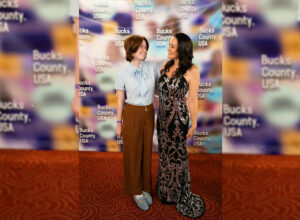
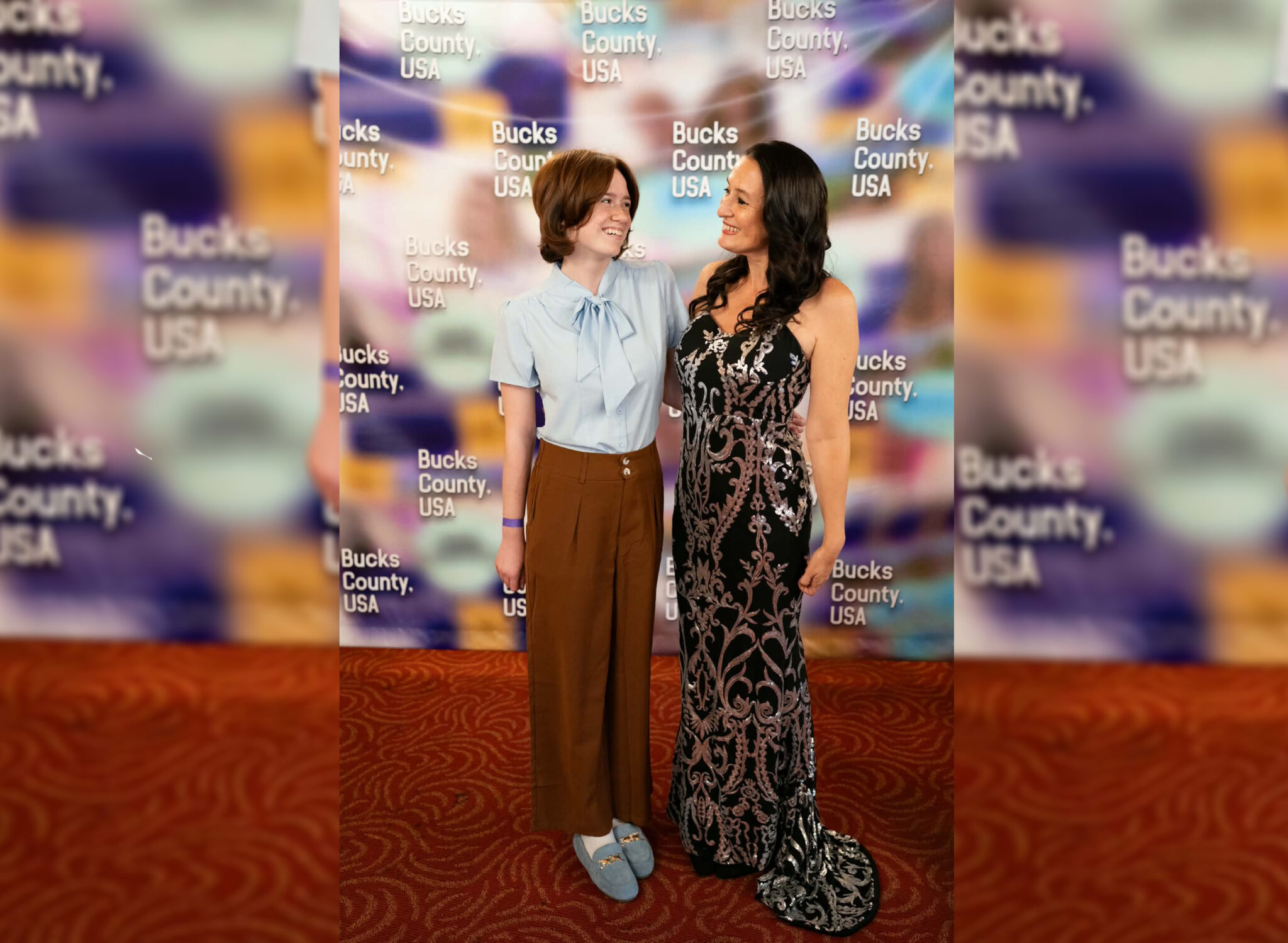
Had I known a press conference about school safety would become dangerous, I never would have brought my 11-year-old daughter Evi. She was standing beside me when a woman rushed at her, shoved a camera in her face and demanded to know how many children had died from COVID.
That moment frightened me, but it also made something much clearer. This was not really a fight about a virus, masks or even schools. Something deeper was taking hold in our community.
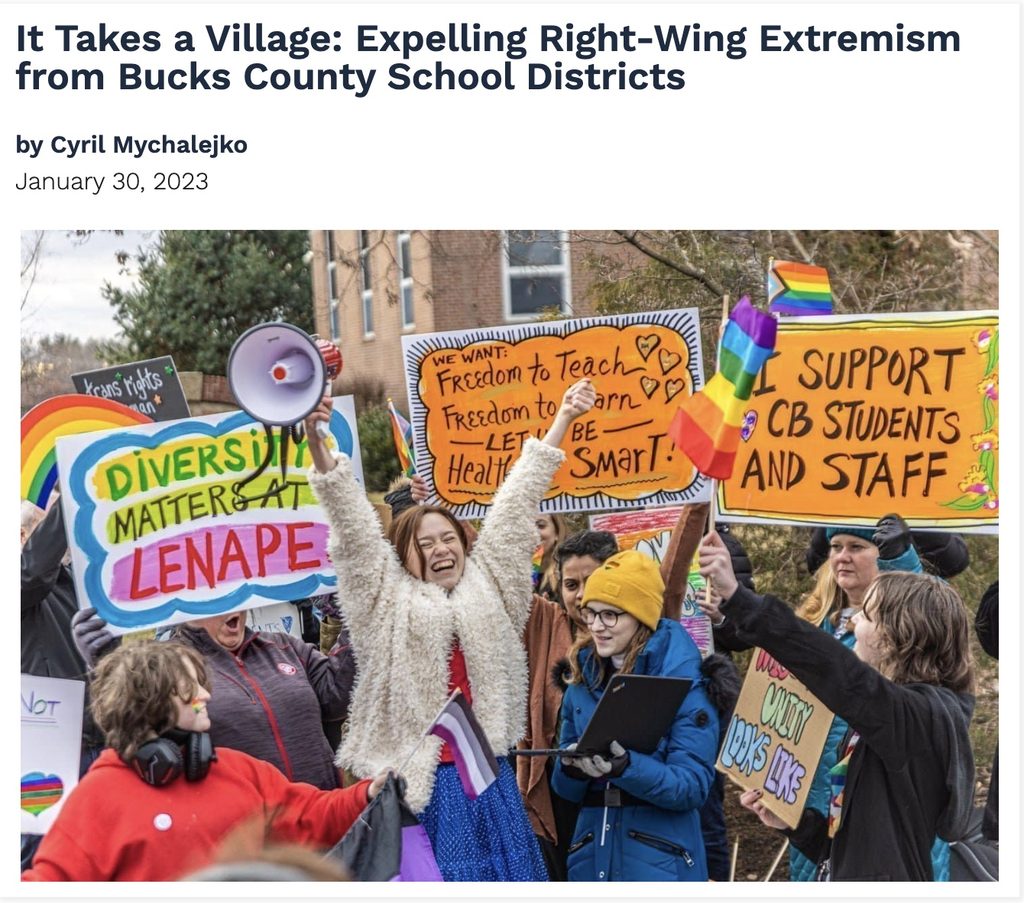
In the weeks following that hostile press conference, I learned that many of the people involved were members of Moms for Liberty and the Proud American Patriots Network (a local Three Percenter group), while others who later ran for school board were closely aligned with their positions. What first looked like a series of local disputes began to feel part of something broader and more coordinated. The battles shifted from masks, which one local Republican called a “satanic ritual,” to books and curriculum, with librarians and teachers accused of being “groomers.” But the underlying ideas became increasingly familiar.
I began to see this less as a series of individual fights than as part of a national astroturf political movement exploiting people’s fears, prejudices and vulnerabilities for power. What struck me most was watching people in my own community support ideas that seemed to work against their own lives, while those with money and influence amplified the division and benefited from it.
My own role, as I saw it, was to fight the political strategies and ideas causing harm without losing sight of the humanity of the individuals caught up in them.
But walking that line raised a difficult question: If we never talk to people who are vulnerable to, or exploited by, these movements, how can we ever hope to help them see the bigger picture? If we simply shut them out, the only voices they hear may come from the same silo of information, or dis- and misinformation, that helped pull them in.
That was part of what interested me when the filmmakers approached us about the documentary. My experiences in those local fights had made me think more seriously about dialogue as a form of civic engagement and whether it could sometimes help people question the movements they had been drawn into, even if I wasn’t always the right person to have those conversations myself.
The filmmakers were also thinking about the role of dialogue, but their focus seemed to be more broadly on whether people on opposite sides of these conflicts could understand one another. At times, those attempts at bridge-building were frustrating to watch. I do believe bringing people together can change minds, but I think those conversations are more meaningful when they grow out of some sense of connection or trust, rather than beginning with people defined mainly by their political differences. And I certainly don’t think anyone has a responsibility to engage with someone who makes them feel unsafe or has caused them harm.
Watching the series made me think more about what helps that kind of trust develop. The adults came to the table already knowing where the other stood politically, often having encountered one another as adversaries. Coworkers or volunteers, by contrast, usually get to know what they share and admire in one another before their differences become central.
My daughter Evi has shown me what that difference can look like.
I’ll never forget the day Evi told me about her new friend, Vanessa, whose father was the major funder of the right-wing school board candidates we were opposing. Evi didn’t fully understand the conflict between our families, but she knew they saw some things very differently. Even so, the girls formed a real friendship built on mutual respect, kindness and teenage humor. Vanessa is smart and open-minded and, most importantly, cares enough about Evi to genuinely try to understand her perspective.
That sort of openness may come more easily to young people, who are still forming their worldview. But there’s also an important difference in what’s at stake. However strongly children may disagree, they aren’t the ones setting school policy or making decisions that directly affect one another’s lives. That different balance of power can make it easier for a friendship to exist alongside political disagreement.
There’s another reason it can be easier for young people to form these relationships, and, ironically, it’s the very thing both sides have been fighting over: public schools.
Vanessa said something during one of our panels together that has really stayed with me. In public school, she said, “we’re incentivized to work together.”
Public schools put children from different backgrounds and belief systems in the same classrooms and give them reasons to work together before they ever think of one another as political opposites. That’s what feels so important about Evi and Vanessa’s friendship. They began as kids who liked each other, and by the time politics entered the picture, they already knew the good in one another.
Maybe that’s what we sometimes get backward as adults. We ask people to bridge enormous political divides before giving them much reason to care about each other. Dialogue still matters, but when we begin with the distance between us, it can be much harder to build the relationship that might eventually help us bridge that divide.
That may also be part of why the docuseries has been so difficult for some people in our community to watch. When you’ve lived through years of conflict, it can be painful to watch people who have hurt you portrayed with sympathy, especially when you know how much never made it onto the screen. For every ugly moment that appears, many of us can think of many worse ones that didn’t.
What has made this easier for me is the response from people outside this community. They don’t seem to need every example spelled out to understand the larger dynamics or recognize who was causing harm. In some ways, that restraint is to the filmmakers’ credit. A hit piece on either side would have lost half the audience and simply preached to the choir. Instead, they ask viewers to stay with people they may strongly disagree with. As uncomfortable as that can be, it may also be where some of the value lies.
My hope is that people who watch the series come away with some additional perspective. Maybe someone on the right begins to question how fear and misinformation can shape what people believe. Maybe someone on the left sees that writing people off entirely can make it harder to reach those who still have room for doubt or questions.
None of that requires pretending the harm was equal on both sides. It simply recognizes that dialogue can help us see past some of the divisions being created between us, and that finding ways to bridge those divides is essential to protecting our democracy.